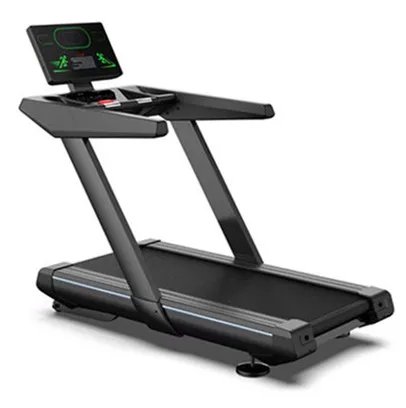
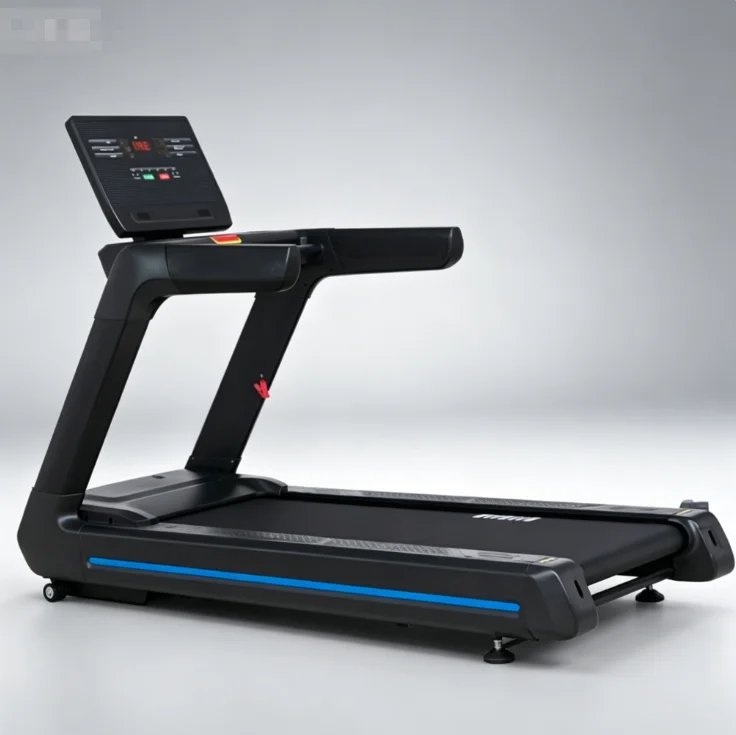
![MT026M Electric Foldable Treadmill for Home Warm-up Use [WARN] draft identifier mismatch](https://bicksport.com/wp-content/uploads/2026/08/mt026m-electric-foldable-treadmill-for-home-warm-up-use-warn-draft-identifier-mismatch-a394a5.webp)
Quiet DC Drive — MT026M uses a DC motor engineered for lower acoustic output in shared residential and hotel environments where noise sensitivity is non-negotiable.
Technical Specifications
| Parameter | Value |
|---|---|
| Designation | MT026M |
| Motor Type | DC |
| Motor Power | 1.5 HP * |
| Speed Range | 1–12 km/h |
| Running Surface | 1200 x 460 mm |
| Console Type | LCD (Speed / Distance / Time / Calories / Pulse) |
| Preset Programs | 12 |
| Product Unfolded Dimensions | 1465 x 750 x 1150 mm |
| Product Folded Dimensions | 1465 x 750 x 390 mm |
| Net Weight | 46.0 kg |
| Foldable | Yes |
| Certification | CE, RoHS |
| OEM / ODM Custom | Available |
* Peak or continuous rating not specified in source documentation — confirm duty classification with manufacturer before deployment planning.
Application Suitability
| Deployment Scenario | Typical Use |
|---|---|
| High-end residential fitness room | Daily personal cardio in noise-sensitive apartment buildings |
| Hotel guest floor fitness alcove | Compact 24-hour self-service warm-up station |
| Corporate wellness room | Employee lunch-break walking and light jogging sessions |
| Light-commercial warm-up zone | Pre-training cardio in boutique studio or physio clinic |
Why Noise Complaints Reach the Front Desk Before Maintenance Does
A quieter motor prevents the call that shuts down your cardio floor at midnight.
In multi-story hotel deployments, treadmill vibration and motor hum travel through floor slabs into guest rooms below. Facilities that spec’d light-commercial units with inadequate acoustic isolation ended up replacing entire batches after repeated noise complaints [NEED_CITE: acoustic transmission through concrete floor assemblies in hotel fitness deployments]. The MT026M foldable home treadmill DC motor energy saving design addresses this at the source — a DC motor inherently runs at lower acoustic output than an equivalent AC motor, making it viable for guest room floors and shared residential corridors where occupants sleep meters away.
Where This Treadmill Fits in a Compact Cardio Layout
The MT026M covers walking through moderate jogging at speeds up to 12 km/h, placing it squarely in the warm-up and steady-state cardio zone. It pairs naturally with ellipticals and rowing machines to give members low-impact variety without expanding the floor footprint. The foldable frame stores vertically, cutting the floor footprint nearly in half when the unit is not in use — a practical advantage in hotel rooms, apartment fitness closets, and corporate wellness corners where every square meter counts. This foldable home treadmill DC motor energy saving unit accommodates users engaging in structured 12-program routines or simple manual speed adjustments.
Continuous Runtime and Deployment Environment Requirements
A 1.5 HP DC motor suits daily sessions of moderate duration rather than back-to-back commercial shifts. Facilities planning round-the-clock access should confirm continuous duty ratings before committing to high-density scheduling [NEED_CITE: motor duty cycle classification for continuous commercial operation]. The folded depth of 390 mm allows placement against walls in narrow corridors, but adequate ventilation clearance behind the motor housing remains necessary to prevent thermal buildup during extended use. Verify local voltage and plug standards before the container ships — mismatched power specifications discovered at the dock delay commissioning by weeks.
What the Drive and Console Specifications Actually Mean
DC motors operate at lower RPM and generate less electromagnetic noise than AC counterparts of similar output, which translates to noticeably quieter belt movement at walking and light jogging speeds. The distinction between peak and continuous horsepower matters here: a motor rated at 1.5 HP peak may deliver considerably less under sustained load, so matching expected daily runtime to the manufacturer’s duty-cycle documentation is essential. The LCD console surfaces speed, distance, elapsed time, calorie estimates, and pulse readings — sufficient for warm-up tracking and recovery monitoring without the complexity of a touchscreen interface. Twelve preset programs introduce structured interval variety, reducing the need for members to manually adjust speed mid-session. The 1200 x 460 mm running surface provides adequate stride length for walking and jogging, though taller users sprinting at maximum speed may find the belt length restrictive [NEED_CITE: EN 957 requirements for running surface dimensions on commercial treadmills].
The Hidden Cost of Spec’ing Below the Application
Deploying a motor rated for intermittent home use in a hotel fitness center that runs eighteen hours daily leads to thermal degradation and premature winding failure — sometimes within the first quarter. Noise output that seems acceptable in a showroom becomes a guest complaint at two in the morning when the floor above a sleeping room is vibrating. Facilities that skip the noise-level test report before ordering often discover the problem only after installation, when replacing a full batch costs far more than requesting documentation upfront [NEED_CITE: treadmill motor failure patterns in light-commercial versus continuous-duty deployments]. Voltage mismatches found at the receiving dock strand equipment in customs while transformers are sourced locally.
Why This Product Line Earns Its Place
Verified sub-35 dB operation across our commercial range means the MT026M slots into noise-sensitive environments with documented acoustic backing. Components across the six-series cardio family undergo 10,000-hour continuous-run testing on motors, frames, and sealed bearings, so durability claims carry test records rather than marketing adjectives. OEM and ODM customization extends to console UI language, color matching, and branding alignment for private-label deployments. Free 3D cardio-zone layout planning covers this unit’s folded and unfolded footprint alongside sightline and airflow considerations, ensuring the treadmill does not end up in a dead corner. Technical support responds around the clock for commissioning questions and spare parts identification.
Documentation & Test Records
- CE declaration of conformity covering electrical safety and EMC directives
- EN 957 test report validating structural and mechanical treadmill requirements
- ISO 9001 certificate confirming quality management system compliance
- RoHS compliance documentation for restricted substance limits
- Motor specification sheet detailing duty cycle and thermal ratings
- Noise level test report with measured output under load conditions
Installation, Commissioning & Maintenance
- Maintain minimum 600 mm rear clearance and 500 mm side clearance from walls for the unfolded 1465 x 750 mm footprint
- Place on a level surface with a vibration-dampening mat to reduce structure-borne noise transmission through floors
- Confirm dedicated 220–240 V circuit with appropriate amperage before first power-on
- Run the belt at low speed for five minutes during initial commissioning to verify tracking and tension alignment
- Inspect belt tension and lubricate the deck interface at intervals specified in the maintenance guide
- Wipe the LCD console and handrails with non-corrosive cleaner after each use to prevent sweat damage
Planning Your Cardio Equipment Inquiry
Provide the total cardio zone area and target unit count to receive a 3D layout with airflow and member flow analysis. Specify expected daily usage hours per unit so motor duty classification can be matched to your operational schedule. Identify the deployment floor and adjacent occupied spaces to confirm whether sub-35 dB acoustic performance is required. State the destination market voltage and plug standard to ensure factory-fit power configuration.
Frequently Asked Questions
Q: What is the difference between continuous duty and peak horsepower in treadmill motors?
A: Peak horsepower represents the maximum output a motor can reach briefly under load, while continuous duty reflects sustained output during extended operation. A 1.5 HP peak rating does not guarantee 1.5 HP over a sixty-minute session. For facilities running equipment multiple hours daily, continuous duty rating determines whether the motor survives the thermal load without premature winding degradation.
Q: How does DC motor noise compare to AC motor noise in residential deployments?
A: DC motors operate at lower rotational speeds and produce less electromagnetic hum than comparable AC motors, resulting in noticeably quieter operation at walking and jogging pace. In apartment fitness rooms and hotel guest floors where occupied spaces sit directly adjacent or below, this acoustic difference reduces noise complaints significantly and allows equipment placement that AC-driven units cannot support.
Q: Can the LCD console data be integrated with facility management or member apps?
A: The LCD console on this model displays real-time workout metrics including speed, distance, time, calories, and pulse. It does not include built-in wireless connectivity for third-party app synchronization. Facilities requiring IoT-enabled data integration should explore touchscreen console options available through OEM customization, which can be scoped during the inquiry phase to match specific software requirements.
Q: What are the space requirements for foldable versus non-foldable treadmills in compact gym layouts?
A: The MT026M folds to 1465 x 750 x 390 mm, reducing its storage depth to roughly one-third of the deployed height. This allows placement against walls or in alcoves when not in active use, freeing floor space for stretching areas or additional equipment. Non-foldable treadmills demand permanent dedicated footprint allocation regardless of utilization patterns throughout the day.

![W08 Electric Folding Fitness Treadmill for Home Use Endurance Training [WARN] draft identifier mismatch](https://bicksport.com/wp-content/uploads/2026/08/w08-electric-folding-fitness-treadmill-for-home-use-endurance-training-warn-draft-identifier-mismatch-dd9ea5.webp)