
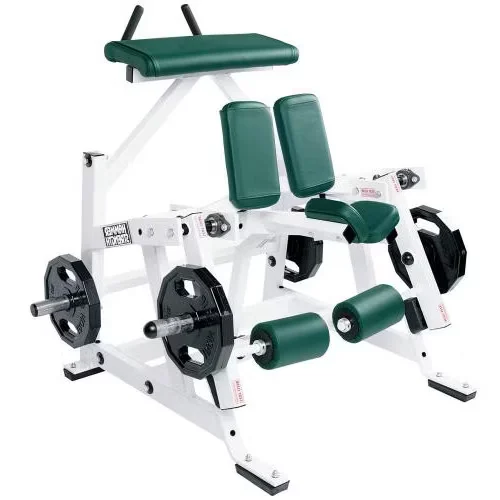
ISO-Lateral Kneeling Leg Curl Machine for Commercial Gym
Structural Rigidity Under Load — Frame welds and pivot bearings are stress-tested through repeated loading cycles to eliminate flex and ensure consistent resistance delivery across thousands of articulations.
Technical Specifications
| Parameter | Value |
|---|---|
| Designation | 5028 |
| Product Type | ISO-Lateral Kneeling Leg Curl Machine |
| Exercise Part | Leg |
| Material | Steel |
| Product Dimensions | 1270 × 1000 × 1290 mm |
| Net Weight | 145 kg |
| Appliance | Community, Gymnasium |
| Fit Area | Professional Gym and Club |
| OEM/ODM | Available |
| Production Capacity | 500 PCS/Month |
| Transport Package | Plywood Case |
| Certification | ISO 9001, CE |
Application Suitability
| Deployment Scenario | Typical Use |
|---|---|
| Commercial fitness club strength zone | High-frequency hamstring isolation training across peak and off-peak hours |
| Hotel fitness center strength corner | Durable low-maintenance leg curl station for guest self-service use |
| Corporate wellness room | Compact posterior chain training for time-constrained employees |
| Community fitness center | Accessible hamstring work for adult members of varying strength levels |
| Professional sports training facility | Targeted hamstring and glute engagement for athlete conditioning programs |
What Pivot Wear and Frame Flex Mean for Commercial Strength Zones
Steel frame construction with reinforced weld geometry eliminates the flex that compromises resistance accuracy under repeated loading.
Commercial strength equipment in public facilities endures hundreds of loading cycles daily. When pivot point bearings degrade or frame joints develop play, the resistance path shifts — members feel the inconsistency before maintenance logs it. [NEED_CITE: pivot bearing lifespan under continuous commercial loading cycles] Facilities that select equipment based on static load ratings alone often discover that dynamic articulation places entirely different demands on the frame and bearing assembly.
Positioning Within the Strength Zone Equipment Array
The ISO-lateral kneeling leg curl machine targets hamstring and glute engagement through a biomechanically guided movement path. In a commercial strength zone, it complements compound lower-body stations like leg presses and squat racks by providing isolated posterior chain work. The kneeling configuration accommodates a broad range of user heights without seat adjustments between sets. This commercial ISO-lateral kneeling leg curl machine is positioned for high-traffic placement where quick user turnover matters, with independent limb movement ensuring balanced bilateral engagement regardless of side-to-side strength differences.
Continuous Operation and Facility Environment Requirements
Strength machines lack motors but still demand attention to deployment conditions that affect structural longevity. Pivot bearings and cable routing systems in high-humidity environments such as hotel fitness centers require sealed specifications to prevent corrosion-induced friction. [NEED_CITE: environmental factors affecting bearing degradation in commercial fitness equipment] Floor leveling is critical: a 145 kg frame on an uneven surface introduces asymmetric loading that accelerates wear on the pivot side bearing heavier static loads. Adequate clearance around the 1270 × 1000 mm footprint ensures safe loading and unloading without interfering with adjacent equipment traffic patterns.
Decoding the Steel Frame and ISO-Lateral Mechanism
The steel frame construction provides the foundation for consistent resistance transmission from the weight stack through the cable and pulley system to the lever arm. ISO-lateral design means each limb operates on an independent movement path, preventing the stronger side from compensating during fatigue — a common issue with bilateral machines where one leg dominates the contraction. The pivot point placement is engineered to align with the knee joint axis, reducing shear force at the joint through proper rotational geometry. Cable routing through sealed pulleys minimizes friction loss and ensures the resistance felt at the pad matches the selected load. Guide rods within the weight stack maintain alignment during rapid concentric and eccentric transitions, preventing the plate chatter that signals premature wear.
The Hidden Cost of Specifying Below Commercial Grade
Strength machines that cut cost through lighter-gauge tubing or unsealed pivot bearings reveal their limitations within the first year of high-frequency deployment. Frame flex under load alters the resistance curve, and members notice the inconsistency even if they cannot articulate the mechanical cause. [NEED_CITE: frame fatigue failure modes in commercial vs light-commercial strength equipment] Cable fraying from misaligned pulleys creates both a maintenance burden and a safety liability. Facilities that replace entire units rather than rebuilding worn pivot assemblies face compounded procurement cycles and strength zone downtime that disrupts member programming.
Why This Product Line Fits Commercial Procurement
Sub-35dB operation verified across the cardio range translates to a facility-wide acoustic standard that this strength machine complements — the absence of motor noise means structural vibration from weight stack movement becomes the dominant sound consideration. The 10,000-hour durability testing protocol applied to motors and bearings in the cardio family extends to pivot point and cable system validation here. [NEED_CITE: commercial strength equipment durability testing methodology] Full OEM and ODM capability covers frame color, pad material, and weight plate branding to match facility identity. The free 3D strength zone layout service accounts for the 1270 × 1000 mm footprint alongside adjacent equipment spacing, member flow corridors, and sightline planning. Twenty-four-seven technical support ensures pivot bearing or cable replacement guidance is available when wear appears outside business hours.
Documentation & Test Records
- CE declaration of conformity for the ISO-lateral kneeling leg curl machine
- EN 957 test report covering structural integrity and safety requirements
- ISO 9001 certificate validating manufacturing quality management systems
- Frame weld quality inspection and structural stress testing records
- Pivot bearing specification sheet with load cycle ratings
- Cable and pulley system durability test documentation
Installation, Commissioning & Maintenance
- Position the 1270 × 1000 × 1290 mm frame on leveled flooring with adequate clearance on all sides for safe user entry and exit
- Verify guide rod alignment and weight stack smoothness before releasing for member use
- Inspect pivot point bearings for play after the first 500 usage cycles and re-torque frame bolts to specification
- Lubricate cable routing pulleys and check cable tension quarterly to maintain consistent resistance delivery
- Clean steel frame and vinyl pads with non-corrosive solutions to prevent sweat-induced surface degradation
Requesting Equipment Selection Guidance
Provide your strength zone square footage and current equipment list to receive a 3D layout with member flow and spacing analysis for the commercial ISO-lateral kneeling leg curl machine. Specify your expected daily user volume so that pivot bearing and cable system durability ratings can be matched to the facility duty cycle. Indicate deployment floor level and adjacent occupied spaces to confirm whether vibration isolation pads are necessary beneath the 145 kg frame. Confirm target market specifications for any OEM customization including frame color and pad material.
Frequently Asked Questions
Q: How does ISO-lateral movement differ from fixed-path leg curl machines in commercial settings?
A: ISO-lateral design provides independent movement paths for each leg, preventing the dominant side from compensating during fatigue. This matters in commercial gyms where members of varying strength levels share equipment — the machine adapts to individual bilateral differences rather than forcing a fixed bar path that can mask imbalances and reduce training effectiveness over time.
Q: What frame specifications matter most for high-traffic gym deployments?
A: Steel frame gauge and weld geometry determine how the structure handles repeated eccentric loading. A 145 kg machine frame with reinforced pivot joints resists the lateral forces generated during kneeling hamstring contractions. Facilities should request weld inspection documentation and structural stress testing records to verify the frame maintains rigidity across thousands of loading cycles without developing flex or play.
Q: What maintenance does the pivot and cable system require under continuous use?
A: Sealed pivot bearings reduce contamination but still require periodic inspection for play and smoothness. Cable routing through pulleys should be checked quarterly for fraying, alignment, and tension. Guide rods within the weight stack need cleaning to prevent plate friction. High-traffic facilities benefit from establishing a usage-based maintenance schedule rather than calendar-based intervals to match actual wear patterns.
Q: How should strength zones be planned around this equipment footprint?
A: The 1270 × 1000 mm footprint requires clearance on all sides for safe kneeling entry and pad adjustment. Placement should account for member flow between adjacent stations — positioning near other lower-body equipment creates logical training circuits. Three-dimensional layout planning considers sightlines so trainers can monitor form across the strength zone without equipment blocking visibility corridors.
Q: What OEM customization options are available for branding and facility matching?
A: OEM and ODM services cover frame color selection, pad material and stitching, weight plate branding, and logo placement. Commercial facilities outfitting multiple locations can standardize visual identity across the strength zone. Customization scoping occurs after initial equipment selection, with production capacity supporting volume orders for gym chain deployments and multi-property hospitality groups.

![Commercial Seated Arm Curl Machine for Professional Gyms [WARN] draft identifier mismatch](https://bicksport.com/wp-content/uploads/2026/08/commercial-seated-arm-curl-machine-for-professional-gyms-warn-draft-identifier-mismatch-b3cee7.webp)
![Plate Loaded Hammer Strength Deluxe Weight Tree Machine Sports Equipment [WARN] draft identifier mismatch](https://bicksport.com/wp-content/uploads/2026/08/plate-loaded-hammer-strength-deluxe-weight-tree-machine-sports-equipment-warn-draft-identifier-mismatch-caf4d9.webp)