Silent Operation — Sub-35dB verified in hotel floor deployments where cardio equipment runs directly above occupied guest rooms.
Technical Specifications
| Parameter | Value |
|---|---|
| Designation | 5004 |
| Product Type | ISO-Lateral Chest Press |
| Frame Material | Reinforced Steel |
| Movement Type | ISO-Lateral Independent Arms |
| Target Muscle Group | Lower Pectoral (Decline Angle) |
| Max User Weight | 180 kg |
| Product Dimensions | 1300 × 1150 × 1750 mm |
| Net Weight | 141 kg |
| Certification | ISO 9001, CE |
| Bearing System | Sealed Precision Bearings |
| OEM/ODM | Available |
Application Suitability
| Deployment Scenario | Typical Use |
|---|---|
| Chain gym strength zone | High-frequency chest training in commercial circuit layouts |
| Corporate wellness room | Moderate-use independent arm pressing for employee fitness programs |
| Community fitness center | Durable chest station accommodating varied fitness levels throughout operating hours |
| Hotel fitness center | Space-efficient ISO-lateral pressing unit for 24-hour guest access areas |
| Sports performance training center | Single-arm corrective work and bilateral strength development |
Why Bearing Wear Outpaces Frame Fatigue in High-Traffic Strength Zones
Precision sealed bearings are the real uptime bottleneck in commercial ISO-lateral equipment.
When a gym owner calls about a "broken" chest press, the frame is rarely the problem. The pivot bearings and bushings absorb every rep’s lateral load, and once the seal fails under continuous use, the grinding noise triggers member complaints before the machine actually seizes. I have seen facilities replace entire units when a bearing swap would have restored smooth operation. Selecting equipment with sealed precision bearing systems and accessible service points matters far more than frame thickness alone [NEED_CITE: bearing lifecycle standards for commercial resistance equipment].
Positioning Within a Commercial Strength Circuit
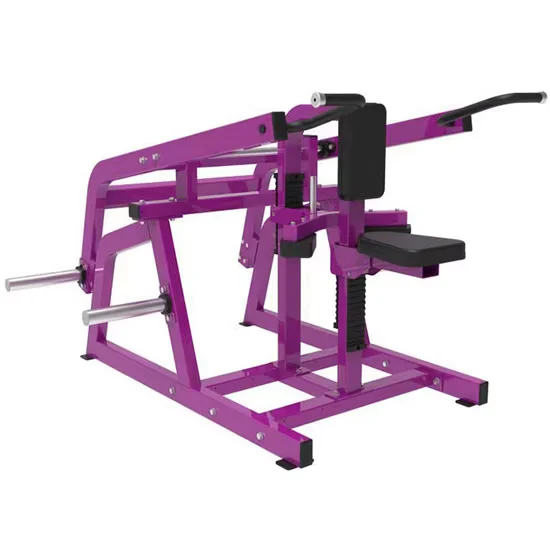
This commercial ISO-lateral decline chest press machine serves as the primary horizontal pressing station targeting the lower pectoral fibers in a multi-station strength layout. It complements flat and incline pressing units by covering the decline angle that cable crossovers alone cannot load effectively. The independent arm mechanism allows unilateral correction work, making it suitable for both general membership circuits and athletic performance zones where symmetry assessment matters. The reinforced steel frame and 1300 × 1150 mm footprint accommodate users up to 180 kg in high-density deployments.
Continuous Operation and Facility Environment Requirements
Strength equipment does not have motors to burn out, but the bearing and bushing systems face comparable duty-cycle demands when a single station sees hundreds of sets daily. Facilities running extended hours need to confirm that pivot points use sealed rather than open bearings, since sweat and chalk infiltration accelerates wear significantly. The 141 kg frame mass provides inherent stability on standard rubber flooring without additional anchoring in most cases, though concrete subfloor verification remains standard practice. Proper leveling during installation prevents asymmetric bearing load that causes premature play on the dominant side [NEED_CITE: commercial gym flooring load distribution requirements].
How ISO-Lateral Mechanics Translate to Equipment Longevity
Independent arm systems impose asymmetric loading that fixed-path machines never experience. Each pivot bearing must handle the full unilateral force when a member trains one side, effectively doubling the per-bearing stress compared to linked mechanisms. The sealed bearing specification in this unit addresses that reality by preventing contaminant ingress at the pivot points where chalk dust and sweat concentrate. The decline angle frame geometry positions the load vector closer to vertical, reducing the lateral shear force on the upper pivot compared to flat-bench ISO-lateral designs. This mechanical advantage contributes to lower bushing wear rates over equivalent rep volumes.
The Hidden Cost of Underspecified Pivot Hardware
Open bushings in independent arm machines typically develop noticeable play within months of commercial deployment, creating the side-to-side wobble that members interpret as equipment failure. Once play exceeds tolerance, the entire arm assembly requires replacement rather than a simple bushing swap, converting a minor consumable cost into significant downtime. Facilities that prioritize low upfront pricing on strength stations frequently encounter this replacement cycle within the first year. The commercial ISO-lateral decline chest press machine addresses this through sealed bearing architecture that maintains smooth articulation through extended high-frequency use [NEED_CITE: commercial strength equipment bushing replacement frequency data].
Why This Product Line Addresses Facility Uptime
Every unit undergoes bearing and pivot testing calibrated for continuous commercial loading cycles before leaving the Shandong production facility. The six-series cardio and strength family allows a facility to source matching build quality across all training zones from a single manufacturing line. The OEM program covers frame color, pad material, and logo placement with flexible minimums, and the free 3D layout service accounts for the 1300 × 1150 mm footprint with appropriate clearance spacing for safe loading and unloading. Technical support remains available around the clock for installation calibration questions.
Documentation & Test Records
- CE declaration of conformity for the 5004 ISO-lateral chest press
- EN 957 structural load test report covering 180 kg user capacity
- ISO 9001 manufacturing process certificate
- Bearing and pivot durability test record for independent arm systems
- Frame welding inspection and dimensional verification report
- Installation and commissioning guide with spacing requirements
Installation, Commissioning & Maintenance
- Verify 1300 × 1150 mm clearance with minimum 600 mm access paths on all sides
- Level the 141 kg frame on reinforced rubber matting to prevent asymmetric bearing stress
- Inspect pivot bearings and bushings quarterly for play under commercial load
- Tighten all frame bolts to specified torque after the first 30 days of operation
- Wipe down steel frame and upholstery daily to prevent sweat corrosion at weld points
- Confirm floor load capacity supports concentrated static weight plus dynamic pressing loads
Equipment Selection and Procurement Inquiry
Provide the strength zone floor area and current equipment list to receive a 3D layout plan that accounts for this unit’s footprint and member flow clearance. Specify expected daily user volume so we can confirm bearing duty-cycle adequacy for your operating model. Indicate your target market and any pad material or frame color preferences for OEM scoping.
Frequently Asked Questions
Q: How does ISO-lateral movement differ from fixed-path chest machines?
A: ISO-lateral arms move independently, allowing each side to press through its own natural arc without the stronger arm compensating for the weaker one. Fixed-path machines link both handles to a single pivot, which can mask strength imbalances and force joints into less natural movement patterns during heavy loading.
Q: What steel frame standards apply to commercial chest press equipment?
A: Commercial strength frames must meet EN 957 structural integrity requirements, including static load testing well above the rated user weight. The reinforced steel construction undergoes weld inspection and dimensional verification to ensure frame geometry remains stable through repeated high-load pressing cycles in continuous commercial use.
Q: What maintenance do the pivot bearings require?
A: Sealed precision bearings in this ISO-lateral system require minimal routine maintenance compared to open bushing designs. Quarterly inspection for lateral play under load is recommended, and any detectable movement indicates seal wear requiring bearing replacement before the pivot develops excessive clearance that affects movement quality.
Q: What training advantage does the decline angle provide?
A: The decline angle shifts the primary load vector to emphasize the lower sternal fibers of the pectoral major, a region that flat and incline presses load less directly. This makes the decline station a standard component in comprehensive chest training layouts for both general membership and athletic performance programs.
Q: What OEM customization options are available for this unit?
A: Frame color, pad material density, logo placement, and upholstery stitching patterns can all be customized to match facility branding requirements. Minimum order quantities remain flexible for commercial projects, and the OEM scoping process begins once base specifications and target deployment environment are confirmed.