
![Hsm Fashion Design Hydraulic Cylinder Household Treadmill MT23B [WARN] draft identifier mismatch](https://bicksport.com/wp-content/uploads/2026/08/hsm-fashion-design-hydraulic-cylinder-household-treadmill-mt23b-warn-draft-identifier-mismatch-66291e.webp)
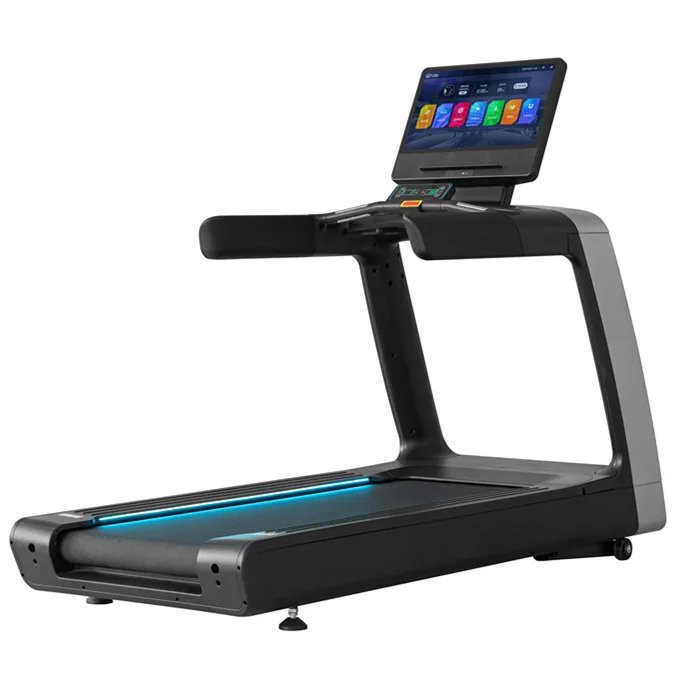
Quiet DC Drive for Shared Residential Floors — foldable frame and 1200 x 420 mm running surface keep noise and footprint low in apartments and multi-purpose rooms.
Technical Specifications
| Parameter | Value |
|---|---|
| Designation | MT23B |
| Motor Type | DC |
| Motor Power | 1.5 HP / DC 2.0 HP (peak or continuous not specified in source) |
| Speed Range | 1–12 km/h |
| Running Surface | 1200 x 420 mm |
| Console Type | LCD (Speed / Distance / Time / Calories / Pulse) |
| Program | 12 preset programs |
| Heart Rate | Handgrip pulse sensor |
| Product Dimensions | 1490 x 720 x 1100 mm (unfolded) |
| Net Weight | 37 kg |
| Foldable | Yes |
| Certification | CE, RoHS |
Application Suitability
| Deployment Scenario | Typical Use |
|---|---|
| High-end residential home gym | Daily walking and light jogging in apartments or shared living floors |
| Compact personal fitness setup | Space-conscious users requiring foldable storage after sessions |
| Light-use residential wellness corner | Short-duration cardio routines for general health maintenance |
Why Apartment Treadmill Noise Reaches Neighbors Before You Finish Your Warm-Up
DC motor architecture and foldable design directly address the two constraints that define residential cardio deployment: acoustic bleed and floor-space scarcity.
When a household treadmill sits above or beside occupied rooms, vibration transfer through floor slabs becomes the primary complaint vector. Home-grade hydraulic cylinder systems and undersized DC motors generate structure-borne noise that propagates differently than airborne sound, triggering neighbor disputes and building management interventions [NEED_CITE: structure-borne noise propagation in multi-story residential buildings]. A foldable DC motor treadmill household deployment must account for both the acoustic signature during operation and the spatial footprint when the equipment is not in use. Operators who ignore the duty-cycle mismatch between residential and commercial motor ratings frequently face premature bearing wear and belt deck degradation within the first few months of daily use.
Where This Foldable Treadmill Fits in a Home Cardio Setup
The MT23B covers walking through moderate jogging intensities at speeds up to 12 km/h, making it suitable for steady-state aerobic work and introductory interval sessions. In a residential fitness corner, it pairs with a yoga mat zone or light resistance equipment to form a complete daily movement routine. The foldable frame allows the unit to occupy minimal floor area between sessions, which matters in studio apartments or shared wellness rooms where the same square footage serves multiple functions throughout the day. Users within the standard adult weight range will find the 1200 x 420 mm running surface adequate for walking and jogging gaits, though taller runners may prefer a longer belt. This foldable DC motor treadmill household unit collects basic session data through the LCD console—speed, distance, time, calories, and pulse—giving users workout feedback without requiring external app connectivity.
Continuous Run-Time and Residential Deployment Constraints
Daily household use typically involves multiple short sessions rather than the continuous eight-hour duty cycles seen in commercial facilities, and the DC motor in the MT23B is configured for this intermittent load pattern. Noise transfer through floor structures depends on subfloor construction, so deploying the treadmill on upper floors of multi-story buildings requires attention to vibration isolation pads and avoiding placement directly above bedrooms [NEED_CITE: residential floor vibration isolation for fitness equipment]. The foldable mechanism introduces a hinge point in the frame, which means the unit must be fully locked into the unfolded position before each session to maintain running stability. Standard household voltage powers the DC motor, though users in regions with 110V and 220V systems should confirm plug compatibility before purchase. Adequate clearance around the unit—at minimum the length of the treadmill behind the rear roller—is necessary for safe mounting and dismounting.
DC Motor, Foldable Frame, and LCD Console: What the Specs Actually Mean
DC motors deliver smooth torque delivery at lower speeds and operate at reduced noise levels compared to AC motors of equivalent horsepower, which is why they dominate the household treadmill category. The distinction between peak and continuous horsepower matters significantly: a motor rated at 2.0 HP peak may sustain considerably less output during extended running sessions, and manufacturers that do not specify which rating applies leave buyers without a reliable durability benchmark [NEED_CITE: treadmill motor horsepower rating standards continuous versus peak]. The foldable frame reduces storage footprint but introduces structural compromise at the folding hinge—rigidity during running depends on the locking mechanism engaging fully and the frame tubing thickness at stress points. LCD consoles displaying speed, distance, time, calories, and pulse provide self-contained workout tracking without Bluetooth or Wi-Fi dependencies, which eliminates connectivity troubleshooting but also means session data stays on the device. Handgrip pulse sensors offer convenience for casual heart rate checks, though they are inherently less stable than chest-strap monitors during higher-intensity efforts where hand position shifts on the rails. The 12 preset programs provide structured variety—alternating speed intervals, steady climbs, and recovery walks—without requiring users to manually adjust settings mid-session.
What Spec Compromises Cost in Residential Treadmill Deployments
Household treadmills with undersized motors and light-duty frames frequently fail at the bearing and belt deck interface before the motor itself burns out, because vibration from structural flex accelerates wear on every moving component. Noise complaints in apartment buildings escalate from neighbor conversations to formal building management complaints within weeks when the equipment generates low-frequency vibration through concrete slabs. Users who experience joint discomfort on poorly cushioned decks tend to abandon the equipment rather than adjust their training, converting what was a fitness investment into unused floor space. Units without connectivity options avoid software compatibility issues but also prevent users from tracking long-term progress trends across external platforms, which reduces engagement over time. Voltage mismatches discovered after delivery require transformer solutions or complete unit replacement, both of which add cost and delay to deployment [NEED_CITE: international voltage compatibility for residential fitness equipment].
Why Biketon’s Residential Cardio Line Addresses These Gaps
Every Biketon cardio platform undergoes acoustic testing to verify operation below noise thresholds that trigger residential complaints, and the MT23B’s DC motor architecture is part of that verified quiet-running lineage. Motor and bearing assemblies are tested against the 10,000-hour continuous operation standard applied across the Biketon commercial range, meaning even the household-oriented models carry durability margins well beyond typical home-use expectations. The six-series cardio family means that buyers outfitting a residential wellness corner can source treadmill, bike, elliptical, and rower from a single engineering platform with consistent build quality. Biketon provides OEM and ODM customization including console UI adaptation, which allows residential developers to align the equipment interface with their property branding. The free 3D cardio-zone layout service covers square footage planning, sightline optimization, and airflow considerations—critical when fitting cardio equipment into compact residential spaces where ventilation is often an afterthought. Biketon’s 24/7 technical support ensures that installation questions and calibration issues receive response regardless of time zone, which matters for international residential deployments.
Documentation & Test Records
- CE declaration of conformity confirming European market compliance for the MT23B platform
- RoHS compliance documentation verifying restricted substance limits in electronic components
- Motor specification sheet detailing DC motor winding, thermal cutoff, and duty-cycle parameters
- Console technical documentation covering LCD segment mapping and program logic
- Installation guide with foldable mechanism locking procedure and safety clearance diagrams
- Spare parts list covering belt, deck, motor brushes, and console PCB for long-term serviceability
Installation, Commissioning & Maintenance
- Maintain minimum clearance behind the 1490 mm unfolded length for safe rear dismount
- Level the frame on firm flooring and add vibration isolation pads for upper-floor residential deployment
- Confirm household voltage and plug type match the MT23B DC motor power requirement before connection
- Fully engage the foldable frame lock mechanism and verify no lateral play before first powered run
- Inspect running belt tension and alignment after the initial break-in period of the 1200 x 420 mm deck
- Wipe LCD console and handgrip pulse sensors after each session to prevent sweat corrosion on contacts
Sourcing Guidance for This Foldable Treadmill Platform
Provide the target deployment environment—apartment floor, standalone residence, or shared wellness room—along with available square footage to receive a tailored equipment layout recommendation. Specify the expected daily usage duration and number of users to confirm whether the DC motor duty cycle aligns with your operational profile. Indicate the deployment country and voltage standard so the correct power configuration is quoted from the outset. Clarify whether console data output to external systems is required, as the MT23B’s LCD platform operates as a self-contained tracking solution.
Frequently Asked Questions
Q: What is the practical difference between peak and continuous motor horsepower on a household treadmill?
A: Peak horsepower measures the motor’s maximum output for brief bursts, while continuous horsepower reflects sustained delivery during extended running sessions. A DC motor rated at 2.0 HP peak may deliver considerably less during a thirty-minute jog, affecting belt speed consistency under load. Always request the continuous rating from the manufacturer to accurately compare durability and performance across models.
Q: How does a DC motor compare to an AC motor for home treadmill deployment?
A: DC motors operate at lower noise levels and deliver smooth torque at walking and jogging speeds, making them the standard choice for household treadmills. AC motors handle continuous heavy loads better and dominate commercial gym deployments where equipment runs eight or more hours daily. For residential use with intermittent sessions, DC motors provide adequate performance with a reduced acoustic footprint.
Q: Can the MT23B LCD console sync with external fitness apps or smart watches?
A: The MT23B console is a self-contained LCD unit displaying speed, distance, time, calories, and pulse without Bluetooth or Wi-Fi connectivity. Session data remains on the console and does not transfer to external platforms. Users requiring app integration should look for models with IoT-enabled consoles offering wireless data export capabilities.
Q: Is this foldable treadmill suitable for upstairs apartment placement regarding noise?
A: The DC motor operates at lower acoustic levels than AC alternatives, but structure-borne vibration through floor slabs depends on subfloor construction and isolation measures. Deploying vibration pads beneath the unit and avoiding placement directly above bedrooms reduces neighbor disturbance. Request the manufacturer’s noise level test data to verify suitability for your specific building type.
Q: Does the foldable mechanism compromise running stability compared to fixed-frame treadmills?
A: Foldable frames introduce a hinge point that can create lateral flex if the locking mechanism does not engage fully. When properly locked, the MT23B frame provides stable running for walking and jogging within its speed range. Users should verify the lock is fully seated before each session and avoid high-speed sprinting, which places greater dynamic load on the hinge structure.
![Hsm Design Foldable Motorized Treadmill for Home Use [WARN] draft identifier mismatch](https://bicksport.com/wp-content/uploads/2026/08/hsm-design-foldable-motorized-treadmill-for-home-use-warn-draft-identifier-mismatch-2f3026.webp)
![Mt296 ABS Electric Treadmill for Maintaining Health [WARN] draft identifier mismatch](https://bicksport.com/wp-content/uploads/2026/08/mt296-abs-electric-treadmill-for-maintaining-health-warn-draft-identifier-mismatch-6822d9.webp)
