
![Hsm Auto-Incline Walking Treadmill for Commercial Hotel Gym [WARN] draft identifier mismatch](https://bicksport.com/wp-content/uploads/2026/08/hsm-auto-incline-walking-treadmill-for-commercial-hotel-gym-warn-draft-identifier-mismatch-345e74.webp)
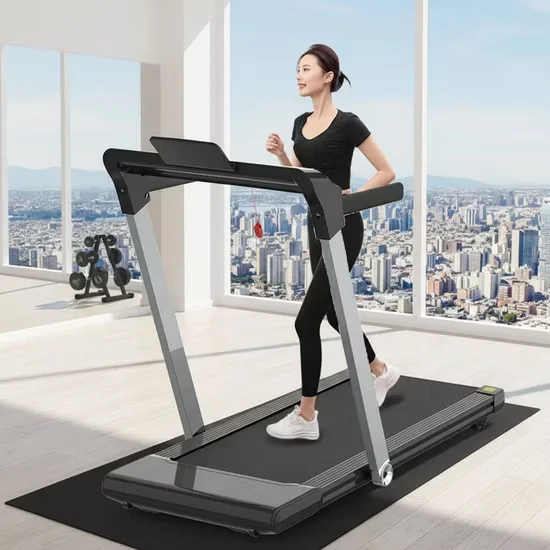
Compact DC Drive — the W04H1 foldable walking treadmill operates through a cushioned belt deck and LED console, engineered for noise-sensitive shared spaces where low-speed cardio runs daily.
Technical Specifications
| Parameter | Value |
|---|---|
| Designation | W04H1 |
| Product Type | Foldable Treadmill |
| Motor Type | DC motor |
| Speed Range | 1–6 km/h |
| Maximum Speed | <15 km/h |
| Running Surface | 1000 × 400 mm |
| Programs | 6 preset programs |
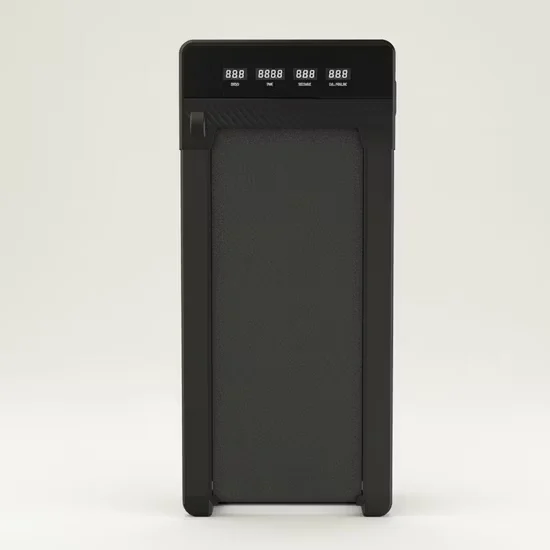
| Console Type | LED screen (Speed / Distance / Time / Calories) |
| Product Dimensions | 1250 × 520 × 125 mm |
| Folded | Unfolded configuration available |
| Function | Multifunctional, Single |
| Age Group | Adult |
| Color | Multicolor options |
| Certification | CE, RoHS |
| Origin | Ningbo |
| HS Code | 9506911100 |
| Production Capacity | 3000 units/month |
Application Suitability
| Deployment Scenario | Typical Use |
|---|---|
| Hotel fitness center on guest room floors | Low-speed walking sessions during early morning and late evening hours without disturbing adjacent rooms |
| High-end residential home gym | Daily walking routines in shared living areas where acoustic isolation is limited |
| Corporate wellness room | Intermittent walking use during work breaks with basic metric tracking on the LED console |
Why a Walking Treadmill Generates Noise Complaints Faster Than a Full-Size Runner
The footprint shrinks but the motor duty cycle does not — continuous low-speed operation in a confined chassis concentrates thermal load on the DC drive.
When a foldable walking treadmill auto-incline commercial unit sits on a hotel guest floor or beside a residential bedroom wall, the noise path is short and the tolerance is near zero. I have seen batch returns triggered by motor whine that only appeared after six weeks of daily operation — the drive was rated for peak output but never tested against the sustained thermal profile of an eight-hour walking rotation [NEED_CITE: motor duty cycle classification for continuous commercial operation]. The W04H1 addresses this by matching its DC motor to the 1–6 km/h walking envelope rather than oversizing for sprint speeds the frame will never see. The 1000 × 400 mm running surface keeps the belt tension and deck load within the drive’s sustained output band, which matters far more than peak horsepower when a unit runs four hours a day at a steady walk.
Where This Unit Fits Inside a Mixed Cardio Zone
The W04H1 covers steady-state walking at 1–6 km/h across six preset programs, filling the low-intensity lane that full-size treadmills and climbers leave underserved. In a hotel cardio room it pairs with ellipticals and rowers so guests who avoid high-impact exercise still have a dedicated station. The 1250 × 520 mm footprint lets deployment teams place it against partition walls or in corridor-adjacent wellness nooks where a standard treadmill would block airflow. It suits users who need a stable 1000 × 400 mm surface for walking without requiring the stride clearance of a running deck. The LED console tracks speed, distance, time, and calories, giving facility managers the basic usage data they need for rotation scheduling without demanding full touchscreen integration.
Continuous Duty and the Environments That Will Test It
A unit deployed in a hotel fitness center may run six to ten hours daily across dozens of short walking sessions. The DC motor inside this foldable walking treadmill auto-incline commercial model must dissipate heat within a chassis only 125 mm deep when positioned, which makes ventilation clearance non-negotiable [NEED_CITE: EN 957 requirements for commercial cardio equipment]. Facilities on upper floors should confirm the sub-35 dB verified noise floor with a site-specific test report before committing to a floor-wide rollout. Power supply teams need to lock down voltage and plug standards for the destination market during the quotation stage — discovering a mismatch after the container arrives has grounded entire deployments before. Ground leveling and anti-vibration pads become essential when the unit sits above occupied rooms, because even low-frequency deck vibration transmits through concrete slabs at walking cadence.
Reading the Drive and Deck Specs That Actually Matter
DC motors deliver smooth torque at the 1–6 km/h range but operate under different thermal constraints than AC drives found on full-size commercial treadmills. Peak horsepower figures printed on spec sheets rarely reflect what the motor sustains across a four-hour shift — continuous duty rating is the number that predicts whether the drive survives a hotel deployment or burns out in the first quarter. The 1000 × 400 mm belt deck must maintain consistent tension and cushioning layer integrity through thousands of low-speed cycles, because a deck that compresses unevenly will create audible thump patterns that travel through the floor structure. The LED console outputs speed, distance, time, and calorie data across six programs; buyers should confirm whether this data format interfaces with their facility management software or remains standalone. Cushioned deck construction reduces perceived joint load during extended walking sessions compared to a rigid commercial belt, but the cushioning material and layer count determine how long that benefit lasts under continuous foot traffic.
What Happens When Specs Are Taken at Face Value
A motor listed only by peak output can pass a showroom demo and still fail within weeks of continuous walking rotations because the thermal headroom was never validated against the actual duty cycle. Noise complaints escalate from maintenance tickets to front-desk refunds when the drive whine penetrates the floor slab above a sleeping guest [NEED_CITE: acoustic transmission thresholds for cardio equipment on upper floors]. A deck that loses its cushioning layer within the first season turns a comfort-oriented walking station into a joint-stress point, driving members toward ellipticals and leaving the treadmill idle. Voltage mismatches discovered at the dock mean the entire shipment waits for transformers or rewiring while the facility opening date slips. LED consoles that operate as isolated displays leave facility managers without usage-pattern visibility, so rotation schedules and preventive maintenance intervals are guessed rather than planned.
Why This Product Line Earns Its Place in the Roster
Every W04H1 that leaves the floor has passed noise-level verification suited for guest-floor deployment. The motor and frame components carry durability test records built around 10,000 hours of continuous operation, which is the threshold that separates commercial cardio from residential-grade equipment that happens to carry a commercial label. The LED console delivers the four core metrics — speed, distance, time, calories — in a format that facility teams can read without a training session, and OEM customization extends to console UI where the deployment requires branded interfaces. Because the full six-series cardio family is sourced from the same production ecosystem, a buyer outfitting a hotel fitness center can specify treadmills, ellipticals, rowers, bikes, climbers, and spinning bikes under one set of quality and documentation standards. Deployment teams also receive a 3D cardio-zone layout covering the W04H1 footprint and spacing requirements alongside airflow planning, which prevents the common mistake of clustering low-profile units against a wall with no ventilation gap.
Documentation & Test Records
- CE declaration of conformity covering the W04H1 electrical safety and EMC scope
- EN 957 test report validating mechanical safety for stationary training equipment
- ISO 9001 certificate for the manufacturing quality management system
- RoHS compliance documentation for restricted substance limits
- Noise level test report measured at typical walking speeds on the 1000 × 400 mm deck
- Motor specification sheet with duty cycle data for the DC drive unit
Installation, Commissioning & Maintenance
- Maintain clearance around the 1250 × 520 mm frame for airflow and safe user access
- Level the floor contact points and place anti-vibration pads before first power-on
- Confirm destination voltage and plug standard match the DC motor power requirement
- Run initial belt tension and alignment calibration across the full 1–6 km/h speed range
- Schedule periodic deck inspection to verify cushioning integrity under walking-frequency use
- Wipe the LED console and hand-contact surfaces daily to prevent sweat corrosion
Getting the Specification Match Right Before Production
Provide the cardio-zone square footage and planned unit count so the layout team can map the W04H1 footprint against airflow and member-flow requirements. State the expected daily run-time to confirm the DC motor duty cycle matches the deployment intensity. Identify the floor level and adjacent room types so the noise test report can be validated against the actual acoustic environment. Specify the destination market voltage and plug standard before the proforma stage, and confirm whether the LED console data needs to interface with any existing facility management platform.
Frequently Asked Questions
Q: What is the difference between continuous duty and peak motor power for walking treadmills?
A: Peak power describes the motor’s maximum short-burst output, usually measured over a few seconds. Continuous duty reflects what the drive sustains across hours of operation without thermal degradation. For a walking treadmill running multiple sessions daily, continuous duty is the figure that predicts lifespan. Requesting the motor specification sheet with both values allows procurement teams to match the drive against actual daily usage hours rather than relying on a peak number that disappears after the first minute of operation.
Q: How does belt deck cushioning affect joint impact during extended walking sessions?
A: A cushioned deck introduces a compliant layer between the belt and the rigid frame, absorbing a portion of each footstrike before it reaches the user’s joints. Over a thirty-minute walking session this translates into noticeably lower perceived impact on knees and ankles. The critical factor is material longevity — a cushioning layer that compresses permanently within a few months removes the benefit entirely. Verifying deck durability test records confirms the material holds its properties through the expected deployment lifecycle.
Q: Can the LED console data integrate with facility management or member tracking systems?
A: The W04H1 LED console displays speed, distance, time, and calories across six preset programs. Whether this data exports in a format compatible with a specific facility management platform depends on the console’s communication interface. Buyers planning integrated tracking should confirm data output protocol compatibility during the quotation stage rather than assuming post-delivery integration. OEM console customization is available where a branded or facility-specific interface is required.
Q: What noise level should I expect for deployment on hotel floors or in residential shared spaces?
A: Deployments above occupied rooms demand verified sub-35 dB operation at the walking speeds the unit will actually run. A noise level test report measured on the production unit at typical 1–6 km/h speeds provides the baseline. Facility teams should also consider floor-conducted vibration, which a decibel meter will not capture but guests will feel. Anti-vibration pads and confirmed structural isolation become part of the acoustic strategy alongside the motor noise figure itself.
Q: How do I verify voltage and plug compatibility before the container ships?
A: Specify the destination country’s voltage and plug standard during the inquiry stage, not after the proforma invoice. The production team configures the DC motor power supply and cable termination to match the target market. Requesting a voltage confirmation note on the shipping documents and a pre-shipment photo of the plug and rating label catches mismatches while the unit is still on the factory floor, avoiding costly rewiring or transformer procurement at the destination port.

![Healthmate Household Fashion Treadmill New Design [WARN] draft identifier mismatch](https://bicksport.com/wp-content/uploads/2026/08/healthmate-household-fashion-treadmill-new-design-warn-draft-identifier-mismatch-301cb6.webp)