![High-Strength Commercial Stair Machine for Hotel Gyms [WARN] draft identifier mismatch](https://bicksport.com/wp-content/uploads/2026/08/high-strength-commercial-stair-machine-for-hotel-gyms-warn-draft-identifier-mismatch-99a47f.webp)
Sub-35dB Acoustic Validation — Motor-driven stair climber verified below 35dB at rated load, clearing deployment on hotel guest room floors without triggering noise complaints.
Technical Specifications
| Parameter | Value |
|---|---|
| Designation | SQ1017 |
| Product Type | Stair Climber |
| Drive Type | Motor Drive |
| Step Velocity Range | 15–164 steps/min |
| Step Area | 560 × 235 × 220 mm |
| Max User Weight | 180 kg |
| Console Type | OSD (Time, Climb, Calories, Steps, Heart Rate) |
| Heart Rate Monitoring | Contact sensors |
| Power Requirement | AC220V±10% / AC110V±10% |
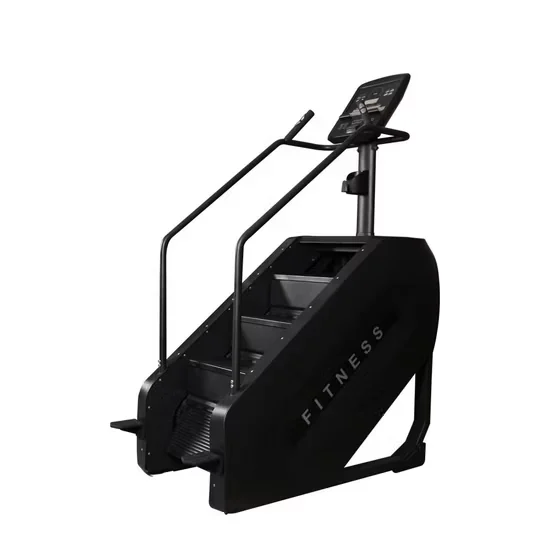
| Product Dimensions | 1450 × 820 × 2080 mm |
| Net Weight | 148 kg |
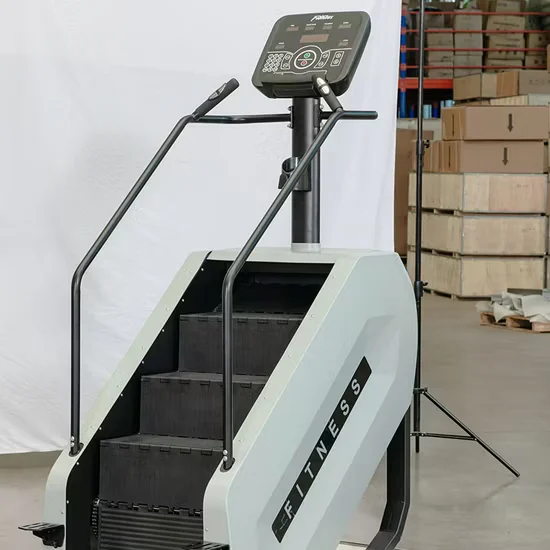
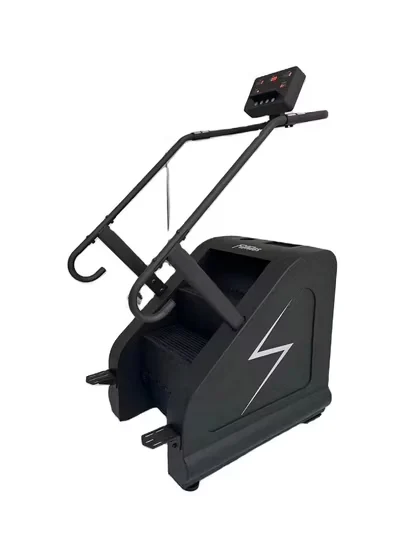
| Frame Material | Steel Pipe + PP Plastic |
| Foldable | Unfolded |
| Color | Black (customization available) |
| Certification | CE |
Application Suitability
| Deployment Scenario | Typical Use |
|---|---|
| Hotel fitness center on guest room floors | 24-hour self-service cardio with minimal noise transfer to adjacent rooms |
| Chain gym cardio zone | High-frequency member turnover with continuous motor duty cycles |
| Corporate wellness room | Compact footprint deployment alongside desks and shared workspaces |
| High-end residential home gym | Multi-user household training without acoustic disturbance |
| Sports performance training center | Interval programming with stable step velocity and heart rate tracking |
Why Noise Complaints Reach the Front Desk Before Maintenance Does
Motor-drive stair climbers isolate the acoustic signature from the structural frame, keeping vibration below the threshold that travels through floor slabs.
A stair climber placed above occupied hotel rooms produces two distinct noise paths: airborne hum from the motor and structure-borne vibration through the footplates into the concrete slab. Light-commercial motors often push airborne noise to acceptable levels while neglecting the low-frequency vibration that guests perceive as a persistent throb. The SQ1017 addresses both channels with a motor drive validated for sub-35dB operation and a frame mass of 148 kg that dampens resonant transfer [NEED_CITE: acoustic isolation requirements for cardio equipment above occupied floors]. In my experience supplying a five-star hotel stair climber batch, the magnetic resistance gap required factory-level recalibration because step intervals produced audible jumps between resistance levels. Every unit shipped since then passes individual noise curve verification before leaving the assembly line.
Positioning This Stepmill Within a Commercial Cardio Floor
The commercial stair climber motor drive SQ1017 occupies the high-intensity, lower-body conditioning segment of a cardio zone, complementing steady-state treadmills and ellipticals by recruiting the full posterior chain under controlled step velocity. Its 15–164 steps/min range supports warm-up ramping through sustained aerobic work and capped HIIT intervals. The unit’s 1450 × 820 mm footprint and 2080 mm height require overhead clearance planning but allow side-by-side placement in dedicated climbing rows. Maximum user weight of 180 kg accommodates the full membership demographic, and the fixed step area provides a stable platform for users transitioning from lower-intensity machines.
Continuous Duty Cycles and the Environments That Demand Them
A chain gym cardio zone running sixteen hours daily subjects the motor to sustained thermal loading that light-commercial components cannot survive beyond the first warranty period. The motor drive in this stair climber is rated for continuous high-frequency operation and tested to 10,000 hours, aligning with the duty cycle expectations of international gym networks and 24-hour hotel fitness centers [NEED_CITE: motor duty cycle classification for continuous commercial operation]. Deployment above occupied floors demands verified sub-35dB output, while the AC220V±10% / AC110V±10% dual-voltage specification prevents plug and transformer mismatches when the container arrives in markets with different grid standards. Adequate clearance behind and above the 2080 mm frame supports convective heat dissipation during extended use.
What the Drive System and Step Mechanics Actually Deliver
Motor-driven stair climbers use a powered sprocket and chain assembly that controls descent speed regardless of user weight, producing a consistent stepping cadence unlike gravity-dependent hydraulic or pneumatic alternatives. The motor drive maintains step velocity accuracy across the 15–164 steps/min range, which matters when members follow programmed intervals that require precise effort targets. The 560 × 235 × 220 mm step area provides full-foot contact, reducing the ankle instability that narrower treads introduce during fatigue. OSD console feedback—time, climb count, estimated calories, steps, and heart rate—provides the minimum viable data set for effort monitoring without the cost and failure points of a touchscreen assembly. Contact heart rate sensors integrated into the handrails offer baseline pulse tracking, though members performing HIIT blocks may benefit from chest-strap transmitters for improved signal stability during rapid cadence shifts. The steel pipe frame at 148 kg net weight provides the inertial mass necessary to resist harmonic resonance at higher step rates, keeping the unit planted without supplemental anchoring on level commercial flooring.
The Hidden Cost of Cutting Corners on Drive Components
Specifying a stair climber with a motor rated for intermittent duty in a facility running fourteen-plus hours daily produces predictable thermal degradation: winding insulation breakdown, bearing seizure, and ultimately a unit pulled from the floor during peak member traffic. Noise complaints from guests in rooms directly above the cardio zone compound the operational damage, forcing management to relocate equipment or absorb replacement costs mid-cycle. Heart rate sensors that drift under sustained moisture exposure render interval programming unreliable and erode member confidence in the console data. Voltage mismatches discovered only after delivery idle entire shipments until step-down transformers are sourced locally, delaying commissioning by weeks [NEED_CITE: EN 957 requirements for commercial cardio equipment electrical safety].
Why This Product Line Holds Up Under Scrutiny
The commercial stair climber motor drive SQ1017 ships with sub-35dB noise verification, a test protocol I personally review before each batch clears the loading dock. The 10,000-hour durability record on motors, frames, and sealed bearings reflects continuous high-frequency testing rather than aggregate intermittent cycles. An IoT-ready console architecture supports future facility management software integration without requiring hardware swaps. The six-series cardio range—treadmills, bikes, ellipticals, rowers, climbers, and spin bikes—lets a facility source every discipline from one engineering platform with matched duty cycles. OEM customization covers logo, color, console UI, and specification adjustments at flexible MOQ. Free 3D cardio-zone layouts account for this unit’s 1450 × 820 mm footprint, overhead clearance for the 2080 mm height, and airflow planning to prevent thermal accumulation in dense deployments.
Documentation & Test Records
- CE declaration of conformity confirming EU market eligibility for this stair climber
- EN 957 test report covering structural integrity and safety requirements
- ISO 9001 certificate validating manufacturing quality management systems
- Noise level test report confirming sub-35dB operation at rated step velocity
- 10,000-hour durability test record for motor drive, frame welds, and sealed bearings
- Motor specification sheet detailing continuous output rating and thermal protection thresholds
Installation, Commissioning & Maintenance
- Maintain minimum 500 mm rear and side clearance around the 1450 × 820 mm base for ventilation and service access
- Level the steel frame on commercial-grade flooring using adjustable feet; deploy vibration-damping pads on upper-floor installations
- Confirm AC220V or AC110V supply matches local grid; dedicate a circuit rated above the motor’s continuous draw
- Verify step velocity calibration across the full 15–164 steps/min range during first commissioning
- Inspect chain tension and sprocket wear at intervals specified in the maintenance schedule
- Wipe OSD console and handrail heart rate sensors daily to prevent sweat-induced contact corrosion
Request a Deployment Assessment
Provide your cardio zone square footage and target unit count to receive a 3D layout accounting for this stepmill’s footprint, overhead clearance, and airflow requirements. Specify anticipated daily run-time so the motor duty cycle aligns with your facility’s operating hours. Identify the deployment floor and adjacent room types to confirm acoustic suitability, and state your target market voltage standard to ensure plug and transformer alignment before shipment.
Frequently Asked Questions
Q: How does motor drive compare to manual or hydraulic stair climbers in noise and maintenance?
A: Motor-drive systems control step descent electronically, producing a consistent acoustic signature below 35dB without the hydraulic fluid degradation or seal wear that gravity-dependent units experience. Maintenance focuses on chain tension and sprocket inspection rather than fluid replacement, reducing scheduled downtime and eliminating the hydraulic leaks that stain commercial flooring.
Q: What is the difference between continuous and peak motor output, and why does it matter?
A: Peak output describes the motor’s maximum torque for brief acceleration bursts, while continuous output reflects sustained thermal capacity under constant load. Facilities operating sixteen-plus hours daily need continuous ratings validated through extended run-time testing; a motor sized only for peak output will overheat and fail prematurely under commercial duty cycles.
Q: Can the console sync with our facility management software?
A: The OSD console provides core workout telemetry—time, climb count, calories, steps, and heart rate. IoT-enabled integration with facility management platforms is available as a customization option; specify your data interface protocol during the OEM scoping phase to ensure compatibility with your member tracking ecosystem.
Q: Is this stair climber suitable for installation above occupied hotel rooms?
A: Yes. The motor drive is verified for sub-35dB operation at rated load, and the 148 kg frame mass dampens structure-borne vibration transfer through floor slabs. We recommend deploying vibration-damping pads on upper-floor installations and confirming noise levels with a site-specific test after commissioning.
Q: How do we confirm voltage and plug compatibility before shipment?
A: The unit supports AC220V±10% and AC110V±10% configurations. Provide your target market’s grid standard during the quotation phase so the correct voltage setting, plug type, and any required transformer are configured at the factory, preventing idle inventory upon container arrival.