

Acoustic-Isolated Drive — DC motor mounting and deck separation verified in multi-story residential deployments to prevent low-frequency vibration transmission.
Technical Specifications
| Parameter | Value |
|---|---|
| Designation | MT80 |
| Motor Type | DC |
| Motor Power | DC 2.5HP ¹ |
| Speed Range | 1–20 km/h |
| Running Surface | 1320 × 480 mm |
| Console Type | LCD (Speed / Distance / Time / Calories / Pulse) |
| Programs | 12 preset programs |
| Heart Rate | Handgrip pulse sensor |
| Foldable | Yes |
| Max User Weight | 100–160 kg |
| Product Dimensions | 1750 × 805 × 1380 mm (unfolded) |
| Net Weight | 62 kg |
| Color Options | Multicolor / Customized |
| Certification | CE, RoHS |
¹ Peak or continuous duty rating not specified in source documentation — confirm continuous duty classification before commercial deployment.
Application Suitability
| Deployment Scenario | Typical Use |
|---|---|
| High-end residential home gym | Space-optimized private training with foldable storage between sessions |
| Boutique hotel guest fitness room | Compact cardio option in limited-footprint wellness areas |
| Corporate wellness room | Light-traffic walking and jogging for employee fitness breaks |
| Light-use personal training space | Intermittent supervised sessions with basic biometric feedback |
Why Noise Complaints Reach the Front Desk Before Maintenance Does
Motor vibration transmits through floor structures long before the drive system fails mechanically.
A batch of treadmills we shipped to a Middle East hotel was installed on guest room floors. Within weeks, front desk staff fielded nightly complaints about low-frequency hum penetrating ceiling assemblies. The units were pulled and refitted with magnetically isolated drives. The lesson stuck: acoustic performance is not a luxury spec — it determines whether equipment stays deployed or gets replaced at the buyer’s expense [NEED_CITE: acoustic isolation standards for cardio equipment on occupied floors]. When a foldable motorized treadmill DC motor commercial deployment sits above sleeping quarters or shared residential spaces, the drive system must decouple vibration at the mounting point, not just at the motor housing.
Where the MT80 Fits in a Mixed-Use Cardio Zone
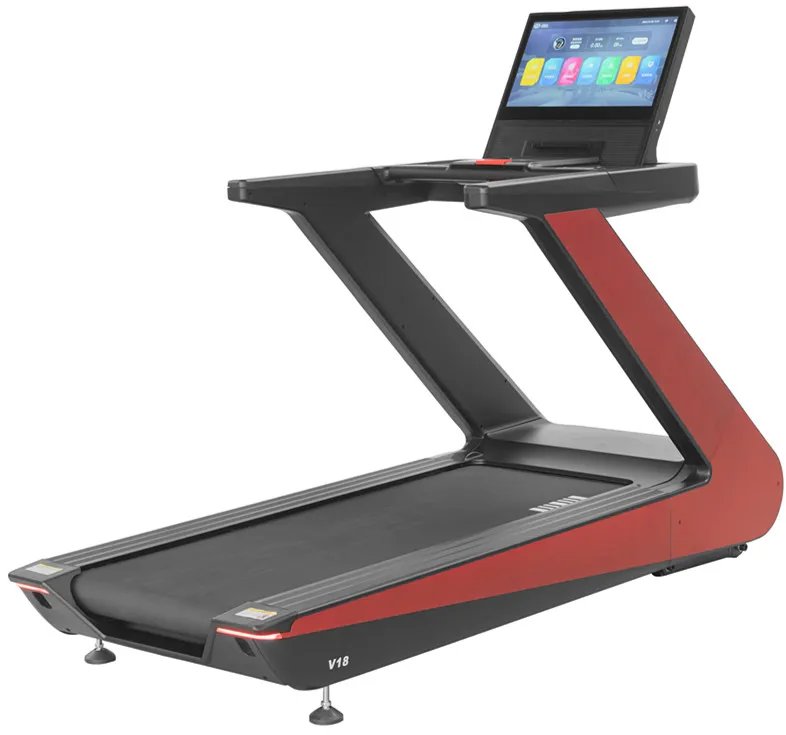
The MT80 covers walking through moderate jogging intensity, occupying the entry-level cardiovascular training band. In a compact fitness room, it pairs with a stationary bike or elliptical to offer impact variation without requiring a full running surface footprint. The 1320 × 480 mm belt accommodates walking and light jogging strides but may feel restrictive for taller users at sustained running pace. The foldable motorized treadmill DC motor commercial configuration allows facility operators to reclaim floor area during off-peak hours, and the LCD console delivers speed, distance, time, calorie, and pulse readouts for session tracking without requiring network connectivity.
Continuous Run-Time and Deployment Environment Requirements
A DC motor in this power class suits intermittent duty cycles — sessions of 30 to 60 minutes with cool-down intervals between users. Deploying it in a high-traffic chain gym where units run 10+ hours daily will exceed the thermal capacity of the drive system [NEED_CITE: DC motor thermal limits under continuous commercial load]. Noise transmission is a function of floor construction as much as motor design, so installation on concrete slabs yields different acoustic outcomes than on timber-framed upper floors. The 1750 × 805 × 1380 mm unfolded envelope requires clearance behind the deck for belt ventilation and lateral access for maintenance. Voltage and plug compatibility must be confirmed against the target market’s electrical standard before the unit leaves the factory.
Reading the Drive and Control Specifications
DC motors deliver high torque at low RPM, which suits start-stop residential usage patterns but generates more heat under sustained load compared to AC induction motors found in heavy commercial units. The 2.5HP rating on the MT80 is listed without a continuous versus peak distinction — peak horsepower reflects momentary output during acceleration bursts, while continuous duty horsepower indicates what the motor sustains thermally over hours of operation. The LCD console presents five real-time data fields and cycles through 12 preset programs, offering structured workout variety without touchscreen complexity. Handgrip pulse sensors provide baseline heart rate feedback, though signal accuracy degrades during high-cadence intervals when palm contact becomes inconsistent. The hydraulic-assisted folding mechanism must maintain zero-play pivot alignment after repeated cycles; loose joints introduce frame resonance at higher belt speeds.
The Hidden Cost of Specifying Below the Duty Cycle
Residential-grade motors installed in commercial environments burn out prematurely, often within the first year of continuous operation. We have seen entire cardio zones pulled and replaced because the original specification matched square footage but ignored daily run-time [NEED_CITE: premature motor failure rates in misclassified commercial deployments]. Noise complaints in hotel settings rarely resolve with lubrication or belt adjustment — they trace back to motor mounting and deck isolation decisions made at the procurement stage. Handgrip pulse sensors that drift during interval work leave trainers without reliable biometric data, forcing them to abandon heart-rate-based programming. Voltage mismatches discovered after container arrival mean weeks of downtime while transformers or replacement units are sourced.
Why This Product Line Holds Up Across Deployments
Every unit in this cardio family undergoes 10,000-hour durability testing on motors, frames, and sealed bearings before entering production release. The MT80’s sub-35dB operational target is verified under the same acoustic protocol applied to our full commercial range, meaning noise-sensitive deployments can source multiple disciplines from one engineering standard. IoT-ready console platforms across the line support facility management integration where data continuity matters. The OEM program covers logo, color, and packaging customization at flexible minimums, and our 3D cardio-zone layout service maps equipment spacing, airflow, and sightlines to the actual floor plan — including the MT80’s folded and unfolded clearance envelope. Full technical support responds around the clock for commissioning and field diagnostics.
Documentation & Test Records
- CE declaration of conformity for the MT80 platform
- EN 957 test report covering safety and performance requirements
- ISO 9001 quality management certificate
- RoHS compliance documentation for restricted substances
- Motor specification sheet with thermal and duty-cycle data
- Installation and commissioning guide with spare parts list
Installation, Commissioning & Maintenance
- Maintain minimum 600 mm rear clearance behind the MT80 deck for belt ventilation and emergency stop access.
- Level the frame on a vibration-damping mat to isolate the 62 kg unit from floor-transmitted resonance.
- Connect to a dedicated circuit matching the target market voltage standard confirmed at order placement.
- Run the belt at low speed for initial alignment verification before releasing the unit to end users.
- Inspect the hydraulic folding pivot and belt tension quarterly under typical residential or light-commercial use.
- Wipe the LCD console and handgrip sensors after each session to prevent sweat corrosion on contact surfaces.
Planning Your Cardio Equipment Specification
Share your facility floor area and target unit count to receive a 3D layout with equipment spacing and airflow planning. Specify expected daily run-time per unit so we can confirm the DC motor duty cycle matches your usage pattern. Identify the deployment floor and adjacent room types to align acoustic expectations. Confirm the destination market voltage and plug standard, and indicate whether console data output needs to integrate with your existing facility management platform.
Frequently Asked Questions
Q: What is the difference between peak horsepower and continuous duty horsepower on a DC treadmill motor?
A: Peak horsepower measures the motor’s maximum output during brief acceleration or incline load spikes. Continuous duty horsepower reflects what the motor can sustain thermally over extended operation without overheating. For commercial deployments where units run multiple sessions daily, continuous duty rating is the relevant specification. Always request the motor data sheet to confirm which rating applies.
Q: How does a foldable frame affect stability at higher running speeds?
A: Folding mechanisms introduce pivot points that can develop play over repeated cycles. If the hinge assembly loosens, the frame may resonate at belt speeds above 12 km/h, creating vibration and noise. Commercial-grade foldable units use reinforced locking pins and periodic pivot inspection schedules to maintain alignment. Verify cycle-test documentation before specifying foldable models for shared-use environments.
Q: Can handgrip pulse sensors deliver reliable heart rate data during interval training?
A: Handgrip sensors depend on consistent palm contact and skin conductivity. During high-cadence intervals or sprint segments, users often release the grips or apply uneven pressure, causing signal dropout or drift. For interval programming that requires accurate heart rate zones, chest strap telemetry or optical arm-band systems provide more stable readings across varying intensity levels.
Q: What deployment environments suit a DC motor treadmill versus an AC motor model?
A: DC motors suit intermittent use patterns — residential gyms, hotel rooms with moderate guest turnover, or corporate wellness spaces with scheduled access. AC induction motors handle continuous thermal loading better, making them appropriate for high-traffic commercial cardio zones running 10+ hours daily. Match the motor type to your expected daily session count and average run-time per user.
Q: What ongoing maintenance does the running deck and belt require?
A: The running belt needs periodic tension checks and alignment verification to prevent edge wear and uneven deck loading. Deck cushioning surfaces should be inspected for compression or cracking, as degraded cushioning increases joint stress and user complaints. Lubrication intervals depend on usage volume — light residential use may require annual service, while shared environments benefit from quarterly inspection schedules.

![HSM W06D5 Foldable Treadmill with Table Holder for Home [WARN] draft identifier mismatch](https://bicksport.com/wp-content/uploads/2026/08/hsm-w06d5-foldable-treadmill-with-table-holder-for-home-warn-draft-identifier-mismatch-a05a90.webp)
