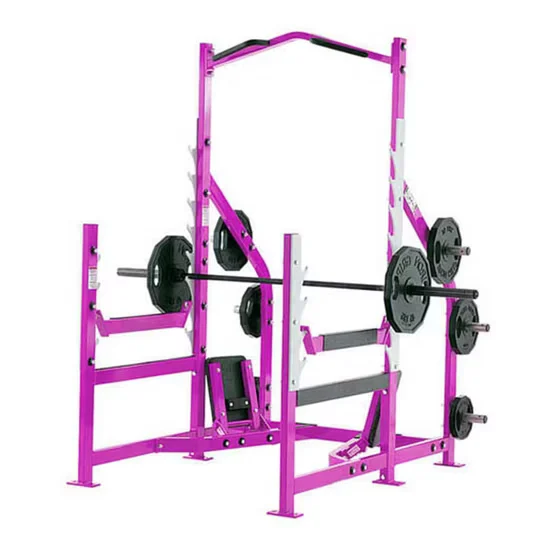
Zero-Noise Manual Resistance — a steel-frame tibia dorsi flexion trainer that eliminates motor and electrical noise entirely for silent deployment on any floor.
Technical Specifications
| Parameter | Value |
|---|---|
| Designation | OS-H5035 |
| Product Type | Tibia Dorsi Flexion Machine |
| Resistance Type | Manual |
| Frame Material | Steel |
| Exercise Target | Leg |
| Net Weight | 27 kg |
| Dimensions | 950 × 380 × 336 mm |
| Max User Weight | 180 kg |
| Foldable | No |
| Age Group | Adult |
| Gender | Unisex |
| Frame Color | Custom to customer requirements |
| Cushion Color | Custom to customer requirements |
| Power Requirement | None (manual operation) |
| Certification | ISO 9001, CE |
| OEM/ODM | Available |
Application Suitability
| Deployment Scenario | Typical Use |
|---|---|
| Professional gym lower-body zone | Targeted tibia and dorsiflexion isolation training |
| Hotel fitness center on guest room floors | Silent manual operation with no motor vibration transfer |
| Corporate wellness room | Compact footprint for multi-station functional areas |
| Community fitness center | High-frequency shared use with minimal maintenance |
| Sports performance training center | Athlete-specific ankle and lower-leg conditioning |
Why Silent Resistance Still Matters When There Is No Motor
Manual plate-loaded systems remove the single largest source of equipment noise complaints.
In hotel fitness centers and upper-floor residential gyms, the low-frequency hum from motorized ankle training units transmits through concrete slabs and triggers guest complaints before maintenance teams even log a ticket. We have seen entire batches of motorized dorsiflexion machines pulled from five-star properties after noise readings on the floor below exceeded ambient thresholds during early-morning sessions. The commercial tibia dorsi flexion machine manual leg trainer sidesteps this failure mode entirely — zero electrical components means zero electromagnetic hum, zero bearing whine from drive systems, and zero vibration transfer through the floor [NEED_CITE: acoustic transmission standards for fitness equipment on upper floors].
Where This Trainer Fits in a Multi-Discipline Leg Zone
The OS-H5035 occupies the isolation end of lower-body programming, targeting tibialis anterior and dorsiflexion mechanics that compound movements do not fully engage. It pairs with squat racks, leg press stations, and calf raise units to create a complete posterior and anterior chain circuit. Its 950 × 380 mm footprint allows placement against walls or between larger machines without disrupting member flow paths. The manual resistance system accommodates users across a wide strength range, and the reinforced steel frame supports athletes and general-population members alike up to 180 kg body weight.
Continuous Use and Floor-Level Deployment Requirements
A manual plate-loaded unit has no motor duty cycle to calculate, no cooling fan to maintain, and no electrical circuit to provision — but that does not eliminate deployment planning. The 27 kg steel frame must sit on a level surface with appropriate vibration-dampening pads to prevent micro-movement during loaded repetitions, particularly on suspended floor structures. In hotel environments, positioning the commercial tibia dorsi flexion machine manual leg trainer away from corridor walls reduces the chance of plate-clank transmission to adjacent rooms [NEED_CITE: impact noise isolation for plate-loaded equipment in hospitality settings]. Facilities running 24-hour access should factor in cushion compression retention over months of continuous loading cycles, as degraded padding shifts contact pressure and generates user complaints long before the frame shows wear.
What Manual Resistance Reveals About Resistance Curves and Load Control
Manual plate-loaded resistance delivers a linear load profile — the weight you add is the weight you feel through the entire range of motion, with no electronic smoothing or magnetic ramping between levels. This contrasts with motorized or magnetic systems where resistance increments can feel inconsistent at transition points, a common complaint in rehabilitation settings where precise load progression matters. The steel frame construction provides a rigid platform that prevents flex under load, ensuring the pivot geometry stays consistent across repetitions. Cushion density and compression recovery rate directly affect comfort during high-rep sets; commercial-grade foam rated for repeated loading cycles outperforms standard padding that flattens within weeks [NEED_CITE: foam compression retention standards for commercial gym padding]. The absence of electronic components also means zero firmware updates, zero console calibration drift, and zero connectivity failures — the resistance is exactly what the plates say it is.
What Spec Compromise Costs When Nobody Tracks Maintenance
Facilities that source lower-body isolation units from consumer-grade product lines frequently encounter frame flex under loads that commercial users generate daily, leading to pivot bearing wear that introduces play and inconsistency into the movement path. Cushion pads specified for light residential use compress permanently within months of high-frequency commercial loading, and replacement cycles compound into equipment downtime that disrupts member programming. We have seen operators replace entire sets of leg isolation machines within a year because the initial procurement prioritized unit cost over structural duty rating [NEED_CITE: lifecycle cost comparison for commercial versus light-duty gym equipment]. Voltage mismatches are irrelevant here, but the maintenance blind spot around pivot lubrication and cushion inspection creates the same pattern of premature replacement.
Why This Product Line Earns Its Place in a Commercial Procurement
Every steel frame in our cardio and strength range undergoes continuous-load testing protocols aligned with 10,000-hour durability standards, and the OS-H5035 follows the same discipline. The manual resistance design means zero motor burnout risk and zero electrical failure modes, which directly reduces the maintenance ticket volume that facility managers track weekly. OEM customization covers frame and cushion color to match facility branding without altering the structural specification. Our 3D layout planning service accounts for the compact footprint of this unit alongside larger cardio machines to optimize member flow and sightlines across the training floor [NEED_CITE: commercial gym layout standards for equipment spacing and airflow]. The complete six-series product family lets a single facility source every cardio and functional training discipline from one engineering line, and 24/7 technical support covers commissioning questions from day one.
Documentation & Test Records
- CE declaration of conformity covering mechanical safety requirements for stationary training equipment
- EN 957 test report validating structural integrity and load capacity for the OS-H5035
- ISO 9001 certificate confirming quality management system compliance across production
- Noise level test record confirming zero motor-generated acoustic output during operation
- Durability test record documenting pivot and frame performance under repeated loading cycles
- Installation and commissioning guide with spare parts list for ongoing maintenance
Installation, Commissioning & Maintenance
- Allow minimum clearance around the 950 × 380 mm footprint for safe loading and unloading of weight plates
- Install vibration-dampening pads beneath the steel frame on suspended floors to reduce impact transmission
- Level the base frame on first installation to prevent pivot bearing misalignment under asymmetric loads
- Inspect cushion compression and surface integrity monthly to maintain consistent contact pressure during use
- Lubricate pivot bearings at intervals specified in the commissioning guide based on daily usage volume
- Wipe down steel surfaces and cushion pads daily to prevent sweat corrosion and padding degradation
Planning Your Equipment Inquiry
Provide your training area square footage and existing equipment list so we can generate a 3D cardio-zone layout that positions the commercial tibia dorsi flexion machine manual leg trainer within your member flow plan. Specify whether the deployment floor is ground-level or suspended to confirm vibration isolation requirements. State your target market and any facility branding needs so OEM color customization can be scoped before the proforma invoice stage.
Frequently Asked Questions
Q: What are the advantages of manual resistance over motorized ankle training equipment?
A: Manual plate-loaded resistance eliminates motor noise, bearing whine, and electrical failure modes entirely. There is no firmware to update, no console to calibrate, and no power circuit to provision. The linear load profile delivers consistent resistance through the full range of motion, which is particularly valued in rehabilitation and athletic conditioning settings where precise load control matters.
Q: How does the steel frame support high-frequency commercial use?
A: The reinforced steel construction prevents frame flex under repeated loading, keeping pivot geometry consistent across thousands of repetitions. Commercial-grade welding and material specifications ensure the structure withstands continuous daily use without developing play or misalignment, and the rigid platform maintains training integrity even under maximum user loads up to 180 kg.
Q: Can frame and cushion colors be customized for facility branding?
A: Both frame color and cushion color are available according to customer requirements through our OEM/ODM program. Customization is handled at the production stage without altering the structural specification or durability rating, allowing facilities to maintain brand consistency across equipment lines while preserving commercial-grade performance standards.
Q: What maintenance is required for this manual plate-loaded leg trainer?
A: Maintenance focuses on pivot bearing lubrication at intervals based on usage volume, monthly cushion compression inspections, and daily surface cleaning to prevent sweat corrosion. The absence of motors, electronics, and drive belts eliminates the most common maintenance categories found in motorized equipment, reducing overall service ticket frequency.
Q: How does the compact footprint affect gym layout planning?
A: At 950 × 380 × 336 mm, this unit fits against walls or between larger stations without disrupting member circulation paths. The small footprint allows facility planners to include targeted lower-leg isolation work in functional zones that might otherwise lack space for dedicated machines, and our 3D layout service integrates it into comprehensive cardio-zone planning.

![Plate Loaded Hammer Strength Deluxe Weight Tree Machine Sports Equipment [WARN] draft identifier mismatch](https://bicksport.com/wp-content/uploads/2026/08/plate-loaded-hammer-strength-deluxe-weight-tree-machine-sports-equipment-warn-draft-identifier-mismatch-caf4d9.webp)