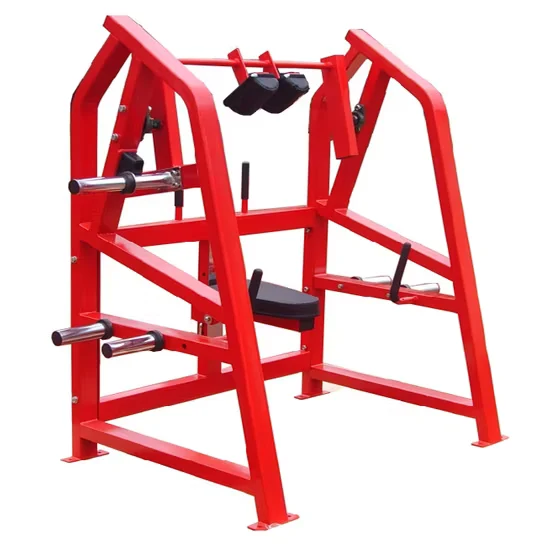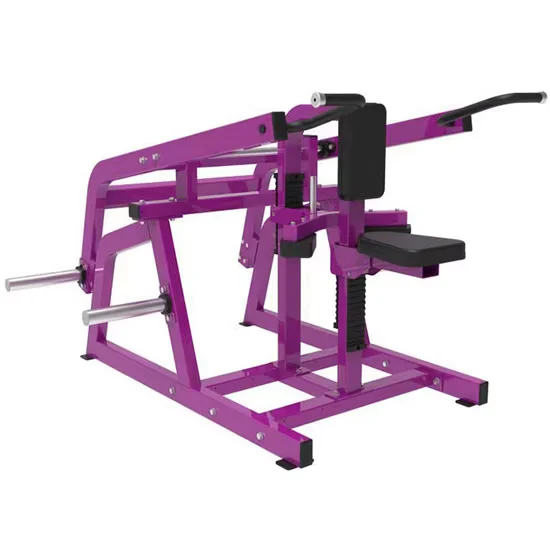
Reinforced Bearing Architecture — Sealed pivot joints maintain smooth articulation through 10,000+ hours of high-frequency loading cycles.
Technical Specifications
| Parameter | Value |
|---|---|
| Designation | 5014 |
| Product Type | Seated Dip Machine (Plate Loaded Strength Equipment) |
| Material | Steel |
| Net Weight | 163kg |
| Product Dimensions | 1833x1492x1110mm |
| Max User Weight | 180kg |
| Exercise Part | Arm |
| Resistance Type | Plate Loaded |
| Certification | ISO 9001, CE |
Application Suitability
| Deployment Scenario | Typical Use |
|---|---|
| Hotel fitness center strength room | Low-noise upper body training for guests without cable rattle or weight stack clatter |
| Chain gym free-weight and plate loaded zone | High-frequency triceps and chest isolation between compound lifts |
| Corporate wellness center | Durable, low-maintenance arm training accessible to all employee fitness levels |
| High-end residential home gym | Compact plate loaded option eliminating cable and pulley maintenance |
| Sports performance training center | Biomechanically precise triceps development for athlete programming |
Why Cable Stretch and Pulley Wear Drive Facility Maintenance Costs
Plate loaded resistance eliminates the entire cable-and-stack failure chain.
In commercial facilities running sixteen-hour days, selectorized dip stations accumulate cable stretch, pulley groove wear, and weight stack guide rod friction. Maintenance teams replace cables on a cycle measured in months, not years. Selectorized machines sitting near guest rooms or shared walls transmit the metallic clatter of weight stacks dropping between sets — a noise signature that reaches front desks before maintenance tickets do. Plate loaded designs remove every one of these failure points. The commercial plate loaded seated dip machine transfers force directly through a steel lever arm and sealed pivot bearings, producing no cable tension to degrade and no weight stack to rattle. [NEED_CITE: maintenance intervals for cable-driven vs plate loaded commercial strength equipment]
Triceps Isolation in the Commercial Strength Zone
This machine targets the triceps through a converging pressing arc that mirrors the biomechanics of a bench dip while removing the shoulder stability demand. In a facility layout, it sits naturally alongside plate loaded chest press and shoulder press stations, completing the upper body push triad. The seated dip occupies a footprint that fits standard strength zone bay spacing and serves users across the full commercial demographic up to 180kg. Resistance scales incrementally with standard Olympic plates, so the equipment accommodates both rehabilitation loads and advanced athlete programming without selectorized weight limits. The commercial plate loaded seated dip machine delivers a fixed movement path that reduces coaching overhead in high-traffic gym floors.
Duty Cycle and Deployment Environment Considerations
Facilities running from early morning to late night subject every pivot bearing and frame weld to thousands of articulation cycles daily. Sealed bearings at the pivot point prevent sweat and chalk ingress that would accelerate wear in humid gym environments. The 163kg steel frame provides mass damping that keeps the unit stable during explosive concentric phases without requiring anchor bolting on most concrete subfloors. Floor leveling within tolerance prevents uneven load distribution across the frame base. [NEED_CITE: EN 957 requirements for static and dynamic load testing of plate loaded strength equipment] Facilities deploying this unit on upper floors benefit from the absence of weight stack impact noise — the only acoustic signature is the controlled contact of plates on the loading horns.
Plate Loaded Lever Mechanics and Frame Engineering
The plate loaded architecture transfers resistance through a lever arm ratio calibrated so the load at the grip matches the intended triceps stimulus across the full range of motion. Unlike cable systems where the resistance curve depends on pulley geometry and cam profiles, the lever arm produces a consistent mechanical advantage determined by pivot placement relative to the grip and plate horn. Sealed bearings at the pivot eliminate the play that develops in bushing-based joints after repeated loading cycles, maintaining the alignment tolerance that keeps the movement path true. The reinforced steel frame resists lateral deflection during unilateral loading or off-center force application, a structural requirement when users load unevenly or shift body position mid-set. The commercial plate loaded seated dip machine maintains its resistance profile through the 10,000-hour duty cycle verified in continuous commercial testing. [NEED_CITE: bearing seal specifications for high-frequency commercial strength equipment]
The Hidden Cost of Selectorized Substitution
Facilities that select cable-based dip machines for perceived user convenience absorb compounding costs. Cable replacement intervals shorten as usage density rises, pulling technician hours from preventive maintenance on other equipment. Weight stack guide rods develop friction that creates uneven resistance, generating member complaints about machines that "feel different" week to week. Pulley wheels wear asymmetrically, introducing lateral cable travel that accelerates sheath degradation. When these machines sit on floors above occupied spaces, the impact noise of weight plates returning to the stack transmits through the structure. [NEED_CITE: acoustic transmission of selectorized weight stack impact through commercial floor assemblies]
Why This Product Line Delivers for Facility Operators
Every frame weld on this commercial plate loaded seated dip machine undergoes load testing documentation before leaving the production floor. The sealed bearing specification matches the 10,000-hour continuous operation standard applied across the full cardio and strength range. Facility operators sourcing multiple disciplines benefit from a single product family covering all six cardio series alongside plate loaded strength, simplifying procurement and spare parts inventory. OEM customization extends to frame color and logo application with flexible minimum order quantities. The engineering team provides 3D strength zone layouts that account for this unit’s 1833x1492mm footprint, plate loading clearance, and user circulation paths. Technical support responds around the clock with parts identification and commissioning guidance.
Documentation & Test Records
- CE declaration of conformity covering plate loaded strength equipment safety requirements
- EN 957 test report validating static and dynamic structural load performance
- ISO 9001 certificate for quality management in manufacturing processes
- Frame weld inspection and load testing records per unit batch
- Sealed bearing specification sheet with seal type and load rating data
- Installation and commissioning guide with spare parts list
Installation, Commissioning & Maintenance
- Allow clearance behind the 1833mm frame length for full plate loading and user entry
- Level the base frame on concrete subfloors using adjustable feet before loading
- Verify plate horn diameter matches standard Olympic plate bore before commissioning
- Inspect sealed pivot bearings for smooth articulation through full range at first use
- Wipe down steel frame and plate horns regularly to prevent chalk and sweat buildup
- Check frame bolt torque at scheduled maintenance intervals per the commissioning guide
Planning Your Strength Equipment Specification
Provide your strength zone square footage and equipment list to receive a 3D layout incorporating plate loading clearances and user circulation. Specify daily operating hours so the team can confirm bearing and frame suitability for your usage density. Identify the deployment floor and adjacent occupied spaces to validate the acoustic profile. Confirm your target market voltage standards if any electrically integrated accessories are planned. Indicate whether facility management system data integration is required for usage tracking.
Frequently Asked Questions
Q: How does plate loaded design reduce maintenance compared to selectorized dip machines?
A: Plate loaded systems eliminate cables, pulleys, and weight stack guide rods entirely. The resistance comes from Olympic plates on fixed horns, leaving only the pivot bearing as a wear component. Sealed bearings in this unit are specified for continuous commercial operation, reducing scheduled maintenance to periodic bolt torque checks and surface cleaning rather than cable replacements and pulley alignments that selectorized machines demand on a monthly cycle.
Q: What frame construction standards apply to commercial plate loaded equipment?
A: Commercial plate loaded frames must withstand repeated loading well beyond maximum rated user weight plus plate load. This unit uses a reinforced steel frame tested to the EN 957 standard for static and dynamic structural integrity. The 163kg net weight provides mass stability during heavy loading, and frame weld inspection documentation accompanies each production batch to verify joint integrity under continuous high-frequency facility use.
Q: How does pivot point alignment affect joint stress during heavy triceps work?
A: The pivot point on this commercial plate loaded seated dip machine is biomechanically aligned to match the natural elbow flexion axis. When the mechanical pivot coincides with the anatomical joint center, the resistance curve remains consistent through the full range of motion. Misalignment creates shear forces at the elbow that increase under heavy loading, making precise pivot tolerance a critical specification for athlete training environments and high-use commercial facilities.
Q: What bearing seal types are used and why do they matter in gym environments?
A: This unit uses sealed bearings at all pivot joints to prevent chalk dust, sweat, and humidity from penetrating the bearing race. Unsealed bearings in commercial gym environments accumulate particulate contamination that accelerates wear and introduces play into the movement path. Sealed bearings maintain smooth articulation and consistent resistance feel across the 10,000-hour duty cycle, eliminating the bearing replacement intervals that unsealed alternatives require.
Q: Are the plate horns compatible with standard Olympic plates?
A: The plate horns on this machine are machined to accept standard Olympic bore plates, the universal format used across commercial gym plate loaded equipment. The horn diameter and length accommodate multiple plates per side for progressive overload. Operators should verify compatibility with any specialty plates or bumper plates in their inventory during the procurement specification phase.

![Commercial Hammer Strength Gym Equipment Jammer Machine for Professional Gyms OEM Available [WARN] draft identifier mismatch](https://bicksport.com/wp-content/uploads/2026/08/commercial-hammer-strength-gym-equipment-jammer-machine-for-professional-gyms-oem-available-warn-draft-identifier-mismatch-048d4f.webp)
![H5008 Commercial ISO-Lateral Super Incline Press Machine [WARN] draft identifier mismatch](https://bicksport.com/wp-content/uploads/2026/08/h5008-commercial-iso-lateral-super-incline-press-machine-warn-draft-identifier-mismatch-f550aa.webp)