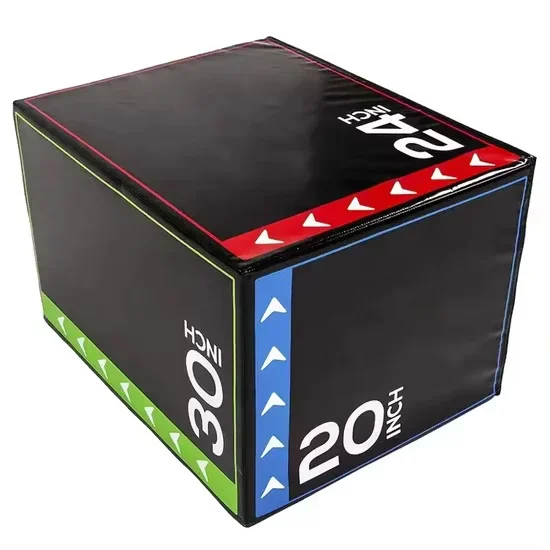
Impact Absorption Tested — High-density foam layers dissipate landing force to keep sub-floor vibration out of occupied rooms below.
Technical Specifications
| Parameter | Value |
|---|---|
| Product Type | Plyometric Jump Box |
| Product Dimensions | 506075cm |
| Color | Black |
| Logo | Customized Logo Available |
| MOQ | 50PCS |
| Production Capacity | 10000/Years |
Application Suitability
| Deployment Scenario | Typical Use |
|---|---|
| Chain gym functional training zone | Group plyometric circuits and box jump WODs |
| CrossFit box competition floor | High-repetition box jumps and step-ups during timed workouts |
| Sports performance training center | Athlete vertical power development and reactive strength drills |
| Corporate wellness functional area | Low-volume plyometric conditioning for employee fitness programs |
| Community fitness center group class room | Instructor-led jump training with mixed fitness levels |
Why Plyometric Impact Noise Travels Faster Than Complaints Reach the Front Desk
Landing force on rigid wooden boxes transmits structure-borne vibration through floor slabs into occupied spaces below.
When we first supplied plyometric equipment to a multi-story fitness facility, the wooden jump boxes generated sharp impact noise every time an athlete landed. Within weeks, tenants on the floor below filed complaints. The problem was never effort or intent — wooden and steel boxes simply conduct impact energy downward with minimal absorption. A commercial soft jump box for plyometric training addresses this by replacing the rigid landing surface with layered high-density foam that dissipates force before it reaches the sub-floor [NEED_CITE: impact attenuation standards for commercial fitness flooring in multi-story buildings].
How This Plyometric Jump Box Fits Into a Functional Training Floor
This unit covers the explosive power and reactive strength training category within a functional zone. It complements Olympic lifting platforms, sled tracks, and rig systems by providing a dedicated plyometric surface. In a commercial gym cardio zone layout, soft jump boxes occupy the high-intensity functional area where athletes cycle through station-based circuits. The 506075cm dimensions allow three-sided approach, and the foam-wrapped construction tolerates misjudged landings that would cause shin injuries on wooden edges. Multiple height options support progressive overload from beginner step-ups to advanced depth jumps.
Deploying Plyometric Equipment on Upper Floors and Shared Spaces
Continuous jump training sessions in commercial facilities can run several hours daily across group classes and open gym time. The foam density must absorb repeated impacts without compressing permanently over the duty cycle. On upper-floor deployments, the soft surface reduces structure-borne noise transmission so that office spaces or guest rooms below remain undisturbed. Adequate ceiling clearance and surrounding safety perimeter must accommodate the full jump arc. Facilities should verify sub-floor load ratings for grouped box placements where multiple athletes land simultaneously [NEED_CITE: structural load requirements for group plyometric training zones on elevated floors].
What Foam Density and Inner Frame Rigidity Actually Control
The landing surface density determines how quickly impact energy dissipates. High-density closed-cell foam compresses under load and returns to shape, managing repeated impacts throughout the training day without bottoming out. The inner steel frame provides structural rigidity so the box maintains its geometry under dynamic loading — a soft exterior on a weak frame would wobble and shift during lateral movements. The non-slip surface texture must maintain grip when athletes are sweating, preventing foot slip on landing. The three-height design (50, 60, 75cm) allows coaches to prescribe progressive loading without purchasing multiple separate units.
The Hidden Cost of Specifying Rigid Boxes in Multi-Story Facilities
Wooden and steel plyometric boxes produce sharp impact noise that travels through concrete floor slabs. Facilities on upper floors face noise complaints from tenants below, sometimes requiring complete equipment replacement mid-lease. Rigid box edges also cause shin abrasions when athletes miss their landing, leading to member injury reports and liability exposure. Foam-wrapped designs eliminate hard contact points and dampen impact noise at the source. When procurement decisions prioritize unit cost over acoustic performance, the downstream expenses from complaints, replacements, and member attrition quickly exceed the initial savings [NEED_CITE: total cost of ownership comparison between rigid and soft plyometric equipment in commercial facilities].
Why Bicksport Built This Product Line Around Acoustic and Durability Performance
Every piece in our cardio and functional range undergoes the same durability philosophy. This soft jump box inner frame is tested for continuous high-frequency loading consistent with our 10,000-hour component standard. The foam density is validated through impact cycle testing to confirm it will not compress permanently under daily commercial use. When planning a functional training zone, we provide 3D layout and airflow planning that accounts for the safety perimeter each box requires, sightline spacing between plyometric stations, and ceiling clearance for full jump arcs. OEM customization extends to logo placement and color matching so the boxes align with facility branding. Our 24/7 technical support covers foam replacement and frame inspection guidance throughout the product lifecycle.
Documentation & Test Records
- CE declaration of conformity for functional training equipment
- Foam density and impact absorption test report
- Inner frame structural load and deformation test record
- Surface anti-slip coefficient certification
- Product specification sheet with dimensional drawings
- Installation and safety perimeter guide
Installation, Commissioning & Maintenance
- Maintain minimum 1.5m safety perimeter on all sides for approach and landing clearance
- Place on level rubber matting to prevent base sliding during lateral jumps
- Inspect foam compression and surface integrity monthly under commercial use frequency
- Clean sweat and moisture from surface after each group session to preserve grip texture
- Verify frame bolts and structural joints quarterly for loosening under impact loading
Planning Your Plyometric Zone Equipment Selection
Provide your functional training area dimensions and expected daily user volume so we can recommend box quantities and height distribution. Specify deployment floor level and adjacent room types to confirm acoustic requirements. Indicate whether equipment branding or color customization is needed to match your facility identity.
Frequently Asked Questions
Q: How does a soft jump box compare to a wooden box for noise and safety in commercial gyms?
A: Wooden boxes transmit sharp impact noise through floor slabs and expose athletes to hard edges on missed landings. A soft jump box wraps the frame in high-density foam that dampens impact vibration and eliminates rigid contact points. This makes it suitable for upper-floor commercial facilities where noise complaints and shin injuries are recurring concerns.
Q: How does foam density affect landing impact absorption over time?
A: Higher-density closed-cell foam compresses under load and recovers its shape, distributing landing force across a broader surface area. Low-density foam compresses permanently after repeated impacts, losing its absorption capacity. Commercial-grade density is specified to withstand daily high-frequency use without measurable degradation in cushioning performance.
Q: What ensures durability under high-frequency commercial plyometric training?
A: The inner steel frame maintains structural geometry under repeated dynamic loading, preventing the wobble that develops in weaker frames. Foam layers are cycle-tested for compression recovery. Surface material resists abrasion from repeated foot contact. Together these elements sustain performance through the daily volume expected in chain gyms and CrossFit boxes.
Q: How do multiple height options support progressive training in group settings?
A: The three-sided design at 50, 60, and 75cm allows athletes of different capability levels to train on the same unit simultaneously. Coaches can prescribe height progression as power output improves without requiring additional equipment purchases. This reduces floor space requirements while supporting varied programming across group classes.
Q: How does the surface texture perform when athletes are sweating during intense sessions?
A: The non-slip surface texture maintains grip coefficient when moisture is present, reducing foot slip risk on landing. This is critical during high-repetition WODs where sweat accumulation is significant. Regular post-session cleaning preserves the texture profile and prevents gradual loss of traction over the equipment lifecycle.