
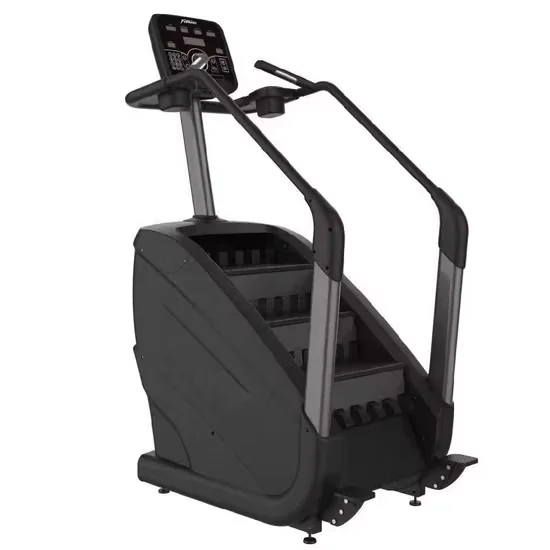
![Commercial Stair Climber Motor Drive for Customized Gym Training [WARN] draft identifier mismatch](https://bicksport.com/wp-content/uploads/2026/08/commercial-stair-climber-motor-drive-for-customized-gym-training-warn-draft-identifier-mismatch-e63c57.webp)
Motor Drive Durability — Engineered for continuous public facility runtimes with motor drive systems tested beyond 10,000 hours of high-frequency operation.
Technical Specifications
| Parameter | Value |
|---|---|
| Designation | SQ1017 |
| Product Type | Stair Climber |
| Drive Type | Motor Drive |
| Running Velocity | 15 steps/Minute — 164 steps/Minute |
| Step Area | 560 x 235 x 220 mm |
| Console Type | LED/LCD display with OSD |
| Heart Rate | Handgrip sensors |
| OSD Metrics | Time, Climb, Calories, Steps, Heart Rate |
| Mains Input | AC220V±10% / AC110V±10% |
| Product Dimensions | 1450 x 820 x 2080 mm |
| Net Weight | 148 kg |
| Max User Weight | 180 kg |
| Foldable | Unfolded |
| Material | Steel Pipe + PP Plastic |
| Certification | CE |
Application Suitability
| Deployment Scenario | Typical Use |
|---|---|
| Hotel fitness center on guest room floors | 24/7 access with sub-35dB operation minimizing noise transfer to adjacent rooms |
| Chain gym cardio zone | High-frequency daily use by members requiring continuous motor duty cycle |
| Corporate wellness room | Moderate daily traffic with employees tracking climb metrics and calories |
| High-end residential home gym | Daily personal training with quiet operation suitable for shared living spaces |
| Sports performance training center | Athlete conditioning with precise velocity control and heart rate monitoring |
Why Motor Burnout Precedes the Maintenance Ticket
A commercial stair climber motor drive system must handle continuous load without thermal degradation. In high-traffic facilities, the difference between a light-duty motor and a continuous-duty rated drive becomes apparent within the first year of deployment.
Hotel operators discover too late that motors specified for intermittent home use cannot survive the 16-hour daily runtimes of guest fitness centers [NEED_CITE: motor duty cycle classification for continuous commercial operation]. The thermal protection trips repeatedly, members abandon mid-session, and front desk complaints escalate before maintenance even receives a work order. The issue traces back to spec sheets listing peak rather than continuous horsepower, obscuring what the motor actually sustains under load.
Positioning Within the Cardio Equipment Array
This stair climber targets vertical climbing motion across a broad velocity range from 15 to 164 steps per minute, accommodating both steady-state endurance sessions and high-intensity interval protocols. In facility layout, it complements treadmills and ellipticals by engaging different muscle activation patterns while occupying a similar footprint. The reinforced steel frame and 180kg maximum user weight rating ensure structural integrity across diverse user populations. For deployment density, operators typically allocate one unit per three to five treadmills based on member utilization patterns. The motor drive commercial stair climber delivers consistent resistance without the momentum variance of self-powered units.
Continuous Operation and Deployment Environment Requirements
Facilities running cardio zones 18+ hours daily need equipment rated for sustained thermal loads without derating. The motor drive system in this unit maintains output consistency across extended duty cycles [NEED_CITE: continuous duty testing protocols for commercial fitness equipment]. Noise transmission through floor structures requires attention to deployment floor — units positioned above occupied spaces benefit from vibration isolation pads and proper floor anchoring. The AC220V/AC110V dual-voltage input accommodates both European and North American electrical standards, though operators must verify plug configuration matches local requirements before container loading. Adequate clearance around the motor housing ensures airflow prevents thermal accumulation during peak usage periods.
Drive System and Control Electronics Breakdown
Motor drive stair climbers differ fundamentally from self-powered hydraulic or magnetic resistance designs in how they manage load application and velocity control. The electric motor directly drives the step mechanism, providing consistent resistance regardless of user weight or cadence — a critical factor when facility users range from 50kg to 180kg. LED/LCD consoles with OSD display capture real-time metrics including climb count, calorie expenditure, step velocity, and heart rate via handgrip sensors. Handgrip heart rate collection introduces motion artifact during vigorous climbing, so operators programming HIIT sessions should account for signal lag during rapid cadence transitions [NEED_CITE: heart rate sensor accuracy comparison across modalities]. The 148kg net weight reflects the steel pipe frame construction necessary to absorb repetitive loading without flex or resonance. Step area dimensions of 560 x 235 x 220mm accommodate standard athletic footwear while preventing lateral foot slip during high-cadence intervals.
The Cost of Underspecified Drive Components
Purchasing decisions based on upfront price rather than duty cycle rating generate predictable failure patterns. Light-commercial motors installed in 24-hour gym facilities burn out within months, requiring warranty replacements that cost more in member dissatisfaction than the original price differential. Noise complaints from guest rooms positioned above inadequately isolated cardio zones lead to equipment relocation or removal, leaving dead space in premium square footage. Console systems lacking data export capability strand usage information, preventing operators from making evidence-based decisions about equipment rotation and preventive maintenance schedules [NEED_CITE: facility management data integration standards for commercial cardio]. Voltage mismatches discovered post-shipment force transformer installations or complete unit returns, delaying facility opening timelines.
Why This Product Line Addresses Deployment Gaps
Sub-35dB operation verified across hotel installations means this unit deploys on guest room floors without generating noise complaints that reach management. The 10,000-hour durability testing protocol on motors, frames, and sealed bearings provides quantitative evidence for continuous-duty claims rather than marketing assertions. Six complete cardio series from one manufacturer allows facilities to source every discipline with consistent console UI and data formatting across the fleet. OEM customization extends to console interface design, letting branded gym chains maintain visual identity across touchpoints. Free 3D cardio zone layout and airflow planning covers this unit’s footprint, sightlines, and member traffic flow to prevent underutilized placements. Technical support availability around the clock addresses commissioning issues without waiting for business hours in different time zones.
Documentation & Test Records
- CE declaration of conformity covering electrical safety and EMC requirements
- EN 957 test report validating structural integrity and safety mechanisms
- Noise level test report confirming sub-35dB operation under load conditions
- Durability test record documenting 10,000-hour motor and bearing performance
- Motor specification sheet detailing continuous duty rating and thermal limits
- Console technical documentation with data interface protocols
Installation, Commissioning & Maintenance
- Maintain 600mm rear clearance and 400mm side clearance for the 1450x820mm footprint to allow safe mounting and dismounting
- Level the unit on solid flooring with vibration isolation pads when deploying above occupied spaces to reduce structure-borne noise
- Verify AC220V or AC110V circuit capacity and dedicated breaker before connecting the motor drive system
- Calibrate step velocity range from 15 to 164 steps/minute during commissioning to confirm motor response accuracy
- Inspect sealed bearings and drive mechanism at scheduled intervals per the maintenance documentation
- Configure console OSD settings and verify handgrip heart rate sensor response during initial power-on
Equipment Selection and Deployment Planning
Provide your cardio zone square footage and planned equipment count to receive a 3D layout addressing unit spacing, member flow, and ventilation requirements. Specify expected daily operating hours so motor duty cycle matching confirms this unit suits your traffic volume without thermal derating. Identify deployment floor and adjacent room types to verify noise isolation meets your acoustic requirements. Confirm target market voltage standard and plug type before production to prevent post-shipment electrical modifications. Indicate whether console data must integrate with existing facility management software for usage tracking.
Frequently Asked Questions
Q: What distinguishes continuous duty from peak motor rating in stair climbers?
A: Peak rating indicates maximum output for brief intervals, while continuous duty specifies what the motor sustains under constant load without thermal shutdown. Commercial facilities running equipment 12+ hours daily require continuous duty ratings matched to their usage patterns. Spec sheets highlighting only peak horsepower obscure real-world performance, leading to premature motor failure in high-traffic deployments. Request continuous duty documentation before purchase.
Q: How does motor drive compare to self-powered stair climbers for commercial use?
A: Motor drive systems deliver consistent resistance independent of user weight or cadence, essential when facilities serve diverse populations. Self-powered units rely on user momentum, creating variable resistance that disadvantages lighter users and generates inconsistent training stimulus. Motor drive also enables precise velocity control for programmed interval sessions. However, motor drive requires electrical infrastructure and generates different maintenance requirements around motor and bearing service intervals.
Q: Can the console integrate with our facility management software?
A: Console data interface capability depends on the specific configuration ordered. Standard LED/LCD displays with OSD show metrics locally but require verification of data export protocols for third-party software integration. Request console technical documentation specifying available data interfaces and communication standards. Custom OEM configurations can include specific connectivity options matched to your existing facility management ecosystem during the ordering process.
Q: What operational noise level should we expect, and is it appropriate for hotel floors?
A: This unit achieves sub-35dB operation under load, verified through noise level testing protocols documented in the provided test reports. This acoustic performance makes deployment above or adjacent to occupied hotel rooms viable without generating noise complaints. Proper installation including vibration isolation and floor anchoring further reduces structure-borne transmission. Request the noise test report to confirm performance under conditions matching your deployment scenario.
Q: How do we verify voltage and plug compatibility before shipment?
A: The unit accepts AC220V±10% or AC110V±10% input, but plug configuration must match your target market’s electrical standards. Specify deployment country and required plug type during quotation to ensure correct configuration at production. Post-shipment voltage mismatches require transformer installation or complete rewinding, both adding cost and delaying deployment. Confirm electrical requirements in writing before proforma invoice issuance.
![Commercial Electric Stair Climber Gym Machine for Fitness Center Cardio Training [WARN] draft identifier mismatch](https://bicksport.com/wp-content/uploads/2026/08/commercial-electric-stair-climber-gym-machine-for-fitness-center-cardio-training-warn-draft-identifier-mismatch-461462.webp)
![Commercial Stair Machine for Fitness Clubs SQ1017 [WARN] draft identifier mismatch](https://bicksport.com/wp-content/uploads/2026/08/commercial-stair-machine-for-fitness-clubs-sq1017-warn-draft-identifier-mismatch-351157.webp)
![Commercial Stair Machine for Cardio Fitness SQ1017 [WARN] draft identifier mismatch](https://bicksport.com/wp-content/uploads/2026/08/commercial-stair-machine-for-cardio-fitness-sq1017-warn-draft-identifier-mismatch-8c06e9.webp)