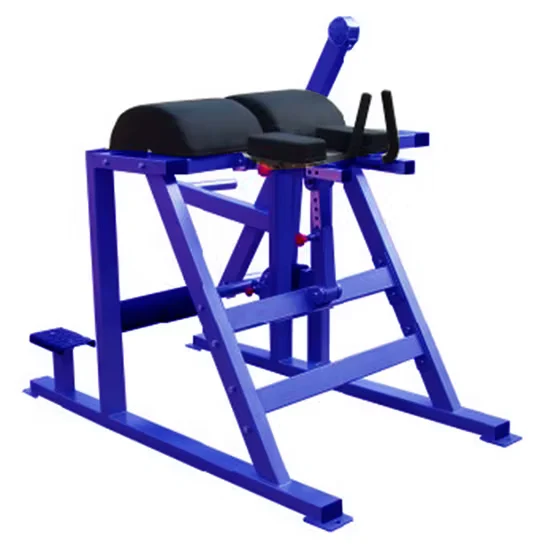
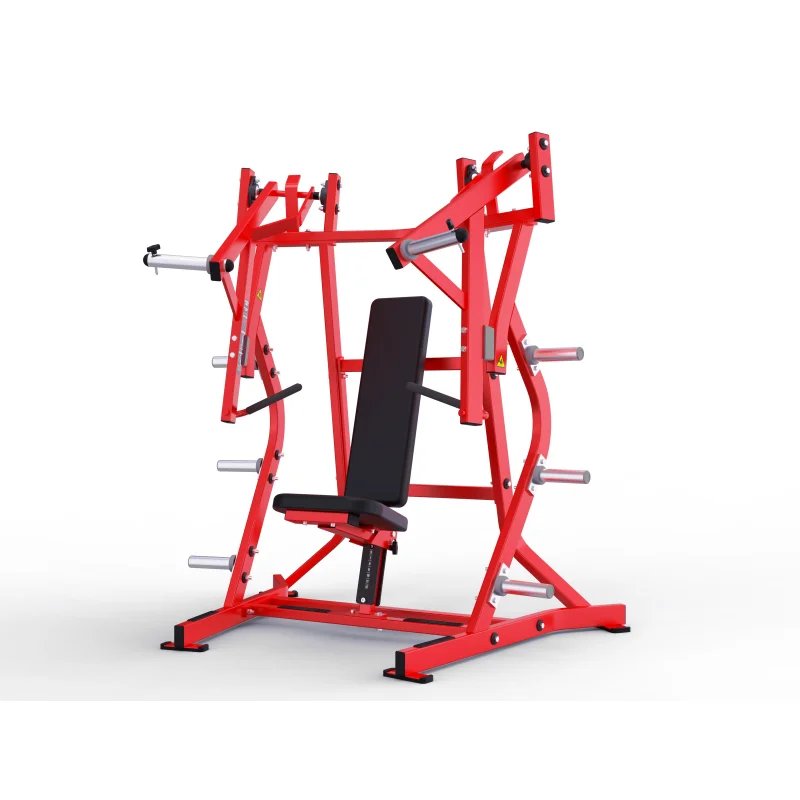
Zero-Motor Silent Resistance — Manual drive system eliminates electrical noise and motor maintenance across high-frequency commercial strength zones.
Technical Specifications
| Parameter | Value |
|---|---|
| Designation | 2019 Hammer Strength Seated Leg Curl 33 |
| Product Type | Seated Leg Curl |
| Power Source | Manual |
| Resistance Type | Manual |
| Frame Material | Steel |
| Net Weight | 101kg |
| Product Dimensions | 1440 × 1695 × 1481 mm |
| Foldable | Yes |
| Frame Color | Available per customer requirements |
| Cushion Color | Available per customer requirements |
| OEM/ODM | Acceptable |
| Certification | ISO 9001, CE |
Application Suitability
| Deployment Scenario | Typical Use |
|---|---|
| Chain gym strength zone | High-frequency hamstring isolation training during peak hours |
| Corporate wellness room | Compact footprint deployment alongside desk-adjacent fitness areas |
| Community fitness center | Durable manual resistance for unsupervised member use |
| Professional sports training center | Controlled hamstring loading for athlete rehabilitation and conditioning |
| High-end residential home gym | Zero-noise operation in shared living environments |
Why Noise Complaints Never Reach the Front Desk With This Machine
Manual resistance removes the motor entirely, so acoustic output stays at ambient room level regardless of repetition speed.
In hotel fitness centers positioned above guest rooms, motorized strength equipment generates low-frequency vibration that transmits through floor slabs. Front desk staff field complaints before maintenance teams even log the issue [NEED_CITE: acoustic transmission thresholds for fitness equipment on suspended floor slabs]. A commercial seated leg curl machine with zero electrical dependency eliminates this failure path completely. I have walked through facilities where motorized leg curl units were pulled from upper-floor deployments after repeated guest escalations — the machines worked fine mechanically, but the vibration coupling through the frame into the structure made them untenable.
Where This Seated Leg Curl Fits in a Commercial Strength Layout
This unit targets hamstring isolation through a fixed seated movement path, complementing free-weight compound exercises and cable-driven machines in a structured strength zone. The 1440 × 1695 mm footprint allows placement along perimeter walls or between rack stations without blocking traffic flow. It suits facilities where members cycle through circuit-style routines and need predictable resistance without console interaction. The steel frame and 101 kg net weight anchor the unit firmly during aggressive loading, accommodating users across a broad body-weight range. A commercial seated leg curl machine in this configuration pairs well with leg extension and hip sled units to form a complete lower-body station.
Continuous Operation Without Electrical Infrastructure
Manual resistance means no motor duty cycle to calculate, no dedicated circuit to install, and no thermal buildup during back-to-back use across a twelve-hour operating window [NEED_CITE: duty cycle requirements for continuous-use commercial fitness equipment]. The absence of power dependency also removes voltage mismatch risk entirely — a recurring problem I have seen when equipment ships to markets with 220-240V standards and arrives wired for 110V. Deployment on any floor level is viable since vibration generation stays minimal. Ground leveling matters for frame stability given the 101 kg mass, and a rubber isolation pad beneath the base prevents micro-movement on polished concrete or timber subfloors.
Manual Resistance Mechanics and Frame Engineering
The manual resistance system relies on mechanical friction or weight-stack coupling rather than electromagnetic braking, which means the resistance curve tracks directly with user input without electronic lag. Steel frame construction at this weight class provides the rigidity needed for repetitive eccentric loading — hamstring curls generate substantial return force that lighter frames absorb as flex, reducing movement accuracy over time. The 1481 mm height clears overhead obstructions in standard commercial ceiling configurations. Foldable capability allows the unit to be repositioned during floor plan reconfigurations or stored during renovation cycles. Cushion density and upholstery material are specified per customer requirements, allowing alignment with existing facility color schemes and durability expectations.
The Hidden Cost of Specifying Below Commercial Grade
Strength equipment rated for light-commercial or home use enters facility inventories regularly, and the failure pattern is consistent: pivot bearings wear through within months under continuous member rotation, frame welds develop stress fractures at high-load junctions, and cushion foam compresses permanently, generating user complaints about joint discomfort [NEED_CITE: fatigue failure patterns in light-commercial vs commercial-rated strength equipment]. When a batch of under-spec units requires replacement mid-contract, the procurement cost doubles and the operational disruption erodes member confidence. Facilities that standardize on commercial-grade steel frames and manual systems avoid the motor and electronic failures that dominate maintenance tickets in mixed-equipment deployments.
Why This Product Line Holds Up Under Facility Audits
The 10,000-hour durability testing protocol extends to frame welds and pivot mechanisms, not just motorized components. OEM and ODM customization covers frame color, cushion upholstery, and branding — so a hotel chain outfitting multiple properties can maintain visual consistency without managing separate suppliers. The complete six-series cardio and strength family means a facility sources complementary equipment from one production line, reducing integration friction. The free 3D layout service accounts for this unit’s footprint and the clearance needed for user entry and exit from the seated position. Technical support responds around the clock, which matters when a pivot mechanism needs adjustment during a holiday weekend.
Documentation & Test Records
- CE declaration of conformity covering mechanical safety requirements
- EN 957 test report validating structural integrity under cyclic loading
- ISO 9001 certificate for manufacturing quality management
- Noise level test report confirming zero motor-generated acoustic output
- Durability test record for pivot bearings and frame weld fatigue life
- Installation guide with floor anchoring and leveling procedures
Installation, Commissioning & Maintenance
- Maintain minimum 600 mm clearance on all sides for user entry and safe egress
- Level the steel frame on a rubber isolation pad to prevent micro-movement during loading
- No dedicated electrical circuit required due to fully manual resistance operation
- Inspect pivot bearings and lubricate mechanical resistance mechanism per maintenance schedule
- Wipe cushion surfaces after each use to prevent sweat degradation of upholstery material
- Verify foldable hinge mechanism integrity during quarterly structural inspections
Scheduling a Technical Consultation
Share your strength zone square footage and current equipment list to receive a 3D layout that positions this seated leg curl within your member traffic flow. Specify your daily operating hours and expected user volume so we can confirm the manual resistance mechanism matches your throughput. Identify your deployment floor and adjacent occupied spaces to validate the zero-noise advantage. Confirm your target market for OEM branding and documentation requirements.
Frequently Asked Questions
Q: How does manual resistance compare to weight-stack systems for commercial deployments?
A: Manual resistance eliminates cables, pulleys, and selectorized pin mechanisms that require regular adjustment under high-frequency use. Weight stacks offer incremental loading precision, while manual systems depend on user-applied force or friction-based mechanisms. The choice depends on whether your members need fixed load progression or variable resistance matching their effort output.
Q: What frame durability testing applies to this seated leg curl?
A: The steel frame undergoes cyclic load testing that simulates years of continuous commercial use, focusing on weld junctions and pivot points where stress concentrates during hamstring curl movements. The 101 kg net weight reflects the material mass required to maintain rigidity under repetitive eccentric loading without frame flex or alignment drift.
Q: How does cushion customization affect long-term maintenance?
A: Cushion color and upholstery material are specified during the order process, allowing you to select foam density and covering material matched to your cleaning protocols and usage intensity. Higher-density foam resists permanent compression in facilities with continuous member rotation, while vinyl or synthetic leather covers withstand standard commercial disinfectant solutions.
Q: What OEM customization is available for branded facility rollouts?
A: Frame color, cushion upholstery, and branding elements are fully customizable, supporting visual consistency across multi-property deployments. The OEM process covers specification adjustments, color matching to existing facility palettes, and logo application, with flexible minimum order quantities designed for phased rollouts across gym networks.
Q: How should this unit be positioned within a strength zone layout?
A: The 1440 × 1695 mm footprint and foldable capability allow flexible placement along walls or between compound exercise stations. A 3D layout plan accounts for user clearance during seated entry and exit, traffic flow patterns during peak hours, and sightline considerations that keep the hamstring station visible and accessible to members.