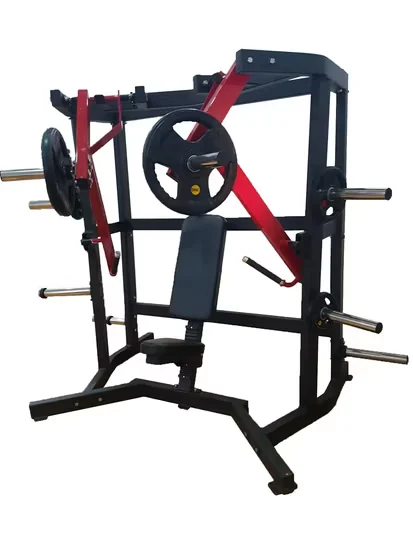
![Commercial Multi-Function Smith Machine Gym Equipment for Professional Gyms [WARN] draft identifier mismatch](https://bicksport.com/wp-content/uploads/2026/08/commercial-multi-function-smith-machine-gym-equipment-for-professional-gyms-warn-draft-identifier-mismatch-93fcc7.webp)
Commercial-Grade Smith Machine — Designed to withstand high-traffic gym environments with reinforced steel construction and precision guide rail systems that maintain smooth operation through thousands of daily repetitions.
Technical Specifications
| Parameter | Value |
|---|---|
| Product Type | Smith Machine |
| Model NO. | 5045 |
| Material | Steel |
| Product Dimensions | 134022662384mm |
| Net Weight | 215kg |
| Max User Weight | 180kg |
| Exercise Part | Arm, Waist, Leg |
| Age Group | Adult |
| Gender | Unisex |
| Certification | ISO 9001, CE |
| OEM/ODM | Available |
| Production Capacity | 500 PCS/Month |
Application Suitability
| Deployment Scenario | Typical Use |
|---|---|
| Chain gym strength training zone | Core compound movement station for members performing squats, presses, and rows |
| Corporate wellness fitness room | Multi-function equipment serving diverse employee fitness levels during lunch and after-work hours |
| Community fitness center | High-durability station handling continuous member turnover throughout operating hours |
| Sports performance training center | Controlled barbell path training for athletes requiring consistent movement patterns |
| Hotel fitness facility | Space-efficient full-body training solution for guests seeking structured strength work |
Why Guide Rail Wear Creates Member Complaints Before Management Notices
Precision-machined rails with sealed bearings prevent the sticking and grinding that drives members to competing facilities.
Commercial strength zones see equipment running eight to twelve hours daily with users loading heavy plates and dropping weights between sets. Guide rails on inferior machines develop grooves and wobble within months, creating uneven barbell travel that forces spotters to intervene and increases injury risk. [NEED_CITE: commercial strength equipment durability testing standards] The commercial Smith machine multi-function gym equipment addresses this through hardened steel rails and precision bearings that maintain tolerance through repeated high-load cycles.
Facility managers often discover rail degradation only after members switch to free weights or cancel memberships, making preventive specification critical for retention in competitive markets.
Positioning This Station Within Your Strength Training Layout
This commercial Smith machine multi-function gym equipment serves as the anchor point for controlled compound movements, complementing free weight racks and plate-loaded machines. The fixed barbell path accommodates users from beginner to advanced levels without requiring spotter assistance, making it suitable for unsupervised hours and high-traffic periods. The equipment handles squat, press, row, and shrug patterns within a single footprint, reducing the total stations needed for comprehensive strength programming. The 134022662384mm footprint positions efficiently against walls or as a divider between training zones, while the 180kg user capacity serves the full member demographic.
Continuous Operation and Facility Environment Requirements
Commercial strength equipment endures repeated loading cycles with users racking heavy weights and adjusting positions between sets. [NEED_CITE: structural load requirements for commercial gym flooring] The 215kg frame mass provides stability during dynamic movements, but deployment requires level concrete flooring capable of supporting concentrated loads plus user weight and plate stacks. Facilities on upper floors must verify structural capacity and consider vibration transmission to spaces below. Adequate clearance on all sides—minimum 600mm recommended—ensures safe loading and unloading while allowing instructor access for form correction. Indoor climate control prevents condensation on steel surfaces that accelerates corrosion and compromises grip texture.
Engineering Decisions That Determine Long-Term Reliability
The steel frame construction uses welded joints at stress points where bolted connections would loosen under repeated impact loading. [NEED_CITE: weld integrity standards for commercial fitness equipment] Guide rail diameter and bearing specification determine how smoothly the barbell travels under load—undersized rails deflect when users load heavy plates, creating binding and uneven wear patterns. The linear bearing system reduces friction compared to sleeve-based designs, requiring less maintenance while delivering consistent bar path throughout the full range of motion. Counterbalance mechanisms offset bar weight for exercises requiring minimal starting resistance, expanding the user range to include rehabilitation and beginner populations. Safety catch systems engage automatically if users lose control, preventing barbell drops that damage equipment and injure members.
The Hidden Cost of Specifying Residential Equipment for Commercial Use
Strength machines rated for home use fail predictably when subjected to commercial traffic patterns. Lightweight frames shift during heavy squats, forcing members to reduce loads or abandon exercises. Guide rails without adequate hardness ratings develop surface damage within months, creating rough travel that members attribute to poor equipment quality rather than specification mismatch. [NEED_CITE: duty cycle differences between residential and commercial strength equipment] Facilities replacing under-specified equipment face double costs—purchasing replacements while managing member dissatisfaction from the original deployment. The upfront savings disappear when replacement cycles compress to eighteen months versus the ten-year service life achievable with properly engineered commercial equipment.
Why This Product Line Delivers for Commercial Deployments
The steel frame undergoes stress testing that simulates years of heavy loading cycles, verifying weld integrity and structural stability under commercial conditions. Guide rails receive hardness treatment that resists surface deformation from repeated barbell travel under load. The commercial Smith machine multi-function gym equipment integrates into comprehensive facility layouts where we provide 3D planning covering equipment spacing, member flow patterns, and sightlines for instructor supervision. OEM customization extends to frame color, logo placement, and grip texture to match facility branding requirements. Documentation packages include structural load calculations, guide rail maintenance schedules, and installation guides covering floor anchoring and safety catch calibration. Technical support addresses deployment questions from initial specification through commissioning and ongoing maintenance planning.
Documentation & Test Records
- CE declaration of conformity covering mechanical safety requirements for commercial strength equipment
- EN 957 test report verifying structural integrity and stability under maximum rated loads
- ISO 957 compliance documentation for manufacturing quality management systems
- Steel material certificates specifying grade and mechanical properties of frame components
- Guide rail hardness testing records confirming surface treatment specifications
- Weld inspection reports covering joint integrity at critical stress points
- Installation guide with floor anchoring requirements and safety catch calibration procedures
- Spare parts catalog with part numbers for bearings, bushings, and wear components
Installation, Commissioning & Maintenance
- Verify floor levelness within 3mm across the 1340*2266mm footprint before anchoring the 215kg frame to prevent racking under load
- Maintain 600mm clearance on all sides for safe plate loading and instructor access during supervised sessions
- Inspect guide rail surfaces monthly for scoring or debris accumulation that compromises smooth barbell travel
- Lubricate linear bearings per manufacturer schedule using specified grease type to maintain consistent friction coefficients
- Test safety catch engagement monthly by loading barbell and releasing to verify automatic arrest function
- Check all bolted connections quarterly for proper torque, particularly at frame junctions subject to dynamic loading
- Clean grip surfaces daily with non-corrosive cleaner to maintain texture and prevent salt buildup from hand contact
Requesting Technical Documentation for Your Project
Provide your strength zone dimensions and planned equipment count to receive a 3D layout showing this commercial Smith machine multi-function gym equipment positioned for optimal member flow and instructor sightlines. Specify your facility’s daily operating hours and expected member volume to confirm the equipment meets your usage intensity requirements. Indicate your deployment floor level and adjacent spaces to verify the frame mass and vibration characteristics suit your building structure. Confirm your target market’s electrical standards if integrating with powered accessories or digital monitoring systems. State whether you require OEM customization including frame color, logo application, or modified grip configurations to match your brand identity.
Frequently Asked Questions
Q: What distinguishes commercial Smith machines from residential versions?
A: Commercial equipment uses heavier-gauge steel, larger-diameter guide rails, and higher-capacity bearings designed for continuous daily use by multiple users. Residential machines prioritize cost reduction with lighter frames and smaller bearings that degrade quickly under commercial traffic. The structural mass prevents frame shift during heavy lifts, while industrial-grade components maintain smooth operation through years of repeated loading cycles.
Q: How often do guide rails require maintenance or replacement?
A: Linear bearings typically require lubrication every three to six months depending on usage intensity and environmental conditions. Guide rails themselves should last the equipment’s full service life when properly maintained and protected from impact damage. Facilities in humid environments may need more frequent inspection for surface corrosion that increases friction and accelerates wear on bearing surfaces.
Q: How does multi-function equipment optimize facility space allocation?
A: This station enables squats, presses, rows, shrugs, and calf raises within a single footprint that would otherwise require multiple dedicated machines. The fixed barbell path eliminates spotter requirements, allowing members to train safely during unsupervised hours. This consolidation reduces total equipment count while expanding exercise variety, particularly valuable in facilities with limited square footage serving diverse membership populations.
Q: What customization options exist for branding and visual identity?
A: OEM services include frame color selection from standard powder coat palettes or custom matches to facility branding. Logo application extends to frame surfaces and weight plate storage horns. Grip texture and handle configurations can be modified to match house specifications. Minimum order quantities vary by customization extent, with simpler color changes available at lower thresholds than structural modifications.
Q: What floor preparation is required before installation?
A: The 215kg frame plus user weight and loaded plates requires level concrete capable of supporting concentrated loads without cracking or settling. Upper-floor deployments need structural engineering verification that the building can handle dynamic forces from heavy squats and drops. Floor anchoring prevents equipment migration during use, particularly important for facilities with high member turnover and frequent position adjustments.

![Wholesale Hammer Strength Commercial Abdominal Work Station Gym Machine [WARN] draft identifier mismatch](https://bicksport.com/wp-content/uploads/2026/08/wholesale-hammer-strength-commercial-abdominal-work-station-gym-machine-warn-draft-identifier-mismatch-f7373d.webp)