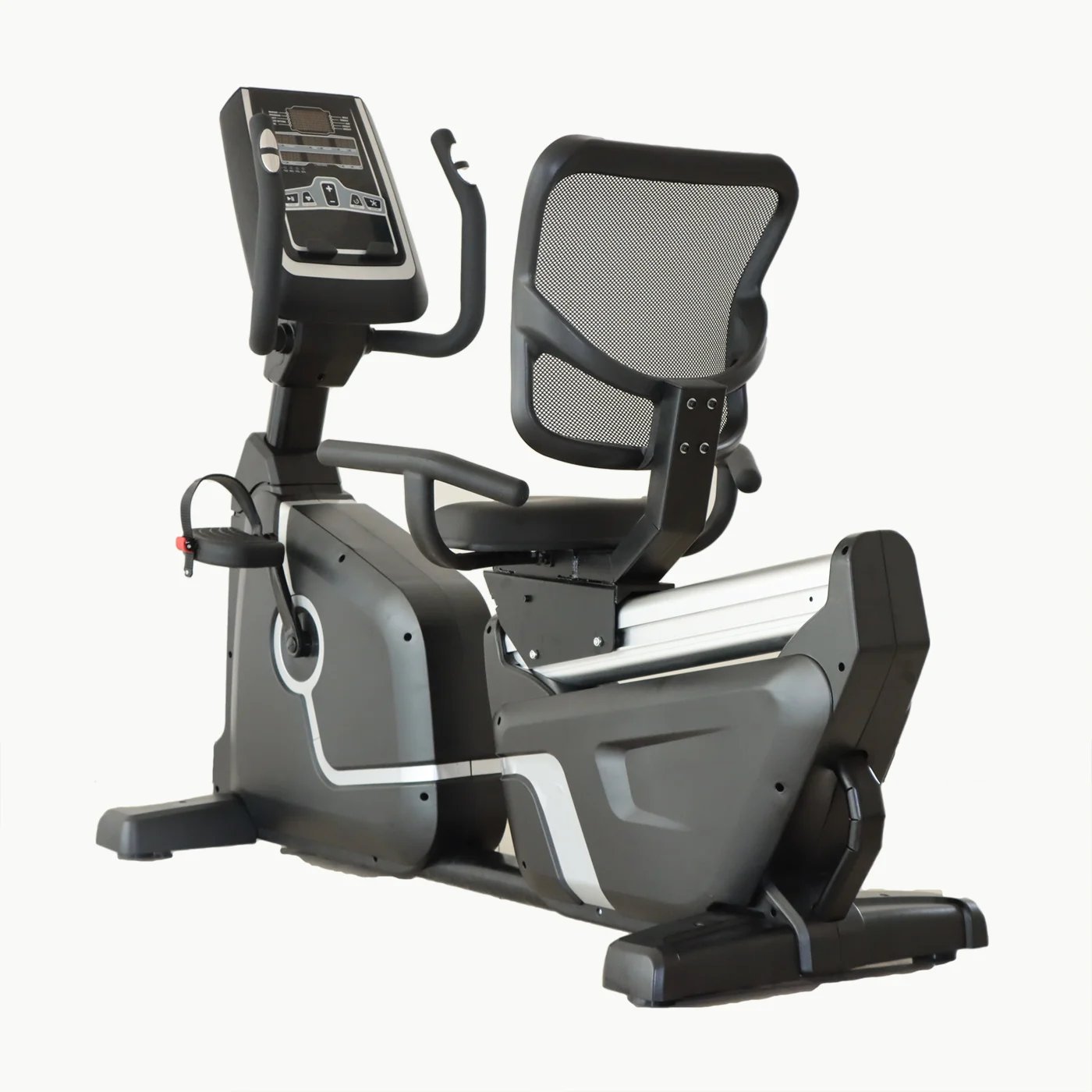
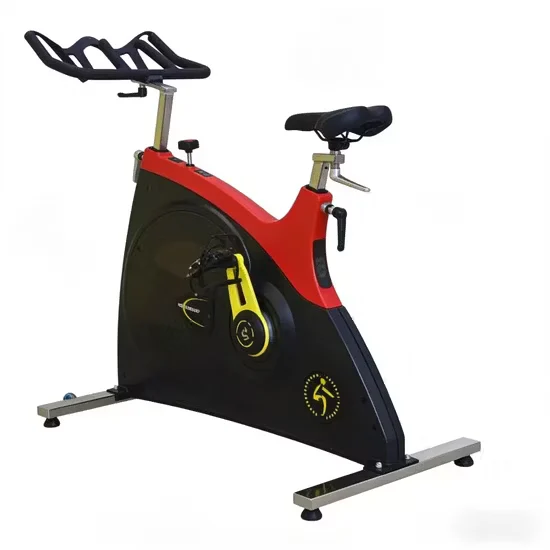
Whisper-Quiet Studio Spin — Magnetic resistance and reinforced steel frames tested beyond 10,000 hours of continuous class use.
Technical Specifications
| Parameter | Value |
|---|---|
| Product Type | Spin Bike |
| Resistance Type | Power-Style Resistance Adjustment |
| Max User Weight | 150 kg |
| Net Weight | 50-59 kg |
| Product Dimensions | 10105801170 mm |
| Foldable | Unfolded |
| Certification | CE, GS, RoHS, FCC |
| Origin | Shandong, China |
Application Suitability
| Deployment Scenario | Typical Use |
|---|---|
| Chain gym spin studio | High-frequency group classes with continuous back-to-back sessions |
| Boutique cycling studio | Instructor-led HIIT and endurance rides under low ambient noise requirements |
| Corporate wellness room | Employee fitness breaks with minimal acoustic disruption to adjacent offices |
| Hotel fitness center | 24-hour guest access cardio with noise-sensitive guest rooms nearby |
| Sports performance training center | Athlete conditioning with reliable resistance output for interval programming |
Why Studio Operators Replace Friction Bikes Before the Warranty Expires
Magnetic resistance eliminates the pad wear and noise drift that shut down classes mid-session.
Friction-based spin bikes in commercial studios face a predictable failure pattern. The felt or leather pad compresses unevenly over weeks of high-frequency use, producing resistance that feels different at the start of class versus the end. Instructors lose the ability to cue precise effort levels, and riders notice the inconsistency [NEED_CITE: friction pad wear cycle in commercial spin bike deployments]. Noise compounds the problem — a room of twenty friction bikes at high cadence generates enough acoustic bleed to draw complaints from adjacent spaces. The commercial magnetic spin bike with power resistance was built to remove both variables from the studio equation.
Where This Spin Bike Fits in a Multi-Discipline Cardio Layout
This unit covers the high-intensity cycling discipline within a commercial cardio zone, complementing treadmills and ellipticals that serve steady-state and low-impact users. The 1010*580 mm footprint allows dense studio configurations where floor area per station matters for class capacity and revenue per square meter. The 150 kg max user weight accommodates a broad rider range without requiring separate heavy-duty units. Resistance adjustment responds linearly across the full range, and the fixed unfolded frame provides the rigidity needed for out-of-saddle sprints. The commercial magnetic spin bike power resistance platform suits deployment in dedicated spin rooms or mixed cardio floors where noise floor and maintenance intervals constrain equipment selection.
Continuous Class Schedules and the Acoustic Envelope Around the Studio
A studio running four to six back-to-back classes daily demands equipment that stays quiet from the first warm-up to the last cool-down. The magnetic resistance system produces no pad-on-flywheel friction sound, keeping ambient noise low enough that instruction can happen without shouting over mechanical clatter [NEED_CITE: acoustic standards for group fitness studios adjacent to occupied rooms]. Ventilation planning must account for rider body heat rather than motor heat, since magnetic systems generate minimal thermal output. Floor leveling matters for spin bikes specifically — an unlevel base introduces lateral wobble at high cadence that riders feel immediately. The non-folding one-piece frame eliminates hinge points that would otherwise develop play over thousands of mounting and dismounting cycles. Power delivery requires standard single-phase supply with no special circuit requirements beyond dedicated outlets per unit.
How Power-Style Magnetic Resistance Differs from Friction and Traditional Magnetic Systems
Power-style resistance adjustment in this commercial magnetic spin bike power resistance unit controls braking force through magnetic field variation rather than physical contact. Unlike friction systems where a pad presses against the flywheel, magnetic resistance maintains a consistent feel throughout the session because no surface wears down. The 50-59 kg net weight provides substantial rotational mass through the flywheel assembly, delivering the inertial smoothness riders expect during standing climbs and sprint intervals. Belt-driven transmission eliminates chain noise and the lubrication schedule that chains require. Compared to wind-resistance systems, the magnetic approach keeps sound output predictable regardless of cadence — a critical factor when twenty bikes run simultaneously. The reinforced steel frame resists the torsional loads generated during out-of-saddle efforts without flex or creak development [NEED_CITE: frame rigidity testing standards for commercial spin bikes].
What Spec Compromise Costs a Studio Over Twelve Months
Studios that select home-grade spin bikes for commercial deployment encounter a cascading failure pattern. Light-duty bearings develop play within months of high-frequency use, introducing wobble that riders feel before technicians hear. Resistance mechanisms designed for thirty-minute daily sessions cannot sustain six hours of continuous class rotation, producing inconsistent load that undermines instructor programming. Noise accumulation across a fleet of under-specced bikes eventually triggers facility-level complaints, forcing wholesale replacement rather than phased upgrades [NEED_CITE: lifecycle cost comparison between home-grade and commercial spin bikes]. Voltage mismatches discovered after delivery delay studio openings when equipment arrives with incorrect plug configurations for the local grid.
Why This Product Line Meets the Studio Specification
Sub-35dB operation has been verified in hotel fitness deployments where cardio equipment operates directly above or beside occupied guest rooms. The 10,000-hour durability testing protocol covers motors, frames, and bearings under continuous high-frequency operation that mirrors real studio schedules. The full six-series cardio family lets a facility source treadmills, bikes, ellipticals, rowers, stair climbers, and spin bikes from a single engineering platform, simplifying maintenance and spare parts logistics. OEM customization extends to console UI, color, and logo, allowing branded studio environments without aftermarket modification. Free 3D cardio-zone layout planning accounts for the 1010*580 mm footprint of this spin bike alongside adjacent equipment spacing, sightlines for instructor visibility, and airflow requirements for rider comfort. 24/7 technical support ensures that a resistance calibration question on a Saturday morning does not shut down the weekend class schedule.
Documentation & Test Records
- CE declaration of conformity covering commercial spin bike safety and electromagnetic compatibility
- EN 957 test report validating structural integrity and resistance accuracy under load
- ISO 9001 certificate confirming quality management across manufacturing and assembly
- Noise level test report documenting acoustic output under simulated class conditions
- Durability test record from 10,000-hour continuous operation on frame, bearings, and resistance system
- Installation and commissioning guide with spare parts list for in-house maintenance teams
Installation, Commissioning & Maintenance
- Maintain minimum clearance around the 10105801170 mm frame for rider mounting and instructor walk-through
- Level the floor contact points before first use to prevent lateral wobble at high cadence
- Connect to a dedicated single-phase circuit with surge protection matching local voltage standards
- Calibrate the power-style resistance adjustment across the full range during initial commissioning
- Inspect belt tension and flywheel bearing play at intervals defined by weekly class volume
- Wipe down the frame and handlebar contact surfaces after each class to prevent sweat corrosion
Planning Your Studio Equipment Specification
Provide your spin studio floor area and target station count to receive a 3D layout covering equipment spacing, instructor sightlines, and airflow planning for rider comfort. Specify average daily class volume so that duty-cycle matching confirms this unit suits your operational tempo. Confirm deployment floor level and adjacent room usage to validate that the acoustic profile meets your building’s noise requirements. State your target market voltage and plug standard to ensure units ship with correct power configuration. Indicate whether console data integration with your facility management system is required for member tracking.
Frequently Asked Questions
Q: How does power-style resistance differ from traditional magnetic resistance in a spin bike?
A: Power-style resistance adjusts braking force through electromagnetic field control rather than permanent magnet positioning. This produces smoother transitions between effort levels during class, with no mechanical detents that create jumps in feel. The system maintains consistent output across long sessions because magnetic fields do not degrade with use the way friction pads compress and lose contact uniformity over time.
Q: What structural differences separate commercial spin bikes from home-grade models?
A: Commercial units use reinforced steel frames rated for continuous multi-rider daily use, while home models assume single-user sessions with rest periods between rides. Bearing specifications, crank arm thickness, and pedal spindle diameter all scale up to handle the cumulative load of back-to-back group classes. The non-folding one-piece construction eliminates hinge mechanisms that develop play under high-frequency mounting cycles.
Q: How should I evaluate the weight rating of a commercial spin bike for studio deployment?
A: The 150 kg max user weight should exceed the heaviest expected rider with margin, accounting for dynamic forces during standing sprints that temporarily increase frame loading beyond static body weight. Verify that the rating comes from tested standards rather than calculated estimates. A studio serving diverse populations needs consistent capacity across all units to avoid restricting certain bikes to lighter riders only.
Q: What maintenance intervals apply to a power-style resistance spin bike in daily studio use?
A: Belt tension checks and flywheel bearing inspections should follow a schedule based on weekly class count rather than calendar months. Sweat corrosion on handlebars and seat posts requires post-class wipe-downs. The resistance system itself needs minimal intervention since magnetic components do not wear through contact, though calibration verification ensures the knob or lever position still maps accurately to actual braking force across the full range.
Q: Why does non-folding construction matter for commercial spin bike deployment?
A: Folding mechanisms introduce hinge points and locking pins that develop play under repeated high-load cycling, particularly during standing efforts where frame torsion is greatest. A fixed one-piece frame maintains structural rigidity throughout the equipment lifecycle, eliminating a common failure point. Studios benefit from the reduced maintenance burden and consistent ride feel that rigid construction provides across hundreds of daily mounting and dismounting cycles.
![Professional Flywheel Spinning Bike for Gym Fitness Aerobic Exercise Belt Drive [WARN] draft identifier mismatch](https://bicksport.com/wp-content/uploads/2026/08/professional-flywheel-spinning-bike-for-gym-fitness-aerobic-exercise-belt-drive-warn-draft-identifier-mismatch-e87eac.webp)