

Structural Anchor Stability — 250kg reinforced steel frame withstands continuous high-frequency leg training without floor bolting in most commercial installations.
Technical Specifications
| Parameter | Value |
|---|---|
| Product Type | Linear Hack Press (Strength Equipment) |
| Exercise Part | Leg |
| Power Source | Manual (Plate-Loaded) |
| Material | Steel |
| Product Dimensions | 2375 x 1500 x 1475 mm |
| Net Weight | 250 kg |
| Folded | Unfolded |
| Max User Weight | 180 kg |
| Age Group | Adult |
| Customization | Available (OEM/ODM) |
| Certification | ISO 9001, CE |
| HS Code | 9506911900 |
| Production Capacity | 500 PCS/Month |
Application Suitability
| Deployment Scenario | Typical Use |
|---|---|
| Professional gym and club strength zones | High-volume leg training for advanced members and athletes |
| Community fitness center | Daily multi-user traffic with progressive overload capability |
| Hotel fitness facility | Plate-loaded strength options operating without motorized noise |
| Sports performance training center | Heavy compound leg movements for athletic development |
What Weight Stack Impacts Mean for Adjacent Training Zones
Manual plate-loaded resistance eliminates motor noise and electrical maintenance while supporting heavy progressive overload.
Strength equipment in shared facilities often generates excessive noise from weight stack impacts and frame vibration, disrupting adjacent training zones and multi-use spaces. When pin-loaded leg machines drop heavy stacks repeatedly, the vibration travels through concrete floors and steel structural members, reaching quiet zones like hotel guest rooms or corporate wellness areas. Facility operators discover that commercial linear hack press machine leg strength equipment with plate-loaded systems avoids this transmission path entirely, keeping sound localized to the immediate footprint. The linear motion path further reduces the lateral frame stress that generates harmonic vibration in traditional hack squat designs [NEED_CITE: vibration transmission through commercial gym flooring].
Leg-Focused Compound Movement in High-Traffic Strength Zones
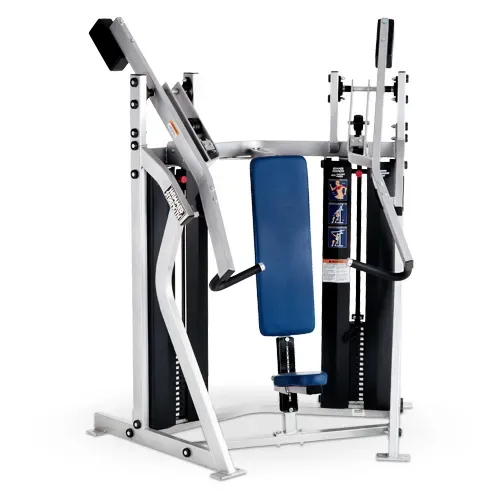
This equipment serves the heavy compound leg training segment, bridging the gap between free-weight squats and isolation machines. In a complete strength zone configuration, it complements squat racks and leg curl stations by offering a guided linear path that allows progressive overload without requiring spotters. The 250kg structural weight provides anchor stability during maximal efforts, while the 180kg user capacity accommodates a broad range of athlete body types. The plate-loaded commercial linear hack press machine leg strength equipment enables precise load progression in small increments, which matters for periodization programming in professional and community facilities.
Continuous Operation and Facility Infrastructure Requirements
Manual plate-loaded systems operate independently of electrical infrastructure, eliminating motor duty-cycle concerns that affect motorized cardio equipment running 12+ hours daily. The 2375 x 1500 x 1475mm footprint requires dedicated floor space with recommended clearance on all sides for loading and unloading weight plates safely. Deploying this equipment on upper floors demands structural assessment for point loading, as the combined weight of frame plus loaded plates concentrates force on the guide rail base. Facilities with rubber flooring or floating floor systems must verify that the substrate can handle repeated loading cycles without compression damage [NEED_CITE: floor load capacity for plate-loaded strength equipment].
Steel Frame Construction and Linear Guide Mechanics
The 250kg net weight reflects reinforced steel construction designed to resist flex during maximal leg presses. Unlike traditional hack squat machines that pivot on a fixed axis, the linear motion path constrains movement to a single plane, reducing shear forces on knees and hips during heavy loading. Guide rails with sealed bearings maintain smooth operation through thousands of repetition cycles, though bearing specifications vary by OEM configuration. Plate-loaded resistance scales linearly with added weight, providing consistent force curves that pin-loaded selector stacks cannot match at the upper load ranges. The manual system eliminates electronic failure points, making it suitable for facilities with limited technical maintenance staff [NEED_CITE: linear guide rail bearing specifications for commercial strength equipment].
The Hidden Cost of Underspec’d Frame Construction
Facilities that purchase lighter-gauge strength equipment discover frame flex issues within months of deployment, as weld joints fatigue under repetitive high-load cycles. Weight plates rattling against inadequate frame supports generate noise complaints that migrate across facility zones, forcing equipment relocations or replacements. Linear guide rails without proper bearing seals develop play that translates into uneven movement paths, creating user discomfort and eventual member attrition from the strength training area. Voltage and electrical mismatches do not apply to manual systems, but structural inadequacies create equally expensive remediation cycles [NEED_CITE: weld fatigue in commercial strength equipment frames].
Why This Product Line Addresses Deployment Realities
Sub-35dB operational noise verified in hotel deployments matters less for manual strength equipment, but the engineering discipline transfers to frame rigidity and guide rail precision that minimize vibration transmission. The 10,000-hour durability testing protocol applied to motors and bearings across the cardio range translates to weld inspection and load-cycle testing on steel frames. Full OEM/ODM customization extends to pad materials, frame color, and branding for facility identity requirements. The 3D strength zone layout service addresses the 2375 x 1500mm footprint alongside adjacent equipment spacing, ensuring adequate clearance for plate loading and user circulation. ISO 9001 and CE documentation supports international deployment compliance without requiring additional third-party testing.
Documentation & Test Records
- CE declaration of conformity for European market deployment
- EN 957 test report covering structural integrity and safety requirements
- ISO 9001 certificate for manufacturing quality management systems
- Frame and weld inspection records from production quality control
- Linear guide rail bearing specification sheet
- OEM customization scope documentation for branding and pad materials
Installation, Commissioning & Maintenance
- Verify 2375 x 1500mm footprint allows minimum 600mm clearance on all sides for safe plate loading
- Install on level substrate capable of supporting 250kg frame plus maximum loaded weight without deflection
- Assemble linear guide rails per manufacturer torque specifications, verify smooth travel through full range of motion before loading
- Lubricate guide rails and inspect sealed bearings quarterly under continuous high-frequency use conditions
- Inspect weld joints and frame connections annually for stress fractures or loosening hardware
- Clean upholstery and steel surfaces with pH-neutral cleaners to prevent sweat corrosion on contact points
Equipment Selection and Facility Planning Inquiries
Provide strength zone dimensions and adjacent equipment list to receive 3D layout with spacing and circulation planning. Specify daily user volume and average session duration to confirm frame duty-cycle adequacy for deployment environment. Identify deployment floor level and structural capacity to assess point-loading requirements for the 250kg frame plus loaded plates. Clarify OEM customization requirements for pad material, frame color, and facility branding integration.
Frequently Asked Questions
Q: What are the advantages of manual plate-loaded vs. pin-loaded leg machines?
A: Plate-loaded systems offer unlimited progressive overload capacity, as users add standard weight plates rather than being constrained by selector stack increments. The manual resistance eliminates electronic components and motors that fail under continuous commercial use, reducing maintenance complexity and long-term operating costs for facility operators managing high-traffic strength zones.
Q: How does linear motion path reduce joint stress during hack press movements?
A: The linear guide rail constrains movement to a single plane, eliminating the rotational shear forces that traditional pivot-axis hack squats impose on knee and hip joints during heavy loading. This controlled path allows users to focus on leg drive without stabilizing the load laterally, making the movement pattern more accessible across different experience levels.
Q: What frame specifications ensure durability in high-traffic commercial gyms?
A: Commercial-grade steel frames for linear hack presses typically exceed 200kg structural weight to resist flex under repetitive high-load cycles. Weld quality and joint reinforcement at stress concentration points determine long-term integrity, while sealed guide rail bearings maintain smooth operation through thousands of daily repetitions without developing play.
Q: Can this equipment be customized for branding and pad materials?
A: Full OEM and ODM customization covers frame color, upholstery material, pad density, and branding elements including logos and facility color schemes. Minimum order quantities vary by customization scope, with production capacity supporting multi-unit facility rollouts across gym chains or hotel fitness center networks.
Q: What maintenance is required for guide rails and bearings in continuous-use environments?
A: Linear guide rails require quarterly lubrication with manufacturer-specified compounds, while sealed bearings should be inspected for play or grinding during the same service intervals. Facilities with extreme humidity or sweat exposure may need more frequent inspection to prevent corrosion on exposed steel surfaces and guide rail contact points.

![Wholesale Multi-Functional Commercial Smith Machine Gym Equipment [WARN] draft identifier mismatch](https://bicksport.com/wp-content/uploads/2026/08/wholesale-multi-functional-commercial-smith-machine-gym-equipment-warn-draft-identifier-mismatch-f5098d.webp)
