Commercial-Grade Frame Durability — Engineered with reinforced steel construction validated through continuous high-frequency load testing for professional gym deployments.
Technical Specifications
| Parameter | Value |
|---|---|
| Designation | 5009 |
| Product Type | Incline Pec Fly Machine |
| Exercise Part | Chest |
| Frame Material | Reinforced Steel |
| Specification | 150013501650mm |
| Net Weight | 92kg |
| Age Group | Adult |
| Gender | Unisex |
| Fit Area | Professional Gym and Club |
| Appliance | Community, Gymnasium |
| OEM/ODM | Available |
| Certification | ISO 9001, CE |
| Production Capacity | 500 PCS/Month |
Application Suitability
| Deployment Scenario | Typical Use |
|---|---|
| Professional gym and commercial fitness club | Targeted chest isolation zones within strength training areas |
| Community fitness center | Accessible strength equipment for unisex adult populations |
| Corporate wellness facility | Circuit training layouts requiring compact footprint |
| High-end residential home gym | Dedicated upper-body conditioning for serious enthusiasts |
| Sports performance training center | Athlete upper-body strength and muscular endurance development |
Why Pivot Arm Play Destroys Member Trust Before Equipment Warranties Expire
Precision bearing alignment eliminates the wobble that causes shoulder complaints in high-traffic strength zones.
Commercial pec fly machines endure thousands of articulation cycles weekly. When pivot arms rely on low-grade bearings, lateral play develops quickly, translating into uneven resistance curves that stress rotator cuffs. Members notice the inconsistency during their second or third session, and complaints reach management before maintenance logs flag the issue [NEED_CITE: bearing degradation timeline in commercial strength equipment]. Facilities replacing machines prematurely face budget overruns and member attrition that no maintenance schedule can reverse.
Positioning Within the Strength Training Equipment Matrix
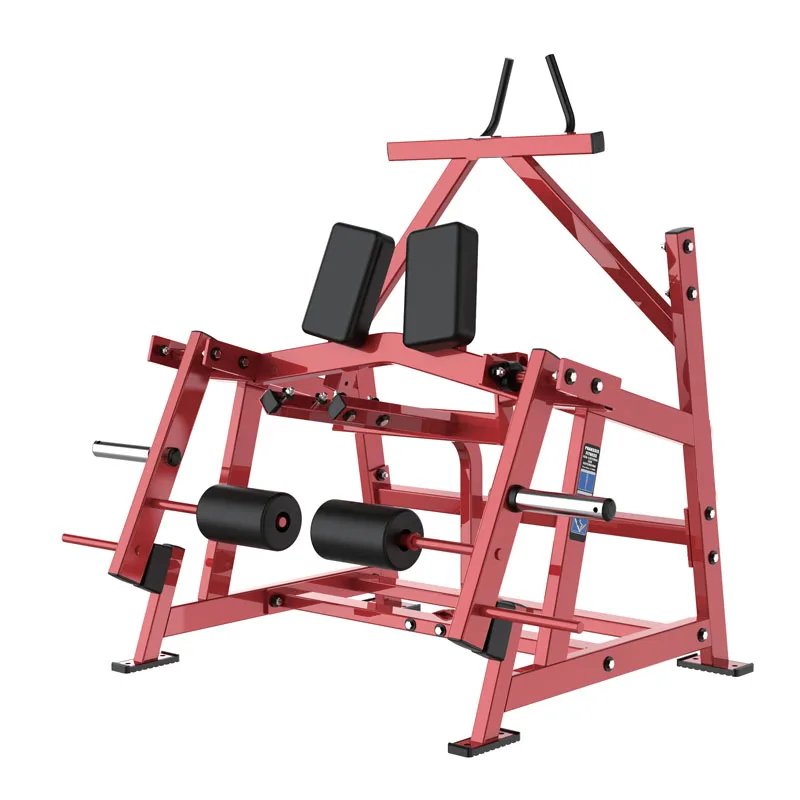
This incline pec fly machine targets the upper and mid-chest fibers through a fixed movement path, complementing free-weight bench press stations and cable crossover systems. The incline angle isolates clavicular head activation that flat bench movements cannot fully engage. In a commercial gym layout, this equipment typically anchors the chest isolation section alongside flat pec deck and shoulder press units. The adjustable seat and arm positioning accommodate diverse user anthropometrics across unisex adult populations, making it suitable for facilities serving broad membership demographics. The commercial incline pec fly machine gym equipment handles continuous rotation throughout operating hours without requiring manual resistance adjustments between users.
Operational Load Profiles and Facility Environment Considerations
Professional gym environments subject strength machines to back-to-back usage during peak hours, demanding components rated for minimal rest intervals between sets. The reinforced steel frame maintains structural integrity under repeated loading cycles that would fatigue lighter constructions [NEED_CITE: frame fatigue testing protocols for commercial strength equipment]. Deployment on upper floors requires attention to vibration transmission through floor slabs, particularly when multiple units operate simultaneously. Adequate clearance around the 150013501650mm footprint ensures safe entry, exit, and plate loading without adjacent equipment interference. Facilities should verify floor leveling before installation, as uneven surfaces accelerate bearing wear and compromise movement smoothness. Ambient temperature and humidity control protect upholstery and prevent corrosion on exposed steel surfaces.
Bearing Systems and Resistance Curve Consistency Explained
The pivot arm mechanism relies on sealed bearing assemblies to maintain smooth articulation throughout the full range of motion. Commercial-grade bearings minimize friction and prevent the lateral play that creates uneven resistance perception during fly movements. Steel frame construction provides the rigidity necessary to keep pivot points aligned under load, preventing the frame flex that degrades movement quality over time. The incline angle positions the resistance vector to match natural chest fiber orientation, reducing anterior deltoid compensation that occurs on poorly angled machines. Adjustable seat height and arm start positions allow users to align their shoulder joints with the pivot axis, which is critical for maintaining proper biomechanics across different body proportions. The 92kg machine weight provides stability during aggressive loading without requiring floor anchoring in most installations.
The Hidden Costs of Underspecified Strength Equipment
Facilities that procure machines with residential-grade bearings face premature replacement cycles as play develops within months of heavy use. Members experiencing joint discomfort during chest fly movements attribute the problem to exercise selection rather than equipment quality, leading them to avoid the machine entirely. Underutilized equipment occupies valuable floor space while generating zero member satisfaction or retention value [NEED_CITE: equipment utilization rates and member retention correlation]. Procurement decisions based solely on initial purchase price ignore the total cost of ownership, including downtime, replacement logistics, and member complaints that damage facility reputation.
Why This Product Line Meets Commercial Deployment Standards
Reinforced steel frame construction undergoes load-bearing validation that simulates years of continuous commercial use. Bearing specifications are selected for extended service intervals, reducing maintenance frequency and associated labor costs. The complete six-series strength and cardio family allows facilities to source multiple equipment categories from a single supplier, simplifying procurement and warranty management. OEM and ODM customization options include upholstery color and branding to match facility design specifications. Free 3D layout planning addresses equipment spacing, member flow patterns, and ventilation requirements specific to the deployment space. Technical support availability ensures rapid resolution of any operational questions that arise after installation.
Documentation & Test Records
- CE declaration of conformity for European market compliance
- EN 957 test report validating safety and performance standards
- ISO 9001 certificate confirming quality management systems
- Frame weld integrity and load-bearing test documentation
- Bearing specification sheets with service interval recommendations
- Installation and commissioning guide with spare parts list
Installation, Commissioning & Maintenance
- Verify 150013501650mm clearance including 600mm safety perimeter on all sides
- Level floor surface before positioning to prevent frame stress and bearing misalignment
- Inspect pivot arm bearing smoothness during initial commissioning before member use
- Check all fastener torque specifications after first 500 usage cycles
- Clean upholstery and steel surfaces weekly to prevent sweat corrosion accumulation
- Verify seat adjustment mechanisms operate smoothly across full range monthly
Equipment Selection and Procurement Process
Provide your strength training area dimensions and equipment list to receive a 3D layout plan addressing traffic flow and spacing requirements. Specify expected daily usage volume to confirm the machine’s durability specifications match your operational demands. Indicate whether the deployment location requires special considerations for floor loading or vibration isolation. Communicate any branding, upholstery color, or custom specification requirements for OEM scoping. Confirm target market certification requirements to ensure documentation packages meet local regulatory standards.
Frequently Asked Questions
Q: How does pivot arm alignment affect shoulder joint safety during pec fly exercises?
A: Proper pivot alignment ensures the user’s shoulder joint axis coincides with the machine’s rotation center. Misalignment forces the shoulder into compensatory movement patterns that stress the rotator cuff and anterior capsule. Adjustable arm start positions allow users of different torso lengths to achieve correct alignment, reducing injury risk during high-volume training sessions common in commercial gym environments.
Q: What bearing specifications are required for continuous commercial gym use?
A: Commercial deployments demand sealed bearing assemblies rated for continuous radial and axial loads without frequent lubrication intervals. Low-grade bearings develop lateral play that creates uneven resistance perception and accelerates wear on adjacent components. Bearing specification sheets should document load ratings and expected service life under defined usage cycles to support procurement validation and maintenance planning.
Q: How to verify frame durability for high-frequency public facility deployment?
A: Request frame weld integrity documentation and load-bearing test records that simulate extended commercial use cycles. Reinforced steel construction should demonstrate resistance to fatigue cracking at stress concentration points. Visual inspection of weld quality and frame tube wall thickness provides initial assessment, but third-party test reports offer objective validation suitable for procurement compliance requirements.
Q: What OEM/ODM customization options are available for commercial gym branding?
A: Customization scope typically includes upholstery color selection to match facility design schemes and logo application on frame surfaces. Console interface customization applies to electronic equipment but strength machines may offer branded weight stack covers or selector pins. Confirm specific OEM capabilities including minimum order quantities and lead time implications before finalizing customization requirements for your deployment.
Q: How does seat adjustability impact user accommodation across diverse gym memberships?
A: Adjustable seat height positions users of different leg lengths so their shoulder joints align with the pivot axis. Insufficient adjustment range forces shorter or taller members into compromised positions that reduce exercise effectiveness and increase injury risk. Commercial facilities serving broad demographics require machines with adjustment mechanisms that accommodate the full spectrum of adult anthropometrics without requiring manual tools or excessive effort.