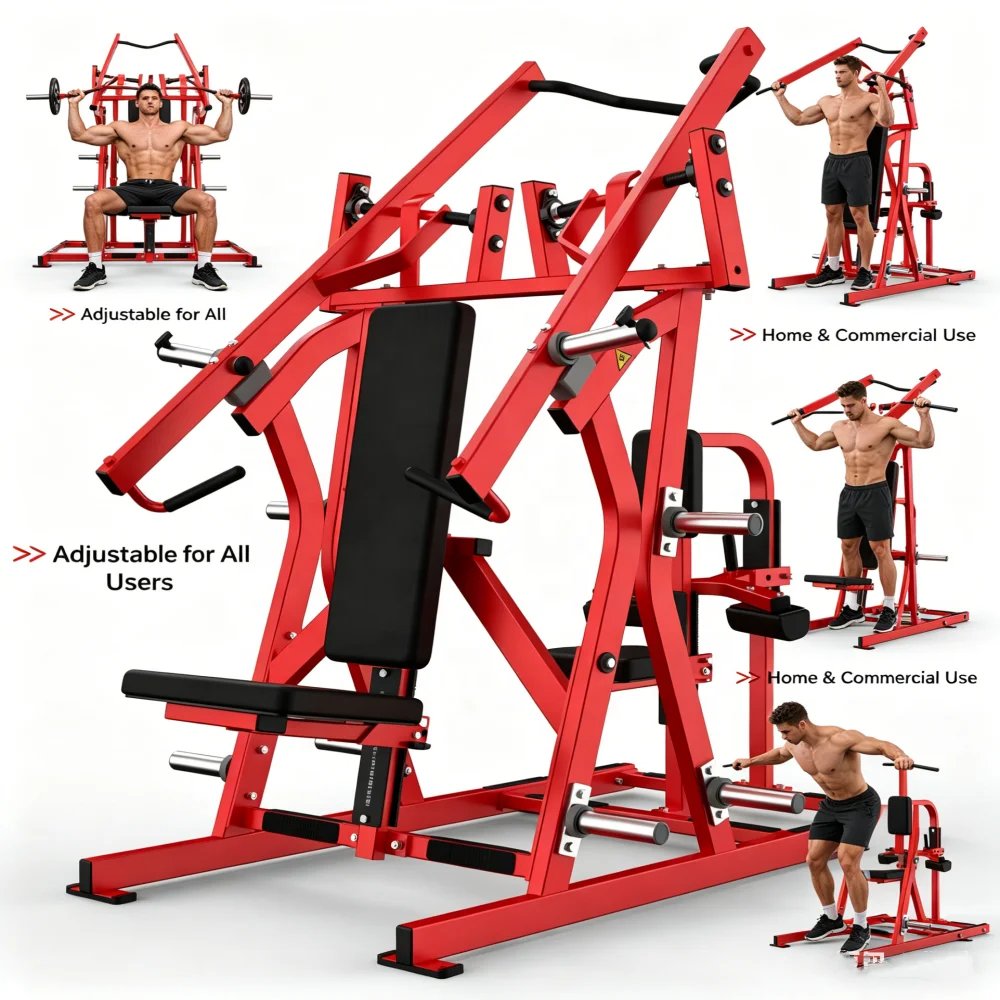
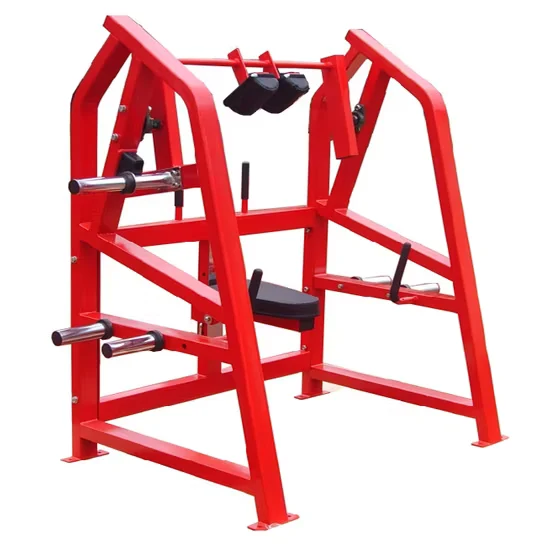
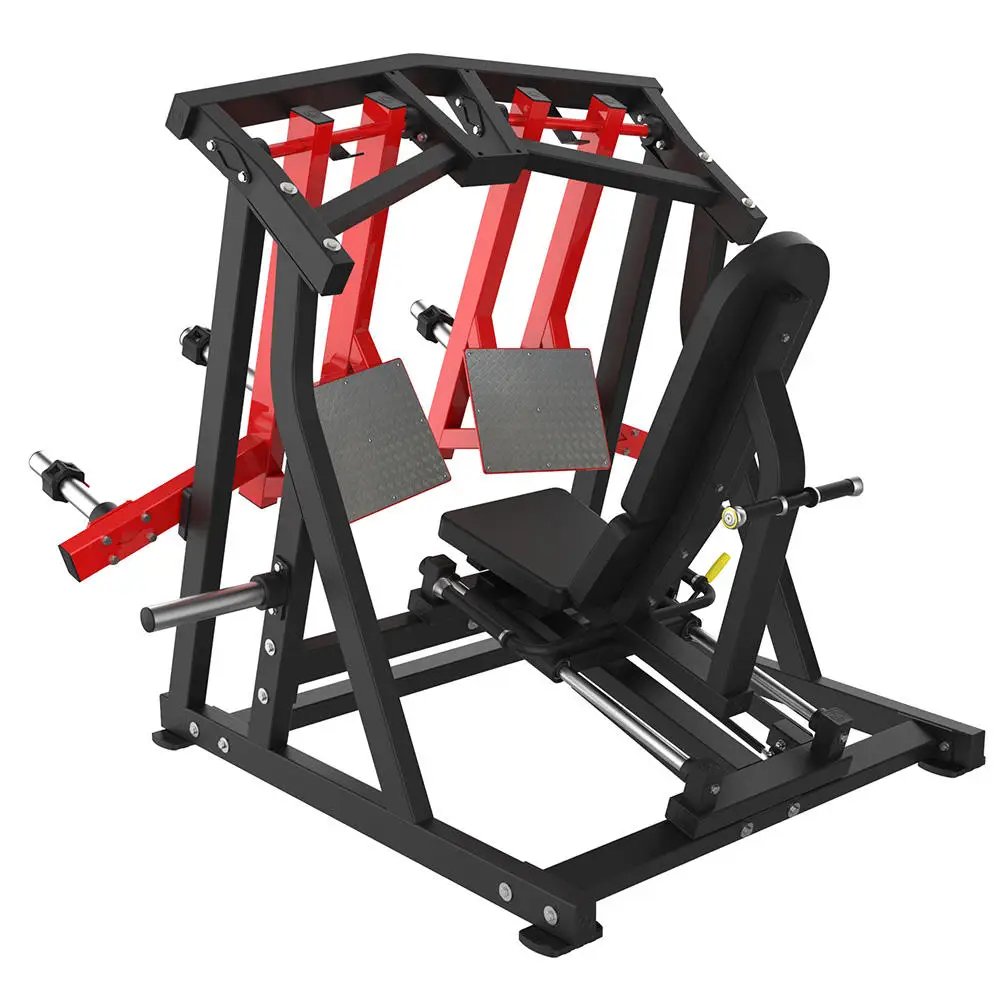
![Commercial Fitness Equipment Decline Bench Machine H-004 for Gym Use [WARN] draft identifier mismatch](https://bicksport.com/wp-content/uploads/2026/08/commercial-fitness-equipment-decline-bench-machine-h-004-for-gym-use-warn-draft-identifier-mismatch-6ebcd5.webp)
Heavy-Duty Steel Frame — 141kg reinforced manual construction eliminates motor failure points for 24/7 gym deployment.
Technical Specifications
| Parameter | Value |
|---|---|
| Designation | H-004 |
| Product Type | Decline Bench |
| Power Source | Manual |
| Resistance Type | Manual |
| Frame Material | Steel |
| Exercise Part | Chest |
| Age Group | Adult |
| Gender | Unisex |
| Net Weight | 141kg |
| Product Dimensions | 130011501750mm |
| Foldable | No (Unfolded) |
| Certification | ISO 9001, CE |
Application Suitability
| Deployment Scenario | Typical Use |
|---|---|
| Commercial gymnasium strength zone | Daily decline pressing under heavy barbell loads |
| Hotel fitness center | Low-maintenance chest station for guest self-service |
| Corporate wellness room | High-frequency use by employees during peak hours |
| High-end residential home gym | Permanent placement for serious strength training |
| Sports performance training center | Targeted lower-chest development for athletes |
Why Fixed-Frame Decline Benches Outlast Adjustable Alternatives in Public Facilities
A 141kg steel frame with no folding mechanism removes every pivot point where commercial benches typically fail.
Strength equipment in shared gymnasiums endures loading cycles that home-grade designs simply never encounter. Adjustable benches with hinged sections develop wobble after months of heavy decline pressing, and the locking pins shear under repeated barbell racking. When a member feels the back pad shift mid-set, they stop using the station — and eventually stop renewing. The commercial decline bench press machine H-004 eliminates this failure chain by locking the geometry into a single welded assembly [NEED_CITE: structural fatigue patterns in adjustable vs fixed commercial benches].
Positioning Within the Strength Training Floor Plan
This unit occupies a dedicated lower-chest training station, complementing flat and incline benches already present in most commercial layouts. The commercial decline bench press machine H-004 fits into high-traffic strength zones where members cycle through pressing variations without waiting. Its 1300*1150mm footprint leaves adequate clearance for barbell loading on both sides when spaced according to standard safety margins. The fixed decline angle targets the sternal head of the pectoralis major, filling a gap that adjustable benches often compromise on due to pad flex at negative angles. This bench accommodates users across a broad range of body sizes, with the steel frame rated for sustained high-frequency loading without deflection.
Continuous Use Demands on Non-Motorized Strength Stations
A manual decline bench sees dozens of loading cycles daily in a busy gymnasium, with each cycle imposing lateral and vertical forces on welded joints. Unlike motorized cardio units, there is no duty-cycle rating to manage — the limiting factor is structural metal fatigue at connection points. The H-004’s reinforced steel welding addresses this directly, maintaining rigidity through thousands of heavy press sessions [NEED_CITE: load cycle standards for commercial strength equipment frames]. Ventilation requirements are minimal since no electronics or motors generate heat. Floor leveling becomes critical at 141kg: an uneven surface transfers asymmetric loads to the frame over time, accelerating wear at specific joints. No electrical circuit is required, simplifying deployment on any floor.
What the Steel Frame Weight and Fixed Geometry Actually Mean
The 141kg net weight signals substantial material thickness in the tubing and gusset plates. In decline bench engineering, the frame must resist both the downward barbell load and the horizontal sliding force generated by the negative angle. Lighter benches counteract this with thinner steel and more bracing welds, which creates stress concentration points. A heavier frame distributes these forces through material mass rather than geometry alone. The unfolded, non-foldable design means every joint is permanently welded rather than pinned, eliminating the single most common maintenance call on commercial benches — loose locking mechanisms. The manual power source means zero electrical components to troubleshoot, no motor burnout risk, and no firmware updates to schedule.
The Hidden Cost of Specifying Lighter Benches in Commercial Zones
Facilities that procure benches below 100kg for commercial deployment typically face frame realignment requests within the first year of heavy use. The decline angle multiplies the effective load on rear support legs, and lighter steel tubing bends progressively until the pad angle no longer matches the intended geometry. Members notice the drift as reduced range of motion and abandon the station. Procurement teams then face wholesale replacement cycles rather than single-unit repairs, since the fatigue damage is distributed across the entire frame [NEED_CITE: replacement frequency of sub-commercial strength equipment in high-traffic facilities]. Data from facility management logs consistently shows that under-specified benches generate disproportionate maintenance tickets relative to their purchase price savings.
Why This Product Line Covers the Full Cardio and Strength Spectrum
The H-004 sits within a manufacturing ecosystem that produces six complete cardio series alongside strength stations, allowing facility operators to source from a single production facility. The ISO-certified Shandong plant runs vertical integration from CNC frame machining through final assembly and QC testing. For this bench specifically, the steel frame originates in the same workshop that builds treadmill and elliptical chassis, meaning welding standards and material sourcing are consistent across equipment categories. OEM customization extends to frame color and pad upholstery, letting operators match branding without separate vendor coordination. The free 3D layout service covers strength zone spacing for this unit alongside adjacent cardio equipment, factoring in member flow paths and barbell clearance arcs. Technical support covers the full installed base around the clock.
Documentation & Test Records
- CE declaration of conformity covering H-004 structural and safety compliance
- EN 957 test report validating strength equipment load ratings
- ISO 9001 certificate for manufacturing quality management systems
- Noise level test record confirming zero operational acoustic output
- Steel frame durability test documentation under cyclic loading conditions
- Installation guide with anchoring specifications and pad maintenance schedule
Installation, Commissioning & Maintenance
- Verify 1300*1150mm footprint clearance plus barbell loading space on both sides
- Level the floor surface before placement to prevent asymmetric frame stress
- No dedicated electrical circuit required since the H-004 operates entirely manually
- Inspect all welded joints upon commissioning for transport-related stress marks
- Schedule quarterly pad upholstery inspection for sweat-related material degradation
- Wipe steel frame weekly with non-corrosive cleaner to prevent salt buildup from member contact
Planning Your Strength Zone Equipment Inquiry
Share your strength zone square footage and existing bench inventory to receive a 3D layout that positions the H-004 with correct barbell clearance arcs. Specify your facility’s daily member throughput so the deployment recommendation accounts for loading frequency. Confirm the target market’s standard voltage for any adjacent cardio equipment in the same zone. Indicate whether frame color or pad upholstery customization is needed to match your facility branding guidelines.
Frequently Asked Questions
Q: How does the 141kg steel frame hold up under continuous commercial loading?
A: The H-004 uses reinforced welding at all structural joints, distributing decline-angle forces through material mass rather than bracing geometry alone. This approach prevents the progressive frame bending that lighter benches experience under repeated heavy barbell sets. The fixed unfolded design eliminates locking pins and hinges — the two components most likely to develop play under high-frequency public use in commercial gymnasiums.
Q: What maintenance does a manual decline bench require compared to motorized equipment?
A: With no motor, electronics, or electrical connections, the H-004 eliminates the entire category of electrical maintenance. Facility staff focus on pad upholstery condition, bolt torque checks at frame connections, and surface cleaning to prevent sweat corrosion on the steel. This dramatically reduces the maintenance ticket volume per station and removes the need for specialized electrical technicians during routine servicing cycles.
Q: Is the decline angle optimized specifically for chest development?
A: The fixed decline geometry on the H-004 targets the sternal and abdominal heads of the pectoralis major through a consistent negative angle. Unlike adjustable benches that introduce pad flex at decline settings, the welded fixed frame maintains the intended angle precisely through every repetition. This consistency matters in commercial environments where dozens of members use the station daily with varying loading patterns.
Q: What customization options are available for facility branding?
A: The OEM program covers frame color, pad upholstery material and color, and logo placement on the H-004. Operators can match the bench to existing facility branding or coordinate it with other equipment in a full-zone deployment. Customization scoping occurs during the quotation phase, with flexible minimum order quantities to accommodate both single-station replacements and full gymnasium fit-outs.