
![Commercial Elliptical Walker for Cardio Training Fitness Equipment [WARN] draft identifier mismatch](https://bicksport.com/wp-content/uploads/2026/08/commercial-elliptical-walker-for-cardio-training-fitness-equipment-warn-draft-identifier-mismatch-a76814.webp)
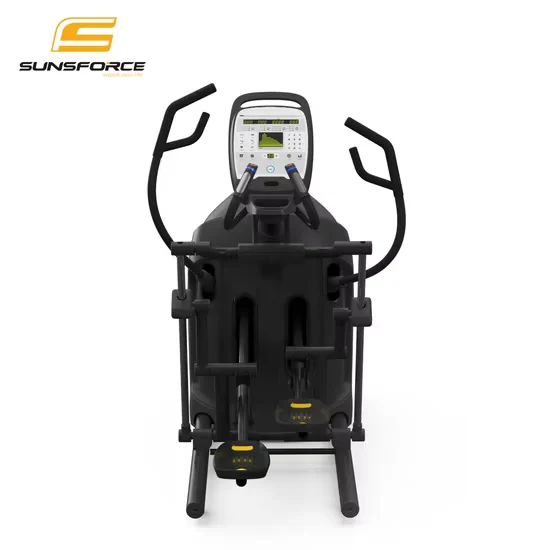
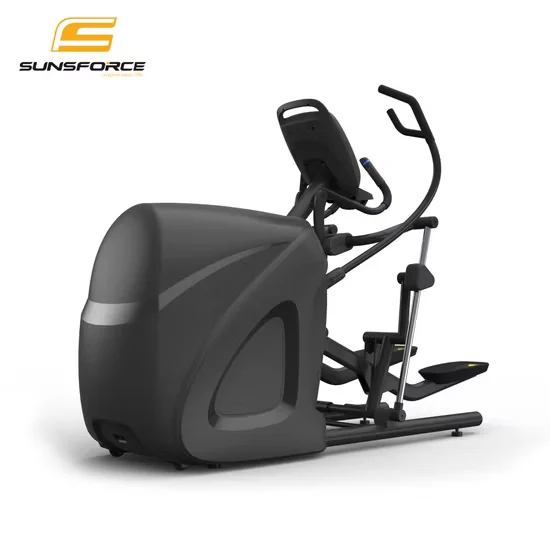
Sub-35dB Magnetic Drive — The CTC60 elliptical trainer’s magnetic resistance system eliminates friction contact, keeping acoustic output below 35dB even during sustained high-cadence intervals on guest room floors.
Technical Specifications
| Parameter | Value |
|---|---|
| Designation | CTC60 |
| Product Type | Elliptical Trainer |
| Resistance Type | Magnetic |
| Resistance Levels | 1-25 |
| Stride Grade | 1-10 |
| Step Depth Grade | 1-15 |
| Pedal Center Distance | 230mm |
| Console Type | LED |
| Max User Weight | 180kg |
| Net Weight | 240kg |
| Product Dimensions | 2120 × 790 × 1680 mm |
| Certification | ISO, RoHS, CE, EN 957 |
Application Suitability
| Deployment Scenario | Typical Use |
|---|---|
| Hotel fitness center on guest room floors | 24-hour self-service access where noise transfer to adjacent rooms must remain below complaint thresholds |
| Chain gym cardio zone | High-frequency rotation across dozens of members daily with minimal scheduled downtime |
| Corporate wellness room | Extended operating windows before and after standard business hours for shift workers |
| High-end residential home gym | Shared multi-unit buildings where sound propagation through floor assemblies is a primary concern |
| Sports performance training center | Steady-state and interval protocols requiring stable resistance output across long sessions |
Why Noise Complaints Reach the Front Desk Before Maintenance Does
Magnetic resistance removes the friction surface entirely, so the CTC60 commercial elliptical trainer magnetic resistance system produces no belt-on-pad contact noise at any cadence.
When cardio equipment sits directly above or beside occupied hotel rooms, friction-based resistance systems generate broadband noise that travels through floor assemblies. Guests call the front desk before maintenance ever logs a ticket, and the pattern repeats until the entire fleet is swapped. I have seen facilities replace full cardio zones within months because the original spec prioritized upfront cost over acoustic propagation. The CTC60’s sealed magnetic system avoids this failure mode at the source. [NEED_CITE: acoustic propagation thresholds for cardio equipment on suspended floor assemblies]
Where the CTC60 Sits in a Mixed Cardio Floor
The CTC60 fills the low-impact, full-body engagement slot in a commercial cardio layout. It complements treadmills and stair climbers by offering a zero-impact movement pattern, giving members with joint sensitivity a viable alternative without leaving the cardio zone. The 25-level resistance range and adjustable stride grade cover recovery-paced steady-state work through high-cadence interval blocks. Its 2120 × 790mm footprint fits standard commercial spacing grids, and the 180kg max user weight accommodates the broadest segment of gym membership without requiring a dedicated heavy-duty lane. The commercial elliptical trainer magnetic resistance architecture means it can be positioned against interior walls or near quiet zones without acoustic buffering.
Continuous Operation and Floor-Level Deployment
The CTC60 is built for facilities running 12 to 18 hours daily. Magnetic resistance generates no friction heat at the resistance mechanism, reducing thermal load on the surrounding area and lowering ventilation requirements in enclosed fitness rooms. At 240kg net weight, the frame mass absorbs vibration before it reaches the floor structure, which matters when deploying on upper hotel floors with suspended slabs. The 230mm pedal center distance keeps the user’s stance narrow and biomechanically neutral, reducing lateral sway that can transmit oscillation through lightweight floor assemblies. Power draw remains stable across all 25 resistance levels since magnetic systems do not spike current under load the way friction brakes do. [NEED_CITE: continuous duty cycle requirements for magnetic resistance cardio in commercial environments]
Magnetic Resistance and LED Console: What the Specs Actually Mean
The 25-level magnetic resistance range provides granular load steps, which matters in commercial settings where members span untrained beginners to competitive athletes. Unlike friction pads that wear unevenly and shift the resistance curve over time, permanent magnets maintain a consistent force profile throughout the equipment’s service life. The LED console displays real-time metrics including time, distance, speed, calories, and heart rate without requiring a touchscreen interface. This is a deliberate trade-off: LED panels have no capacitive layer to fail under sweat exposure and no operating system to patch, which reduces the maintenance surface in high-throughput gyms. Heart rate is captured through handlebar contact sensors, adequate for steady-state zone training though less precise than chest strap telemetry during rapid interval transitions. The 1-10 stride grade and 1-15 step depth grade together allow users to shift between a flat walking ellipse and a steep climbing motion, engaging different muscle groups without changing machines.
The Hidden Cost of Underspecifying Resistance Systems
Facilities that install friction-based ellipticals in high-traffic zones face a predictable degradation curve. The pad surface glazes within months, the resistance curve flattens at higher levels, and members start abandoning the machine because it no longer matches their effort expectations. I have watched gym operators cycle through replacement pads quarterly, each swap requiring technician hours and machine downtime. In hotel environments, the problem compounds because noise degradation accelerates alongside mechanical wear, and guest complaints create operational urgency that maintenance schedules do not. Voltage mismatches add another layer of failure when equipment arrives in markets with different power standards and no pre-shipment verification. [NEED_CITE: maintenance intervals for friction vs magnetic resistance in commercial cardio]
Why This Product Line for Your Facility
Every CTC60 undergoes 10,000-hour continuous operation testing on motors, frames, and sealed bearings before leaving the Shandong facility. The sub-35dB noise output is verified in actual hotel deployments, not just lab conditions. As part of a complete six-series cardio family, this elliptical trainer sources alongside treadmills, bikes, rowers, and climbers from one production line, simplifying warranty and spare parts logistics. OEM customization covers console UI language, frame color, and logo placement at flexible MOQ. Our team provides free 3D cardio-zone layouts that account for the CTC60’s 2120 × 790mm footprint, member flow corridors, and HVAC sightline requirements. Technical support responds around the clock with remote diagnostics and parts dispatch.
Documentation & Test Records
- CE declaration of conformity for the CTC60 elliptical trainer
- EN 957 test report covering structural and safety requirements
- ISO 9001 certificate for the manufacturing quality system
- RoHS compliance documentation for restricted substances
- Noise level test report verifying sub-35dB magnetic drive operation
- Durability test record confirming 10,000-hour continuous run validation
Installation, Commissioning & Maintenance
- Maintain 600mm lateral and 800mm rear clearance around the 2120 × 790mm frame for safe member passage
- Level the 240kg frame on vibration-damping pads to prevent oscillation transfer through upper-floor slabs
- Verify local voltage and plug standard before connecting; confirm dedicated circuit capacity for LED console draw
- Calibrate stride grade and step depth range at commissioning to ensure full 1-10 and 1-15 travel
- Inspect sealed magnetic resistance housing and pedal bearings at six-month intervals per maintenance schedule
- Wipe LED console and handlebar sensors after each use to prevent sweat corrosion on contact surfaces
Specifying the Right Configuration for Your Project
Share your cardio zone square footage and unit count so we can generate a 3D layout showing CTC60 placement relative to airflow paths and member circulation. Specify daily operating hours and peak occupancy to confirm the magnetic drive matches your duty cycle. Confirm deployment floor level and adjacent room types so we can validate the sub-35dB acoustic profile against your building’s sound transmission class. State your target market voltage and plug standard to avoid post-shipment mismatches, and indicate whether the LED console requires integration with facility management software.
Frequently Asked Questions
Q: What is the difference between magnetic resistance and friction-based systems on elliptical trainers?
A: Magnetic resistance uses permanent magnets positioned near a flywheel to create drag without physical contact. This eliminates pad wear, keeps the resistance curve stable over the equipment’s lifespan, and produces significantly less operational noise. Friction systems rely on physical contact surfaces that glaze and degrade under commercial use, requiring regular pad replacement and generating broadband noise that propagates through floor assemblies.
Q: How does the 25-level resistance range benefit a commercial gym membership?
A: A wide resistance range allows one machine to serve members from rehabilitation patients needing minimal load to athletes performing high-intensity intervals. In commercial environments with diverse user populations, this eliminates the need to dedicate separate machines to different fitness levels. The 25 steps provide fine granularity so members can make small adjustments rath* demanding.
Q: Can the LED console on the CTC60 sync with facility management software?
A: The LED console displays real-time workout metrics clearly and reliably without a touchscreen interface. It is designed for durability in high-sweat environments where capacitive screens degrade. If your facility requires data integration with management software or member apps, contact our team to discuss console options available with IoT connectivity and data export capabilities suited to your system requirements.
Q: What is the expected service life of the CTC60 under continuous commercial operation?
A: The CTC60’s sealed bearings, reinforced steel frame, and magnetic resistance mechanism are validated through 10,000-hour continuous operation testing. Magnetic systems avoid the wear patterns that limit friction-based equipment, and the absence of contact surfaces at the resistance mechanism reduces scheduled maintenance. Actual service life depends on maintenance adherence, environmental conditions, and daily usage intensity at your facility.
Q: How does the 180kg max user weight capacity relate to frame durability?
A: A 180kg rating reflects structural engineering decisions including steel gauge thickness, weld patterns, and bearing load ratings. It ensures the 240kg frame maintains rigidity and alignment under dynamic loading from the heaviest users without deflection or oscillation. This capacity covers the vast majority of commercial gym memberships and reduces warranty claims related to frame fatigue or component misalignment under load.
![Commercial Cross Elliptical Trainer CTC60-T for Gym Home Fitness Equipment [WARN] draft identifier mismatch](https://bicksport.com/wp-content/uploads/2026/08/commercial-cross-elliptical-trainer-ctc60-t-for-gym-home-fitness-equipment-warn-draft-identifier-mismatch-c15a35.webp)
![Elliptical Gym Commercial Fitness Equipment Cross Trainer 10.1" Touch Screen [WARN] draft identifier mismatch](https://bicksport.com/wp-content/uploads/2026/08/elliptical-gym-commercial-fitness-equipment-cross-trainer-10-1-touch-screen-warn-draft-identifier-mismatch-7ec675.webp)