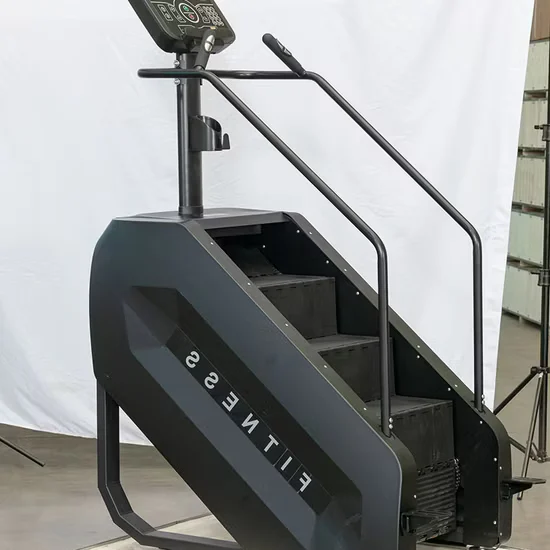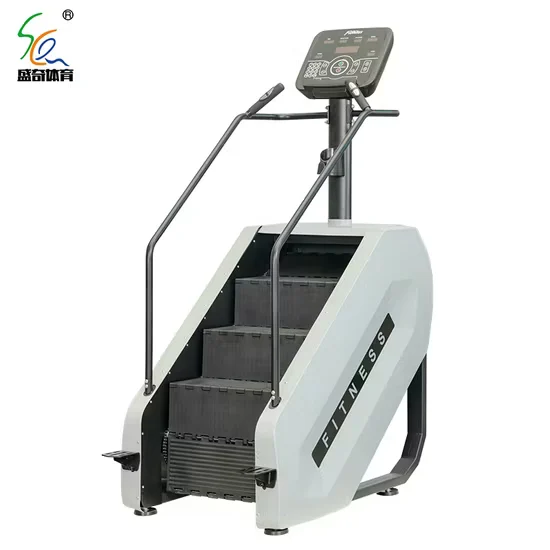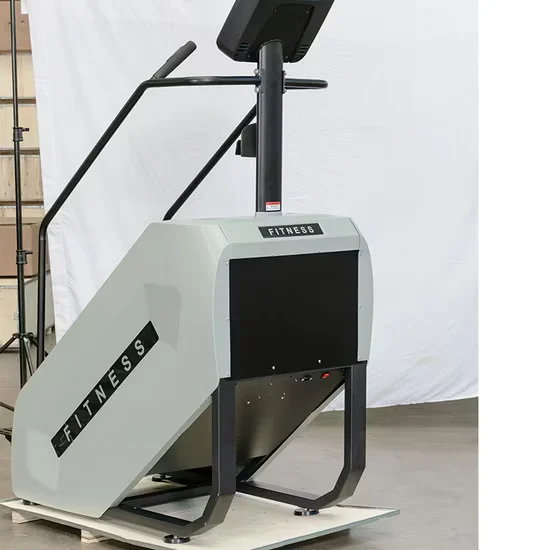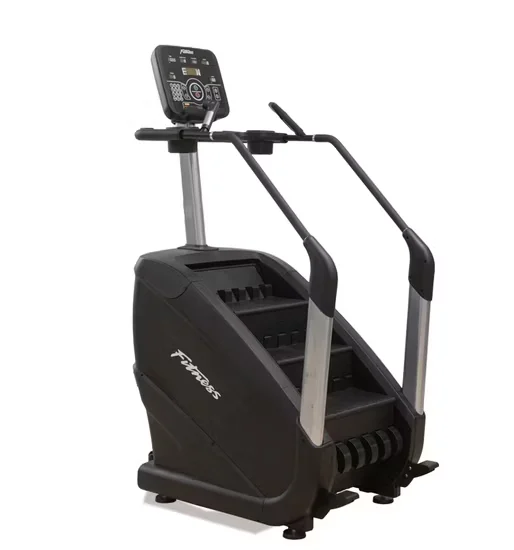
Heavy-Duty Endurance — Motor-driven stair climber tested for 10,000+ hours of continuous commercial operation with reinforced steel frame stability.
Technical Specifications
| Parameter | Value |
|---|---|
| Product Type | Stair Climber |
| Drive Type | Motor Drive |
| Running Velocity | 15 – 164 steps/minute |
| Step Area | 560 × 240 × 200 mm |
| Mains Input | AC220V±10% / AC110V±10% |
| OSD Display | Time, Climb, Calories, Steps, Heart Rate |
| Product Dimensions | 1400 × 700 × 2000 mm |
| Net Weight | 148 kg |
| Frame Material | Steel Pipe + PP Plastic |
| Folded | Unfolded |
| Certification | CE |
Application Suitability
| Deployment Scenario | Typical Use |
|---|---|
| Hotel fitness center on guest room floors | 24/7 guest access with low noise transmission to adjacent occupied rooms |
| Chain gym cardio zone | High-frequency member use across peak hours with continuous duty-cycle demand |
| Corporate wellness room | Compact footprint deployment supporting employee interval and steady-state sessions |
| High-end residential home gym | Quiet motor operation compatible with shared living spaces and multi-story structures |
| Sports performance training center | Adjustable step velocity for athlete conditioning and biometric tracking |
Why Motor Burnout Reaches the Manager Before the Maintenance Log
Commercial stair climbers live or die by their motor duty-cycle rating.
Facilities that spec light-duty motors for public cardio zones often face premature burnout within the first season of heavy member traffic. The commercial electric stair climber motor drive in this unit addresses that failure pattern by engineering the drive system for sustained load rather than intermittent bursts. When a motor designed for thirty-minute home sessions runs eight continuous hours in a gym, thermal accumulation degrades windings and bearings long before any scheduled maintenance window. Operators end up replacing units instead of servicing them [NEED_CITE: motor duty cycle classification for continuous commercial operation].
Where This Stair Climber Fits in a Mixed Cardio Floor
This stair climber covers low-impact vertical climbing across a broad intensity range, from 15 steps per minute for active recovery to 164 steps per minute for high-intensity interval blocks. In a cardio zone layout, it complements treadmills and ellipticals by engaging the glute and quad chains through a distinct movement pattern. The 1400 × 700 mm footprint allows placement along walls or in dedicated climbing bays without obstructing sightlines across the floor. The step area accommodates users of varying stride lengths, and the 148 kg net weight anchors the frame against lateral sway during vigorous use. The commercial electric stair climber motor drive delivers the adjustable velocity range that both novice members and advanced athletes require from a single unit.
Continuous Operation Demands and Environmental Factors
Deploying this unit in a hotel or multi-story facility requires attention to vibration transmission through the floor structure. The 148 kg steel frame provides inherent damping, but placement on upper floors benefits from anti-vibration pads beneath the leveling feet. Dual voltage compatibility — AC220V±10% and AC110V±10% — eliminates transformer dependencies when shipping to markets with different mains standards, though plug configuration must still match local requirements. The OSD console outputs real-time metrics including heart rate, but operators should verify whether the data protocol integrates with their existing membership management platform before committing to a fleet order [NEED_CITE: EN 957 requirements for commercial cardio equipment]. Adequate clearance around the unit — particularly overhead given the 2000 mm height — ensures heat dissipation from the motor housing during back-to-back use.
Decoding the Drive System and Load-Bearing Specs
The motor drive system in this stair climber translates electrical input into controlled step velocity without the momentum-assist of a flywheel, meaning the motor bears the full load of each step cycle. Unlike manual friction-based climbers where user effort directly dictates resistance, a motor-driven unit maintains consistent cadence regardless of fatigue, which is critical for structured interval programming. The steel pipe frame at 148 kg net weight provides the mass needed to resist frame flex when users push through heavy step loads — lighter frames transmit vibration into the floor and develop fatigue cracks at weld joints over extended use. The step area of 560 × 240 mm offers sufficient platform depth for secure foot placement without excess overhang that would widen the overall footprint. Heart rate monitoring via the OSD console supports effort-based programming, though grip sensor accuracy varies with hand moisture and contact pressure compared to chest-strap alternatives. The dual voltage input means the same unit ships to European and North American markets without internal rewiring.
The Hidden Cost of Underspec’d Components
A stair climber with a motor rated for intermittent rather than continuous duty will fail predictably under gym-floor conditions — typically within the first quarter of heavy deployment. Noise from worn bearings and degraded drive components then generates guest complaints in hotel settings, forcing reactive maintenance during occupied hours. When the frame lacks sufficient mass, lateral oscillation during use accelerates wear on pivot points and creates an unstable feel that discourages repeat use. Facilities that discover voltage incompatibility after container arrival face costly transformer procurement or entire shipment returns [NEED_CITE: voltage standard mismatches in international fitness equipment deployment]. Console data that cannot export to facility management software leaves operators blind to usage patterns, preventing evidence-based decisions about equipment rotation and replacement cycles.
What This Product Line Delivers to Facility Operators
The sub-35dB whisper-quiet operation verified across hotel deployments means this stair climber can occupy floors directly above or beside guest rooms without generating noise complaints. Motor and bearing assemblies undergo 10,000-hour continuous operation testing before production sign-off, matching the duty-cycle demands of 24/7 fitness centers. The OSD console provides real-time workout analytics, and OEM customization extends to the console UI so branded gym chains can align the interface with their visual identity. When planning a cardio zone, the 1400 × 700 mm footprint and 2000 mm height inform spacing calculations, and our 3D layout service accounts for airflow around the motor housing and member flow between adjacent units. Full documentation including spare parts lists supports in-house maintenance teams rather than creating vendor dependency.
Documentation & Test Records
- CE declaration of conformity for stair climber safety and electrical compliance
- EN 957 test report covering structural and mechanical performance requirements
- ISO 9001 certificate for manufacturing quality management systems
- Noise level test report verifying operational acoustic output
- Durability test record documenting 10,000-hour motor and frame validation
- Console technical documentation with OSD parameter specifications
Installation, Commissioning & Maintenance
- Confirm 1400 × 700 mm footprint clearance plus recommended front and side safety margins before placement
- Level the unit on a flat surface using adjustable feet to prevent frame stress and step misalignment
- Connect to a dedicated circuit matching AC220V or AC110V input specification to avoid shared-load voltage drops
- Run initial calibration cycle verifying full step velocity range from 15 to 164 steps per minute
- Inspect motor drive belt tension and pivot bearing lubrication at intervals defined by daily usage hours
- Wipe step surfaces and handrails after peak usage periods to prevent sweat corrosion on steel and PP components
Planning Your Stair Climber Deployment
Share your cardio zone square footage and target unit count so we can generate a 3D layout accounting for this climber’s footprint, overhead clearance, and airflow requirements. Specify average daily operating hours so we can confirm the motor duty-cycle rating matches your facility’s traffic profile. Indicate deployment floor level and adjacent room types to validate acoustic suitability. Confirm your market’s voltage standard and plug type, and let us know whether console data integration with your membership platform is required for operational reporting.
Frequently Asked Questions
Q: How does a motor-driven stair climber differ from a manual unit in durability and maintenance?
A: Motor-driven climbers maintain consistent step cadence under continuous use, distributing load evenly across drive components. Manual units rely on user-generated momentum, creating irregular stress patterns that accelerate wear on pivots and linkages. For commercial environments running eight or more hours daily, the motor drive system reduces unpredictable maintenance events and supports structured programming with reliable cadence control.
Q: How can I verify the motor is rated for 24/7 commercial deployment?
A: Request the motor duty-cycle specification sheet, which distinguishes continuous ratings from intermittent or peak values. A motor rated for continuous commercial operation will list thermal class, bearing life expectancy, and validated run-hour thresholds. Units spec’d for light commercial or home use typically carry lower thermal tolerances that degrade under sustained gym-floor demand.
Q: Does dual voltage compatibility mean the unit ships ready for any market?
A: The AC220V±10% and AC110V±10% input range covers most international mains standards without internal rewiring or external transformers. However, plug configuration and local electrical code compliance remain market-specific. Confirm your target deployment country’s plug type and circuit requirements before shipment to avoid on-site adaptation delays.
Q: Can the console data sync with our gym management software?
A: The OSD console displays time, climb, calories, steps, and heart rate in real time. Integration capability with third-party facility management platforms depends on the data output protocol configured at the factory. Specify your software platform during the quotation stage so we can confirm compatibility or scope custom interface development.
Q: How reliable is the heart rate reading for interval training programming?
A: The console reads heart rate through grip sensors on the handrails, which provide adequate accuracy for steady-state monitoring. For HIIT programming requiring precise biometric feedback, chest-strap monitors typically deliver more consistent readings during rapid cadence changes where hand contact pressure fluctuates.
![Professional Large Step Area Stair Climber for Fitness CentersSQ1017 Commercial Motor Drive Stair Climber for Fitness Centers [WARN] draft identifier mismatch](https://bicksport.com/wp-content/uploads/2026/08/professional-large-step-area-stair-climber-for-fitness-centerssq1017-commercial-motor-drive-stair-climber-for-fitness-centers-warn-draft-identifier-mismatch-547172.webp)