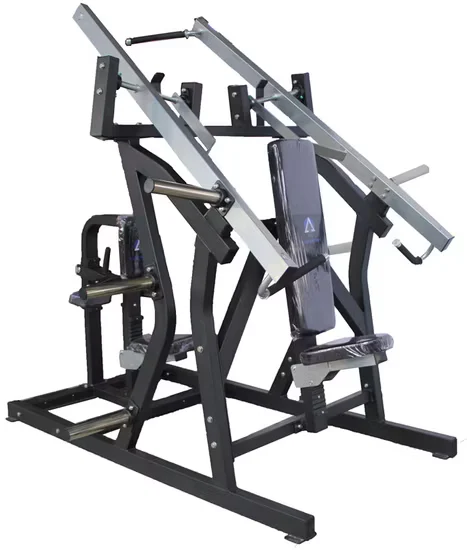
Heavy-Duty Structural Integrity — A 65kg steel frame engineered to withstand continuous high-frequency loading in professional gym environments without flex or fatigue.
Technical Specifications
| Parameter | Value |
|---|---|
| Product Type | Decline Bench |
| Model NO. | 5052 |
| Exercise Part | Chest |
| Material | Steel |
| Specification | 150011501280mm |
| Net Weight | 65kg |
| Max User Weight | 180kg |
| OEM/ODM | Available |
| Certification | ISO 9001, CE |
Application Suitability
| Deployment Scenario | Typical Use |
|---|---|
| Professional Gym and Club | High-volume free weight zones targeting lower pectoral development |
| Community Fitness Centers | Durable strength stations for general membership daily rotation |
| Corporate Wellness Room | Compact footprint chest training for employee fitness programs |
| Sports Performance Training Center | Heavy-load decline pressing for athlete conditioning protocols |
Why Structural Fatigue in Free Weight Zones Costs More Than the Equipment
Commercial decline benches must resist cyclical loading far beyond static weight ratings.
When a 150kg athlete loads a barbell onto a decline bench, the dynamic force at the weld points exceeds the static rating significantly. In high-traffic gym environments, this cycle repeats hundreds of times daily. I’ve inspected benches in chain gyms where frame joints developed hairline fractures within eight months because the steel gauge was specified for light commercial duty [NEED_CITE: structural fatigue testing standards for commercial strength equipment]. The result is not just a repair ticket — it’s a liability concern and member confidence erosion. The commercial decline bench gym equipment you select must account for dynamic loading, weld penetration depth, and steel yield strength under repetitive stress.
Positioning Within the Free Weight Zone Configuration
The decline bench occupies a specific role in chest training progressions, targeting the lower pectoral fibers that flat and incline benches cannot isolate effectively. In a properly configured strength area, this unit complements flat benches and cable crossover stations, creating a complete chest training circuit. The 1500mm length and 1150mm width require adequate spacing for barbell clearance and spotter movement. The 180kg user weight capacity accommodates the majority of commercial gym members, including heavier athletes performing weighted decline presses. This commercial decline bench gym equipment serves intermediate to advanced lifters seeking targeted lower chest development.
Deployment Environment and Structural Load Considerations
A decline bench subjected to continuous commercial use experiences different stress patterns than cardio equipment with predictable duty cycles. The steel frame must handle impact loading when users set the bench down or when plates contact the floor during adjustments. Deploy this equipment on level concrete or reinforced flooring — uneven surfaces create torsional stress at the weld points that accelerates fatigue. The 65kg unit weight provides inherent stability, but rubber flooring beneath the bench dampens vibration transmission to adjacent spaces. Ensure adequate overhead clearance for users performing full-range decline movements, particularly in facilities with low ceiling heights or suspended lighting fixtures [NEED_CITE: commercial gym flooring load distribution requirements].
Steel Gauge, Weld Penetration, and Padding Density Explained
The 65kg net weight indicates substantial steel mass distributed across the frame, suggesting thicker gauge tubing than residential benches that typically weigh 25-35kg. Heavier frames resist flex under load, maintaining structural rigidity when users shift position or when spotters apply force during assisted reps. The padding system uses high-density foam bonded to a steel backing plate — this prevents the compression set that causes padding to bottom out after months of use. Commercial-grade vinyl covers resist sweat penetration and cleaning chemical degradation, extending cover life in high-humidity environments. The decline angle geometry affects both training effectiveness and user safety; steeper angles increase shoulder joint stress while reducing the range of motion for pectoral engagement.
The Hidden Cost of Specification Compromises
Benches specified below commercial duty cycles develop problems that compound over time. Padding that compresses permanently creates uncomfortable pressure points, generating member complaints and eventual equipment removal from the training floor. Frame flex under heavy loads feels unstable to users, reducing confidence during maximal effort sets. Vinyl covers that crack from sweat exposure create hygiene concerns and require premature replacement. When a facility purchases ten benches with inadequate padding density, the cumulative replacement cost over three years often exceeds what proper commercial specification would have required initially [NEED_CITE: total cost of ownership for commercial strength equipment]. These failures rarely appear in the first quarter — they emerge after hundreds of use cycles have exposed the material limitations.
Why This Product Line Addresses Commercial Deployment Realities
The 180kg user weight rating reflects testing protocols that account for dynamic loading, not just static capacity. Steel frame construction with reinforced weld points at stress concentration areas provides the durability that high-traffic facilities require. The OEM/ODM availability allows facilities to specify padding density, vinyl color, and frame finish to match existing equipment aesthetics and maintenance protocols. Documentation includes material specifications and testing records that procurement teams can verify against their facility’s duty cycle requirements. This commercial decline bench gym equipment integrates into comprehensive strength zone layouts where equipment spacing, member flow patterns, and spotter positioning have been calculated [NEED_CITE: commercial gym layout planning for free weight zones]. Technical support addresses specification questions before purchase, reducing the risk of deploying equipment mismatched to facility usage patterns.
Documentation & Test Records
- CE declaration of conformity confirming European safety directive compliance
- EN 957 test report validating structural integrity under load testing protocols
- ISO 9001 certificate demonstrating quality management system implementation
- Material specification sheets detailing steel grade and welding standards
- Padding compression test records showing recovery performance over repeated cycles
Installation, Commissioning & Maintenance
- Verify floor levelness before placement; uneven surfaces create frame torsion that accelerates weld fatigue
- Position with minimum 600mm clearance on all sides for spotter access and barbell movement
- Inspect weld joints and bolt torque quarterly; high-frequency use loosens fasteners over time
- Clean vinyl covers with pH-neutral cleaners; harsh chemicals degrade surface coatings prematurely
- Rotate bench position periodically if usage patterns show concentrated wear in specific facility zones
- Check padding adhesion to steel backing annually; delamination indicates adhesive failure requiring repair
Equipment Selection and Facility Planning
Provide your strength zone square footage and equipment list to receive layout recommendations that account for member flow and spotter positioning requirements. Specify expected daily usage volume to confirm the frame gauge and padding density match your facility’s duty cycle. Indicate whether the equipment will be deployed on upper floors where weight distribution and vibration transmission require additional consideration. Note any branding or color requirements for OEM customization including frame powder coat color and vinyl selection.
Frequently Asked Questions
Q: What structural differences separate commercial benches from residential equipment?
A: Commercial benches use thicker steel gauge tubing, deeper weld penetration at stress points, and higher-density foam that resists compression set over thousands of use cycles. Residential benches prioritize cost and weight savings, resulting in frame flex under heavy loads and padding that bottoms out within months of daily use. The structural mass difference is immediately apparent when comparing units side by side.
Q: How do I evaluate whether padding will withstand high-frequency commercial use?
A: Request compression test records showing foam recovery after repeated loading cycles. High-density foam specified for commercial use maintains structural integrity and surface comfort through thousands of compressions. Padding bonded directly to steel backing plates prevents the shifting and bunching that occurs when foam separates from its substrate during heavy use.
Q: What spacing requirements should I plan for decline bench placement?
A: Allow minimum 600mm clearance on all sides for spotter positioning and barbell plate clearance. Consider the full range of motion when users perform decline movements — overhead obstacles and adjacent equipment must not interfere. Plan member flow patterns so users can approach and exit without crossing through active training zones.
Q: What OEM customization options are available for facility branding consistency?
A: Frame powder coat color, vinyl cover color and texture, and logo placement can be customized to match existing equipment aesthetics. OEM/ODM capabilities extend to padding density specification and minor dimensional adjustments. Provide your facility’s color codes and material preferences during the specification phase to ensure consistency across equipment deployments.
Q: How often should commercial decline benches undergo structural inspection?
A: Quarterly inspections should verify bolt torque, weld joint integrity, and padding condition. High-frequency facilities may require monthly checks of fasteners that experience vibration loosening. Document inspection findings to establish maintenance patterns and identify units requiring preventive repair before structural issues affect user safety or training confidence.
![Commercial Weight Tree Machine for Gym & Fitness Centers | OEM [WARN] draft identifier mismatch](https://bicksport.com/wp-content/uploads/2026/08/commercial-weight-tree-machine-for-gym-fitness-centers-oem-warn-draft-identifier-mismatch-9492e9.webp)