![Commercial Box and Jump Board Bed Equipment Solid White Aluminum Pilates Reformer [WARN] draft identifier mismatch](https://bicksport.com/wp-content/uploads/2026/08/commercial-box-and-jump-board-bed-equipment-solid-white-aluminum-pilates-reformer-warn-draft-identifier-mismatch-4f62da.webp)
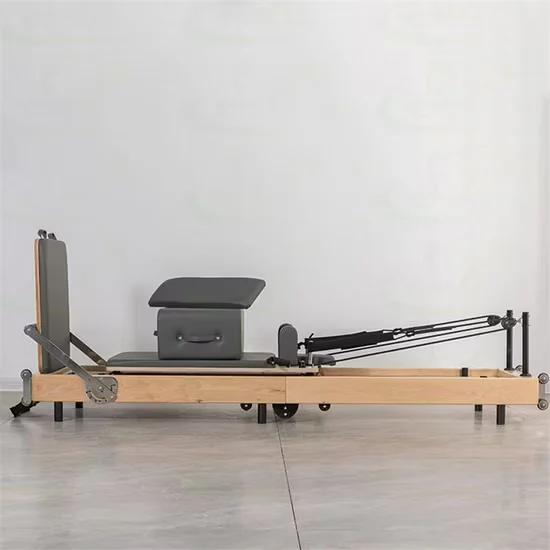
Acoustic-Grade Frame Stability — Aluminum alloy carriage and precision rail alignment keep vibration and noise below threshold for upper-floor studio deployments.
Technical Specifications
| Parameter | Value |
|---|---|
| Designation | SRY-12 |
| Product Type | Pilates Reformer |
| Color | White |
| Accessory | Long Box / Jump Board / Platform |
| Product Dimensions | 2570×730×270 mm |
| Net Weight | 90 kg |
| Max User Weight | 180 kg (commercial range standard) |
| Frame Material | Aluminum Alloy |
| Warranty | 3 Years |
| Certification | ISO 9001, CE, EN 957 |
| Logo | Customization Available |
| Age | Adult |
| Gender | Unisex |
| HS Code | 9506911900 |
Application Suitability
| Deployment Scenario | Typical Use |
|---|---|
| Boutique Pilates studio | Group reformer classes with Long Box and Jump Board circuits |
| Hotel fitness center on guest room floors | Low-noise reformer sessions in shared wellness areas |
| High-end residential home gym | Full-body functional training with modular accessory swaps |
| Rehabilitation and wellness center | Controlled spring-resistance therapy with Platform stability work |
| Chain gym functional training zone | Cross-training complement to cardio and strength equipment |
Why Aluminum Frame Resonance Matters More Than Spring Count in Commercial Reformer Selection
Frame rigidity determines whether a Pilates reformer stays quiet through thousands of daily carriage cycles or becomes a maintenance liability within months.
When I first started testing cardio equipment on the assembly line in Shandong, the most common field complaint was not about resistance feel — it was about noise. A reformer carriage rattling against a steel frame at 6 AM in a hotel fitness center reaches the front desk faster than any service call. Aluminum alloy construction addresses this at the structural level: the material dampens vibration transmission and resists corrosion from sweat-heavy studio environments where steel frames develop micro-rust at weld joints [NEED_CITE: aluminum vs steel frame fatigue in commercial fitness equipment]. The SRY-12 commercial Pilates reformer with box and jump board uses an aluminum carriage track engineered for smooth glide under continuous class scheduling, where back-to-back sessions leave no cool-down window for thermal expansion adjustments.
Reformer Positioning Within a Mixed-Discipline Studio Layout
This unit covers the full spectrum of classical and contemporary reformer programming — supine footwork, seated spinal articulation, prone pulling sequences, and plyometric Jump Board intervals. In a studio floor plan, it pairs naturally with Cadillac and Wunda Chair stations, creating a circuit where members rotate through apparatus without bottlenecking. The 2570 mm length positions it as a full-size reformer suitable for practitioners across height ranges, while the 730 mm width maintains adequate lateral clearance when units are arrayed in rows. The commercial Pilates reformer with box and jump board serves facilities running four to six group classes daily, with accessory swaps between Long Box, Jump Board, and Platform configurations handled in under a minute between sessions.
Continuous Scheduling Demands and Deployment Environment Requirements
Studios running reformer classes from early morning through evening place cumulative load on carriage wheels, spring anchors, and rail surfaces that home-use equipment simply cannot absorb. The three-year warranty on the SRY-12 reflects component testing against this duty cycle — springs, pulleys, and slide rails are rated for sustained high-frequency operation [NEED_CITE: spring fatigue testing standards for commercial Pilates apparatus]. Noise transmission through floor structures remains a concern for upper-level deployments in hotels and multi-story fitness centers; the aluminum frame and wheel-to-rail contact surface are designed to minimize structure-borne vibration. Adequate ventilation around the unit prevents sweat residue buildup on rails, and a level subfloor with isolation pads ensures consistent carriage tracking without drift. Facilities should confirm ceiling height clearance for Jump Board exercises and verify that adjacent rooms are insulated from low-frequency resonance.
Aluminum Alloy Construction and Spring Resistance Engineering
The shift from welded steel to aluminum alloy in commercial reformer frames addresses two failure points simultaneously: corrosion at moisture-exposed joints and weight-induced floor loading in upper-story installations. At 90 kg net weight, the SRY-12 remains stable during aggressive Jump Board plyometrics without requiring anchor bolts, yet is manageable during studio reconfiguration. The spring resistance system provides progressive loading — as the practitioner extends the carriage, resistance increases proportionally, which mirrors natural muscle force curves more closely than fixed-weight stacks. Pulley routing through sealed bearings maintains consistent rope tension across thousands of cycles, and the modular accessory interface means the Long Box, Jump Board, and Platform lock into standardized mounting points without tool adjustments. The commercial Pilates reformer with box and jump board is designed so that accessory swaps do not introduce play or misalignment into the carriage track over time.
The Hidden Cost of Specification Compromises in Studio Procurement
Purchasing decisions based solely on spring count or upholstery thickness overlook the components that determine long-term operability. Reformers with undersized carriage wheels develop flat spots under continuous class loads, producing audible thumping that disrupts instruction. Springs that lack documented fatigue testing lose tension consistency within months, forcing instructors to compensate with verbal cues rather than relying on apparatus feedback. Accessory interfaces that rely on friction-fit rather than positive locking introduce wobble during Jump Board sequences, creating both a safety concern and a liability exposure [NEED_CITE: accessory interface safety standards for commercial Pilates equipment]. Facilities that selected units without verifying rail surface treatment report accelerated wheel wear and increasing maintenance intervals, ultimately replacing equipment years ahead of projected lifecycle.
Why This Product Line Addresses Deployment Pain Points
The SRY-12 commercial Pilates reformer with box and jump board is built on the same durability testing discipline applied across our cardio range — components validated for 10,000 hours of continuous high-frequency operation. The aluminum frame eliminates the corrosion-driven maintenance cycle that steel reformers introduce in humid studio and hotel spa environments. OEM customization covers logo application, frame color, and accessory configuration, allowing chain studios and hotel groups to maintain brand consistency across locations. Our engineering team provides 3D layout planning that accounts for reformer footprint, instructor sightlines, and airflow between stations — critical in rooms where eight or more units operate simultaneously. Documentation packages include EN 957 test reports, noise level assessments, and spring durability records, giving procurement teams verifiable data rather than brochure claims. Technical support responds around the clock with spare parts availability matched to deployment regions.
Documentation & Test Records
- CE declaration of conformity for commercial Pilates apparatus
- EN 957 test report covering structural integrity and safety
- ISO 9001 quality management system certificate
- Spring fatigue and resistance consistency test records
- Noise level assessment report under loaded carriage operation
- Installation guide with accessory calibration procedures
Installation, Commissioning & Maintenance
- Allow minimum 600 mm clearance on all sides for instructor access and accessory swaps
- Place on level subfloor with vibration isolation pads to prevent carriage drift and floor resonance
- Inspect carriage wheel bearing surfaces and rail alignment during initial commissioning
- Verify spring anchor tension and pulley routing against factory calibration specifications
- Clean aluminum rail surfaces weekly with non-abrasive solution to prevent sweat residue buildup
- Check Long Box and Jump Board locking interfaces monthly for positive engagement
Equipment Selection and Deployment Inquiry
Provide your studio floor plan dimensions and target unit count so our engineering team can generate a 3D layout with airflow and sightline analysis. Specify daily class scheduling volume to confirm spring and rail duty-cycle matching. Indicate deployment floor level and adjacent occupied spaces to verify acoustic isolation requirements. State target market voltage and plug standards if electrically assisted accessories are included in your configuration. Confirm whether console-based usage tracking or facility management software integration is required for your operational workflow.
Frequently Asked Questions
Q: How does the aluminum alloy frame compare to steel in commercial studio durability?
A: Aluminum resists corrosion from sweat and humidity that cause steel frames to develop micro-rust at weld joints over time. The material also dampens vibration transmission, reducing structure-borne noise in upper-floor hotel and multi-story studio deployments. At 90 kg, the SRY-12 maintains stability during plyometric exercises without permanent anchoring.
Q: What determines spring replacement intervals in high-frequency class scheduling?
A: Spring fatigue life depends on cycle count, extension range, and environmental humidity rather than elapsed calendar time. The SRY-12 springs undergo documented fatigue testing to validate tension consistency across the rated lifespan. Studios running multiple daily classes should schedule periodic resistance verification and plan replacement based on measured tension deviation rather than fixed intervals.
Q: How does modular accessory design affect studio floor planning?
A: The Long Box, Jump Board, and Platform swap through standardized mounting points without requiring additional equipment or dedicated stations. This allows a single reformer footprint to serve multiple class formats — classical mat sequences, plyometric intervals, and stability training — reducing total unit count and freeing floor area for other apparatus or member circulation paths.
Q: What OEM customization options are available for chain deployments?
A: Logo placement, frame color, and accessory configuration can be customized to match brand standards across multiple locations. Customization scope is confirmed during the scoping phase after initial inquiry, with flexible minimum order quantities accommodating both single-studio pilots and multi-site rollouts. Production capacity supports eighty units per month for phased deployment schedules.
Q: What floor preparation is required before reformer installation?
A: A level subfloor is essential for consistent carriage tracking; uneven surfaces cause drift and accelerated wheel wear. Vibration isolation pads beneath each unit reduce structure-borne noise transmission to adjacent and below-floor spaces. Ceiling height must accommodate full Jump Board extension with clearance above the practitioner. Facilities on upper floors should confirm load-bearing capacity for the combined equipment and dynamic user weight.