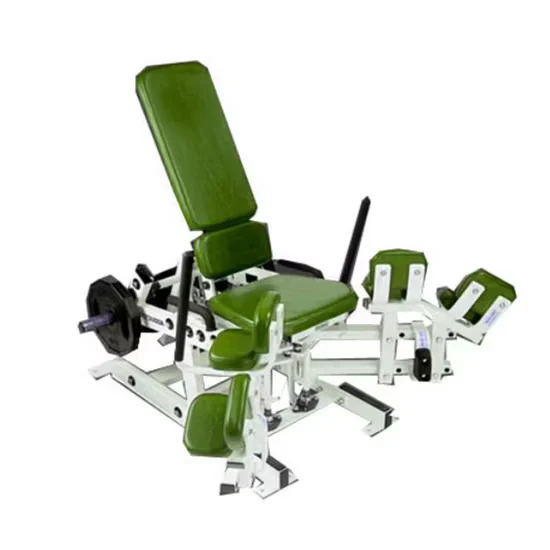
Heavy-Duty Frame — Welded steel construction rated for continuous commercial use, supporting diverse training postures across professional facilities.
Technical Specifications
| Parameter | Value |
|---|---|
| Designation | OS-H5066 |
| Product Type | Adjustable Bench |
| Exercise Part | Abdominal |
| Power Source | Manual |
| Frame Material | Steel |
| Product Dimensions | 1615 560 1450 mm |
| Net Weight | 38 kg |
| Main Frame Color | Customizable per client specification |
| Cushion Color | Customizable per client specification |
| Folded | Unfolded |
| Age Group | Adult |
| Gender | Unisex |
| OEM/ODM | Acceptable |
| Certification | ISO 9001, CE |
Application Suitability
| Deployment Scenario | Typical Use |
|---|---|
| Chain gym free weight zone | Core abdominal training and incline resistance exercises |
| Professional sports training center | Athlete conditioning and targeted abdominal strengthening |
| Corporate wellness facility | Daily strength circuit integration for employee fitness programs |
| Community fitness center | Shared-use abdominal and functional strength station |
Why Frame Weight and Weld Quality Determine Equipment Lifespan in Public Facilities
Structural integrity under repeated loading separates commercial benches from retail-grade alternatives.
Facility operators frequently encounter adjustable benches that develop frame wobble within months of deployment. The pivot points and weld joints bear the cumulative stress of thousands of articulation cycles per year. When procurement decisions prioritize unit cost over steel gauge and welding depth, the replacement cycle accelerates, disrupting member experience and inflating long-term capital expenditure [NEED_CITE: structural fatigue analysis for commercial gym equipment]. A commercial adjustable bench integrated gym trainer must sustain repeated angle adjustments while maintaining alignment under loaded conditions, which requires deliberate engineering at every joint interface.
Positioning Within the Free Weight and Functional Training Zone
This equipment anchors the abdominal and core training segment within a facility’s strength layout. The OS-H5066 pairs naturally with plate-loaded machines and cable systems, providing a dedicated station for incline and decline movements. Its footprint suits both high-density chain gym floors and specialized performance centers where athletes rotate through structured conditioning circuits. The manual adjustment mechanism accommodates users of varying body proportions without electronic dependency, ensuring continuous availability during peak traffic periods. As a commercial adjustable bench integrated gym trainer, it delivers targeted engagement for the abdominal muscle group across multiple resistance angles.
Deployment Density and Environmental Considerations
The unfolded configuration requires adequate perimeter clearance for safe ingress and egress during loaded exercises. Floor mounting considerations include level surface preparation to prevent lateral drift during intense contraction phases. Facilities installing multiple units should account for the 1615 mm length and 1450 mm height when planning spatial allocation and sightline management. The steel frame dissipates ambient humidity better than composite alternatives, reducing corrosion risk in basement or pool-adjacent installations [NEED_CITE: environmental degradation factors for commercial fitness equipment]. Ventilation requirements remain minimal given the manual operation, though air circulation prevents sweat accumulation on contact surfaces.
Material Selection and Load Transfer Mechanics
The 38 kg net weight reflects the steel gauge chosen to resist deformation under asymmetric loading. When users perform incline abdominal work, the pivot axis transfers torque directly into the main frame welds. Manual adjustment mechanisms using pin-lock or lever-cam systems eliminate electrical failure points while demanding precise machining tolerances to prevent play development over thousands of articulation cycles. The cushion attachment interface must distribute shear forces across a broad surface area, preventing localized tearing at stitch lines. Customizable frame and cushion colors allow facilities to maintain brand consistency across equipment categories without compromising structural specifications.
The Hidden Cost of Under-Specified Components
Procurement teams evaluating adjustable benches often focus on visible features while overlooking load path engineering. Benches with insufficient frame mass develop resonance during repetitive movements, transmitting vibration to adjacent equipment and creating user discomfort. Pivot mechanisms using undersized pins or thin-wall tubing exhibit progressive looseness, eventually requiring complete unit replacement rather than component-level repair. Cushion materials lacking adequate density compress permanently under sustained loading, reducing effective training angles and accelerating member complaints [NEED_CITE: cushion density standards for commercial fitness seating]. These failures compound across a facility’s equipment portfolio, generating maintenance overhead that exceeds the initial procurement savings.
Why This Product Line Delivers Operational Continuity
The six-series cardio family allows facilities to source complementary equipment from a unified manufacturing process, ensuring consistent quality control across strength and conditioning zones. Full OEM and ODM capability extends to frame color, cushion material, and dimension customization, enabling brand-specific differentiation without tooling delays. The ISO 9001 certified production workflow includes weld inspection protocols that verify joint integrity before powder coating application. Facility operators benefit from 3D layout planning services that optimize equipment spacing, airflow patterns, and member circulation paths around fixed stations like the OS-H5066. Technical support availability ensures rapid resolution of any adjustment mechanism queries during the commissioning phase.
Documentation & Test Records
- CE conformity declaration confirming European market compliance
- EN 957 test report validating structural and mechanical safety requirements
- ISO 9001 certificate covering manufacturing quality management processes
- Weld inspection records documenting joint integrity verification
- Material certification for steel frame components
- Load testing documentation demonstrating capacity validation
Installation, Commissioning & Maintenance
- Verify floor levelness across the 1615 x 560 mm footprint before anchoring
- Maintain minimum clearance around the 1450 mm height for full articulation range
- Inspect pivot pin engagement and locking mechanism monthly during initial deployment
- Check weld joints at stress concentration points quarterly under loaded conditions
- Wipe cushion surfaces daily with approved cleaning agents to prevent material degradation
- Re-torque frame fasteners according to maintenance schedule after first 500 usage cycles
Equipment Selection and Specification Confirmation
Provide your facility’s total free weight zone area and adjacent equipment inventory to receive optimized placement recommendations accounting for member flow and sightlines. Specify your target market’s environmental conditions, including humidity levels and temperature ranges, to confirm material suitability for long-term deployment. Clarify whether customization requirements extend beyond standard frame and cushion colors to include dimension modifications or specialized mounting configurations. Identify any facility management system integration needs that might influence equipment selection across your procurement portfolio.
Frequently Asked Questions
Q: What distinguishes commercial-grade adjustable benches from residential models?
A: Commercial benches use heavier steel gauges, reinforced weld patterns, and higher-density cushion materials designed to withstand continuous multi-user loading. Residential variants optimize for cost and compact storage, sacrificing structural reserves necessary for public facility duty cycles. The pivot mechanisms in commercial equipment undergo extended cycle testing to verify sustained precision under frequent adjustment demands.
Q: How should facilities evaluate cushion durability for high-traffic environments?
A: Cushion longevity depends on foam density, cover material thickness, and stitching reinforcement patterns. Request material specification sheets showing compression resistance ratings and abrasion test results. Facilities should verify that replacement cushions remain available as standalone components rather than requiring full unit replacement when surface wear occurs.
Q: What adjustment mechanism types offer the best long-term reliability?
A: Pin-lock and lever-cam systems provide mechanical simplicity with fewer failure points compared to hydraulic or gas-assisted alternatives. Evaluate the pin diameter relative to frame thickness and verify that locking positions remain positive under loaded conditions. Mechanisms using stainless steel pins resist corrosion better than plated variants in humid environments.
Q: What customization options affect lead time and minimum order requirements?
A: Standard frame and cushion color customization typically integrates into normal production cycles without significant delays. Dimensional modifications requiring new tooling or weld fixture adjustments may extend lead times and increase minimum quantities. Confirm early whether custom requirements involve aesthetic changes or structural modifications affecting manufacturing processes.