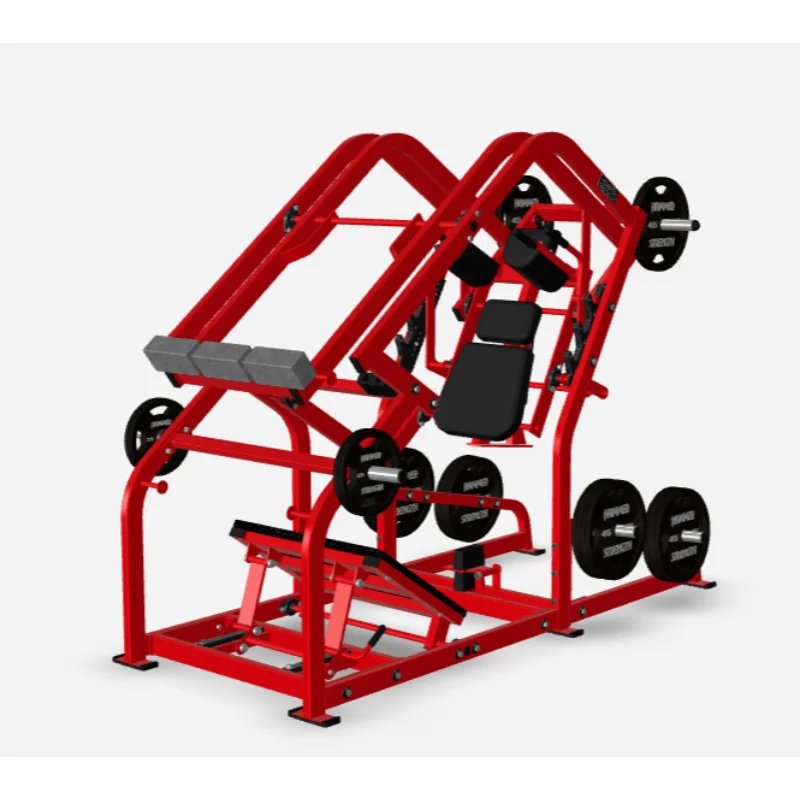
Heavy-Duty Core Training — Steel frame construction and reinforced welding nodes tested for continuous high-frequency load in commercial strength zones.
Technical Specifications
| Parameter | Value |
|---|---|
| Designation | OS-H5060 |
| Product Type | Adjustable Abdominal Board |
| Exercise Part | Abdomen |
| Material | Steel |
| Product Dimensions | 1400680600mm |
| Net Weight | 48kg |
| Color Options | Optional |
| OEM | Available |
| Certification | ISO 9001, CE |
| Function | Body Building |
| Age Group | Adult |
| Gender | Unisex |
| Appliance | Gymnasium / Fitness Center |
Application Suitability
| Deployment Scenario | Typical Use |
|---|---|
| Chain gym strength and functional training zones | High-frequency core conditioning circuits between compound lifts |
| Corporate wellness room | Space-efficient abdominal training corner for daily employee use |
| Hotel fitness center on guest room floors | Compact steel-frame unit complementing limited-space cardio setups |
| Sports performance training center | Targeted core stabilization work for athlete periodization programs |
| High-end residential home gym | Dedicated abdominal station in a multi-rack environment |
Why Weld Joints Fail Before the Warranty Expires
Full-gauge steel tubing and reinforced gusset plates carry every repetition without flex.
Commercial strength zones see members adjusting equipment angles dozens of times daily. Thin-wall tubing and spot-welded joints fatigue under repeated loading, developing hairline cracks that compromise structural integrity long before anyone reports a problem. I have seen adjustable boards pulled from gym floors after the angle lock mechanism worked loose from its housing, leaving the backrest unstable mid-set [NEED_CITE: structural fatigue patterns in high-frequency commercial strength equipment].
The commercial adjustable abdominal board strength equipment category is where shortcuts show fastest. A board that flexes under load is not just uncomfortable — it shifts the resistance curve and forces stabilizer muscles to compensate, defeating the purpose of the exercise. When a facility replaces core training stations annually, the purchase price was never the real cost.
Where This Board Fits in the Strength Floor Layout
This commercial adjustable abdominal board strength equipment occupies a compact footprint that fits between rack bays or along perimeter walls where floor space is constrained. The multi-position backrest covers flat, decline, and intermediate angles, pairing naturally with cable columns for weighted crunch progressions and with free-weight zones for plate-loaded core work. It serves users across a wide body weight range without adjustment complexity, making it suitable for high-turnover areas where members cycle through stations quickly. The unit collects no electronic data and requires no console interaction — it is purely mechanical, which eliminates one entire category of maintenance in facilities that already manage dozens of networked machines.
Load Cycles, Floor Mounting, and Daily Abuse
A commercial gym core station may see forty or more users per day, each adjusting the backrest angle and loading the frame with dynamic body weight. Steel-on-steel contact points at the adjustment pins experience repeated impact, demanding hardened detents rather than soft-metal friction locks. Floor mounting is not optional for a 48kg unit receiving dynamic loads; anchor bolts prevent walking and vibration transfer to adjacent equipment [NEED_CITE: dynamic load requirements for commercial strength equipment anchoring]. Leveling feet compensate for minor floor irregularities, but the subfloor must be structurally rated for concentrated point loads. No electrical circuit is required, which simplifies placement decisions and removes one constraint from the floor plan.
Decoding the Steel and Locking Mechanism Specs
The 1400680600mm frame dimension places this board in the full-length commercial category, providing adequate backrest support for taller users without the board becoming an obstacle in tight layouts. The 48kg net weight indicates substantial material mass — thin-wall commercial boards typically sit below 30kg and rely on footprint width rather than mass for stability. The steel construction specification points to welded tubular sections with reinforced gussets at stress concentration points, specifically where the angle adjustment bracket meets the main frame rail. Multi-position angle locking uses pin-through-detent engagement rather than friction clamps, which maintain positive lock under repetitive loading without requiring periodic re-tensioning. The absence of padding specification in the base unit means upholstery density and vinyl covering are configurable through OEM channels to match facility branding and wear-resistance requirements.
The Real Cost of Underspecified Core Stations
Facilities that source abdominal boards based on unit price alone discover the economics quickly. Thin-gauge frames develop visible weld cracking within the first year of commercial use, and angle adjustment mechanisms that rely on friction rather than positive lock begin slipping under load, creating a safety concern that pulls the entire station offline. When a chain gym replaces core training equipment across multiple locations simultaneously, the logistics cost and member disruption far exceed what a heavier-gauge unit would have required initially [NEED_CITE: replacement cycle costs for commercial strength equipment in multi-site operations]. Noise from rattling adjustment mechanisms in a quiet strength area also registers as a quality signal that members notice, even if they never file a complaint.
Why This Product Line Earns Floor Space
The OS-H5060 draws from a manufacturing approach that tests frame welds and mechanical joints against continuous high-frequency use protocols, the same methodology applied across the full cardio and strength family. The steel frame receives the same surface treatment and quality inspection as equipment rated for 10,000-hour continuous operation, because failure modes in strength equipment follow the same fatigue patterns as in motorized cardio. OEM customization extends to frame color, upholstery specification, and branding, allowing facility operators to maintain visual consistency across a mixed equipment floor. The compact 1400680600mm footprint was established with 3D layout planning in mind, leaving standard clearance for adjacent equipment traffic flow. 24/7 technical support covers mechanical troubleshooting and parts replacement, backed by ISO 9001 process documentation.
Documentation & Test Records
- CE conformity declaration for commercial strength equipment category
- EN 957 test report covering static and dynamic load verification
- ISO 9001 manufacturing process certificate
- Structural weld inspection and material specification records
- Angle adjustment mechanism fatigue cycle test documentation
- Surface treatment and corrosion resistance verification
Installation, Commissioning & Maintenance
- Position with minimum 600mm clearance on all sides for safe user entry and exit from the 1400680600mm frame
- Anchor to structural floor using specified bolt pattern to manage dynamic load transfer from the 48kg steel unit
- Verify all angle lock pins engage positively in each detent position before releasing equipment for member use
- Inspect weld joints and adjustment mechanism engagement quarterly under full facility load conditions
- Wipe steel surfaces and upholstery after each use cycle with non-corrosive cleaner to prevent sweat accumulation
- Confirm leveling feet maintain full ground contact to prevent frame torsion during off-angle loading
Specifying the Right Core Station for Your Floor Plan
Provide your strength zone square footage and equipment list so we can generate a 3D layout that positions this unit with correct traffic clearances and adjacent equipment sightlines. Specify whether the deployment floor is above occupied space, which determines whether vibration isolation pads are required beneath the frame. Indicate your target market so we can confirm color, branding, and upholstery options align with your facility visual standards. State whether OEM customization is needed for frame finish or logo placement, and provide your expected daily user volume so we can verify the mechanical specification matches your operational duty cycle.
Frequently Asked Questions
Q: What structural differences separate commercial abdominal boards from home-use versions?
A: Commercial boards use thicker-gauge steel tubing, reinforced gusset plates at high-stress weld junctions, and positive-lock angle adjustment mechanisms rated for hundreds of daily engagement cycles. Home units rely on lighter frames and friction-based locks that degrade rapidly under shared-use conditions. The material mass difference — often doubling the unit weight — directly reflects structural margin.
Q: How long does the angle adjustment mechanism last under daily commercial use?
A: Pin-through-detent locking systems in commercial-grade boards are tested through repeated engagement cycles that simulate years of daily adjustment. The critical factor is hardened steel pins mating with hardened detent seats, preventing the oval wear patterns that cause slop in softer metal assemblies. Regular visual inspection of pin engagement depth catches wear before it affects user safety.
Q: How does steel thickness relate to load capacity and frame longevity?
A: Greater wall thickness and larger tube cross-section increase both static load rating and resistance to cyclic fatigue cracking. A heavier frame absorbs dynamic loading without flex, which prevents stress concentration at weld nodes. This is why the 48kg net weight of this unit signals genuine commercial capacity rather than a light-commercial rating dressed in marketing language.
Q: What OEM options are available and what minimum quantities apply?
A: OEM customization covers frame color, upholstery material and density, brand logo placement, and packaging specification. Minimum order quantities vary by customization depth — color changes typically require lower thresholds than full upholstery re-engineering. Confirm your specific requirements during the inquiry stage so we can scope the production run accurately.
Q: Where should abdominal boards sit in a strength zone layout?
A: Core stations belong near cable columns and free-weight zones where members naturally progress from compound movements to targeted abdominal work. Allow standard clearance on all sides for safe entry and exit. Avoid placing them in primary traffic corridors where users carrying plates or dumbbells pass closely beside someone in a declined position.
![Commercial Plate Loaded Squat Lunge Hammer Strength Machine [WARN] draft identifier mismatch](https://bicksport.com/wp-content/uploads/2026/08/commercial-plate-loaded-squat-lunge-hammer-strength-machine-warn-draft-identifier-mismatch-ea7e5f.webp)