![Aluminum Pilates Reformer with Trapeze Tower for Commercial Studio Use [WARN] draft identifier mismatch](https://bicksport.com/wp-content/uploads/2026/08/aluminum-pilates-reformer-with-trapeze-tower-for-commercial-studio-use-warn-draft-identifier-mismatch-413f93.webp)
Whisper-Quiet Glide — Sub-35dB verified carriage operation eliminates low-frequency noise transfer in multi-story studio and hotel wellness deployments.
Technical Specifications
| Parameter | Value |
|---|---|
| Product Type | Pilates Reformer with Tower |
| Designation | SRY-12A |
| Frame Material | Aluminum |
| Color | White (Customizable) |
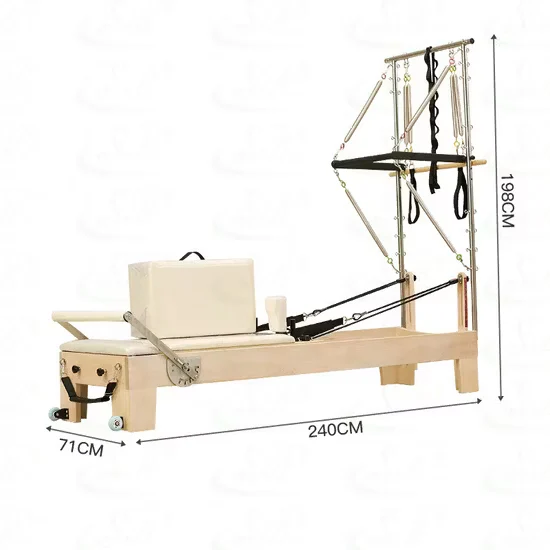
| Product Dimensions | 2570 730 1850 mm |
| Net Weight | 130 kg |
| Target User | Adult / Unisex |
| Accessories | Long Box / Jump Board / Platform |
| Warranty | 3 Years |
Application Suitability
| Deployment Scenario | Typical Use |
|---|---|
| Boutique Pilates Studio | High-frequency group classes requiring consistent carriage feel and rigid tower rigging. |
| Hotel Wellness Floor Fitness Center | Guest-access equipment where quiet operation and corrosion resistance are critical. |
| Rehabilitation & Physiotherapy Clinic | Controlled movement paths for recovery programming with stable spring tension. |
| High-End Residential Private Gym | Low-profile equipment matching interior design standards with minimal floor-load stress. |
What Carriage Wobble Costs a Studio Schedule
Precision wheel-and-rail alignment maintains glide consistency across thousands of repetitions.
When a studio deploys equipment not engineered for continuous class cycles, the first sign of failure is not a broken spring but a subtle lateral play in the carriage. Instructors notice members compensating during footwork series, and within months, the rail wear creates a grinding noise that disrupts the focus of the room [NEED_CITE: commercial equipment wear patterns in high-frequency studio environments]. The aluminum pilates reformer with trapeze tower commercial studios choose must address these mechanical tolerances from the frame up.
Positioning Within the Studio Equipment Mix
The SRY-12A covers the full spectrum of classical and contemporary movement patterns, from supine footwork to advanced tower-based suspension work. In a facility layout, it anchors the primary apparatus zone, complementing mat stations and smaller props. It is specified for studios and wellness centers where user traffic is continuous throughout the day, accommodating a wide range of user heights and limb lengths through adjustable rigging points and spring tension configurations.
Continuous Scheduling and Environmental Loads
In a fully booked studio, a single unit may see continuous use for several hours between maintenance windows. The aluminum frame resists the corrosive effects of high-humidity environments and sweat exposure far better than painted steel, reducing long-term degradation. Because this is a non-motorized apparatus, deployment does not require dedicated electrical circuits, though lighting and ventilation must be planned to ensure adequate airflow around the 2570mm footprint [NEED_CITE: ventilation requirements for high-density fitness apparatus zones].
Rigging Mechanics and Frame Tolerances
The integrated trapeze tower provides a rigid mounting structure for spring-loaded rigging, eliminating the need for separate tower purchases and ensuring the attachment points remain square to the carriage path. The aluminum construction significantly reduces the static floor load compared to steel equivalents, a critical factor for upper-floor hotel wellness centers where structural load limits dictate equipment selection. The wheel-and-rail carriage system is designed to deliver smooth, predictable resistance throughout the entire range of motion, which is essential for protecting joints during repetitive studio class cycles.
The Hidden Cost of Light-Duty Apparatus
Facilities that procure light-duty reformers for commercial deployment frequently encounter rail deformation and carriage bearing failure well before the expected lifecycle. This leads to unscheduled downtime and member complaints about inconsistent resistance feel. In hotel environments, the noise generated by worn carriage wheels traveling over degraded rails can transfer through floor structures, reaching occupied guest rooms below and triggering noise complaints that damage the facility’s reputation [NEED_CITE: acoustic transfer of mechanical vibration through concrete floor slabs].
Why the Senrui Line Is Specified
We verify that every unit meets sub-35dB operational standards, ensuring that even during intensive jump board sequences, noise transfer to adjacent spaces is minimized. Our durability testing protocols run components through continuous high-frequency cycles to validate bearing and rail longevity. We provide 3D studio layouts that account for the 2570mm length plus instructor clearance zones, optimizing member flow and sightlines. Full OEM customization, including branding and accessory packages, allows facility operators to align the equipment with their identity.
Documentation & Test Records
- CE Declaration of Conformity for commercial fitness apparatus
- EN 957 structural and safety test report
- ISO 9001 manufacturing quality management certificate
- Frame material specification and corrosion-resistance confirmation
- Spring tension consistency and load certification records
- Installation guide with floor-load and clearance specifications
Installation, Commissioning & Maintenance
- Verify floor levelness across the 2570 * 730 mm footprint before anchoring.
- Confirm ceiling height clearance for the 1850 mm tower rigging points.
- Inspect carriage wheel alignment and rail lubrication upon commissioning.
- Establish a weekly cleaning schedule for rails to prevent sweat corrosion.
- Audit spring tension and attachment point security monthly.
Planning the Next Deployment
To ensure optimal deployment, share your studio floor plan so we can provide a 3D layout addressing equipment spacing and instructor circulation paths. Specify the expected daily class volume to confirm the carriage system matches your scheduling density. Confirm the target deployment floor to assess acoustic isolation requirements and floor-load limits for the aluminum frame.
Frequently Asked Questions
Q: How does an aluminum frame compare to steel for multi-story studio deployment?
A: Aluminum significantly reduces the static weight of the unit, lowering the total dead load on upper-floor structures. It also offers superior corrosion resistance in high-humidity studio environments where sweat and cleaning chemicals are prevalent, maintaining structural integrity and appearance longer than painted steel without intensive maintenance.
Q: What maintenance does the carriage glide system require to stay smooth?
A: The wheel-and-rail system requires periodic cleaning to remove dust and residue that can cause grinding. Lubrication schedules depend on daily usage volume, but regular inspection of wheel bearings for play and rail surfaces for scoring ensures the consistent, quiet glide necessary for professional instruction and member comfort.
Q: Can the trapeze tower support the tension required for advanced suspension work?
A: The integrated tower is engineered as a single rigid structure with the reformer base. The rigging points are tested to withstand the maximum spring tension loads encountered in advanced commercial and therapeutic programming, ensuring stability and safety during high-force suspension and pulling movements.
Q: How does the equipment footprint influence studio layout planning?
A: At 2570mm in length, this unit requires specific clearance zones at both ends for safe movement and instructor access. We provide 3D layout planning that accounts for these dimensions, ensuring efficient member flow and compliance with safety spacing standards within the total available square footage.

![Fitness Lady Wooden Alloy White Frame Pilates Reformer for Studio [WARN] draft identifier mismatch](https://bicksport.com/wp-content/uploads/2026/08/fitness-lady-wooden-alloy-white-frame-pilates-reformer-for-studio-warn-draft-identifier-mismatch-e127c2.webp)