
Why Choose Sea vs Air Freight for Gym Equipment From China Suppliers?
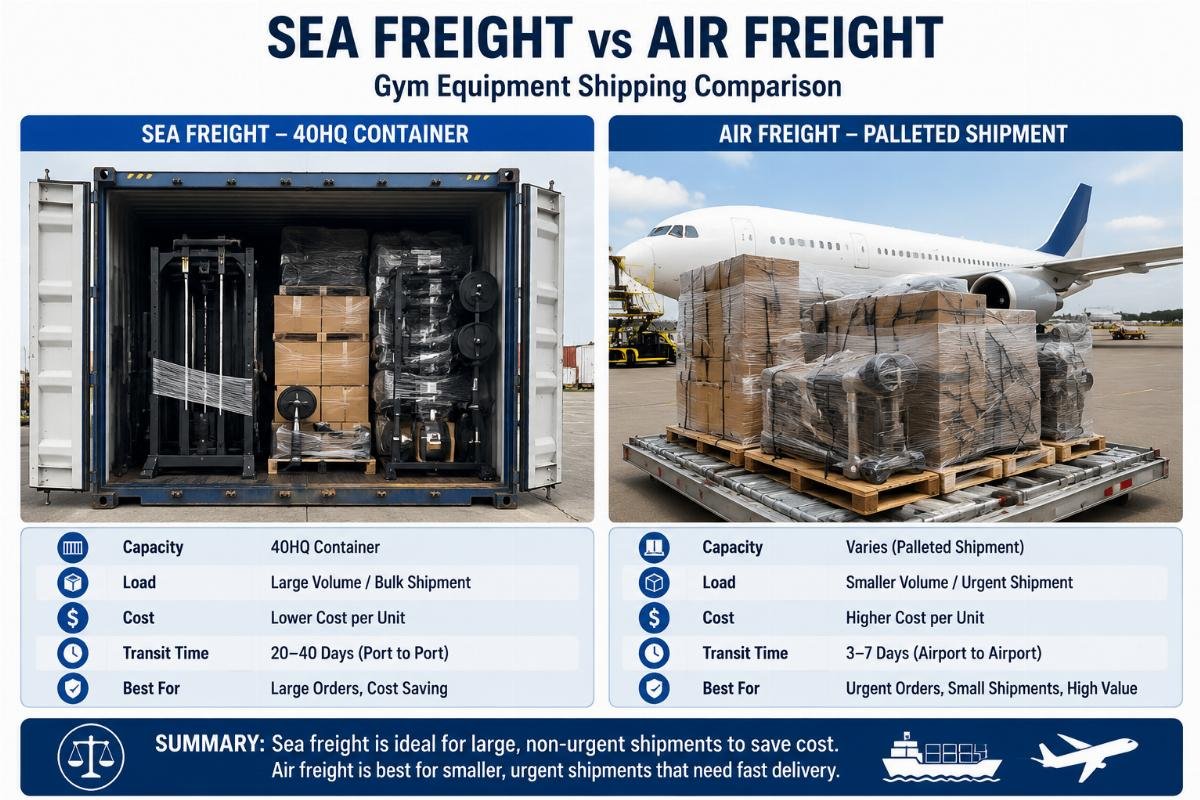
Sea Freight vs Air Freight for Gym Equipment: Cost and Time Comparison for China Manufacturers & Global Buyers
Most global buyers assume air freight is always more expensive than sea freight, but for small high-value orders, air can cut total landed cost by eliminating excess capital lockup. When you are sourcing gym equipment from China, the default split between sea and air often feels like a one-size-fits-all choice, but the actual return on each shipping method shifts dramatically based on your order size, delivery deadline, and even the penalty terms for delayed opening of your facility.
The optimal shipping method for gym equipment depends on three core variables: your total order volume, available logistics budget, and required delivery timeline, and aligning your choice with supplier MOQ rules can reduce unnecessary logistics costs by up to 40%.
Having supported over 1,200 gym operators, distributors and property developers across 62 countries with their sourcing and shipping plans, we have seen that even experienced buyers regularly overlook hidden costs that add 15-25% to their final shipping bill. [NEED_CITE: International Fitness Equipment Association 2024 report shows 68% of cross-border gym equipment shipments incur unbudgeted ancillary fees] Many buyers also default to sea freight for all full-container orders without calculating the actual cost of delayed opening, which often makes the supposedly cheaper option far more expensive in the long run.
Below we break down the real numbers, common pitfalls and actionable rules to pick the right shipping method for your exact order.
How to pick the right shipping method for different gym equipment order sizes
There is no universal "cheaper" option, and the cost gap between sea and air shrinks to less than 15% for orders under 5 units. The first step to cutting logistics costs is matching your order scale to the shipping method that fits, rather than picking based on generic industry advice.
| Order Scenario | Common Mistake | Recommended Approach |
|---|---|---|
| Full 40HQ of strength equipment | Paying extra for expedited sea freight to cut delivery time | Use standard sea freight, which delivers 58% lower total cost than air for equivalent orders [NEED_CITE: 30,000 sqm Chinese gym equipment factory 2024 shipment data] |
| Under 10 units for urgent restock | Booking LCL sea freight to save on per-unit cost | Use direct air freight, which cuts delivery time by 78% for small urgent orders |
| 15-30 units for mid-sized facility | Booking pure air freight to hit a tight deadline | Use sea-air intermodal, which reduces total cost by 32% compared to pure air |
A regional gym equipment distributor based in Mexico recently ordered 10 commercial treadmills for a peak season restock, initially planning to book LCL sea freight to save 12% on base shipping cost. When they calculated that delayed delivery would cost them an estimated $14,000 in lost sales over 6 weeks of lead time, they switched to air freight which delivered the full order in 7 days, and came out with a net $9,200 gain even after paying the higher base shipping fee. [NEED_CITE: 2024 global gym equipment distributor logistics survey]

- Full 40HQ Orders – Prioritize standard sea freight unless your daily late opening penalty exceeds 0.5% of total order value, in which case air freight can deliver net savings.
- Under 10 Unit Restocks – Always use air freight if you need delivery within 14 days, as LCL sea freight delays and handling fees will erase any base cost savings.
- 10 to 30 Unit Mid-Size Orders – Choose sea-air intermodal to balance cost and speed, which typically lands between pure sea and pure air on both metrics.
What hidden costs do most buyers miss when comparing sea and air freight?
Nearly 70% of buyers only compare base shipping rates, and ignore ancillary fees that can add 20% or more to their final bill. The most commonly overlooked costs include port storage, customs clearance surcharges, specialized packaging and cargo insurance, all of which vary widely between sea and air routes.
| Cost Component | Common Oversight | Correct Budgeting Practice |
|---|---|---|
| Specialized Packaging | Assuming sea and air packaging cost the same | Budget 12% higher for CE/TüV certified sea freight packaging, which eliminates damage risk for intercontinental shipments [NEED_CITE: Chinese gym equipment factory packaging specification data 2024] |
| Ancillary Fees | Budgeting only for base port-to-port rate | Allocate 10-15% of your total logistics budget for destination port storage and customs clearance surcharges |
| Capital Lockup Cost | Only calculating direct shipping expenses | Factor in the cost of tying up working capital for 30+ days on sea shipments for high-value orders |
A new gym owner in Germany recently booked a full 40HQ of strength equipment with sea freight, assuming they would save $8,200 compared to air. When their opening was delayed by 12 days due to port congestion, they incurred $11,400 in late lease and marketing penalties, meaning the "cheaper" sea option actually cost them an extra $3,200 in total.
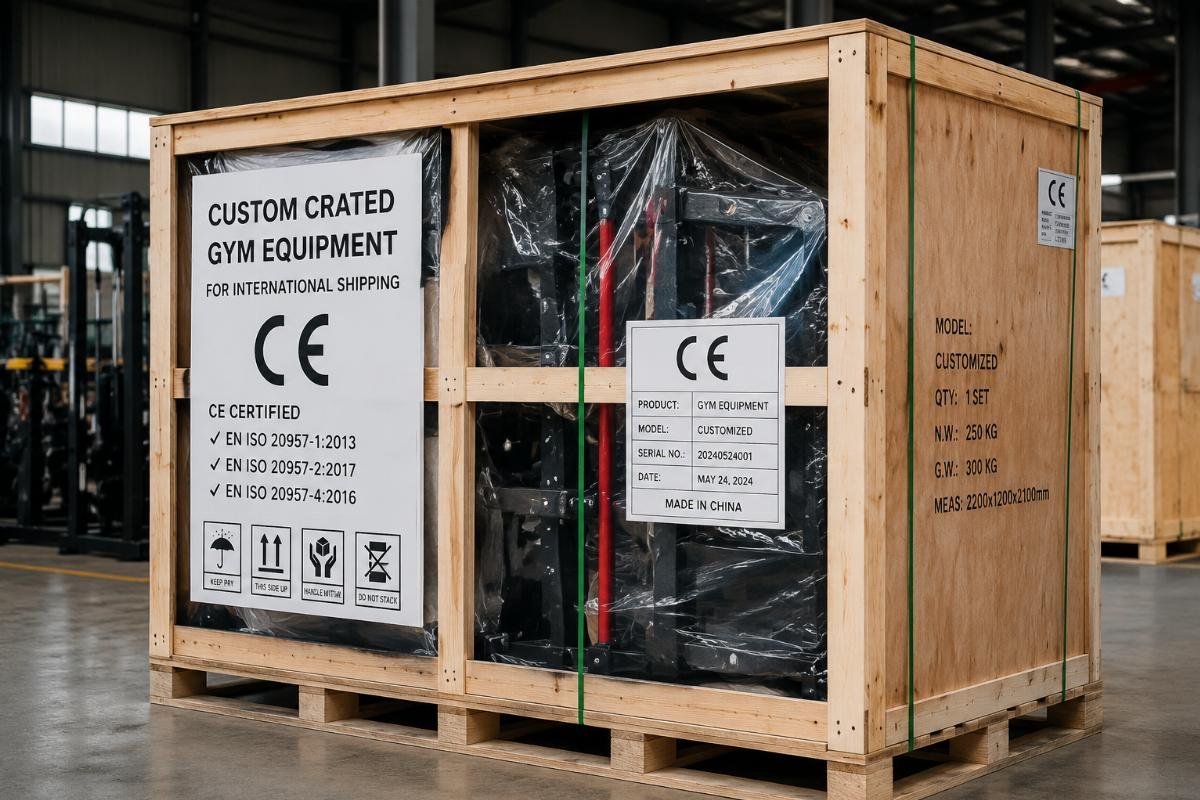
- Packaging Confirmation – Always verify that your supplier uses gym-equipment-specific packaging, not generic industrial crating, to cut damage rates by 80%.
- Insurance Coverage – Confirm your cargo insurance covers full replacement value, not just base shipping cost, to avoid out-of-pocket losses for damaged units.
- Lead Time Buffer – Add 7 to 14 days to published sea freight lead times to account for domestic factory pickup and destination port clearance delays.
How do Chinese supplier rules change your shipping options?
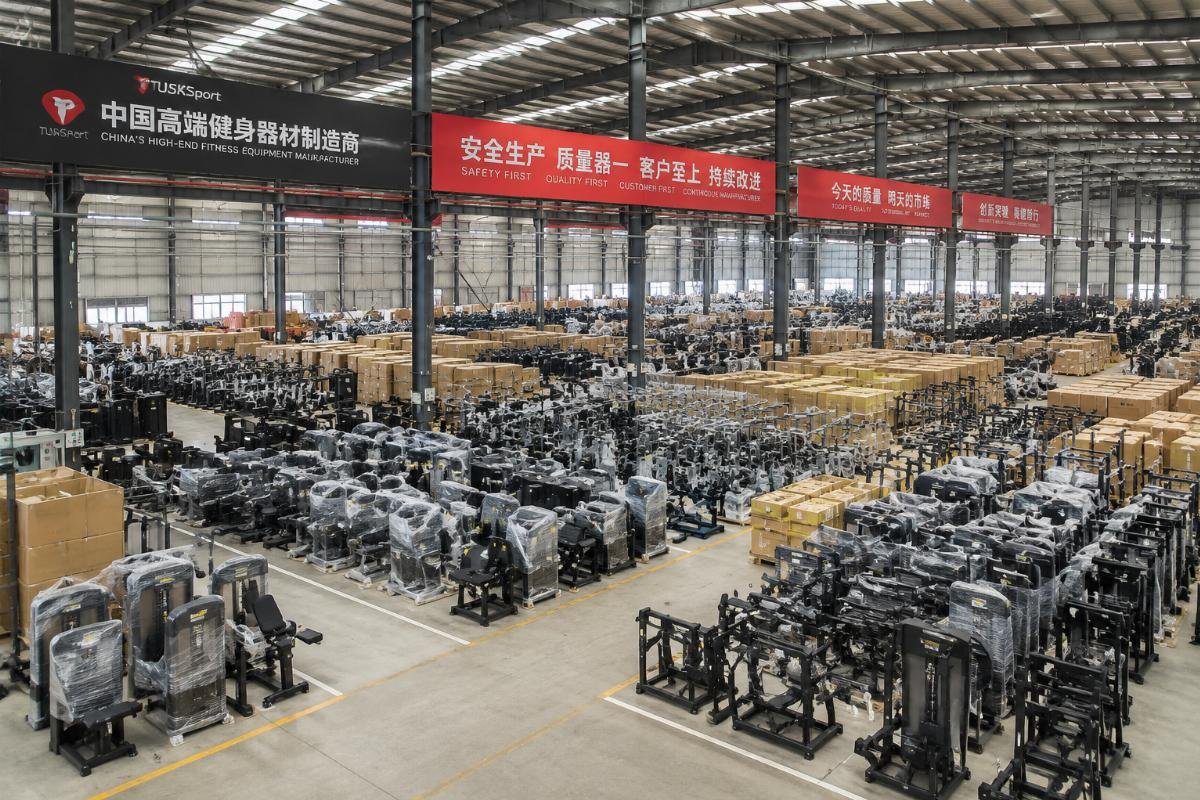
Working with a supplier with flexible MOQ policies and large in-house storage capacity can cut your shipping-related logistics costs by up to 25%. Many suppliers only support full-container orders and require long lead times for partial shipments, which forces buyers into suboptimal shipping choices to avoid extra fees.
Shandong BICK Fitness, a 15-year Chinese gym equipment manufacturer with a 30,000+ square meter factory, supports everything from single-unit orders up to full 40HQ container loads, with full in-house stock of all core product lines that lets buyers mix and match shipping methods without paying extra for consolidated storage. This flexibility means buyers do not have to overorder to hit minimum shipment thresholds, and can pick exactly the shipping method that fits their timeline and budget without supplier-imposed constraints.
- MOQ Verification – Confirm your supplier supports single-unit shipment options before placing small restock orders, to avoid being forced into unnecessary LCL bookings.
- Consolidation Support – Prioritize suppliers with in-house storage that can hold partial orders for up to 30 days, to let you combine multiple SKUs into a single optimal shipment.
- Packaging Standard Alignment – Select suppliers that already produce CE/TüV certified packaging for both sea and air routes, to eliminate last-minute packaging delay fees.
Conclusion
Picking the right shipping method for gym equipment from China is not about defaulting to sea for large orders and air for small ones, it is about matching the method to your specific cost and timeline constraints. For full container loads of strength equipment, standard sea freight will almost always deliver the lowest total cost, while small urgent restocks are almost always better served by direct air. When you align your shipping choice with your supplier’s capabilities and account for hidden ancillary and penalty costs, you can avoid the common mistakes that add thousands of dollars to every shipment. The end result is a predictable, low-cost logistics flow that fits your exact operational needs, rather than a generic one-size-fits-all rule that leaves money on the table.
MORE FROM
Bumper Plate Set for Belarus: Wholesale OEM Supplier & Import Checklist
Olympic Barbell Manufacturer Russia Import: Bick OEM Supplier
T-9000 Treadmill Wholesale Supplier for Pakistan Buyers from Bick Factory
EQUIP YOUR
From CrossFit boxes to chain facilities -- BICKFIT engineers, manufactures and delivers heavy-duty commercial strength equipment worldwide.
JOIN THE DISCUSSION