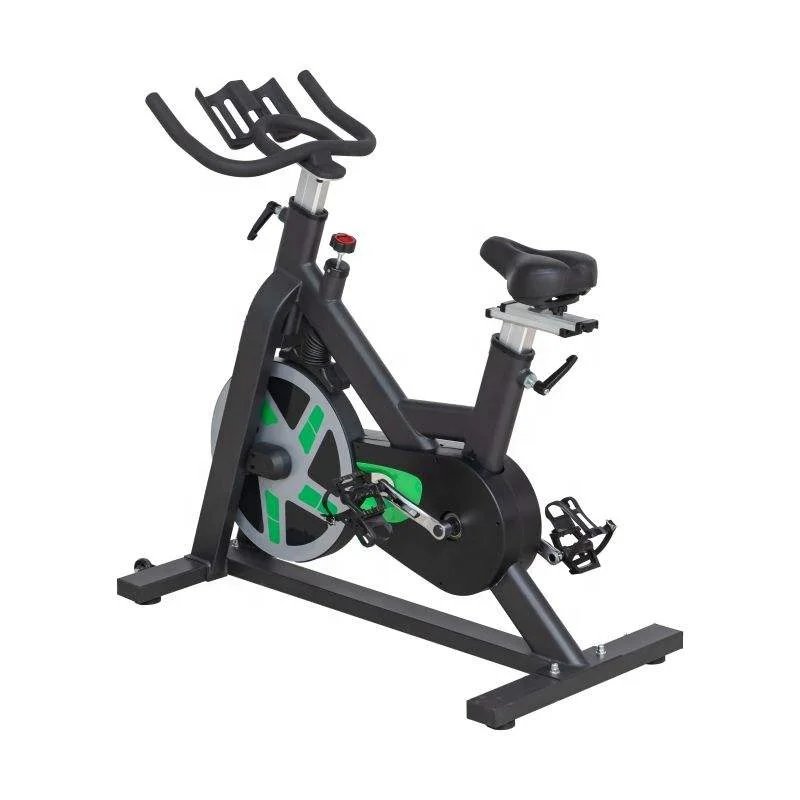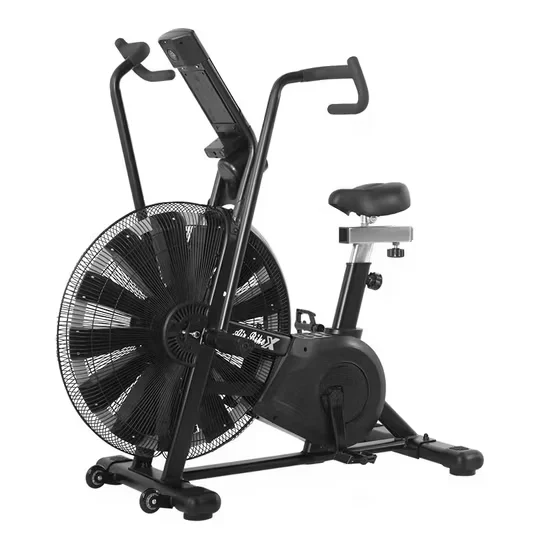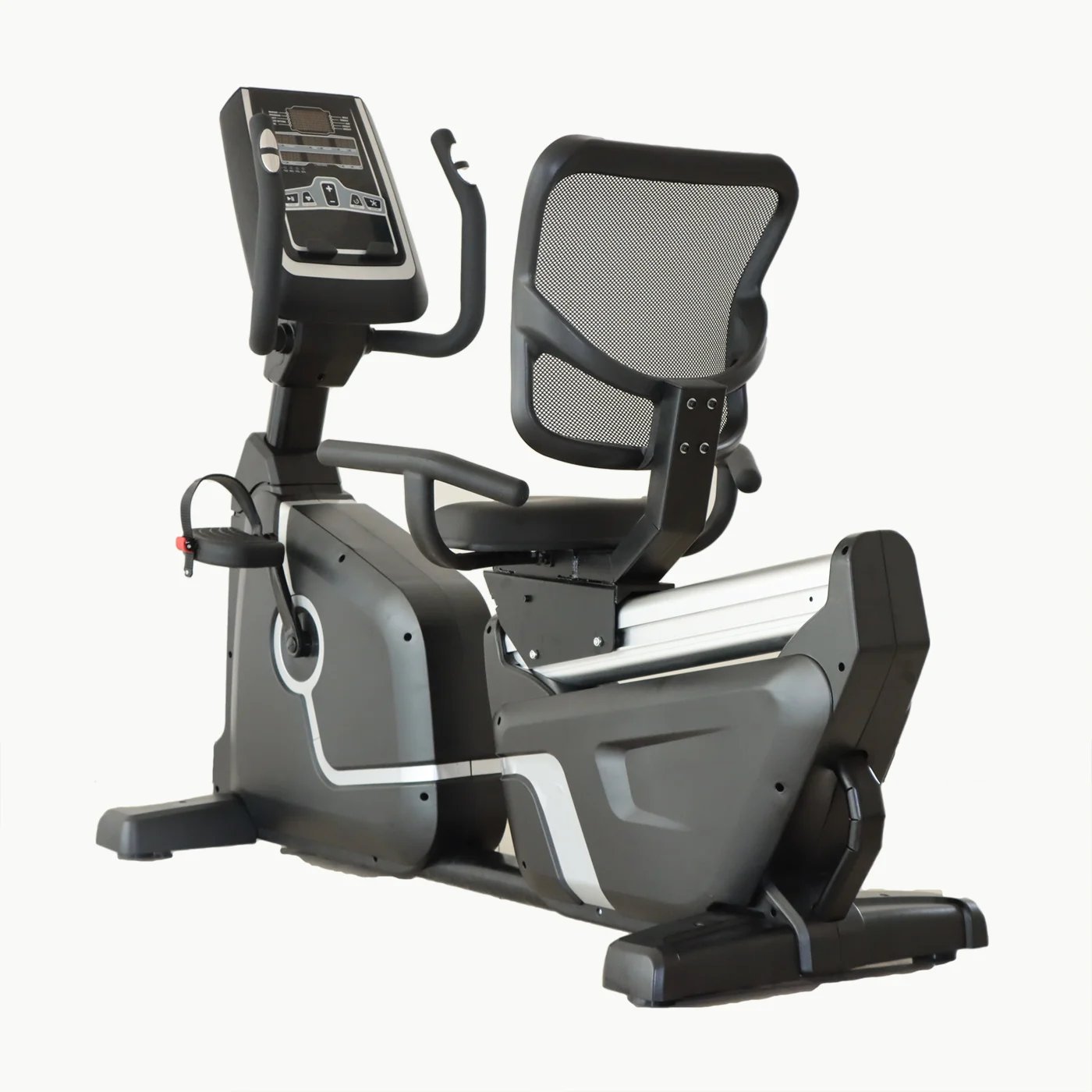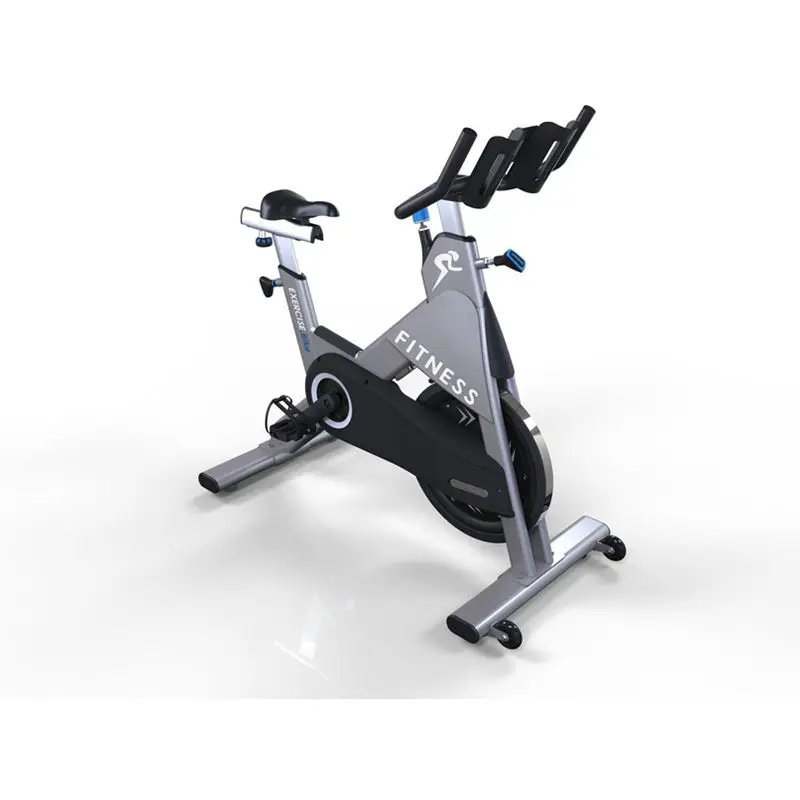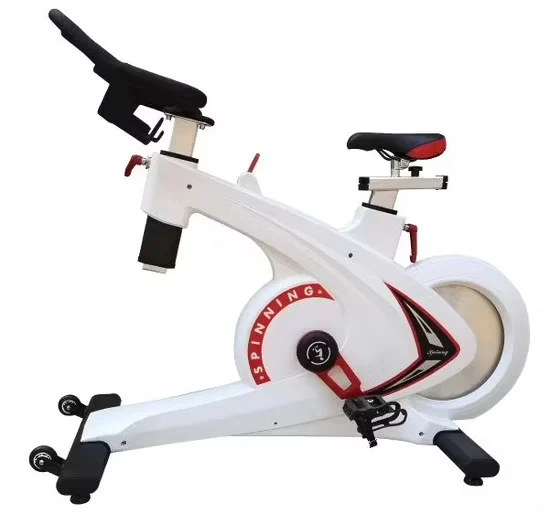
Acoustic-Verified Magnetic Drive — Tested below 35dB under sustained pedal cadence, verified across deployed hotel fitness floors where guest rooms sit directly overhead.
Technical Specifications
| Parameter | Value |
|---|---|
| Designation | Savo-007(Spinning Bike white) |
| Product Type | Spin Bike |
| Resistance Type | Magnetic (Power-Style Resistance Adjustment) |
| Drive Type | Belt |
| Max User Weight | 150kg |
| Connectivity | IoT-enabled console with app sync |
| Console Type | Smart HD touchscreen |
| Noise Level | Sub-35dB verified |
| Product Dimensions | 14005601300mm |
| Net Weight | 50kg |
| Foldable | No |
| Certification | CE, GS, RoHS, FCC |
| Origin | Shandong, China |
Application Suitability
| Deployment Scenario | Typical Use |
|---|---|
| Hotel fitness center on guest room floors | 24-hour self-service cardio with strict noise thresholds |
| Chain gym cardio zone | High-frequency spin classes and open-gym interval sessions |
| Corporate wellness room | Midday and after-work cycling with app-tracked metrics |
| High-end residential home gym | Shared amenity cycling in noise-sensitive multi-unit buildings |
| Spinning studio | Instructor-led group rides requiring uniform resistance response |
Why Noise Complaints Reach the Front Desk Before Maintenance Does
Magnetic resistance eliminates the friction pad wear and belt slippage that push operating noise above guest tolerance.
In upper-floor hotel fitness centers, a spin bike generating structure-borne vibration or airborne whine triggers a complaint call long before the duty-cycle motor shows thermal stress. Friction-based resistance systems degrade audibly as pads wear unevenly, and belt tension drift compounds the problem week over week. A magnetic resistance spin bike commercial deployment avoids that entire failure chain because there is no contact point generating friction noise [NEED_CITE: acoustic propagation thresholds for cardio equipment on occupied floors]. The sub-35dB operating envelope means the unit stays below the ambient noise floor of most guest corridors and residential hallways.
Positioning Within the Cardio Zone Layout
This unit fills the high-intensity cycling slot in a mixed cardio configuration, complementing treadmills and ellipticals that cover steady-state and low-impact demand. The 1400×560mm footprint allows tight row spacing for group spin classes while still leaving lateral clearance for mounting and dismounting. It accommodates riders up to 150kg across a broad seat-height and handlebar-reach adjustment range. The IoT-enabled console captures cadence, resistance level, elapsed time and heart rate data, feeding usage analytics back to facility management software without manual logging.
Continuous Operation and Deployment Environment Requirements
A spin bike in a chain gym or hotel fitness center may see eight to sixteen hours of daily saddle time across multiple riders, demanding a frame and bearing set rated for that thermal and mechanical load [NEED_CITE: continuous duty cycle standards for commercial spin bikes]. The sub-35dB magnetic drive removes the need for acoustic isolation enclosures, but the deployment floor still requires leveling to prevent frame rock under out-of-saddle efforts. Adequate cross-ventilation around the unit prevents sweat-driven corrosion on sealed bearings and console electronics. Facilities planning data integration should confirm console API compatibility with their existing member app or access control platform before production.
What the Magnetic Drive and Belt Transmission Actually Deliver
Magnetic resistance works by varying the proximity of permanent magnets to the flywheel, producing eddy-current braking without any physical contact. This means the resistance curve stays consistent across the adjustment range — no dead spots at low settings and no sudden grab at high settings. The belt drive transmits pedal force to the flywheel without the lubrication demands and stretch maintenance of a chain system, and it contributes materially to the low noise signature. The Smart HD touchscreen console connects via IoT protocols to push session data upstream, so facility managers see real-time utilization rather than discovering usage gaps during monthly audits [NEED_CITE: IoT data integration standards for commercial fitness equipment]. Power-style resistance adjustment lets riders dial load incrementally without interrupting cadence, which matters in structured interval programming.
The Hidden Cost of Specifying Below the Duty Requirement
Deploying a light-commercial or home-grade spin bike in a 24-hour hotel gym typically surfaces as premature bearing noise within the first season, followed by console connectivity failures under constant power cycling. Friction-resistance units in the same environment generate escalating pad-replacement costs and noise complaints that force equipment relocation to less convenient floors. When consoles lack API documentation, usage data never reaches the facility management dashboard, leaving operators blind to which units are underutilized and which are approaching maintenance intervals [NEED_CITE: facility management data gaps from non-integrated consoles]. Voltage mismatches discovered after container arrival can strand an entire shipment until transformers are sourced locally, delaying opening timelines.
Why This Product Line Holds Up Under Scrutiny
Every unit in the six-series cardio family undergoes 10,000-hour continuous operation testing on motor, frame and bearing assemblies before release. The sub-35dB acoustic verification is documented per unit, not estimated from prototype samples. OEM customization extends to console UI branding and resistance mapping, so a hotel group can align the rider interface with its own wellness app ecosystem. The 1400×560mm footprint feeds directly into the complimentary 3D cardio-zone layout service, which models sightlines, airflow and member traffic flow before equipment is committed to production. Post-deployment, 24/7 technical support covers firmware troubleshooting and console re-integration if the facility’s management software is updated.
Documentation & Test Records
- CE declaration of conformity covering electromagnetic compatibility and low-voltage directives
- EN 957 test report validating structural and safety requirements for stationary training equipment
- ISO 957 noise level test report confirming sub-35dB at operating cadence
- 10,000-hour durability test record for frame welds, bearings and resistance mechanism
- Console technical documentation with IoT API endpoints and data schema
- Installation guide with leveling procedure and spare parts catalog
Installation, Commissioning & Maintenance
- Allocate 1400×560mm footprint plus 600mm rear and lateral clearance for safe mounting
- Level all four contact feet on a rigid subfloor to eliminate frame rock under standing efforts
- Connect to a dedicated circuit matching the target market voltage and plug standard
- Run initial console firmware update and verify IoT data handshake with facility management software
- Inspect belt tension and magnetic gap calibration at first 500-hour service interval
- Wipe down frame and console enclosure daily to prevent sweat-driven corrosion on sealed bearings
Scoping Your Deployment Before Quotation
Share the cardio zone square footage and planned unit count to receive a 3D layout that models spacing, airflow and member circulation around each spin bike. Specify the expected daily run-time per unit so the duty-cycle rating can be matched to your operational profile. Identify the deployment floor and adjacent occupied spaces to confirm that sub-35dB operation meets your acoustic requirements. State the target market voltage and plug standard to prevent post-shipment mismatches, and indicate whether console data must integrate with an existing member app or access control platform.
Frequently Asked Questions
Q: What is the difference between magnetic resistance and friction resistance in a commercial spin bike?
A: Magnetic resistance uses eddy currents generated by permanent magnets near the flywheel, with no physical contact producing wear or noise. Friction resistance relies on a felt or composite pad pressing against the flywheel, which degrades over time and generates increasing audible friction. For high-frequency commercial environments, magnetic systems deliver a consistent resistance curve and eliminate recurring pad-replacement maintenance.
Q: How does sub-35dB noise level compare to typical gym environments and hotel room thresholds?
A: A typical gym ambient noise floor sits around 50-60dB from HVAC, music and concurrent equipment use. Guest room corridors in hotels often target below 40dB during nighttime hours. Sub-35dB operation means the spin bike remains below both thresholds, producing no structure-borne vibration or airborne noise that would trigger guest complaints on adjacent or overhead floors.
Q: Can the console sync with our facility management software or member app?
A: The IoT-enabled Smart HD console exposes data through standard API endpoints that facility management platforms can consume. Before production, our engineering team reviews your software’s data schema and connection protocol to confirm compatibility. This prevents the common deployment failure where usage data remains stranded on the console because no integration path was verified.
Q: What does 10,000-hour durability testing actually cover on this spin bike?
A: The testing protocol subjects the frame welds, sealed bearings, belt drive and magnetic resistance mechanism to continuous cyclic loading that simulates years of multi-user commercial operation. It validates that structural integrity and resistance consistency hold without degradation across the rated lifespan, rather than only testing peak-load failure points.