
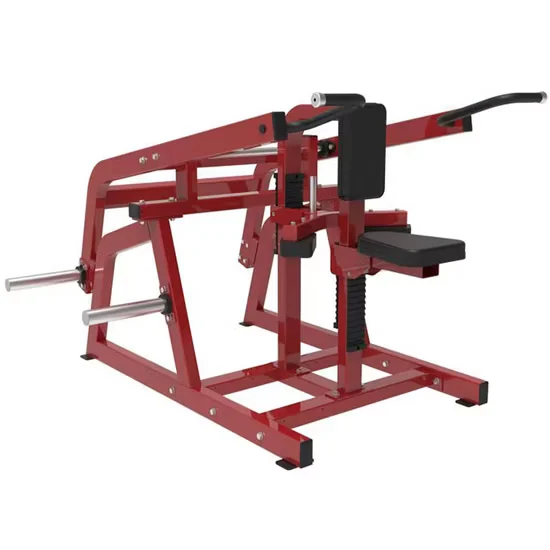
Reinforced Frame Integrity — every pivot axis on this seated dip machine undergoes 10,000-hour continuous load cycling before leaving the Shandong facility.
Technical Specifications
| Parameter | Value |
|---|---|
| Designation | 5014 |
| Product Type | Seated Dip Machine |
| Exercise Part | Tricep DIP |
| Frame Material | Reinforced Steel |
| Product Dimensions | 1833 × 1492 × 1110 mm |
| Net Weight | 163 kg |
| Maximum User Weight | 180 kg |
| Resistance Type | Selectorized weight stack |
| Age Group | Adult |
| Gender | Unisex |
| Fit Area | Professional Gym and Club |
| OEM/ODM | Available |
| Certification | ISO 9001, CE |
Application Suitability
| Deployment Scenario | Typical Use |
|---|---|
| International chain gym strength zone | High-frequency tricep isolation between compound pressing movements |
| Hotel fitness center | Guest-accessible upper body station with clear instructional placards |
| Corporate wellness room | Compact footprint upper body isolation for time-constrained sessions |
| Sports performance training center | Athlete tricep conditioning with controlled biomechanical path |
| Community fitness facility | Durable public-use station built for unsupervised operation |
Why Pivot Mechanics Determine Whether Members Return or Complain
Precision-machined pivot points keep resistance consistent from full extension to peak contraction.
Commercial dip stations with misaligned pivot axes create uneven resistance curves that strain the elbow joint at the bottom position. Members sense this immediately — the movement feels rough at the start and hollow at the finish, so they stop using the machine within the first week [NEED_CITE: biomechanical alignment tolerance in selectorized strength equipment]. A commercial seated dip machine tricep station must maintain linear resistance delivery across every repetition, otherwise it becomes the most expensive coat rack in the facility. I have seen procurement teams reject entire shipments because the pivot bushings showed lateral play after only a few thousand cycles on the test floor.
Positioning Within the Strength Training Floor
This seated dip machine fills the tricep isolation slot in a comprehensive strength circuit, complementing overhead press and chest press stations that handle compound pushing patterns. The 1833 × 1492 mm footprint allows placement along perimeter walls or as an inline station between plate-loaded and selectorized zones. It accommodates users across a wide anthropometric range through adjustable seat and pad positioning, ensuring proper elbow alignment regardless of limb length. The commercial seated dip machine tricep configuration supports moderate to high repetition ranges typical of hypertrophy-focused programming, and the selectorized stack enables quick weight changes between users in high-throughput environments.
Continuous Operation and Facility Infrastructure Requirements
A selectorized dip station in a busy gym endures hundreds of daily cycles, each one imposing lateral and vertical loads on the pivot bearings and guide rods [NEED_CITE: duty cycle standards for commercial selectorized equipment]. The 163 kg net weight provides a stable base that resists frame walk on rubber-matted floors, but installers must still verify level placement to prevent uneven wear on the guide rod bushings. Adequate clearance around the unit — particularly overhead and to the rear — ensures users can enter and exit without obstruction. For multi-floor hotel deployments, placing heavy selectorized machines on reinforced subfloors prevents long-term vibration transmission to occupied rooms below.
Decoding the Load Path and Bearing Specifications
The reinforced steel frame channels user load through a triangulated structure that distributes force from the handle grips down through the pivot axis and into the base rails. Sealed bearings at each pivot point prevent sweat and humidity intrusion, which is the primary cause of premature bushing failure in humid climates. The guide rod system keeps the weight stack traveling vertically without lateral sway, reducing friction and cable wear over thousands of cycles. Pad density and vinyl covering must withstand repeated compression and cleaning chemical exposure without cracking or flattening — specifications that separate commercial-grade upholstery from light-commercial alternatives. A commercial seated dip machine tricep unit built with undersized bearings will develop noticeable play within the first year of public use.
The Hidden Cost of Specifying Below Commercial Grade
Facilities that procure light-commercial dip stations for public-facing floors inevitably face premature pivot bearing replacement, guide rod scoring, and cable fraying within months of deployment [NEED_CITE: failure mode analysis for sub-rated commercial strength equipment]. Members notice the developing rattle and lateral wobble, associate the degradation with the facility brand, and shift their tricep work to free-weight alternatives. Procurement teams then face an unplanned capital replacement cycle that disrupts the floor layout and member experience simultaneously. Investing in properly rated pivot mechanics and sealed bearing assemblies from the outset avoids this cascading operational cost.
What Differentiates This Equipment Line
Every frame in this range undergoes 10,000-hour continuous load testing that replicates the worst-case cycle frequency of an unsupervised public gym floor. The reinforced steel construction and sealed pivot bearings on this dip station are validated through destructive testing protocols, not just finite element simulation. Full OEM and ODM customization extends to frame color, pad vinyl, and weight stack branding so the unit matches facility identity. The 3D cardio and strength zone layout service accounts for the 1833 × 1492 mm footprint and required user clearance when planning adjacent equipment spacing. Technical support remains available around the clock for commissioning questions and spare parts identification.
Documentation & Test Records
- CE declaration of conformity for commercial strength equipment
- EN 957 test report covering static and dynamic load verification
- ISO 9001 certificate for the manufacturing quality management system
- Noise level test record for operational sound during use
- Durability test documentation for pivot bearing and guide rod assemblies
- Upholstery material specification with foam density and chemical resistance data
Installation, Commissioning & Maintenance
- Verify 1833 × 1492 × 1110 mm clearance envelope including user entry and exit paths
- Level the reinforced steel frame on rubber matting to prevent guide rod lateral drift
- Inspect selectorized weight stack cable tension and guide rod lubrication before first use
- Confirm all pivot bearing fasteners are torqued to specification after initial break-in period
- Schedule guide rod cleaning and re-lubrication based on facility humidity and usage volume
- Wipe vinyl pads with approved cleaner after each operating shift to prevent chemical degradation
Planning Your Strength Zone Equipment Selection
Share your strength floor square footage and target station count so the 3D layout service can position this dip station with correct spacing and member flow lines. Specify expected daily user volume to confirm the bearing and cable specifications match your facility’s duty cycle. Indicate deployment floor level and adjacent room types so vibration and acoustic transmission can be evaluated before installation. State your target market voltage requirements if any powered accessories are planned for the strength zone.
Frequently Asked Questions
Q: What frame construction ensures commercial durability for continuous gym use?
A: The reinforced steel frame uses triangulated load paths that distribute user force through the pivot axis and into heavy-gauge base rails. Each weld joint and bolted connection is validated through 10,000-hour continuous cycling tests that replicate worst-case public facility usage. This construction approach prevents the frame flex and fatigue cracking that plague lighter-duty alternatives deployed in high-traffic commercial environments.
Q: How do pivot mechanics affect joint safety and exercise effectiveness?
A: Precision-machined pivot points maintain a consistent arc that matches natural elbow extension, preventing the resistance dead spots and joint shear forces caused by misaligned axes. When the pivot geometry is correct, users experience smooth loading from full flexion through peak contraction without elbow discomfort. This mechanical accuracy directly determines whether members continue using the station or abandon it for free-weight alternatives.
Q: What bearing specifications prevent wear in high-frequency commercial environments?
A: Sealed bearings at each pivot point exclude sweat, chalk dust, and humidity that cause premature bushing degradation in unsealed designs. The guide rod system uses linear bushings rated for continuous vertical cycling without lateral play development. These bearing specifications are documented in the technical datasheet provided with each unit, allowing facility maintenance teams to verify replacement part compatibility.
Q: Can pad materials and colors be customized for facility branding?
A: OEM and ODM services include vinyl pad color matching, embroidered logo placement, and foam density selection to meet facility aesthetic and durability requirements. High-density foam resists compression set over thousands of use cycles, while commercial-grade vinyl withstands repeated cleaning with facility-standard disinfectants. Custom color and branding options are confirmed during the quotation scoping phase before production begins.
Q: What testing validates long-term durability for public facility deployment?
A: Each model undergoes continuous load cycling that replicates years of public-use repetition patterns, documenting pivot bearing wear, cable elongation, and frame fatigue at scheduled intervals. The durability test records are included in the documentation package provided to procurement teams. These records demonstrate performance retention under conditions far exceeding typical commercial gym duty cycles [NEED_CITE: commercial strength equipment durability testing protocols].

![Hammer Strength Plate-Loaded ISO-Lateral Kneeling Leg Curl Gym Equipment [WARN] draft identifier mismatch](https://bicksport.com/wp-content/uploads/2026/08/hammer-strength-plate-loaded-iso-lateral-kneeling-leg-curl-gym-equipment-warn-draft-identifier-mismatch-247b68.webp)