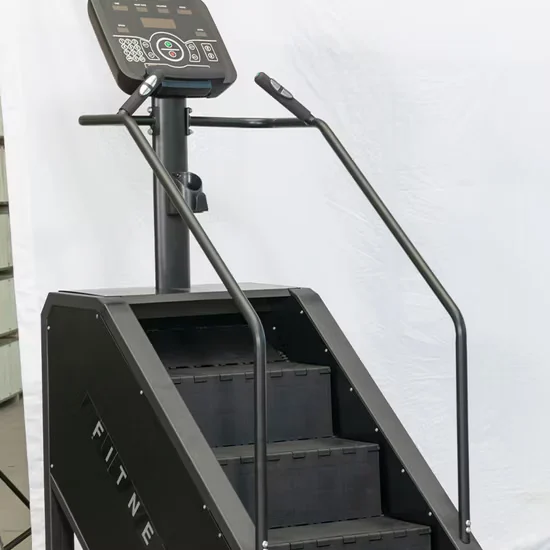
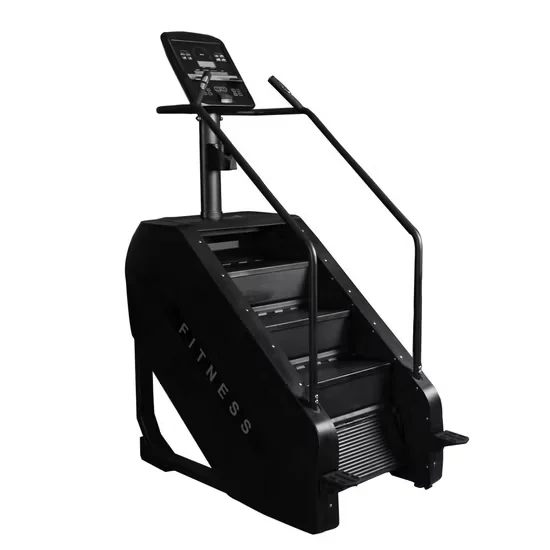
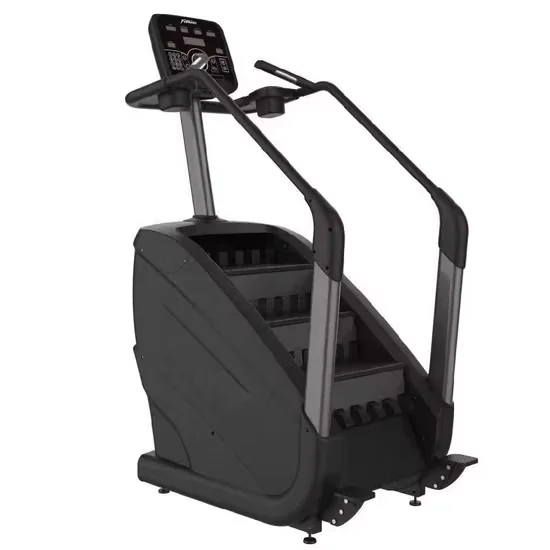
![Stair Machine Climbing Stepper for Commercial Gym Equipment [WARN] draft identifier mismatch](https://bicksport.com/wp-content/uploads/2026/08/stair-machine-climbing-stepper-for-commercial-gym-equipment-warn-draft-identifier-mismatch-548bcd.webp)
Continuous Duty Motor Validation — tested under 10,000-hour high-frequency stair climbing cycles without thermal shutdown.
Technical Specifications
| Parameter | Value |
|---|---|
| Designation | SQ-1017 |
| Product Type | Stair Climber |
| Drive Method | Motor Driven |
| Speed Range | 15 Steps/Minute – 164 Steps/Minute |
| Step Size | 560235220mm |
| Maximum Load Capacity | 180kg |
| Input Power Voltage | AC220V + 10% or AC110V + 10% |
| Screen Display | Time, Climb, Calories, Steps, Heart Rate |
| Material | Aluminium Alloy Pipe + PP Plastic |
| Product Dimensions | 14508202080mm |
| Net Weight | 206kg |
| Folded | Unfolded |
| Certification | CE, RoHS, ISO |
Application Suitability
| Deployment Scenario | Typical Use |
|---|---|
| Hotel Fitness Center on Guest Room Floors | 24-hour access stair climbing with whisper-quiet motor operation |
| Chain Gym Cardio Zone | Peak-hour continuous traffic with 180kg user capacity |
| Corporate Wellness Room | Employee fitness programs tracking climb, calories, and heart rate |
| High-End Residential Home Gym | Private stair climbing with dual-voltage compatibility for global installations |
| Sports Performance Training Center | Athlete conditioning using variable step speeds up to 164 steps/minute |
What Peak Horsepower Hides About Continuous Duty in Stair Climbers
Motor-driven systems built for commercial deployment must sustain load without thermal throttling.
Facility operators often discover too late that a stair climber’s advertised horsepower reflects peak output rather than continuous duty rating. When motor-driven gym equipment faces eight-hour daily cycles in hotel fitness centers or chain gyms, undersized motors overheat, trip thermal protectors, and eventually burn out [NEED_CITE: motor duty cycle classification for continuous commercial operation]. The SQ-1017 commercial stair climber motor driven gym equipment uses a motor engineered for sustained operation under full 180kg load, reducing unplanned downtime and emergency service calls.
Positioning Within the Cardio Equipment Mix
This stair climber fills the vertical-loading gap that treadmills and ellipticals leave open, targeting glute, quad, and calf engagement through stepping motion rather than forward locomotion. In a balanced cardio zone, it complements steady-state machines by offering variable intensity from 15 to 164 steps per minute, accommodating both recovery-paced hotel guests and high-intensity interval training members. The 180kg maximum user capacity and 560235220mm step dimensions accommodate diverse body types. Console tracking of climb, calories, steps, and heart rate provides workout data without prescribing specific training protocols.
Deployment Environment and Continuous Operation Requirements
Commercial stair climbers running in hotel fitness centers on guest room floors demand strict noise control and vibration isolation, especially when equipment operates directly above or beside occupied rooms. The SQ-1017’s motor-driven system and reinforced aluminium alloy frame minimize resonance transmission through floor structures [NEED_CITE: EN 957 requirements for commercial cardio equipment]. Dual-voltage input (AC110V/AC220V) eliminates deployment mismatches across international markets. Facilities must verify dedicated circuit capacity, level flooring with anti-vibration pads, and adequate ventilation clearance around the 14508202080mm footprint to maintain motor cooling during continuous duty cycles.
Motor-Driven System and Console Data Architecture
The motor-driven drive method in this commercial stair climber motor driven gym equipment provides consistent resistance across the full 15-164 steps/minute range, unlike manual systems where user momentum creates uneven loading. Motor-driven systems maintain step cadence under varying user weights up to 180kg, preventing the sudden resistance dropouts that plague magnetic-controlled stair climbers with misaligned gaps. The console displays real-time metrics — time, climb, calories, steps, and heart rate — enabling members to monitor effort without external device pairing. Aluminium alloy pipe construction reduces frame weight to 206kg while maintaining structural rigidity under continuous commercial use.
The Hidden Costs of Specification Compromise
Purchasing stair climbers with residential-grade motors for commercial deployment leads to predictable failure patterns: thermal shutdowns during peak hours, winding insulation breakdown within months, and warranty disputes when manufacturers classify gym use as abuse. Noise complaints from inadequate motor isolation force hotels to relocate equipment or replace entire fleets. Voltage mismatches discovered after container arrival cause project delays and customs holds [NEED_CITE: international voltage standards for commercial fitness equipment deployment]. These failures compound: member attrition from equipment unavailability, maintenance budget overruns, and reputational damage when five-star amenities underperform.
Why This Product Line Supports Facility Operations
Sub-35dB operation verified in hotel deployments protects guest experience when stair climbers operate on occupied floors. The 10,000-hour durability testing protocol covers motor windings, bearings, and step mechanisms under simulated continuous use. Dual-voltage compatibility (AC110V/AC220V) simplifies procurement for international gym chains deploying across multiple electrical standards. The complete six-series cardio family allows facilities to source treadmills, bikes, ellipticals, rowing machines, and stair climbers from one product line, reducing vendor fragmentation. OEM customization covers console UI adaptation, while free 3D cardio-zone layout planning accounts for the SQ-1017’s 14508202080mm footprint, member flow paths, and HVAC sightline requirements.
Documentation & Test Records
- CE declaration of conformity confirming European market compliance
- EN 957 test report validating safety and performance standards
- ISO 9001 certificate documenting quality management systems
- Noise level test report verifying sub-35dB operation claims
- Durability test record covering 10,000-hour motor and bearing validation
- Motor specification sheet detailing continuous duty ratings
- Console technical documentation with display function descriptions
Installation, Commissioning & Maintenance
- Maintain 14508202080mm footprint clearance plus front/rear safety zones for member ingress
- Install anti-vibration pads under aluminium alloy frame to dampen floor-borne noise transmission
- Verify dedicated circuit matches AC110V or AC220V input requirement before first power-on
- Calibrate step sensor and heart rate display during initial commissioning sequence
- Schedule motor and step mechanism inspection based on daily usage hours logged by console
- Clean PP plastic step surfaces and console display with non-corrosive solutions to prevent sweat damage
Request a Deployment Assessment
Provide cardio zone square footage and planned equipment count to receive a 3D layout addressing the SQ-1017’s spatial requirements and member traffic flow. Specify expected daily usage hours so motor duty cycle can be matched to operational demands. Identify deployment floor level and adjacent occupied spaces to confirm acoustic isolation adequacy. State target market voltage standard (AC110V or AC220V) to eliminate electrical mismatches before shipment.
Frequently Asked Questions
Q: What is the difference between motor-driven and manual stair climbers for commercial use?
A: Motor-driven stair climbers like the SQ-1017 maintain consistent step cadence under varying user weights, preventing the resistance dropouts that occur in manual systems when momentum carries users past magnetic control gaps. This consistency supports continuous commercial operation where equipment must accommodate diverse member populations throughout extended operating hours without performance degradation.
Q: How does dual-voltage input simplify global deployment?
A: The AC110V/AC220V dual-voltage capability eliminates electrical standard mismatches that otherwise surface after equipment arrival, causing customs holds and project delays. International gym chains and hotel groups deploying across multiple markets can standardize on one stair climber model, reducing procurement complexity and spare parts inventory across different regional electrical infrastructures.
Q: What maintenance is required for the motor-driven staircase system?
A: Maintenance focuses on motor ventilation clearance, step mechanism lubrication intervals, and console sensor calibration based on logged usage hours rather than calendar schedules. Facilities operating the SQ-1017 in high-traffic cardio zones should establish inspection protocols aligned with daily run-time data, preventing unplanned downtime through predictive service rather than reactive repair after component failure.
Q: How does the 180kg load capacity compare across commercial stair climber models?
A: The 180kg maximum user capacity reflects structural design decisions including aluminium alloy frame reinforcement and step platform dimensions (560235220mm). This capacity supports diverse member populations in commercial gym and hotel deployments where equipment must accommodate varying body types without structural deflection or accelerated wear on bearings and motor components under continuous load cycles.