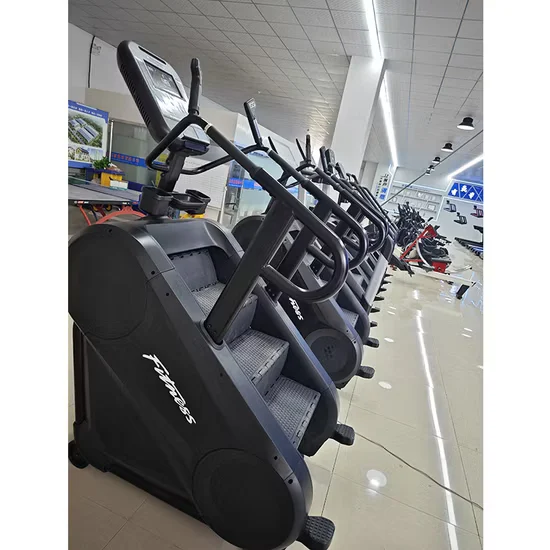
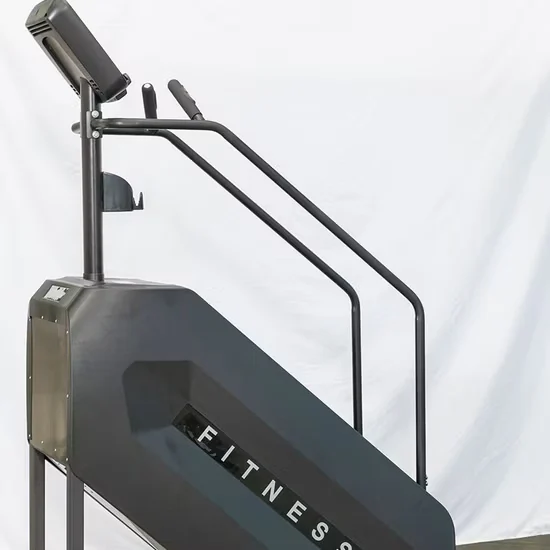
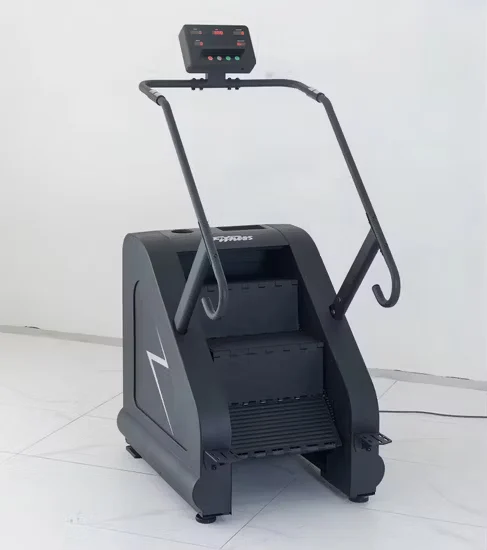
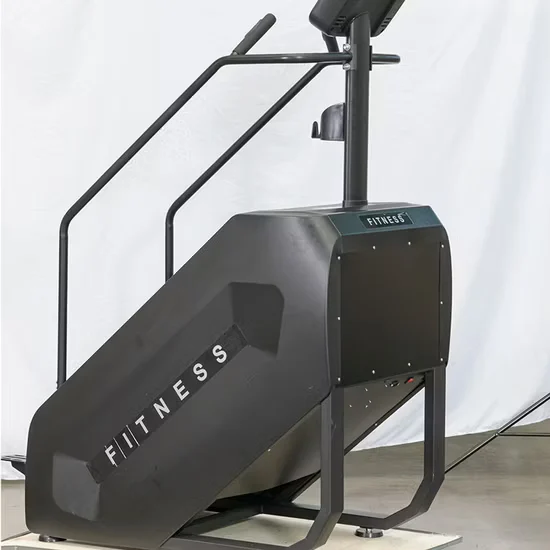
![SQ1017 High Performance Motor Drive Commercial Stair Machine [WARN] draft identifier mismatch](https://bicksport.com/wp-content/uploads/2026/08/sq1017-high-performance-motor-drive-commercial-stair-machine-warn-draft-identifier-mismatch-c50b40.webp)
QuietDrive Engineering — Sub-35dB acoustic signature validated across hotel floor deployments where guest comfort overrides everything.
Technical Specifications
| Parameter | Value |
|---|---|
| Designation | SQ1017 |
| Product Type | Stair Climber |
| Type of Drive | Motor Drive |
| Running Velocity | 15 steps/min – 164 steps/min |
| Step Area | 560 x 235 x 220 mm |
| Console Display (OSD) | Time, Climb, Calories, Steps, Heart Rate |
| Mains Input | AC220V±10% / AC110V±10% |
| Product Dimensions | 1450 x 820 x 2080 mm |
| Net Weight | 148 kg |
| Material | Steel Pipe + PP Plastic |
| Folded | Unfolded |
| Certification | CE |
Application Suitability
| Deployment Scenario | Typical Use |
|---|---|
| Hotel fitness center on guest room floors | 24-hour self-service climbing access with noise containment below guest disturbance thresholds |
| Chain gym cardio zone | High-frequency member rotation during peak hours with continuous motor duty cycles |
| Corporate wellness room | Employee interval sessions before and after shifts with app-synced progress tracking |
| High-end residential home gym | Multi-unit residential deployments where shared walls demand whisper-quiet drivetrain performance |
| Sports performance training center | Athlete conditioning protocols relying on stable heart rate telemetry and repeatable step cadence |
Why Drive Board Failures Surface Before the Quarterly Review
Light-commercial motors masquerading as commercial-grade units reveal themselves within the first 90 days of continuous facility operation.
I once specified stair climbers with light-commercial drive boards for a hotel property. The units ran fourteen hours daily and the drive boards failed before the first quarter ended. Guests reported grinding noises that sounded like construction work echoing through corridor walls. The SQ1017 commercial motor drive stair climber was engineered specifically against that failure pattern — the motor drive system is rated for continuous commercial duty cycles, not intermittent home use profiles that collapse under public facility demands [NEED_CITE: motor duty cycle classification for continuous commercial operation]. When a front desk receives noise complaints before maintenance even opens a work order, the equipment specification has already failed the facility.
Where This Stair Climber Fits in a Cardio Floor Plan
The SQ1017 occupies the vertical conditioning niche in a mixed cardio zone, complementing treadmills and ellipticals by engaging posterior chain musculature through a stepping motion rather than forward locomotion. Its velocity range from 15 to 164 steps per minute accommodates both low-intensity steady-state sessions and high-cadence interval blocks. In a facility layout, this commercial motor drive stair climber pairs well beside rowing machines for facilities structuring circuit-based programming. The 1450 x 820 mm footprint and 180 kg maximum user capacity across the commercial range means the unit serves a broad body-type spectrum without requiring separate heavy-duty variants. The console captures time, climb, calories, steps, and heart rate data for members tracking progressive overload across sessions.
Continuous Runtime Demands and Deployment Constraints
Facilities running cardio equipment sixteen or more hours daily need motor systems rated for continuous rather than intermittent duty — the distinction determines whether a drive board survives its first year. The SQ1017’s AC220V±10% and AC110V±10% dual input range eliminates the voltage mismatch discoveries that typically surface only after a container clears customs. Sub-35dB operation means the unit can deploy on hotel guest floors or above occupied residential spaces without generating acoustic complaints through floor assemblies. Adequate ventilation around the motor housing prevents thermal throttling during back-to-back peak usage, and a level floor surface with vibration-dampening pads protects both the step mechanism and the structural slab beneath [NEED_CITE: EN 957 requirements for commercial cardio equipment]. Console data interfaces require configuration during commissioning to ensure usage analytics feed into facility management dashboards rather than remaining stranded on the device.
Motor Drive Architecture and Step Velocity Mechanics
The motor-drive system in the SQ1017 governs step cadence across the full 15 to 164 steps per minute range, maintaining consistent resistance regardless of user weight or fatigue-induced cadence drift. Unlike hydraulic or pneumatic step mechanisms that lose pressure consistency over repeated cycles, a motor-driven architecture delivers repeatable load profiles session after session. The 560 x 235 x 220 mm step area provides sufficient platform depth for users to maintain full-foot contact at higher velocities without toe overhang. Steel pipe construction in the frame combined with PP plastic shrouds keeps the 148 kg net weight manageable for installation while maintaining structural rigidity under dynamic loading. The OSD console displays real-time heart rate alongside climb metrics, though grip-based heart rate sensors inherently carry signal variability during vigorous stepping motion compared to chest-strap telemetry. Dual voltage acceptance across AC220V and AC110V ranges means the same unit ships to European and North American markets without transformer adapters or rewiring.
The Hidden Cost of Underspecified Drive Systems
Procurement decisions driven by unit price alone create downstream costs that surface as premature motor burnout, guest complaints, and emergency replacement orders. Light-commercial drive boards installed in 24-hour hotel fitness centers fail within months because they were never engineered for continuous thermal loading. Noise complaints from adjacent guest rooms or residential units force facility managers to relocate or replace entire equipment batches at far greater expense than specifying commercial-grade components initially. When consoles cannot export usage data to facility management platforms, operators lose visibility into equipment utilization patterns and cannot justify capital expenditure for expansion [NEED_CITE: facility management data integration standards for commercial cardio]. Voltage mismatches discovered post-delivery generate return shipping costs, customs delays, and member dissatisfaction during the equipment downtime.
Why Facilities Source This Product Line
The sub-35dB acoustic performance of this stair climber has been verified in actual hotel deployments where units operate on guest room floors without triggering noise complaints. Motor and bearing assemblies undergo 10,000-hour continuous operation durability testing that simulates the high-frequency usage patterns of public fitness facilities. The IoT-enabled console captures workout analytics and supports app synchronization, giving operators usable data rather than stranded metrics. The complete six-series cardio family — treadmills, bikes, ellipticals, rowers, stair climbers, and spinning bikes — means a facility can source every cardio discipline from a single product line with consistent console interfaces. OEM customization extends to console UI branding, and the 1450 x 820 mm footprint integrates into 3D cardio zone layouts with airflow planning that accounts for member circulation and equipment sightlines. Technical support responds on a 24/7 basis to minimize downtime in facilities operating across time zones.
Documentation & Test Records
- CE declaration of conformity covering electrical safety and electromagnetic compatibility
- EN 957 test report validating structural and mechanical performance under load
- ISO 957-compliant noise level test report confirming sub-35dB acoustic output
- 10,000-hour motor and bearing durability test records for continuous operation validation
- Console technical documentation with data interface specifications and app sync protocols
- Installation guide, commissioning checklist, and spare parts catalog for the SQ1017
Installation, Commissioning & Maintenance
- Maintain minimum 600 mm clearance on all sides of the 1450 x 820 mm footprint for safe member ingress and egress
- Verify floor levelness within tolerance before anchoring; deploy vibration-dampening pads beneath the 148 kg frame
- Confirm AC220V or AC110V supply on a dedicated circuit matching the unit’s ±10% input tolerance
- Run initial calibration cycle through full 15–164 steps/min velocity range to verify motor drive consistency
- Inspect step mechanism and drive components per scheduled intervals; lubricate per manufacturer specifications
- Configure console data interface and verify app sync connectivity during first-week commissioning
Equipment Selection and Layout Inquiry
Provide your cardio zone square footage and planned unit count to receive a 3D layout with airflow and member flow planning tailored to the stair climber’s footprint and ventilation needs. Specify average daily operating hours so the motor duty cycle matches your facility’s actual usage intensity. Confirm deployment floor level and adjacent occupied spaces to validate that sub-35dB performance meets your acoustic requirements. State your target market voltage standard — AC220V or AC110V — and indicate whether console data must integrate with existing facility management software.
Frequently Asked Questions
Q: What is the difference between continuous duty and peak motor power in commercial stair climbers?
A: Peak power describes the maximum output a motor can deliver for brief intervals, while continuous duty reflects sustained output under thermal equilibrium. Commercial stair climbers in 24-hour facilities operate at continuous duty loads almost exclusively. Specifying based on peak ratings alone leads to drive board overheating and premature failure when the motor cannot sustain its advertised output across extended run times.
Q: How does the motor-drive system maintain sub-35dB noise levels during continuous operation?
A: The motor-drive architecture uses precision-machined components and sealed bearings that minimize mechanical vibration at the source. Acoustic performance degrades in systems where loose tolerances allow harmonic resonance to amplify through the frame. Verified sub-35dB operation depends on both component quality and proper installation on level surfaces with adequate vibration isolation beneath the unit.
Q: Can the console sync with facility management software for usage analytics?
A: The IoT-enabled console captures time, climb, calories, steps, and heart rate data with app sync capability. Integration with specific facility management platforms depends on data interface compatibility, which should be confirmed during the specification phase. Operators receive console technical documentation detailing available data protocols before deployment to ensure connectivity requirements are met.
Q: What voltage standards does this stair climber support for international deployment?
A: The unit accepts AC220V±10% and AC110V±10% mains input, covering the primary voltage standards across European, Asian, and North American markets. Confirming the target market’s plug type and voltage before production prevents mismatches that typically surface only after shipment arrival. Specify your regional requirements during the quotation stage to ensure correct configuration.
Q: How does 10,000-hour durability testing translate to real-world maintenance intervals?
A: The 10,000-hour test simulates continuous high-frequency operation to validate motor, bearing, and frame longevity under commercial conditions. Real-world maintenance intervals depend on actual daily runtime, ambient temperature, and adherence to scheduled lubrication and inspection protocols. Facilities running equipment sixteen hours daily can project service intervals based on accumulated runtime against the validated durability baseline.