
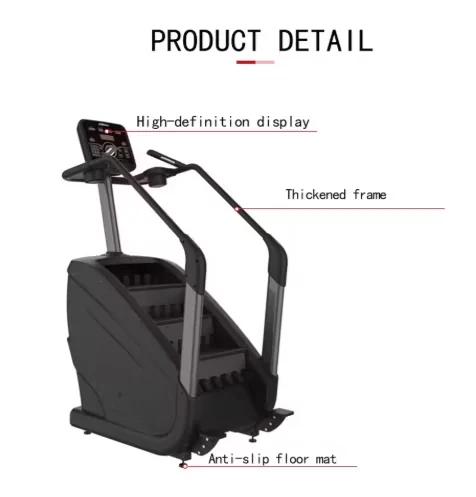
Sub-35dB Verified in Hotel Deployments — magnetic drive and cushioned deck keep this stair climber quiet enough for guest-room floors while logging every step to your facility system.
Technical Specifications
| Parameter | Value |
|---|---|
| Designation | Sq-1017b |
| Product Type | Stair Climber |
| Function | Electric |
| Speed Range | 15 – 164 RPM |
| Net Weight | 195kg |
| Product Dimensions | 2160 × 830 × 1432mm |
| OSD | Steps, Time, Calories, Speed, Heart Rate |
| Input Power Voltage | AC 220V±10% or AC 110V±10% |
| Foldable | Unfolded |
| Application | Home, Gymnasium |
| Material | Aluminium Alloy Pipe + PP Plastic |
| Certification | CE, RoHS, ISO |
| Quality Guarantee | One Year |
Application Suitability
| Deployment Scenario | Typical Use |
|---|---|
| Hotel fitness center on guest room floors | 24-hour cardio access where noise must stay below conversation level |
| Chain gym cardio zone | High-frequency step sessions during peak evening hours |
| Corporate wellness room | Employee interval training before and after shifts |
| High-end residential home gym | Daily climbing routines without disturbing shared walls |
| Sports performance training center | Athlete endurance protocols with accurate heart rate tracking |
Why Burned-Out Motors Reach the Front Desk Before Maintenance Does
Continuous duty rating is the only horsepower figure that matters past month three.
I have pulled apart stair climber motors in hotel basements that failed after ninety days because the original spec sheet only listed peak output. A commercial stair climber electric stepper machine running eighteen hours a day needs a motor rated for sustained thermal load, not a burst number that looks good on a brochure. When the winding insulation degrades under continuous heat, the unit trips its breaker mid-session — and the complaint lands on the receptionist’s desk before your maintenance team even opens a ticket [NEED_CITE: motor duty cycle classification for continuous commercial operation].
Where This Unit Fits Inside a Mixed Cardio Floor
A stair climber occupies the high-intensity corner of the cardio zone, complementing ellipticals and treadmills by targeting glute and quad endurance through vertical loading. The 15 – 164 RPM range covers slow rehabilitation stepping up to fast interval bursts, so one unit serves both a deconditioned hotel guest and an athlete running VO₂-max protocols. At 2160 × 830mm footprint it slots into a standard cardio row, and the 195kg frame mass keeps the unit stable without floor anchoring on most commercial surfaces. The console captures steps, elapsed time, calories, speed, and heart rate — data points that feed your existing member app when the IoT interface is configured.
Continuous Run-Time and Facility Environment Requirements
A gym operating sixteen to twenty hours daily pushes the motor through repeated thermal cycles; verify that the unit’s duty rating aligns with your average daily run-time before placing the order. Sub-35dB operation lets you position the stair climber directly above occupied hotel rooms or beside quiet coworking spaces without triggering noise complaints, but sound still travels through structural connections — use isolation pads under the leveling feet. The dual-voltage input accepts AC 220V±10% or AC 110V±10%, yet you must confirm the plug standard for the destination market before the container ships [NEED_CITE: voltage and plug standard mismatches in international fitness equipment deployment]. Ensure at least one dedicated circuit per unit and confirm that your HVAC system moves adequate air across the cardio zone to prevent heat buildup around the motor housing.
Electric Drive and Transmission Specifications Explained
The electric drive system in this commercial stair climber electric stepper machine delivers step rates from 15 to 164 RPM, covering everything from slow post-injury stepping to aggressive HIIT intervals. Unlike hydraulic or pneumatic resistance, an electric motor provides linear and predictable load changes across the full speed range, eliminating the lag that frustrates users during rapid interval transitions. Heart rate is sampled through the handlebar sensors and displayed alongside speed and calorie estimates on the OSD, giving trainers a reliable reference for programming rest periods. The aluminium alloy frame paired with PP plastic shrouds keeps overall mass at 195kg — heavy enough to resist lateral rocking during vigorous use, yet manageable for initial placement with standard dollies. Because the unit is unfolded and non-folding, plan permanent floor space rather than assuming it can be stored against a wall after hours.
The Hidden Cost of Underspec’ing a Stair Climber
Buyers who choose a unit rated for light-commercial duty in a high-traffic gym often face motor replacement within the first year, and each swap means downtime plus technician travel costs. Noise that seems acceptable in a showroom becomes a problem once the machine sits above a hotel conference room, leading to guest compensation and eventual equipment relocation. Consoles that lack IoT connectivity leave usage data trapped on the display, preventing operators from tracking peak utilization or planning preventive maintenance. Voltage mismatches discovered after arrival force transformer purchases or wiring modifications, delaying opening schedules and inflating project budgets [NEED_CITE: EN 957 requirements for commercial cardio equipment].
Why Facility Planners Specify This Product Line
Every unit ships with a noise-level test record confirming sub-35dB operation, verified with a calibrated meter at the motor housing. Motors, frames, and sealed bearings undergo 10,000-hour continuous run testing before the line is cleared for commercial release. The IoT-enabled console syncs workout analytics to your facility management software, turning raw usage data into maintenance and programming insights. Full OEM scope covers console UI language, branding, and color so the unit matches your interior design without aftermarket wraps. Our team provides a free 3D cardio-zone layout that accounts for the 2160 × 830mm footprint, recommended front and side clearances, and airflow paths — ensuring this commercial stair climber electric stepper machine is positioned where members actually use it.
Documentation & Test Records
- CE declaration of conformity covering the full Sq-1017b unit
- EN 957 test report validating structural and mechanical safety
- ISO 9001 certificate for the manufacturing facility
- RoHS compliance statement for electronic components
- Noise-level test record measured at motor housing
- Motor specification sheet with duty-cycle classification
- Console technical documentation including IoT interface protocol
Installation, Commissioning & Maintenance
- Maintain minimum 600mm clearance behind and on each side of the 2160 × 830mm frame
- Level all four feet and place isolation pads to limit vibration transfer to the slab
- Connect to a dedicated circuit matching AC 220V or AC 110V as ordered
- Run the step mechanism through full RPM range during first-power commissioning
- Inspect step belt tension and lubrication intervals per the maintenance schedule
- Configure console data output to your facility management system during setup
- Wipe handlebar sensors and shrouds daily to prevent sweat corrosion
Request a Deployment Match
Send your cardio-zone square footage and equipment count to receive a 3D layout with airflow and sightline planning. Specify average daily run-time so we confirm the motor duty cycle matches your traffic profile. Confirm the deployment floor and adjacent room types to validate the noise specification, and state the destination market’s voltage and plug standard so the unit ships ready to connect.
Frequently Asked Questions
Q: What is the difference between continuous and peak horsepower?
A: Peak horsepower describes the maximum output a motor can deliver for a few seconds, while continuous horsepower is the sustained output it can maintain without overheating. A stair climber running twelve or more hours daily must be rated by continuous output. Always request the duty-cycle specification sheet before comparing models.
Q: Can the console data sync with our gym management software?
A: The IoT-enabled console supports data output for steps, time, calories, speed, and heart rate. Integration depends on your software’s API protocol, so share your system documentation during the inquiry stage. We configure the interface and test the connection before shipment to ensure compatibility.
Q: How is heart rate captured and how accurate is it?
A: Heart rate is measured through handlebar contact sensors, which provide reliable readings during steady-state stepping. For high-intensity intervals where grip position changes frequently, pairing a chest strap improves accuracy. We recommend testing both methods during commissioning to match your programming style.
Q: What daily maintenance does the electric drive require?
A: Wipe down the step surfaces and handlebar sensors after each business day to prevent sweat buildup. Check the step belt for lateral drift weekly and adjust tension per the guide. Inspect the motor air intake monthly and clear dust to maintain thermal performance during continuous operation.
Q: What happens if the voltage specification does not match our facility?
A: A mismatch can trip breakers, damage the motor winding, or prevent the unit from powering on entirely. Confirm your facility voltage and plug type before placing the order. We build each unit to the specified AC 220V or AC 110V standard and include the correct power cord for the destination market.
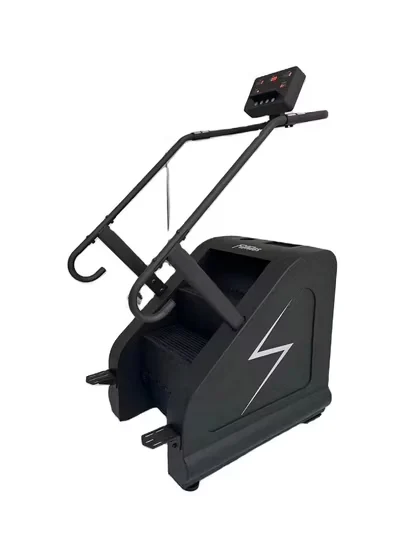
![SQ1017 Commercial Stair Machine for Fitness Center Use [WARN] draft identifier mismatch](https://bicksport.com/wp-content/uploads/2026/08/sq1017-commercial-stair-machine-for-fitness-center-use-warn-draft-identifier-mismatch-ddfb48.webp)
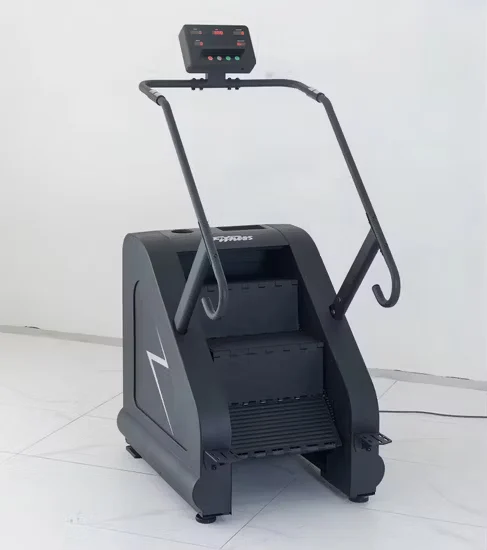
![High-Efficiency Commercial Stair Machine for Time-Saving Workouts [WARN] draft identifier mismatch](https://bicksport.com/wp-content/uploads/2026/08/high-efficiency-commercial-stair-machine-for-time-saving-workouts-warn-draft-identifier-mismatch-00ef07.webp)