
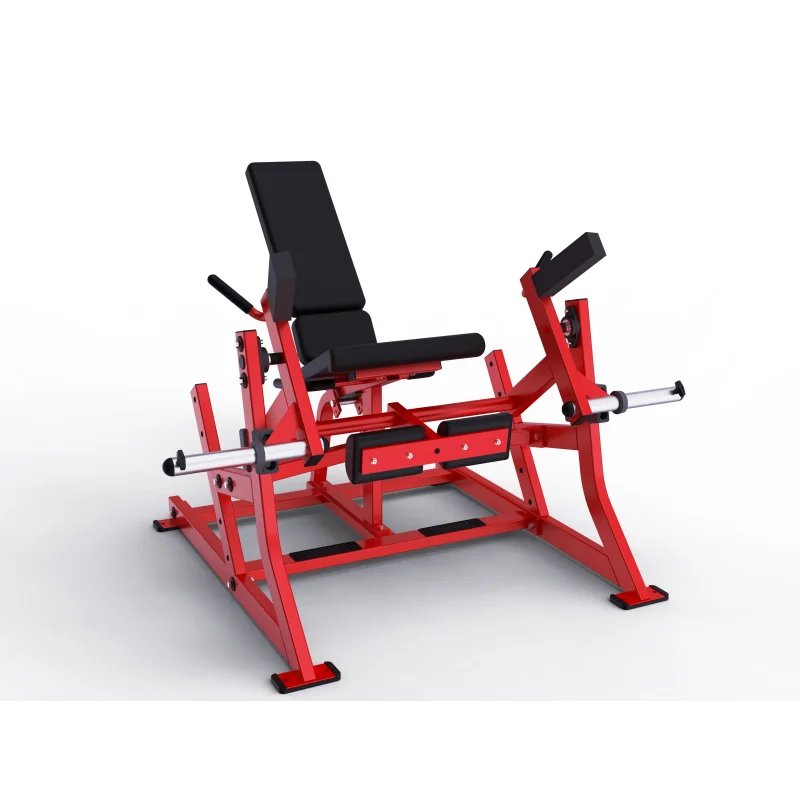
![Shandong Dezhou Fitness Equipment Commercial Free Weight Rogers PRO Squat MachineRogers PRO Squat Machine | Commercial Free Weight Fitness Equipment [WARN] draft identifier mismatch](https://bicksport.com/wp-content/uploads/2026/08/shandong-dezhou-fitness-equipment-commercial-free-weight-rogers-pro-squat-machinerogers-pro-squat-machine-commercial-free-weight-fitness-equipment-warn-draft-identifier-mismatch-bb2819.webp)
Commercial Squat Machine | Heavy-Duty Strength Equipment for Gyms
Heavy-Duty Free Weight Anchor — The reinforced 50×100×3mm steel frame delivers the rigidity required for continuous heavy compound lifts in high-traffic commercial facilities.
Technical Specifications
| Parameter | Value |
|---|---|
| Designation | SRH-72 |
| Product Type | Squat Machine (Strength Equipment) |
| Tube Size | 50×100×3mm |
| Frame Material | Iron |
| Product Dimensions | 1550×1480×1825mm |
| Machine Weight | 170kgs |
| Max User Weight | 180kg |
| Exercise Part | Waist |
| Color | Customized |
| Certification | CE, ISO 9001, RoHS |
Application Suitability
| Deployment Scenario | Typical Use |
|---|---|
| chain gym cardio zone | High-frequency squat and compound movement stations |
| corporate wellness room | Staff strength training in shared fitness spaces |
| sports performance training center | Athlete-grade loaded movement training |
| community fitness center | Public-access lower body and core work |
Why Light-Commercial Frames Crack Under Real Gym Workloads
Commercial squat machine strength equipment must survive thousands of loaded cycles, not just showroom demos.
When a frame rated for light-commercial duty enters a busy gym floor, the welded joints and tubing begin to flex under repeated heavy loads. That flex transfers vibration through the floor into occupied spaces below, and over months it develops into hairline cracks at the stress points. Facility managers typically discover the problem only after a member reports instability mid-set [NEED_CITE: structural fatigue patterns in commercial strength equipment frames]. I have seen gym chains replace entire squat rack batches because the original tube gauge was never specified for continuous public use.
Where This Squat Machine Fits in a Commercial Free Weight Zone
This unit anchors the loaded movement section of a free weight area, handling barbell squats and related compound exercises across beginner to advanced intensity ranges. It complements bench stations and deadlift platforms by covering the primary lower-body and core movement pattern that those units do not address. The 1550×1480mm footprint fits standard rack-spacing layouts, and the 180kg max user weight accommodates the broad athlete demographic found in commercial squat machine strength equipment deployments. The frame geometry supports controlled loading and unloading without requiring a spotter arm for basic use.
Continuous Operation and Floor-Level Deployment Considerations
A commercial squat station does not have a motor or duty cycle, but it does face repetitive impact loading every time a barbell is re-racked. The 170kgs machine weight combined with the wide base footprint resists walking and tipping during heavy sets. On upper floors or above occupied rooms, vibration transmission becomes the main concern — the solid iron construction and stable base reduce resonance compared to lighter welded frames. Ground leveling is critical; an uneven floor transfers asymmetric loads into the joints over time [NEED_CITE: floor loading requirements for commercial free weight equipment]. Facilities planning multi-unit installations should confirm slab load capacity and allocate rubber matting zones around the rack perimeter.
Reading the Steel and Weld Specs That Actually Matter
The 50×100×3mm rectangular tube determines how much the uprights deflect under load. Thinner-walled tubing flexes noticeably when a loaded barbell rests on the catches, and that flex worsens as weld fatigue accumulates. The 3mm wall thickness here places the frame in the commercial bracket, where deflection stays within acceptable limits during heavy compound movements. Welded joint construction rather than bolted assembly eliminates the loosening problem that bolted racks develop after months of vibration. The iron material choice trades weight savings for mass — the 170kgs total weight is functional ballast that keeps the unit planted during dynamic re-racking. Color customization through powder coating protects the steel from sweat corrosion and matches facility branding without altering structural properties.
What Happens When Frame Specs Are Undersized
A squat station built on lighter tubing develops visible flex within the first year of commercial use. Members notice the movement and lose confidence during heavy sets, which drives them toward competitor facilities with better equipment. The welds at high-stress junctions begin to crack, creating liability exposure that most gym insurance policies explicitly exclude if equipment was not rated for the actual usage pattern [NEED_CITE: liability implications of underspecified commercial gym equipment]. Replacing a single failed unit means pulling it off the floor, sourcing a match, and disrupting the training zone layout — costs that multiply across a chain rollout.
Why the Bicktongchuang Commercial Strength Line Holds Up
Every frame in this product family undergoes weld quality inspection and load testing before leaving the Shandong facility, verified against EN 957 requirements for commercial strength stations. The six-series cardio and strength family means a facility can source every discipline from one manufacturing line, simplifying spare parts logistics and OEM color matching across zones. The 50×100×3mm tube specification is consistent across the squat range, so expansion units match existing inventory. Free 3D layout planning covers equipment spacing, member flow, and rubber matting zones specific to this 1550×1480mm footprint. Full OEM capability extends to frame color and pad upholstery, and 24/7 technical support covers structural warranty claims.
Documentation & Test Records
- CE declaration of conformity for commercial strength equipment
- EN 957 test report covering static and dynamic load verification
- ISO 9001 certificate for manufacturing quality management
- RoHS compliance documentation for material safety
- Weld quality inspection and frame durability test records
- Powder coating specification and color matching guide
Installation, Commissioning & Maintenance
- Confirm floor levelness across the 1550×1480mm footprint before anchoring
- Place rubber matting around perimeter to absorb re-rack vibration
- Inspect all welded joints upon delivery and after the first 30 days of use
- Check powder coating for chips monthly and touch up to prevent corrosion
- Verify barbell catch alignment and replace worn contact pads on schedule
- Clean sweat contact points daily with non-corrosive sanitizer
Plan Your Free Weight Zone Equipment Selection
Provide your free weight zone square footage and planned unit count to receive a 3D layout with spacing and member flow planning for this commercial squat machine strength equipment. Specify your deployment floor level and adjacent room usage so we can confirm vibration isolation requirements. State your target market so that documentation and labeling match local regulatory standards. Indicate whether color and upholstery customization is needed to align with existing facility branding.
Frequently Asked Questions
Q: What tube size and material grade is used for commercial durability?
A: The frame uses 50×100×3mm rectangular steel tubing with full welded construction. This wall thickness provides the rigidity needed for heavy compound lifts without visible deflection, and the iron material delivers the mass required to keep the unit stable during dynamic barbell loading and unloading in high-frequency commercial environments.
Q: How does frame construction affect stability during heavy lifts?
A: The 170kgs machine weight and wide base footprint work together to resist tipping and walking during loaded sets. Welded joints eliminate the loosening that bolted connections develop over time, and the 3mm tube wall limits upright flex so the barbell path stays predictable through full range of motion.
Q: What weight capacity is supported for commercial use?
A: The unit supports a maximum user weight of 180kg, which aligns with the commercial range standard across the Bicktongchuang product family. This capacity accommodates the full spectrum of athletes found in gym chains, corporate wellness centers, and professional sports training facilities.
Q: Can the equipment be customized for facility branding?
A: Full OEM and ODM customization is available including frame powder coat color and pad upholstery material. This allows facility operators to match existing interior design schemes or corporate branding guidelines across all strength equipment zones without compromising structural specifications.
Q: What certifications ensure commercial-grade quality and safety?
A: The unit carries CE marking and ISO 9001 manufacturing certification, with EN 957 test verification for commercial strength equipment. RoHS compliance confirms material safety, and weld quality inspection records are provided as part of the standard documentation package with each shipment.
![Hammer Strength ISO-Lateral Front Lat Pulldown Gym Equipment [WARN] draft identifier mismatch](https://bicksport.com/wp-content/uploads/2026/08/hammer-strength-iso-lateral-front-lat-pulldown-gym-equipment-warn-draft-identifier-mismatch-b890da.webp)
![Hammer Strength OS-H5001 ISO-Lateral Bench Press for Commercial Gyms [WARN] draft identifier mismatch](https://bicksport.com/wp-content/uploads/2026/08/hammer-strength-os-h5001-iso-lateral-bench-press-for-commercial-gyms-warn-draft-identifier-mismatch-5a0724.webp)
![Plate Loaded Hammer Strength Utility Bench 75 Degree Sports Equipment for Commercial Gyms [WARN] draft identifier mismatch](https://bicksport.com/wp-content/uploads/2026/08/plate-loaded-hammer-strength-utility-bench-75-degree-sports-equipment-for-commercial-gyms-warn-draft-identifier-mismatch-010c0c.webp)