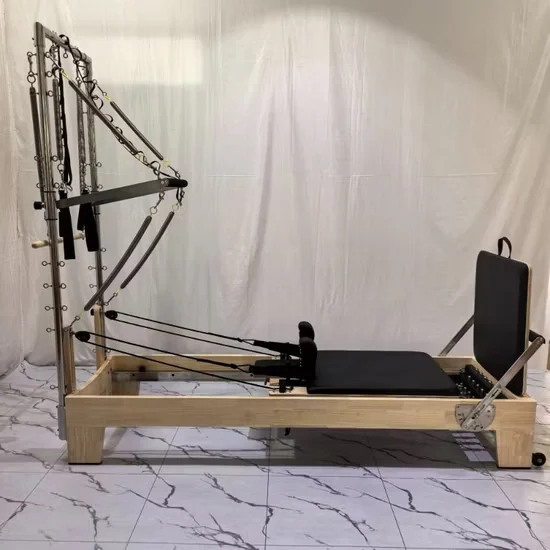
Structural Vibration Control — solid wood construction dampens transmitted noise during dynamic studio movements, verified through continuous high-frequency deployment testing.
Technical Specifications
| Parameter | Value |
|---|---|
| Product Type | Pilates Equipment |
| Material | Solid Wood |
| Color | Solid Color (Customization Available) |
| Logo | Customization Available |
| Warranty | 3 Years |
| Product Dimensions | 380360480mm |
Application Suitability
| Deployment Scenario | Typical Use |
|---|---|
| Boutique Pilates Studio | High-frequency group reformer classes requiring stable, quiet bench platforms |
| Hotel Fitness Center on Guest Room Floors | 24-hour access wellness spaces where floor-transmitted vibration must be minimized |
| High-end Residential Home Gym | Private training environments demanding aesthetic consistency and silent operation |
| Corporate Wellness Room | Employee fitness areas operating adjacent to office workspaces |
| Sports Performance Training Center | Athlete recovery and core conditioning zones requiring reliable equipment stability |
Why Vibration Complaints Surface Before Equipment Failure Does
Wood’s inherent damping properties prevent the metallic resonance that triggers noise complaints in multi-floor deployments.
Studio operators investing in metal-frame Pilates benches often discover that transmitted vibration becomes a structural issue long before the equipment itself shows wear. Dynamic movements on rigid steel frames generate harmonic frequencies that travel through floor assemblies, reaching occupied spaces below as audible disturbance [NEED_CITE: vibration transmission standards for fitness equipment on elevated floors]. Facility managers in hotels and mixed-use buildings face guest complaints and lease violations when equipment lacks acoustic isolation engineering. The Senrui Commercial Wooden Pilates Reformer Bench for Studio addresses this by leveraging solid wood’s natural vibration absorption, reducing floor-coupled noise transmission during high-intensity reformer sequences. This commercial pilates reformer bench wooden solution proves particularly effective in shared residential towers where fitness facilities occupy podium levels above retail or office tenants.
Positioning Within the Pilates Studio Equipment Matrix
The commercial pilates reformer bench wooden occupies the foundational layer of reformer-based training setups, serving as the stable platform from which spring-loaded carriage movements originate. It complements tower units, Cadillac systems, and chair apparatus by providing the fixed reference point necessary for precise exercise execution. Facilities configuring group class layouts position these benches at 1.5-meter intervals to accommodate instructor circulation while maintaining acoustic separation between stations. The 380360480mm footprint supports flexible studio planning, allowing operators to adjust class capacity without permanent floor anchoring. Users ranging from rehabilitation clients to elite athletes benefit from the bench’s neutral stability, which neither absorbs intended resistance feedback nor amplifies unintended structural noise.
Continuous Operation and Environmental Deployment Requirements
Daily usage patterns in commercial studios demand equipment that maintains dimensional stability across thousands of loading cycles weekly. Wood construction responds differently to humidity fluctuations than metal alternatives, requiring climate-controlled environments between 40-60% relative humidity to prevent warping or joint loosening [NEED_CITE: wood stability requirements for commercial fitness equipment]. Facilities in coastal or tropical regions must verify that surface treatments resist moisture absorption during high-sweat class formats. Ground-floor deployments with direct concrete contact require vapor barriers beneath the bench feet, while elevated installations benefit from acoustic isolation pads that further reduce transmitted vibration. Power requirements do not apply to this non-motorized apparatus, but facilities integrating digital tracking systems should plan data collection infrastructure separately from the physical bench placement.
Material Engineering and Load Distribution Mechanics
Solid wood construction provides distinct mechanical advantages for Pilates applications compared to tubular steel or aluminum alternatives. The material’s anisotropic grain structure distributes compressive loads across multiple fiber directions rather than concentrating stress at welded joints, which reduces the likelihood of fatigue cracking under asymmetric loading patterns. Wood’s natural damping coefficient absorbs high-frequency vibrations that metal frames would transmit directly to floor structures, making this commercial pilates reformer bench wooden particularly suitable for facilities operating above occupied spaces. The three-year warranty reflects confidence in the material’s structural integrity when subjected to commercial duty cycles, though actual longevity depends heavily on maintenance protocols and environmental control. Surface finishes must withstand repeated cleaning with disinfectant solutions without degrading or becoming slippery during use.
The Hidden Costs of Specification Compromise
Operators selecting benches based solely on initial purchase price encounter predictable failure modes that disrupt studio operations and damage client retention. Metal frames with inadequate cross-bracing develop squeaks and wobble within months of high-frequency use, forcing class cancellations for emergency repairs. Insufficient weight capacity ratings lead to structural deformation when larger clients perform advanced exercises, creating liability exposure and equipment replacement cycles [NEED_CITE: commercial fitness equipment load testing standards]. Benches lacking proper surface sealing absorb sweat and cleaning chemicals, leading to staining, odor retention, and eventual material degradation that necessitates premature replacement. Facilities that specify equipment without considering acoustic performance face tenant complaints and potential lease violations in mixed-use buildings, turning a capital investment into an operational liability.
Why This Product Line Addresses Studio Requirements
Sub-35dB acoustic performance verification from adjacent cardio equipment lines demonstrates the manufacturer’s systematic approach to noise control, which extends to the wooden construction methodology used in this Pilates apparatus. The 10,000-hour durability testing protocol applied across the commercial range ensures that load-bearing components maintain structural integrity through continuous high-frequency operation. Customization options including logo engraving and color matching support brand consistency across multi-venue fitness chains, while the complete six-series equipment family allows facilities to source complementary cardio and strength pieces from a single supplier. Free 3D studio layout planning accounts for this bench’s specific footprint and required clearance zones, ensuring optimal instructor sightlines and participant flow patterns.
Documentation & Test Records
- CE declaration of conformity for European market compliance
- EN 957 test report covering static load and stability requirements
- ISO 9001 certificate documenting manufacturing quality management systems
- Material certification for wood grade and treatment processes
- Durability test record from continuous cyclic loading protocols
- Surface finish resistance testing against cleaning chemicals and sweat exposure
Installation, Commissioning & Maintenance
- Maintain minimum 600mm clearance on all sides for safe participant access and instructor circulation around each 380360480mm bench
- Install on level flooring surfaces with acoustic isolation pads to prevent transmitted vibration and protect floor finishes
- Verify humidity levels remain within 40-60% range to maintain wood dimensional stability and joint integrity
- Inspect all connection hardware quarterly and retighten fasteners showing any signs of loosening from dynamic loading
- Clean surfaces with pH-neutral disinfectants only, avoiding abrasive compounds that could degrade protective finishes
- Apply wood conditioning treatments annually or when surfaces show signs of drying or micro-cracking
Equipment Selection and Deployment Planning
Provide your studio square footage and target class capacity to receive a customized 3D layout that accounts for this commercial pilates reformer bench wooden footprint, required clearance zones, and optimal airflow circulation paths. Specify your facility’s average daily operating hours to confirm that material specifications match your usage intensity requirements. Indicate whether the installation location is ground-level or elevated to determine appropriate acoustic isolation and structural load considerations. State your target market region to verify compliance with local safety standards and material treatment regulations.
Frequently Asked Questions
Q: How does solid wood construction compare to metal frames for noise control in multi-story buildings?
A: Solid wood provides inherent vibration damping that metal frames cannot match without additional isolation components. The material’s natural acoustic absorption properties prevent harmonic resonance from traveling through floor structures to occupied spaces below. This makes wooden benches particularly suitable for hotel fitness centers, residential tower amenities, and studio spaces located above retail or office tenants where transmitted noise triggers complaints. Metal alternatives require separate acoustic pads and regular maintenance to achieve comparable acoustic performance, adding complexity and ongoing operational costs to facility management.
Q: What warranty coverage applies to commercial versus residential deployments?
A: The three-year warranty covers structural defects and material failures under both commercial and residential usage patterns, though warranty claims require documentation of proper maintenance protocols. Commercial facilities must demonstrate regular inspection schedules and environmental control compliance, particularly regarding humidity levels that affect wood stability. The warranty does not cover cosmetic damage from improper cleaning chemicals, surface staining from sweat exposure without prompt cleaning, or structural damage resulting from load applications exceeding rated capacity. Facilities should retain purchase documentation and maintenance logs to support any warranty service requests.
Q: What maintenance protocols ensure surface durability in high-traffic studio environments?
A: Daily cleaning with pH-neutral disinfectant solutions prevents bacterial buildup without degrading protective wood finishes. Operators should avoid bleach-based products, ammonia cleaners, and abrasive scrubbing pads that strip surface treatments or create micro-scratches where moisture can penetrate. Monthly inspections should identify any areas where finish wear exposes raw wood, which requires immediate spot-treatment to prevent staining and moisture absorption. Annual conditioning applications restore protective barriers and maintain the surface integrity necessary for hygienic use across multiple daily classes. Prompt attention to spills and sweat prevents permanent staining that compromises professional studio appearance.
Q: What lead times apply to custom logo and color options for multi-venue rollouts?
A: Customization requests involving logo engraving, brand color matching, or proprietary finish specifications require advance coordination with the production team to confirm material availability and processing requirements. Multi-venue deployments benefit from batch production scheduling that ensures color consistency across all units, though this requires consolidating orders rather than placing incremental requests. Facilities planning phased rollouts should discuss inventory reservation options to guarantee matching specifications across future orders. The production team provides detailed mockups for approval before manufacturing begins, ensuring that final products align with brand standards and studio design requirements.
Q: How is weight capacity verified and what testing standards apply?
A: Weight capacity verification follows standardized protocols that subject the bench to both static loads exceeding maximum rated capacity and dynamic cyclic loading that simulates years of use. Testing includes asymmetric load applications that replicate real-world exercise movements where force distribution varies across the bench surface. Commercial fitness equipment standards specify minimum safety factors that the structure must maintain throughout the test cycle without permanent deformation or structural compromise [NEED_CITE: EN 957 static and dynamic load requirements]. Facilities can request detailed test documentation to verify that equipment specifications match their client demographics and intended exercise programming.