

Impact Resistance — rubber compound tested for repeated floor drops without surface cracking or deformation.
Technical Specifications
| Parameter | Value |
|---|---|
| Product Type | Medicine Ball |
| Model | MB-1000 |
| Material | Rubber |
| Available Weight Range | 1-10kg |
| Surface Texture | Non-slip textured finish |
| Age Group | Adult |
| Gender | Unisex |
| Exercise Part | Arm and full-body functional training |
| Color Options | Customized color options available |
| Logo Placement | Customized logo available |
| Production Capacity | 10000 units per year |
| Transport Packaging | Carton |
| HS Code | 9506911900 |
Application Suitability
| Deployment Scenario | Typical Use |
|---|---|
| hotel fitness center functional zone | guest self-service strength and conditioning variety |
| commercial gym functional training area | group classes, partner drills, explosive movement programming |
| corporate wellness room | circuit training stations and guided movement sessions |
| high-end residential home gym | individual strength work and rehabilitation routines |
| sports performance training center | athletic development drills involving throws and rotational work |
Why Grip Fails Months Before the Core Does
Surface texture retention determines real service life, not rubber thickness alone.
Facility operators rarely inspect medicine balls until a member reports a slip during an overhead throw. By that point, the surface has polished smooth from repeated handling, chalk residue, and cleaning chemicals breaking down the texture [NEED_CITE: surface degradation patterns on rubber fitness accessories under commercial cleaning protocols]. The commercial non-slip rubber medicine ball addresses this through a dense compound with a molded texture that resists smoothing under high-frequency use, maintaining grip predictability across extended deployment cycles.
Positioning Within a Functional Training Zone
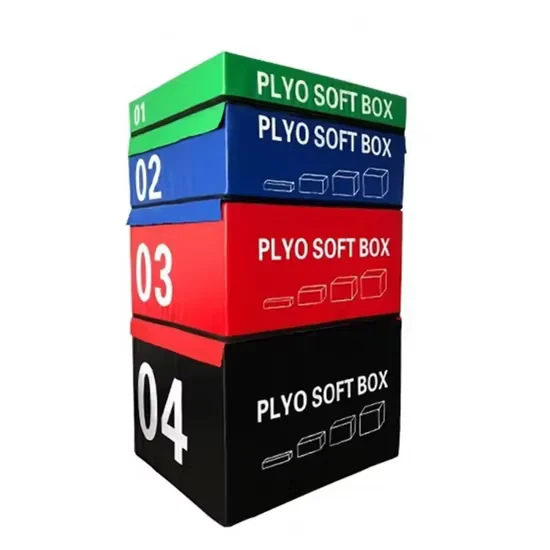
Medicine balls fill the gap between free weights and bodyweight stations, covering rotational power, explosive throws, and loaded carries that barbells and dumbbells cannot replicate. This unit pairs naturally with plyometric boxes, cable columns, and open floor space for partner drills. Weight distribution across the 1-10kg range accommodates progressive overload without requiring members to switch equipment categories. The compact form factor allows storage on wall-mounted racks or floor stands, keeping the commercial non-slip rubber medicine ball accessible without consuming primary floor lanes.
Deployment Environment and Floor Protection Considerations
Repeated drops on hard flooring demand a rubber compound that absorbs impact without transferring excessive force to subfloor structures. Facilities on upper floors or above occupied spaces benefit from the material’s energy absorption, reducing transmitted vibration compared to harder vinyl alternatives [NEED_CITE: impact force transmission through fitness flooring from dropped equipment]. Temperature stability matters in spaces without climate control, as extreme cold can harden rubber compounds and increase bounce unpredictability. The ball performs consistently across typical indoor temperature ranges without requiring special storage conditions.
Material Density and Weight Accuracy Tolerance
Rubber medicine balls rely on consistent mass distribution to ensure predictable flight paths during throws and reliable resistance during rotational movements. Variance in weight accuracy across production batches creates training inconsistency, particularly in programming that specifies exact loads. The molding process controls material density to maintain weight tolerance within commercially acceptable limits, ensuring a 6kg ball delivers 6kg of resistance regardless of production date. Surface texture is integrated during molding rather than applied as a coating, preventing delamination under repeated impact and cleaning cycles.
The Cost of Substituting Light-Duty Alternatives
Vinyl and synthetic leather medicine balls reduce upfront procurement costs but develop surface polish and seam failures under commercial drop frequencies. Facilities replacing inventory twice annually due to splitting seams and grip loss absorb higher total cost than investing in durable rubber construction from the start [NEED_CITE: total cost of ownership comparison between material types for high-frequency functional training equipment]. Inconsistent weight distribution in lower-tier balls also creates member complaints about unpredictable behavior during dynamic movements, undermining programming credibility.
Why This Product Line Fits Facility Procurement
The MB-1000 sits within a broader equipment ecosystem sourced from a single manufacturing partner, simplifying procurement coordination. Customization options for color and logo placement allow branding alignment without separate vendor contracts. Production capacity supports multi-site rollout timelines for gym chains and hotel groups standardizing across properties. The rubber compound and construction methods align with commercial durability expectations, verified through impact testing protocols consistent with facility equipment standards [NEED_CITE: EN 957 requirements for functional training accessories and impact resistance].
Documentation & Test Records
- CE declaration of conformity for fitness equipment safety standards
- Material composition and density verification reports
- Weight accuracy tolerance records across production batches
- Impact resistance test documentation for repeated drop cycles
- Surface texture durability assessment under extended use conditions
Installation, Commissioning & Maintenance
- Store on wall racks or floor stands with adequate spacing to prevent surface compression marks
- Inspect surface texture quarterly and clean with pH-neutral solutions to preserve grip compound
- Verify weight accuracy annually using calibrated scales to confirm tolerance compliance
- Rotate stock positions periodically to equalize usage wear across inventory
- Replace units showing visible surface polish or seam separation to maintain safety standards
Inquiry Guidance for Equipment Selection
Provide functional training zone square footage and intended use patterns to receive layout recommendations covering storage and clearance requirements. Specify target deployment environments including floor type and climate control status to confirm material suitability. Indicate customization requirements for color schemes or branding placement to align with facility design standards. Clarify quantity needs and rollout timelines to confirm production scheduling alignment.
Frequently Asked Questions
Q: How does rubber compare to vinyl for commercial medicine ball applications?
A: Rubber maintains surface texture longer under repeated handling and drop impacts, resisting the polish effect that makes vinyl slippery over time. The material also absorbs impact energy more effectively, reducing bounce unpredictability and protecting flooring from concentrated force transfer during overhead throws and slams.
Q: What weight range should facilities stock for diverse member populations?
A: Stocking incremental weights across the 1-10kg range accommodates beginners through advanced athletes without requiring equipment substitutions. Lighter weights serve rehabilitation and technique work, while heavier options support explosive power development and loaded carry programming in group class settings.
Q: How should non-slip surfaces be maintained in high-use environments?
A: Clean with pH-neutral solutions rather than harsh disinfectants that degrade rubber compounds over time. Avoid abrasive brushes that can prematurely wear texture patterns. Quarterly inspections identify units showing surface polish, allowing proactive replacement before grip failure creates safety concerns during dynamic movements.
Q: What customization options exist for multi-property branding consistency?
A: Color and logo placement customization allows facilities to match equipment to interior design schemes or corporate branding standards. Minimum order quantities apply for custom configurations, so procurement teams should consolidate requirements across properties to optimize production efficiency and timeline coordination.
![Heavy Duty Multi-Functional Pull-up Bars for Commercial Gym Strength Training [WARN] draft identifier mismatch](https://bicksport.com/wp-content/uploads/2026/08/heavy-duty-multi-functional-pull-up-bars-for-commercial-gym-strength-training-warn-draft-identifier-mismatch-27c800.webp)
![Heavy-Duty Lat Pulldown Machine Handles with Rotating Grips for Commercial Gyms [WARN] draft identifier mismatch](https://bicksport.com/wp-content/uploads/2026/08/heavy-duty-lat-pulldown-machine-handles-with-rotating-grips-for-commercial-gyms-warn-draft-identifier-mismatch-b0684e.webp)