
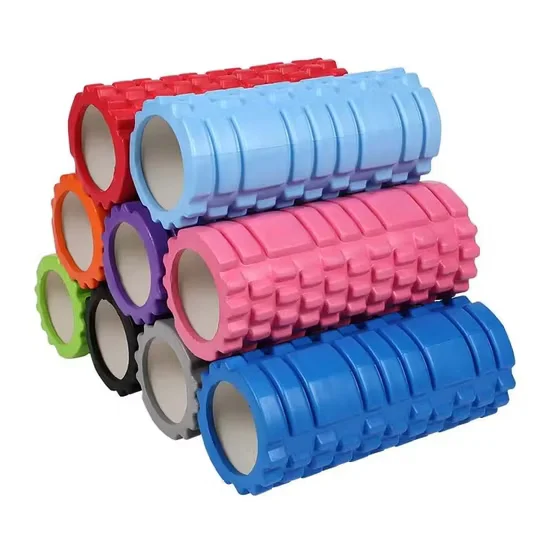
Structural Density Retention — High-density foam cores tested to maintain shape under continuous studio and gym compression cycles without deformation.
Technical Specifications
| Parameter | Value |
|---|---|
| Product Type | Yoga Foam Roller |
| Model NO. | AY-1300 |
| Specification | 331414CM |
| Material | High-density EVA foam |
| Color | Customized Color |
| Logo | Customized Logo Available |
| Age Group | Adult |
| Gender | Unisex |
| Surface Texture | Customizable |
| MOQ | 50PCS |
| HS Code | 9506911900 |
| Production Capacity | 5000/Years |
| Certification | CE, ISO 957 |
Application Suitability
| Deployment Scenario | Typical Use |
|---|---|
| Yoga and Pilates studios | Daily class recovery sessions with repeated compression across dozens of members |
| Commercial gym recovery zones | Self-myofascial release between strength training sets in high-traffic functional areas |
| Corporate wellness centers | Employee recovery and mobility work during lunch breaks and after-shift use |
| Physical therapy clinics | Assisted soft tissue work under practitioner guidance for rehabilitation protocols |
| High-end residential home gyms | Personal recovery tool complementing treadmill and strength equipment installations |
Why Studio Recovery Tools Fail Before the First Membership Renewal
Foam density determines whether a roller lasts six months or six years in shared environments.
When I managed fitness floor procurement for hotel properties, recovery accessories were an afterthought — ordered in bulk from catalog suppliers without checking compression ratings. The result was predictable: rollers that flattened within weeks, accumulated surface bacteria in open-cell foam, and generated member complaints about hygiene and effectiveness [NEED_CITE: foam density standards for commercial fitness accessories]. A commercial custom logo yoga foam roller deep tissue tool must survive hundreds of compression cycles weekly without losing structural integrity, which requires closed-cell high-density construction that most consumer-grade rollers simply do not offer.
Role Within the Recovery and Mobility Zone
A foam roller occupies a specific position in the facility layout — typically placed in functional training areas, stretching corridors, or dedicated recovery corners adjacent to strength equipment. The commercial custom logo yoga foam roller deep tissue specification at 331414CM provides a compact footprint that fits alongside resistance bands, mobility tools, and stretching mats without congesting traffic flow. It complements high-intensity cardio zones by offering members a self-directed recovery option between treadmill intervals or after cycling sessions, and the high-density foam core delivers consistent resistance across the full length of the roller for users across a wide body weight range.
Continuous Use and Surface Hygiene Requirements
In a commercial deployment, a single foam roller may see thirty or more users per day, each applying full body weight through compression and rolling. The non-porous surface specification supports cleaning between users with standard commercial disinfectants, addressing the hygiene concern that open-cell foam cannot solve [NEED_CITE: sanitation requirements for shared fitness accessories]. The high-density foam core is engineered to retain its cylindrical shape under this repeated loading, preventing the flat spots and density loss that force facilities into frequent replacement cycles. Temperature and humidity in the deployment area affect foam longevity — climate-controlled indoor environments extend service life compared to open-air or semi-outdoor fitness decks.
Material Composition and Compression Behavior
The high-density EVA foam construction delivers firm resistance that does not collapse under body weight, which is the fundamental difference between a commercial-grade roller and a consumer product. Closed-cell structure prevents sweat and moisture from penetrating the core, maintaining dimensional stability across thousands of compression cycles. The customizable surface texture allows facilities to specify smooth, grid, or contoured patterns depending on the recovery protocols their trainers and physiotherapists recommend. Customized Color and Customized Logo Available options mean the roller can match facility branding without sacrificing the underlying density specification that determines lifespan. The 331414CM dimension provides sufficient length for thoracic spine work and IT band release while remaining portable for group class settings.
The Hidden Cost of Specifying Consumer-Grade Recovery Tools
Facilities that purchase foam rollers without verifying density ratings and compression test records face a predictable failure pattern: initial member satisfaction followed by progressive flattening, surface cracking, and hygiene complaints as open-cell foam absorbs sweat [NEED_CITE: replacement cycle frequency for commercial foam rollers]. The replacement cost compounds — not just the unit price but the procurement overhead, shipping, and the gap period where recovery zones sit under-equipped. For international deployments, specifying rollers without confirming material safety certifications for skin-contact products can create compliance issues at customs or during facility inspections, delaying opening timelines and generating avoidable friction with local regulatory bodies.
Why This Product Line Addresses Facility-Level Requirements
The high-density foam core specification is validated through compression testing records that document shape retention over extended use cycles, giving procurement teams evidence rather than marketing claims. The full OEM/ODM capability covering logo, color, surface texture, and packaging customization allows facilities to align recovery tools with brand identity across multi-site rollouts. The 50-piece MOQ supports both single-site deployments and phased multi-property orders without forcing excessive inventory commitment. Combined with Biketon Sport’s broader cardio equipment family — covering treadmills, bikes, ellipticals, rowing machines, stair climbers, and spinning bikes — facilities can source recovery accessories alongside primary cardio units from a single manufacturing partner, simplifying logistics and quality accountability. The 3D cardio zone layout service extends to recovery areas, ensuring foam roller placement accounts for member flow, sightlines, and proximity to complementary equipment. Documentation including material safety certifications and compression test records ships with every order.
Documentation & Test Records
- CE declaration of conformity covering fitness accessory safety requirements
- Material safety certification for skin-contact foam products
- Compression test records documenting density retention over extended cycles
- ISO 957 compliance documentation for commercial fitness equipment
- OEM customization artwork approval and production specification sheet
- Sanitation compatibility guide listing approved commercial disinfectants
Installation, Commissioning & Maintenance
- Position on level flooring in recovery zones with adequate spacing for full-body extension movements
- Wipe non-porous surface with approved commercial disinfectant between users during peak operating hours
- Inspect foam surface monthly for cracks, flat spots, or density loss indicating replacement need
- Store in climate-controlled environment away from direct UV exposure to preserve foam integrity
- Rotate high-use rollers quarterly to distribute compression wear evenly across the surface
- Maintain cleaning log documenting sanitation frequency for facility inspection compliance
Equipment Selection and Layout Planning
Provide your recovery zone square footage and adjacent cardio equipment list to receive a 3D layout that positions foam rollers for optimal member flow and accessibility. Specify average daily user count to confirm whether the high-density foam specification matches your deployment intensity. Indicate target market and facility type so OEM customization covering logo, color, and packaging aligns with your brand standards. Note any material certification requirements specific to your operating jurisdiction.
Frequently Asked Questions
Q: How does foam density affect durability in high-frequency commercial use?
A: Higher density foam resists permanent deformation under repeated body weight compression. In commercial settings where a single roller serves dozens of users daily, low-density foam collapses within weeks, creating flat spots that reduce effectiveness and require replacement. High-density EVA foam maintains cylindrical shape across thousands of compression cycles, extending replacement intervals and reducing total cost of ownership for the facility.
Q: What customization options are available for facility branding?
A: The OEM program covers customized color matching to facility brand palettes, logo application via printing or embossing, and packaging customization for retail-facing deployments. Surface texture can be specified as smooth, grid, or contoured to match the recovery protocols your trainers and physiotherapists recommend. Artwork approval happens before production begins, ensuring brand accuracy across bulk orders.
Q: How should foam rollers be cleaned in shared gym environments?
A: The non-porous closed-cell surface supports wiping with standard commercial disinfectants between users. Facilities should establish a cleaning protocol that specifies approved solutions, wiping frequency during peak hours, and deeper sanitation at closing. Avoid abrasive cleaners that can damage the foam surface texture. A visible cleaning station adjacent to the recovery zone encourages member participation in hygiene maintenance.
Q: What firmness levels suit different recovery needs?
A: Firm high-density foam delivers deep tissue pressure suitable for IT band release, thoracic spine mobilization, and large muscle group work. Softer density options target gentle myofascial release and beginner users who find firm rollers uncomfortable. The customizable surface texture adds another variable — contoured patterns concentrate pressure on trigger points while smooth surfaces distribute force evenly across broader tissue areas.
Q: What are the minimum order quantities and lead times for custom logo orders?
A: The MOQ for custom logo and color orders is 50 pieces, supporting single-site deployments without excessive inventory commitment. Lead time depends on customization complexity — standard color and logo applications ship within standard production windows, while bespoke surface textures or specialized packaging may require additional tooling time. Confirm specific timelines during the quotation phase after artwork approval.
![Commercial Core Strength Training Sit-up Cushion for Fitness Facilities [WARN] draft identifier mismatch](https://bicksport.com/wp-content/uploads/2026/08/commercial-core-strength-training-sit-up-cushion-for-fitness-facilities-warn-draft-identifier-mismatch-f47fea.webp)

![Commercial Wood Plyometric Box for Elite Fitness Training [WARN] draft identifier mismatch](https://bicksport.com/wp-content/uploads/2026/08/commercial-wood-plyometric-box-for-elite-fitness-training-warn-draft-identifier-mismatch-e7e4b8.webp)