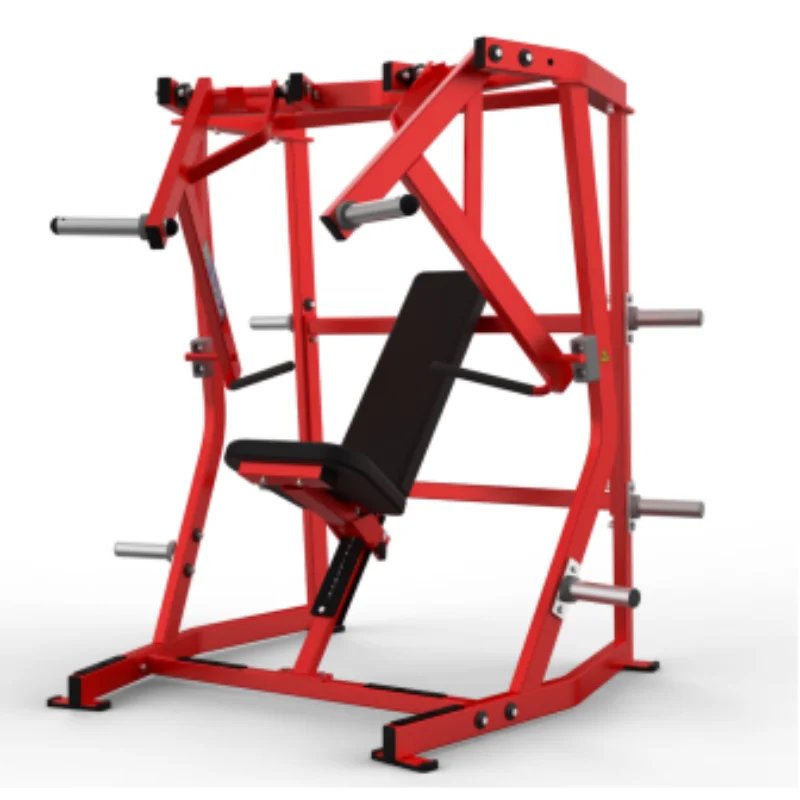
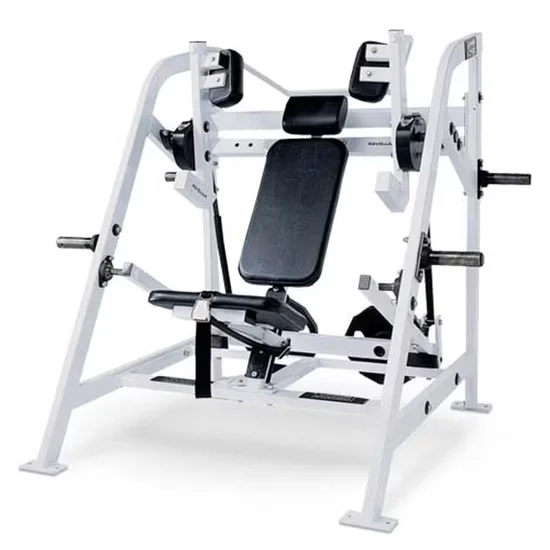
Steel Frame Stability — Reinforced steel construction and sealed bearing systems ensure vibration-free performance across continuous commercial training cycles.
Technical Specifications
| Parameter | Value |
|---|---|
| Product Type | Plate Loaded Adductor Machine |
| Model NO. | 5027 |
| Exercise Part | Leg |
| Resistance Type | Plate loaded |
| Material | Steel |
| Product Dimensions | 1690730750mm |
| Net Weight | 139kg |
| Certification | ISO 9001, CE |
Application Suitability
| Deployment Scenario | Typical Use |
|---|---|
| hotel fitness center on guest room floors | 24-hour access strength training for guests seeking lower body isolation work without loud cable stack impacts |
| chain gym cardio zone | High-frequency adductor training between cardio sessions, supplementing treadmill and elliptical routines |
| corporate wellness room | Compact footprint lower body machine for employees during lunch breaks and before/after work sessions |
| high-end residential home gym | Private strength training without weight stack noise transferring through shared walls |
| sports performance training center | Targeted inner thigh strengthening for athletes requiring controlled plate loaded resistance curves |
Why Frame Resonance Matters More Than Pad Thickness on Hotel Floors
Structural rigidity determines whether equipment becomes a noise source or a silent training station.
When a plate loaded hammer strength adductor machine commercial facility operators choose sits on an elevated floor, every repetition sends kinetic energy through the frame into the building structure. Lightweight frames flex under load, converting controlled movements into low-frequency vibrations that travel through concrete slabs [NEED_CITE: structural vibration transmission through commercial fitness equipment frames]. We learned this the hard way after replacing an entire floor of under-specced machines following repeated guest complaints about nighttime noise from the fitness center below. The distinction between equipment that absorbs training energy and equipment that amplifies it comes down to steel thickness, welding patterns, and bearing quality rather than cosmetic padding upgrades.
Where Adductor Training Fits in a Complete Cardio Zone Layout
A plate loaded hammer strength adductor machine commercial deployment complements the six cardio disciplines by addressing a muscle group that treadmills, ellipticals, and bikes underutilize during standard programming. The inner thigh muscles engage primarily as stabilizers during cardio work, meaning dedicated isolation training creates balanced lower body development for members who train multiple times per week. This machine occupies a compact footprint relative to its training value, making it suitable for placement between cardio units without disrupting member flow or sightlines [NEED_CITE: commercial gym layout optimization for equipment spacing and member circulation]. The plate loaded design allows users across strength levels to self-select resistance without waiting for pin selection mechanisms or dealing with weight stack friction inconsistencies.
What Continuous Use Means for Bearing Lifespan and Noise Levels
Commercial facilities operating sixteen or more hours daily subject equipment to thermal cycles and repeated loading patterns that reveal design compromises within months. The sealed bearing system on this plate loaded hammer strength adductor machine commercial operators deploy protects the pivot points from sweat intrusion, chalk dust accumulation, and humidity exposure common in fitness environments [NEED_CITE: sealed bearing specifications for high-frequency commercial fitness equipment]. Unlike open bearings that require regular lubrication schedules and generate increasing noise as contamination builds, sealed units maintain consistent rotational smoothness across extended service intervals. The steel frame’s mass dampens the acoustic signature of plate contact, keeping operational noise compatible with adjacent occupied spaces including hotel corridors and residential units.
How Plate Loading Differs from Weight Stack Transmission Systems
Plate loaded systems eliminate the cable wear, pulley friction, and guide rod maintenance cycles that characterize selectorized equipment under continuous commercial operation. The resistance curve on this plate loaded hammer strength adductor machine commercial strength zones integrate comes directly from gravity acting on the loaded plates, creating smooth progressive loading without the sticking points or cable stretch issues that develop in high-use pin selectorized machines. The trade-off involves manual plate handling, which some users prefer for its tactile feedback and others find less convenient than quick pin changes. For facilities prioritizing maintenance reduction and mechanical simplicity over rapid adjustment speed, plate loading offers predictable performance characteristics that remain stable across thousands of training sessions without requiring tension adjustments or cable replacements.
The Cost of Underspecified Steel in High-Frequency Deployments
Equipment purchased on upfront price alone reveals its true cost when frames develop fatigue cracks at weld points, pivot bearings seize from contamination ingress, or structural flex creates audible creaking during normal use [NEED_CITE: structural failure modes in commercial fitness equipment under continuous loading]. Facilities that cycle through multiple equipment generations due to premature frame failure spend considerably more over a decade than those who specify appropriate steel thickness and welding standards initially. The acoustic consequences compound the financial ones, as noise complaints in hotel and residential deployments force entire zone replacements rather than single unit repairs. Member retention in commercial gym settings correlates directly with equipment availability, meaning each machine pulled from service for structural issues creates training gaps that drive members to competing facilities.
Why This Product Line Addresses Deployment Challenges
The sub-35dB acoustic verification across our cardio deployments extends to how we evaluate plate loaded equipment for shared-wall environments where noise transmission ends contracts. The 10,000-hour durability testing protocols applied to motors and bearings in our cardio range inform the bearing specifications we require on strength equipment like this adductor unit. The IoT console integration available on our cardio family establishes data collection standards that shape how we approach usage tracking across complete facility deployments. Our six-series cardio coverage means facilities sourcing adductor machines receive equipment evaluated within the same acoustic and durability framework as their treadmills and ellipticals. The OEM customization capability covering console UI and branding on cardio units extends to finish and pad specifications on strength equipment. Free 3D layout planning ensures adductor machine placement accounts for plate loading clearance, member circulation, and airflow patterns rather than treating strength units as afterthoughts to cardio zones. The 24/7 technical support model developed through international cardio deployments provides the same response structure for strength equipment maintenance questions.
Documentation & Test Records
- CE declaration of conformity covering structural and mechanical safety requirements
- EN 957 test report validating load capacity and stability specifications
- ISO 9001 certificate confirming quality management system compliance
- Noise level test report documenting acoustic output under loaded operation
- Durability test record tracking frame and bearing performance across extended cycles
- Installation and commissioning guide with maintenance interval specifications
Installation, Commissioning & Maintenance
- Verify 1690730750mm footprint with clearance for plate loading access on both sides
- Level floor surface and install vibration isolation pads beneath frame contact points
- Confirm structural load capacity of elevated floor installations before placement
- Inspect all pivot bearings for smooth rotation and proper seal integrity at commissioning
- Establish regular inspection schedule for weld points and frame connection hardware
- Clean plate loading horns and frame surfaces to prevent corrosion from sweat accumulation
Equipment Selection and Facility Planning
Share your strength zone dimensions and adjacent equipment list to receive a 3D layout showing adductor machine placement relative to member circulation paths and ventilation patterns. Specify your facility’s daily operating hours and expected usage density so we can confirm bearing specifications match your duty cycle requirements. Identify whether the installation floor shares walls or ceilings with occupied spaces to verify acoustic compatibility. Communicate any brand-specific finish requirements or pad material preferences for OEM customization scoping.
Frequently Asked Questions
Q: How does plate loaded maintenance compare to selectorized weight stack systems?
A: Plate loaded systems eliminate cable replacement cycles, pulley bearing maintenance, and guide rod lubrication that selectorized equipment requires. The mechanical simplicity means fewer wear components and more predictable service intervals, though manual plate handling replaces quick pin selection. Facilities prioritizing reduced maintenance downtime over rapid adjustment speed typically prefer plate loaded configurations for high-use lower body stations.
Q: What frame characteristics determine stability during heavy loading?
A: Steel thickness at primary load paths, welding penetration depth at frame junctions, and triangulation patterns that prevent torsional flex under asymmetric loading all contribute to stability. The frame’s mass also affects vibration damping, with heavier constructions transmitting less kinetic energy to building structures. These specifications determine whether equipment remains stable across years of continuous commercial use or develops movement and noise issues.
Q: How do sealed bearings affect maintenance scheduling?
A: Sealed bearings prevent contamination ingress from sweat, chalk, and environmental dust that degrades open bearing surfaces and increases rotational friction. This protection extends service intervals considerably while maintaining consistent movement smoothness across the bearing’s operational lifespan. Facilities in humid environments or high-sweat training zones benefit most from sealed configurations that resist moisture-related corrosion.
Q: What layout considerations apply to plate loaded adductor machine placement?
A: Adequate clearance for plate loading access on both sides prevents congestion during peak usage periods. Sightline positioning relative to cardio zones allows members to locate the machine without navigating crowded pathways. Airflow planning ensures adequate ventilation around the training position, particularly important for lower body work that generates significant metabolic heat during high-repetition sets.