
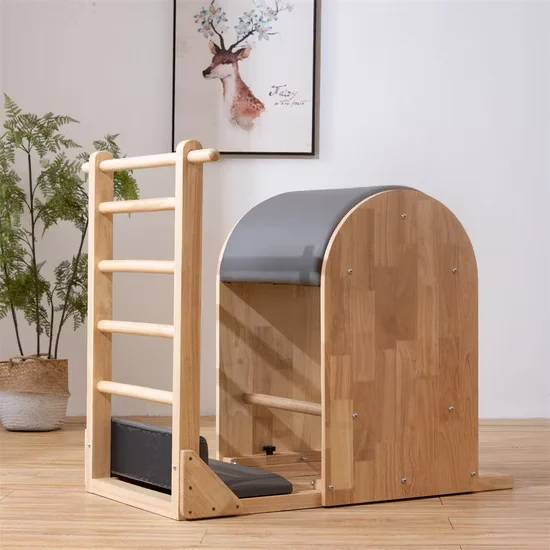
Solid Wood Vibration Damping — Solid hardwood frame construction eliminates metal-on-metal friction points that generate structure-borne noise in studio floors above occupied spaces.
Technical Specifications
| Parameter | Value |
|---|---|
| Product Type | Pilates Ladder Barrel |
| Model NO. | SRY-03 |
| Specification | 1100770980mm |
| Net Weight | 50kgs |
| Material | Solid Wood Frame |
| Color | Solid Color (customizable) |
| Accessory | Long Box / Jump Board / Platform |
| Logo | Customized Is Allowed |
| Age | Adult |
| Gender | Unisex |
| Warranty | 3 Years |
| Production Capacity | 800 Pieces/Month |
| Origin | China |
| HS Code | 9506911900 |
| Certification | ISO 9001, CE |
Application Suitability
| Deployment Scenario | Typical Use |
|---|---|
| hotel fitness center on guest room floors | paired with cardio equipment in mixed-use zones requiring sub-35dB ambient noise compliance |
| boutique Pilates studio adjacent to reformer rooms | spinal articulation circuits complementing reformer-based group classes |
| corporate wellness room | multi-discipline stretching and core stabilization stations for employee programs |
| high-end residential home gym | space-consolidated barrel station with accessory modularity for private training |
| sports performance training center | progressive flexibility and lower-body power development alongside athlete conditioning protocols |
Why Studio Operators Rethink Barrel Frame Materials After the First Noise Complaint
Solid wood absorbs vibration that steel frames transmit directly into the floor structure.
When a boutique studio retrofits a cardio zone beside a reformer room, the acoustic weak link often isn’t the treadmill belt — it’s the metal-on-metal contact points on accessory stations that telegraph impact into the slab below. Guests or tenants in the room underneath hear rhythmic thudding during high-repetition ladder barrel sequences, and the complaint reaches management before the maintenance team ever sees a ticket [NEED_CITE: structure-borne noise transmission through fitness equipment contact points]. A solid wood frame introduces natural damping at the material level, interrupting that transmission path without requiring aftermarket isolation pads. For a commercial Pilates ladder barrel wood material selection, this distinction between inherent damping and bolted-on solutions defines long-term deployment satisfaction.
Where This Barrel Station Sits in the Studio Floor Plan
The Pilates ladder barrel occupies a transitional role in mixed cardio-Pilates zones, positioned between reformer stations and dedicated stretching areas. It covers progressive spinal articulation, core stabilization, and lower-body power development through the ladder rungs and barrel arc, complementing the horizontal resistance profiles of reformers. The modular accessory ecosystem — long box, jump board, platform — allows a single footprint to serve multiple movement patterns without adding separate stations. This consolidation matters when operators plan airflow and sightlines across compact studio floors. The 1100770980mm footprint fits standard commercial spacing allowances, and the 50kgs unit weight anchors the frame during dynamic use without requiring floor bolting. The commercial Pilates ladder barrel wood material construction suits unisex adult use across group class turnover and private training alike.
Continuous Class Turnover and Acoustic Deployment Requirements
A studio running four to six group classes daily subjects barrel joinery to repetitive loading cycles that expose weak fasteners and frame flex within the first quarter. The solid wood construction here relies on reinforced joinery rather than tubular steel welding, distributing stress across glued and pinned joints designed for continuous commercial class frequency [NEED_CITE: commercial fitness equipment joinery standards for high-frequency use]. Noise transmission to floors below remains a primary constraint for hotel fitness centers and second-story studio deployments — the wood frame’s inherent damping reduces structure-borne vibration that would otherwise require floating floor systems. Adequate ventilation around the barrel station prevents moisture accumulation that could affect wood integrity over time, and floor leveling ensures the frame sits without rocking that accelerates joint wear. Operators deploying on upper floors should verify that ambient noise budgets account for accessory impact sounds during jump board sequences.
Frame Material and Accessory Load-Bearing Decoded
Solid hardwood frames differ from engineered wood laminates in density and fastener retention under cyclic loading. Hardwood species used in commercial Pilates equipment absorb vibration at the cellular level, a property that steel tubing cannot replicate without supplemental dampening layers [NEED_CITE: material vibration damping coefficients in fitness equipment frames]. The 50kgs unit weight reflects reinforced construction — a lighter barrel typically indicates hollow-core or thin-walled materials unsuited for dynamic jump board use. The included accessories extend the barrel’s utility: the long box supports seated and supine articulation sequences, the jump board introduces plyometric loading, and the platform provides an elevated base for advanced balance work. Each accessory must pass load-bearing validation under dynamic conditions, not just static weight ratings, to survive commercial class environments where members transition rapidly between movement patterns.
What Happens When Barrel Specifications Get Compromised
Operators sourcing barrel stations on price alone often discover the cost of replacement within eighteen months. Lightweight frames with hollow-core construction develop visible flex during lateral work, and fasteners back out under vibration, creating the exact noise complaints the wood frame was meant to prevent [NEED_CITE: fitness equipment structural failure modes under commercial duty cycles]. Studios that skip accessory load-bearing validation find jump boards delaminating or platform brackets shearing mid-class. Warranty terms that exclude commercial deployment leave operators absorbing full replacement cost, and mismatched wood finishes force aftermarket refinishing to match the studio’s visual branding. These compromises compound when a facility sources equipment piecemeal rather than from a coordinated product line with consistent material standards.
Why This Product Line Earns Studio Floor Space
The solid wood frame delivers inherent vibration damping verified in hotel deployments where ambient noise budgets are non-negotiable. Every unit undergoes durability validation covering reinforced joinery under continuous high-frequency use, with testing records available for procurement review. The complete six-series cardio family allows operators to source reformer-adjacent barrel stations alongside treadmills, bikes, and climbers from one production line, ensuring material and finish consistency across the floor. OEM customization extends to logo placement and solid color matching, eliminating the need for aftermarket refinishing that delays studio openings. The free 3D cardio-zone layout service covers barrel station placement alongside airflow and sightline planning, accounting for the 1100770980mm footprint and required safety clearances. Technical support remains available around the clock for commissioning questions and spare parts coordination.
Documentation & Test Records
- CE declaration of conformity covering the complete Pilates ladder barrel assembly
- EN 957 test report validating structural integrity and safety requirements
- ISO 9001 certificate confirming manufacturing quality management systems
- Noise level test report documenting vibration damping performance of the wood frame
- Durability test record for joinery and accessory load-bearing under cyclic loading
- Accessory specification sheets detailing long box, jump board, and platform ratings
Installation, Commissioning & Maintenance
- Verify floor leveling within tolerance before positioning the 1100770980mm frame to prevent joinery stress from uneven loading.
- Maintain recommended clearance on all sides to accommodate long box and jump board extension during group class sequences.
- Inspect all fasteners and wood joinery after the first 30 days of commercial use and retighten to specified torque values.
- Apply wood-appropriate sealant to high-contact surfaces quarterly to protect against moisture from cleaning solutions and member perspiration.
- Check accessory attachment points on the platform and jump board for wear signs before each scheduled class block.
- Reference the commissioning guide for correct accessory mounting sequences to avoid cross-threading or bracket misalignment.
Planning Your Studio Equipment Inquiry
Provide the studio’s total cardio-Pilates zone area and existing equipment list to receive a 3D layout incorporating barrel station placement and airflow planning. Specify the daily class schedule and expected member turnover to confirm that joinery and wood material specifications match the deployment intensity. Note the floor level and adjacent occupied spaces so acoustic requirements can be matched to the solid wood frame’s damping characteristics. Indicate whether OEM customization for logo placement or color matching is required for branded studio integration, and clarify the target market’s import documentation requirements.
Frequently Asked Questions
Q: How does solid wood compare to steel framing for long-term durability in commercial Pilates environments?
A: Solid hardwood provides natural vibration absorption that steel frames cannot match without supplemental dampening. Under continuous class turnover, wood joinery distributes cyclic stress across glued and pinned connections, while steel frames concentrate stress at weld points. The trade-off is that wood requires moisture management and periodic fastener inspection, whereas steel is more susceptible to transmitting structure-borne noise to floors below occupied spaces.
Q: What spacing and placement considerations apply when integrating a ladder barrel into a mixed cardio-Pilates zone?
A: The 1100770980mm footprint requires clearance on all sides for accessory extension and member movement during transitions. Position the barrel station away from reformer carriage paths and high-traffic corridors to maintain sightlines. Airflow planning should account for the barrel’s solid profile, which can obstruct cross-ventilation if placed perpendicular to HVAC supply vents in compact studio layouts.
Q: Which included accessories justify the investment for group class programming versus private training?
A: The long box extends the barrel’s utility for seated and supine articulation sequences common in group class circuits. The jump board introduces plyometric loading that benefits athletic populations in semi-private sessions. The platform provides an elevated base for advanced balance work. Operators should evaluate which movement patterns their programming emphasizes before prioritizing accessory-heavy configurations over basic barrel stations.
Q: What does warranty coverage include for wood-frame equipment deployed in commercial settings?
A: The 3-year warranty covers structural defects in the solid wood frame, joinery failure under normal commercial use, and manufacturing flaws in included accessories. It does not cover cosmetic wear, moisture damage from improper cleaning, or fastener loosening resulting from skipped maintenance schedules. Operators should review warranty terms to understand the boundary between commercial wear expectations and covered structural failure modes.
Q: What customization options are available for branded studio deployments, and what lead times should operators expect?
A: Logo placement and solid color matching are available through OEM customization, allowing the barrel station to integrate visually into branded environments without aftermarket refinishing. Lead times depend on the customization scope and current production capacity of 800 pieces per month. Operators should confirm MOQ requirements and provide vector artwork early in the procurement process to avoid delays during studio fit-out schedules.


