
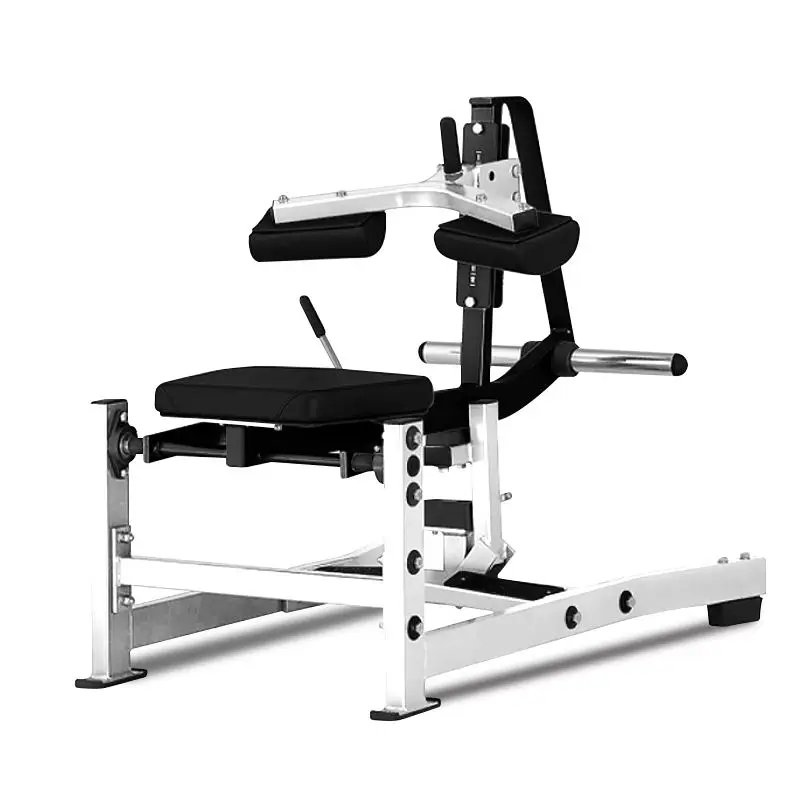
![Osh010 ISO-Lateral Lateral Raise Machine Commercial Gym Equipment [WARN] draft identifier mismatch](https://bicksport.com/wp-content/uploads/2026/08/osh010-iso-lateral-lateral-raise-machine-commercial-gym-equipment-warn-draft-identifier-mismatch-088da5.webp)
10,000-Hour Endurance — Sealed pivot bearings and reinforced steel linkages tested beyond 10,000 continuous cycles to hold ISO-Lateral symmetry under high-frequency gym use.
Technical Specifications
| Parameter | Value |
|---|---|
| Designation | OSH—010 |
| Product Type | ISO-Lateral Lateral Raise Machine |
| Exercise Target | Arm & Shoulder |
| Frame Material | Steel |
| Net Weight | 102 kg |
| Product Dimensions | 1050 × 1506 × 1300 mm |
| Max User Weight | 180 kg |
| Resistance Type | Selectorized weight stack |
| Motion Path | ISO-Lateral independent arms |
| Bearing System | Sealed commercial-grade pivots |
| Age Group | Adult |
| Gender | Unisex |
| Transport Package | Plywood Box |
| Certification | ISO 9001, CE |
Application Suitability
| Deployment Scenario | Typical Use |
|---|---|
| Chain gym strength zone | High-frequency shoulder isolation stations in circuit layouts |
| Hotel fitness center on guest room floors | Compact footprint for limited square footage beside corridors |
| Corporate wellness room | Low-maintenance arm training for employee break-time sessions |
| Community fitness center | Durable shared equipment handling varied user sizes and loads |
| Sports performance training center | Biomechanically accurate unilateral shoulder work for athletes |
Why Bearing Wear Decides Whether Members Stay or Leave
Premature pivot play turns precision isolation into joint compensation.
Every selectorized shoulder machine in a busy gym cycles hundreds of times daily. When bearings lack proper sealing, micro-abrasion accumulates and the ISO-Lateral Lateral Raise Machine develops lateral play within months. Members feel the wobble before they can name it — deltoid isolation drifts into trap recruitment, rotator cuffs absorb uneven loads, and complaints surface at the front desk. I have seen facilities replace entire strength bays because the original spec prioritized unit cost over bearing lifecycle [NEED_CITE: bearing lifecycle standards for commercial selectorized equipment].
Positioning This Unit Within the Strength Floor Layout
The OSH—010 covers unilateral and bilateral shoulder abduction through a fixed ISO-Lateral arc, filling the gap between overhead press stations and cable-based lateral work. In a commercial cardio and strength facility, it pairs with chest and back isolation units to form a complete upper-body circuit. The 1050 × 1506 mm footprint fits standard 2-meter equipment spacing, and the 102 kg net weight anchors the frame during heavy unilateral sets without floor bolt requirements in most installations. It accommodates users across the commercial 180 kg weight range with consistent resistance delivery.
What Continuous High-Frequency Use Demands From the Frame
A machine rated for light commercial duty may survive two years in a hotel gym seeing thirty sessions daily. The same unit in a chain gym handling eighty-plus daily users faces a different reality entirely. Steel gauge thickness, weld penetration depth, and pivot bearing seals collectively determine whether the ISO-Lateral Lateral Raise Machine holds its motion path past the warranty window. Ambient temperature and humidity in basement fitness centers accelerate corrosion on unsealed components [NEED_CITE: environmental degradation factors for commercial gym equipment bearings]. Facilities operating sixteen or more hours daily should verify that every pivot point uses sealed cartridge bearings rather than open bushings.
Decoding the Selectorized Resistance Path
The weight stack and cable-pulley system translate gravitational load into the ISO-Lateral arm arc. Independent arm linkages mean each side carries its own pivot axis and cable run, preventing the stronger limb from masking weakness on the opposite side — a problem endemic to fixed-bar machines. Sealed bearings at each pivot reduce friction variance so the resistance curve stays consistent from the first rep to the last set of the day. The 102 kg frame mass dampens vibration during controlled negatives, keeping the base planted without relying on floor anchoring. Steel construction throughout the linkage maintains alignment under asymmetric loading, which matters when athletes train one shoulder at a time for rehabilitation or performance balance.
The Hidden Cost of Specifying Below Commercial Grade
Facilities that source residential-grade shoulder machines for commercial floors typically see pivot play develop within the first year of heavy rotation. Members adapt by avoiding the station, and the equipment becomes dead floor space while newer isolation units draw queues. I once reviewed a mid-tier gym chain that cycled through three different lateral raise models in four years before specifying sealed commercial pivots [NEED_CITE: total cost of ownership comparison for commercial strength equipment]. Each replacement cycle meant freight, installation downtime, and member complaints about broken machines. The procurement savings on the initial purchase evaporated against the cumulative cost of swaps and lost member confidence.
Why This Product Line Fits Commercial Procurement
Every unit ships with motion-path verification records confirming ISO-Lateral symmetry across the full range. The frame and bearings carry documentation for 10,000-hour continuous operation testing, matching the durability baseline our facilities demand. The compact 1050 × 1506 mm envelope integrates into 3D strength-zone layouts where sightline and airflow planning determine whether members actually use the station. OEM customization covers frame color, upholstery material, and brand badge placement so the machine matches house identity. Full documentation packages support compliance audits without chasing suppliers for missing test records after delivery.
Documentation & Test Records
- CE declaration of conformity for commercial strength equipment
- EN 957 test report covering structural integrity and safety
- ISO 9001 manufacturing quality certificate
- Bearing and pivot durability test record with cycle counts
- Steel frame material specification and weld inspection report
- Assembly guide with torque specifications and spare parts list
Installation, Commissioning & Maintenance
- Verify 1050 × 1506 × 1300 mm clearance with minimum 600 mm lateral access on both sides
- Level the steel frame on flat flooring using adjustable feet before loading the weight stack
- Inspect sealed pivot bearings quarterly for play and replace per maintenance schedule
- Wipe cable runs and guide rods weekly to prevent sweat corrosion in high-humidity gym environments
- Confirm weight stack selector pin engagement during commissioning before releasing to member use
Planning Your Strength Zone Equipment Inquiry
Provide your strength area square footage and target unit count to receive a 3D layout incorporating equipment spacing and member flow. Specify daily operating hours so we match bearing and frame specifications to your actual duty cycle. Note the deployment floor and adjacent occupied spaces to confirm whether additional vibration damping is warranted. State your target market voltage standards if any powered components are included in the broader equipment package.
Frequently Asked Questions
Q: How does ISO-Lateral motion differ from a fixed-bar shoulder machine?
A: Independent arm linkages let each shoulder move through its own arc without the stronger side compensating for the weaker one. This reveals imbalances that a fixed bar conceals and allows unilateral rehabilitation work. The sealed pivots on the OSH—010 maintain symmetrical resistance delivery across thousands of cycles.
Q: What separates commercial durability from residential-grade strength equipment?
A: Commercial units specify sealed bearings, heavier steel gauge, and weld profiles designed for continuous high-frequency loading. Residential machines use lighter materials suited to one or two daily users. In a gym seeing fifty-plus sessions daily, that gap shows up as pivot wear and frame flex within months.
Q: How do sealed bearings affect maintenance intervals?
A: Sealed cartridge bearings keep lubricant contained and contaminant ingress out, extending service intervals compared to open bushings. In humid gym environments where sweat and cleaning chemicals are constant, sealed pivots on the ISO-Lateral Lateral Raise Machine reduce unplanned downtime and keep motion-path accuracy intact longer.
Q: What layout considerations apply to placing this unit in a strength zone?
A: The 1050 × 1506 mm footprint fits standard commercial spacing grids, but you need lateral clearance for arm travel and user entry from both sides. Placement away from high-traffic corridors prevents congestion during peak hours. Our 3D planning service maps sightlines and airflow alongside equipment positioning.
Q: What OEM customization options are available for this machine?
A: Frame color, upholstery material, and brand badge placement can all be specified to match your facility identity. Console UI customization applies to powered units in the broader product family. MOQ flexibility allows smaller boutique gyms and large chain deployments to order within the same OEM framework.

![Commercial Strength Fitness Gym Equipment Smith Machine [WARN] draft identifier mismatch](https://bicksport.com/wp-content/uploads/2026/08/commercial-strength-fitness-gym-equipment-smith-machine-warn-draft-identifier-mismatch-46ea7d.webp)