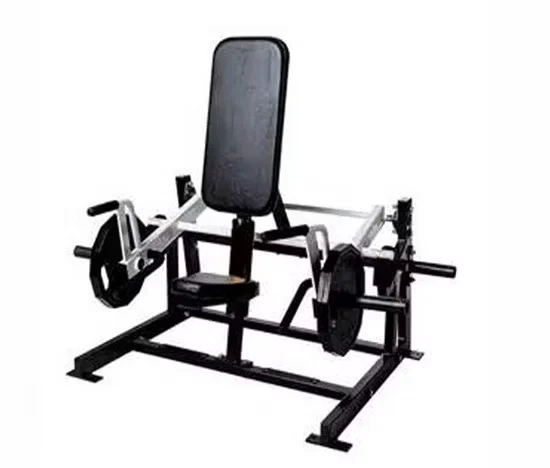
Steel-Frame Rigidity — Full steel welded construction tested to withstand high-frequency integrated training loads in commercial environments.
Technical Specifications
| Parameter | Value |
|---|---|
| Product Type | Smith Machine |
| Designation | OS-H5045 |
| Frame Material | Steel |
| Product Dimensions | 1340 × 2266 × 2384 mm |
| Net Weight | 215 kg |
| Main Frame Color | Custom to buyer specification |
| Cushion Color | Custom to buyer specification |
| Target User | Adult, Unisex |
| Production Capacity | 1,000 units per cycle |
| Certification | ISO 9001, CE |
| HS Code | 950691190 |
| OEM/ODM | Acceptable |
Application Suitability
| Deployment Scenario | Typical Use |
|---|---|
| Chain gym strength zone | High-traffic barbell and assisted lifting stations |
| Community fitness center | Supervised and independent integrated strength training |
| Corporate wellness room | Compact multi-function trainer for limited square footage |
| Professional sports training center | Guided resistance work for athletic conditioning programs |
| Hotel fitness room | Space-consolidated equipment reducing total unit count |
Why Frame Wobble Triggers Member Complaints Faster Than Any Other Flaw
Rigidity under load separates commercial-rated integrated trainers from light-duty alternatives.
When a commercial Smith machine integrated gym trainer shifts laterally during heavy squats, members sense instability before the frame itself fails. In facilities running back-to-back peak hours, that micro-movement compounds—bolts loosen, guide rods wear unevenly, and the equipment develops a reputation members share on the locker room floor. I have seen entire strength zones replaced within a year because procurement prioritized unit cost over frame mass and weld integrity. The OS-H5045 addresses this through a 215 kg net weight steel structure designed to resist resonance during repetitive barbell paths [NEED_CITE: frame rigidity requirements for commercial integrated gym trainers under EN 957].
Positioning the OS-H5045 Within a Commercial Strength Floor
The OS-H5045 operates as an Integrated Gym Trainer, consolidating guided barbell movements and auxiliary exercises into a single footprint of 1340 × 2266 mm. In a typical strength zone layout, it complements free-weight racks by offering a controlled movement path for members training without a spotter. The unit suits medium- to high-density deployment where floor space limits the number of standalone stations. Its steel frame accommodates the full adult user range, and the integrated design reduces total equipment count while preserving exercise variety across pressing, squatting, and pulling patterns. This commercial Smith machine integrated gym trainer anchors the guided-resistance section of any professional club or community facility.
Continuous Operation and Floor-Level Deployment Considerations
Facilities running twelve to sixteen hours daily subject guide rails and linear bearings to sustained friction cycles that expose material weaknesses within months. The OS-H5045’s steel guide system is built for this duty cycle, but deployment planning still matters—placing the unit on uneven concrete without leveling shims introduces lateral stress on the welds. For upper-floor installations in hotels or multi-story gyms, vibration transmission through the slab requires rubber isolation pads beneath the base plates. Voltage consistency affects any electronically loaded components, so confirming local power standards before container loading prevents on-site rewiring [NEED_CITE: commercial gym equipment power supply requirements across export markets]. Adequate clearance around the 1340 × 2266 × 2384 mm envelope ensures safe bar loading and member passage.
Decoding the Structural and Mechanical Specifications
The 215 kg net weight reflects the mass of steel required to maintain frame rigidity during loaded barbell travel—lighter frames in this category typically sacrifice tube wall thickness, leading to visible deflection under heavy compound lifts. The 1340 × 2266 × 2384 mm dimensions position the OS-H5045 as a full-envelope integrated trainer, tall enough to accommodate overhead pressing movements while keeping the footprint within a standard commercial rack bay. Guide rail smoothness depends on bearing surface finish and lubrication retention; sealed linear bearings reduce maintenance intervals compared to open bushings. The custom color options for both main frame and cushions allow facility operators to align the unit with existing brand palettes without secondary powder-coating after delivery. OEM and ODM acceptance means the welding schedule and assembly sequence can be audited before production begins.
The Hidden Cost of Compromised Frame Specifications
Procurement teams that accept lighter frames to reduce per-unit cost often face replacement cycles that erase the initial savings within eighteen months. Guide rails on undersized structures develop uneven wear tracks, causing the barbell carriage to bind at specific points in the travel range. Members notice the sticking and avoid the station, leaving expensive floor space underutilized. In one regional chain I supported, three integrated trainers with sub-spec frames were pulled from service simultaneously after guide rod play exceeded tolerance during a routine inspection [NEED_CITE: guide rail wear patterns in high-frequency commercial strength equipment]. Specifying verified steel mass and weld documentation upfront avoids these operational disruptions.
Why This Product Line Earns Its Place on the Floor
Every OS-H5045 unit passes through a testing protocol that includes sustained load cycling on the guide rails and frame stress verification at weld junctions—consistent with the 10,000-hour durability standard applied across the product family. The ISO 9001 manufacturing process ensures weld penetration depth and tube alignment are documented, not assumed. For facilities planning a complete strength zone, sourcing the commercial Smith machine integrated gym trainer alongside complementary stations from the same production line simplifies color matching and maintenance parts commonality. The OEM and ODM scope extends to frame color and cushion specification, so branding consistency is achieved at the factory rather than through aftermarket refinishing. A 3D layout plan covering equipment spacing, member flow, and sightlines is available during the specification phase to confirm the 1340 × 2266 mm footprint integrates cleanly with adjacent units. Technical support remains accessible around the clock for commissioning and in-service queries.
Documentation & Test Records
- CE declaration of conformity for OS-H5045 integrated trainer
- EN 957 test report covering structural and safety requirements
- ISO 9001 certificate for manufacturing quality management
- Frame weld inspection and steel material certificates
- Load cycle test record for guide rail and bearing assembly
- OEM color sample approval and production sign-off sheet
Installation, Commissioning & Maintenance
- Verify floor levelness across the 1340 × 2266 mm footprint before anchoring base plates
- Place rubber isolation pads beneath all contact points on upper-floor or suspended-slab installations
- Confirm local voltage and plug type match any electronic loading components before connection
- Lubricate guide rails at commissioning and reapply per the maintenance schedule based on usage density
- Inspect weld joints and fastener torque after the first 500 hours of operation
- Clean frame surfaces daily with non-corrosive solution to prevent sweat-induced oxidation
Request a Facility-Specific Equipment Plan
Provide your strength zone square footage and planned unit count to receive a 3D layout covering equipment spacing and member circulation paths. Specify daily operating hours so guide rail and bearing duty cycles are matched to your traffic volume. Indicate deployment floor level and adjacent occupied spaces to confirm vibration isolation requirements. State your target market voltage standard and plug type. Confirm whether OEM frame or cushion color customization is required for brand alignment.
Frequently Asked Questions
Q: How does a Smith Machine differ from a free-weight power rack in a commercial setting?
A: A Smith Machine constrains the barbell to a fixed vertical or slightly angled path, allowing members to train heavy compound movements without a spotter. Free-weight racks offer unrestricted bar travel suited to experienced lifters. Most commercial facilities deploy both—Smith Machines serve the general membership seeking guided safety, while power racks accommodate advanced athletes requiring full movement freedom.
Q: What should facility operators evaluate when assessing frame rigidity for integrated strength trainers?
A: Key indicators include net weight relative to dimensions, steel tube wall thickness, weld penetration documentation, and guide rail bearing type. Operators should request load deflection test data and cycle test records rather than relying on visual inspection alone. A frame that weighs significantly less than comparable units in its category often signals thinner materials that compromise long-term stability.
Q: What is the OEM customization process for frame and cushion colors?
A: Buyers submit target color references during the specification phase. The factory produces physical samples for approval before full production begins. Custom colors apply to both the main steel frame powder coating and the cushion upholstery. Lead times depend on order volume and color complexity, and sample approval is required to proceed past the proforma invoice stage.
Q: What advantages does an integrated trainer offer over separate standalone machines?
A: An integrated trainer consolidates multiple exercise stations into one footprint, reducing total equipment count and freeing floor space for other training modalities. Maintenance is simplified since guide rails, bearings, and structural fasteners are centralized in one unit rather than distributed across several standalone frames. This also streamlines spare parts inventory for facility maintenance teams.
Q: Why do CE and ISO 9001 certifications matter for commercial strength equipment procurement?
A: CE certification confirms the equipment meets European safety directives required for market entry across EU member states and many adopting regions. ISO 9001 demonstrates that the manufacturing facility operates a documented quality management system covering material sourcing, weld inspection, and final testing. Together they reduce procurement risk for operators importing equipment across regulatory jurisdictions.

![Hammer Strength Equipment OS-H5055 Deluxe Weight Tree for Commercial Gym Plate Storage [WARN] draft identifier mismatch](https://bicksport.com/wp-content/uploads/2026/08/hammer-strength-equipment-os-h5055-deluxe-weight-tree-for-commercial-gym-plate-storage-warn-draft-identifier-mismatch-20ff2a.webp)