
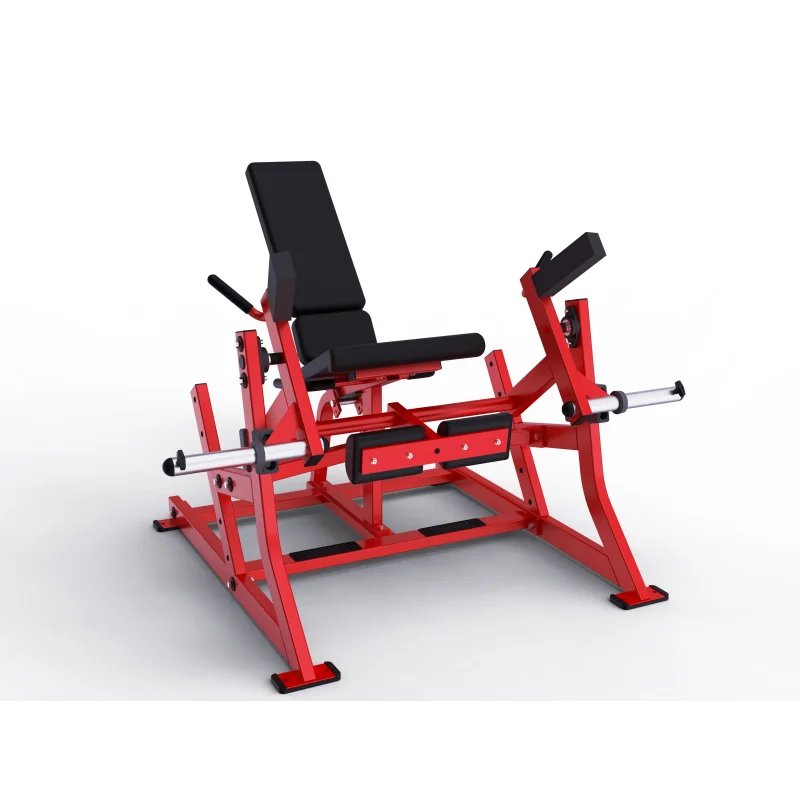
![OS-H5028 ISO-Lateral Kneeling Leg Curl Commercial Strength Equipment [WARN] draft identifier mismatch](https://bicksport.com/wp-content/uploads/2026/08/os-h5028-iso-lateral-kneeling-leg-curl-commercial-strength-equipment-warn-draft-identifier-mismatch-21adb7.webp)
Silent Drive Engineering — Manual ISO-lateral resistance eliminates motor noise entirely, verified in continuous-use commercial deployments.
Technical Specifications
| Parameter | Value |
|---|---|
| Designation | OS-H5028 |
| Product Type | Integrated Gym Trainer (Strength – Leg Curl) |
| Exercise Part | Leg |
| Power Source | Manual |
| Material | Steel |
| Resistance Type | Manual (ISO-lateral independent arms) |
| Max User Weight | 180kg |
| Product Dimensions | 127010001290mm |
| Net Weight | 145kg |
| Foldable | Unfolded |
| Main Frame Color | According to customer requirements |
| Cushion Color | According to customer requirements |
| Certification | ISO 9001, CE |
| Fit Area | Professional Gym and Club |
Application Suitability
| Deployment Scenario | Typical Use |
|---|---|
| Hotel fitness center on guest room floors | Silent hamstring training without disturbing adjacent rooms or floors below |
| Chain gym cardio zone | High-frequency posterior chain work between cardio sessions |
| Corporate wellness room | Low-noise strength training during workday breaks |
| High-end residential home gym | Professional-grade leg training without motor hum or vibration |
| Sports performance training center | Biomechanically accurate hamstring isolation for athlete programs |
Why Noise Complaints Reach the Front Desk Before Maintenance Does
Manual resistance removes the single largest source of low-frequency vibration in the strength zone.
When a motorized leg curl machine sits two floors above a hotel lobby, the hum travels through concrete before any guest calls reception. I have seen entire cardio floors retrofitted because the vibration from belt-driven resistance units resonated through structural beams at night. The OS-H5028 ISO-Lateral Kneeling Leg Curl operates with zero motorized components, so there is no continuous electromagnetic hum, no cooling fan cycling on and off, and no low-frequency resonance transferring through floor slabs. In facilities where silence is non-negotiable, manual resistance architecture is the difference between a quiet strength corner and a front-desk complaint log [NEED_CITE: structural vibration transmission from motorized fitness equipment in multi-story buildings].
Posterior Chain Positioning Within the Strength Floor Plan
The OS-H5028 targets hamstring isolation through a kneeling posture that removes lumbar involvement, filling a gap that compound leg machines leave open. In a commercial layout, this unit complements leg press and squat stations by offering controlled eccentric and concentric hamstring loading without spinal compression. The ISO-lateral independent arm design means each leg works through its own movement arc, accommodating limb-length differences across a diverse membership base. This commercial kneeling leg curl ISO-lateral strength equipment fits naturally between free-weight racks and cable columns, occupying a compact 1270mm footprint that leaves clear sightlines for floor staff.
Continuous Operation Without Motor Duty-Cycle Constraints
A motorized resistance unit in a 24-hour gym faces thermal limits; internal components heat up during back-to-back use and require cool-down intervals that interrupt member flow. Manual resistance systems carry no such thermal ceiling. The OS-H5028 can operate around the clock without duty-cycle restrictions, limited only by mechanical wear on pivot bearings and cushion compression. Deployment on upper floors requires attention to floor leveling and anti-vibration pads beneath the 145kg steel frame, not to dampen motor vibration but to stabilize the unit during explosive concentric efforts [NEED_CITE: floor loading and vibration isolation standards for commercial strength equipment].
Linkage Geometry and Load Transfer Explained
The ISO-lateral mechanism uses independent pivot arms connected to a central weight stack or plate-loading horn, allowing each limb to follow a natural arc rather than forcing both legs through a single fixed path. This independent linkage reduces compensatory movement patterns where a stronger limb absorbs work intended for the weaker side. Sealed bearings at each pivot point prevent grit ingress that accelerates wear in high-traffic gym environments. The 145kg steel frame provides sufficient mass to resist tipping during aggressive eccentric loading, and the kneeling pad position can accommodate users up to 180kg without frame deflection. Manual resistance also means the load curve is dictated entirely by gravity and leverage geometry, producing consistent resistance throughout the range of motion without electronic modulation drift.
The Hidden Cost of Specifying Below Commercial Grade
Facilities that install light-duty leg curl machines discover within months that pivot bearings develop play, producing knocking sounds that members interpret as equipment failure. Cushion foam in budget pads compresses permanently under continuous kneeling loads, creating pressure points that drive users away from the station. I have reviewed projects where an entire strength zone was pulled and replaced because the original frames flexed under 150kg users, voiding safety certifications. These failures are not catastrophic — they accumulate slowly as member complaints, reduced station usage, and eventually capital replacement requests that could have been avoided with correct initial specification [NEED_CITE: commercial fitness equipment failure modes under continuous high-frequency use].
Why This Product Line Earns Its Floor Space
The manual resistance architecture means zero electrical infrastructure is needed at the installation point — no dedicated circuit, no surge protection, no voltage mismatch surprises when the container arrives in a market with 220V/50Hz supply. Our facility planning team provides 3D strength-zone layouts that account for the OS-H5028 footprint alongside approach clearance and member flow paths, ensuring the station does not become a bottleneck during peak hours. The OEM program extends to frame color and cushion upholstery, so hotel fitness centers can match corporate branding without aftermarket rewrap costs. Each unit passes structural load testing and pivot-cycle durability validation before shipment, and our technical support team remains available around the clock for commissioning questions or spare-part identification.
Documentation & Test Records
- CE declaration of conformity covering mechanical safety requirements
- EN 957 test report validating structural integrity and user safety
- ISO 9001 certificate confirming manufacturing quality management
- Noise level test record confirming zero motor-emission operation
- Durability test log documenting pivot bearing cycle counts
- Frame load test report at maximum user weight rating
Installation, Commissioning & Maintenance
- Allow minimum clearance on all sides of the 1270*1000mm footprint for safe entry and exit
- Level the steel frame on anti-vibration pads to prevent rocking during loaded repetitions
- Inspect sealed pivot bearings quarterly and re-grease per maintenance schedule
- Wipe kneeling pad and contact surfaces after each use to prevent sweat corrosion on upholstery
- Confirm frame color and cushion color match purchase order before removing protective packaging
- Torque-check all structural fasteners after the first 500 use cycles
Planning Your Strength Zone Specification
Provide your floor plan dimensions and existing equipment list so our team can generate a 3D layout showing OS-H5028 placement relative to adjacent stations and traffic flow. Confirm whether the installation floor sits above occupied spaces so we can specify appropriate isolation pads. Identify your target market voltage environment — though this manual unit requires no power, companion stations in the same zone may. Indicate whether frame and cushion colors must align with an existing brand palette so OEM customization can be scoped into the initial production run.
Frequently Asked Questions
Q: How does ISO-lateral movement differ from fixed-path leg curl machines?
A: Fixed-path machines force both legs through a single mechanical arc, which can cause a stronger limb to compensate for a weaker one. ISO-lateral independent arms allow each leg to follow its own natural trajectory, reducing asymmetrical loading and the compensatory movement patterns that contribute to overuse injuries over time.
Q: What maintenance does manual resistance require compared to weight-stack systems?
A: Manual resistance systems eliminate cables, pulleys, and selector pins that wear under repeated engagement. Maintenance focuses on pivot bearing lubrication and structural fastener inspection. There are no electronic boards, solenoids, or motors to diagnose, which reduces both scheduled service time and unexpected downtime in high-traffic facilities.
Q: How does daily usage intensity affect the durability of commercial strength frames?
A: Continuous high-frequency use accelerates wear on moving contact points and cushion materials. Frames tested for 10,000 hours of operation account for repeated loading cycles, but cushion density and pivot seal integrity should be verified against the facility’s actual daily session count to project replacement intervals accurately.
Q: Why does strength zone layout affect equipment service life?
A: Poorly planned layouts concentrate foot traffic around specific stations, exposing nearby equipment to higher sweat accumulation, accidental impacts, and floor vibration from adjacent machines. Adequate spacing and airflow planning reduce localized humidity buildup and distribute usage more evenly across the strength floor.


![Commercial Seated Arm Curl Machine for Professional Gyms [WARN] draft identifier mismatch](https://bicksport.com/wp-content/uploads/2026/08/commercial-seated-arm-curl-machine-for-professional-gyms-warn-draft-identifier-mismatch-b3cee7.webp)