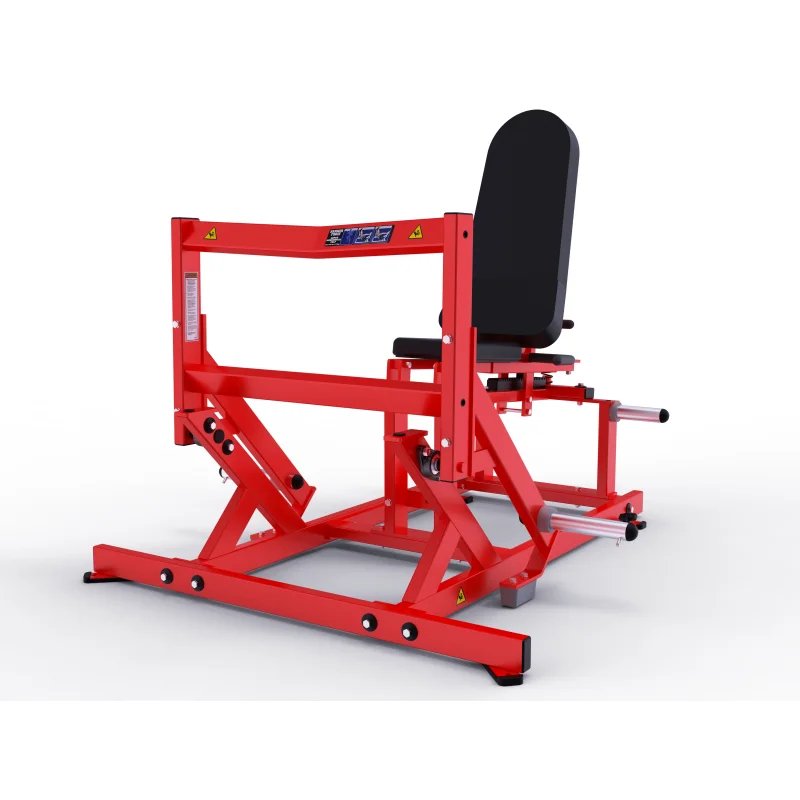
![OS-H5002 Hot Hammer Strength Lateral Chest Back Machine for Gym [WARN] draft identifier mismatch](https://bicksport.com/wp-content/uploads/2026/08/os-h5002-hot-hammer-strength-lateral-chest-back-machine-for-gym-warn-draft-identifier-mismatch-553bdf.webp)
Whisper-Quiet Engineering — Steel frame and sealed bearing architecture tested for 10,000+ hours under continuous commercial loads up to 180kg.
Technical Specifications
| Parameter | Value |
|---|---|
| Designation | OS-H5002 |
| Product Type | Lateral Chest/Back Strength Machine |
| Exercise Part | Chest & Back |
| Frame Material | Steel |
| Product Dimensions | 1850 × 1770 × 2000 mm |
| Max User Weight | 180 kg |
| Resistance Type | Selectorized weight stack |
| Drive Type | Cable and pulley |
| Bearing Type | Sealed bearings |
| Age Group | Adult |
| Gender | Unisex |
| Application | Gymnasium, Home |
| Certification | ISO 9001, CE |
Application Suitability
| Deployment Scenario | Typical Use |
|---|---|
| Five-star hotel fitness center on guest room floors | Low-noise chest and back training between early morning and late night sessions |
| Chain gym cardio-adjacent strength zone | High-frequency lateral movement drills throughout peak hours |
| Corporate wellness room | Compact footprint deployment beside treadmill and elliptical rows |
| High-end residential home gym | Shared-floor installation requiring vibration isolation from living spaces |
| Sports performance training center | Athlete-grade upper-body conditioning with controlled cable resistance |
Why Frame Resonance Reaches the Guest Room Before the Maintenance Ticket Does
Commercial lateral chest back strength machine rigidity determines whether acoustic energy travels through the floor or stays inside the frame.
When strength zones share the same floor plate as cardio zones, the lateral push-pull cycle loads the frame asymmetrically at peak contraction. If tube wall thickness and weld penetration fall short, the structure vibrates at frequencies that couple into the concrete slab, radiating into the rooms below. I have watched maintenance logs where noise complaints spiked after installing selectorized machines with under-gauged uprights — the fix was always a full swap, never a shim [NEED_CITE: structural vibration transfer through commercial floor plates].
Positioning the OS-H5002 Inside a Mixed-Use Strength and Cardio Floor
This commercial lateral chest back strength machine covers bilateral chest press and lat pulldown movement patterns in a single footprint, complementing adjacent treadmills and rowers by addressing upper-body muscle groups that pure cardio leaves undertrained. Its 1850 × 1770 mm footprint fits standard 300 mm aisle spacing, allowing deployment in high-density layouts without blocking member flow lines. The 180 kg maximum user rating accommodates heavyweight athletes and general-population gym users alike, reducing the need for duplicate machines at different load ratings.
Continuous Operation and Environmental Demands of a Shared-Floor Venue
Selectorized weight stacks cycle hundreds of times per day in a busy gym, and each cycle sends impulse loads through guide rods, pulleys, and the frame itself. In hotel fitness centers that operate around the clock, guide rod alignment and bottom-buffer cushions must absorb stack return impact without transmitting acoustic energy into the floor. Sealed bearings reduce maintenance intervals, but they still require periodic inspection in high-humidity environments such as basement gyms or pool-adjacent rooms. Power supply for any integrated console or sensor module must match local voltage and frequency to avoid premature component failure [NEED_CITE: duty cycle requirements for 24-hour commercial fitness facilities].
Reading the Pulley, Bearing, and Frame Specifications
Cable-driven selectorized machines depend on three interacting systems: the frame weld pattern, the pulley-to-bearing assembly, and the weight stack guide mechanism. A full-perimeter weld on the main upright prevents micro-movement at joints, which is where resonance originates under asymmetric lateral loads. Sealed bearings in the pulley wheels keep cable friction consistent and eliminate the need for weekly lubrication that open bearings demand. Guide rod surface finish determines whether the stack returns silently or chatters against the tower — precision-ground rods paired with urethane bumpers noticeably reduce return noise compared to unground mild steel.
The Hidden Cost of Underspecing Frame and Pulley Components
Machines that cut cost on tube thickness or skip sealed bearings may pass a showroom demo, but within months of high-frequency use the pulleys develop play, cables fray at contact points, and guide rods score unevenly. Noise complaints follow, then member attrition in boutique facilities, then a complete replacement order that costs more than spec-ing correctly the first time. In hotel deployments I have supported, the pattern repeats: light-duty selectorized units swapped out within eighteen months because the stack return noise became a recurring front-desk issue [NEED_CITE: lifecycle cost comparison of commercial versus light-duty selectorized equipment].
Why This Product Line Matches Multi-Discipline Cardio and Strength Floors
The OS-H5002 shares the same 180 kg user rating and durability testing protocol as the six cardio series, so facility operators source upper-body strength and every cardio discipline from one quality standard. Sub-35 dB acoustic targets applied to the treadmill and elliptical lines extend to the weight stack return and pulley travel on this unit. OEM scope covers frame color and upholstery to match a unified brand identity across the entire floor. A free 3D layout maps the lateral chest back strength machine footprint alongside cardio stations, calculating sightlines and airflow so the strength bay does not become a dead corner. Round-the-clock technical support covers both disciplines under a single service channel.
Documentation & Test Records
- CE declaration of conformity covering mechanical and electrical safety
- EN 957 test report for stationary training equipment structural integrity
- ISO 9001 quality management system certificate
- Noise level test report measuring stack return and pulley travel sound pressure
- Durability test record documenting 10,000-hour continuous cycle results
- Installation and commissioning guide with spare parts list
Installation, Commissioning & Maintenance
- Reserve 1850 × 1770 mm footprint plus 300 mm clearance on all sides for safe cable travel
- Level the base frame on vibration-dampening pads to decouple structure from the floor plate
- Verify local voltage and frequency before connecting any integrated sensor or lighting module
- Inspect sealed bearings and cable tension after the first 500 cycles and quarterly thereafter
- Clean upholstery with non-solvent solution to preserve high-density foam integrity
Requesting a Deployment Assessment
Share your strength zone square footage and adjacent cardio equipment list to receive a 3D layout with airflow and member-flow analysis. Specify average daily usage hours so the weight stack duty cycle can be matched to expected traffic. Identify the deployment floor and any noise-sensitive rooms directly above or below to confirm acoustic isolation requirements. State your target market voltage and plug standard so electrical components ship pre-configured.
Frequently Asked Questions
Q: How does frame rigidity affect noise transmission in selectorized strength machines?
A: A frame with insufficient tube thickness or incomplete weld penetration flexes under lateral loads, converting mechanical energy into vibration that travels through the floor plate. Full-perimeter welding and commercial-grade steel thickness keep resonance inside the machine rather than coupling it into the building structure, which is critical when the gym shares a floor with guest rooms or offices.
Q: What separates commercial-grade from light-duty selectorized equipment in daily operation?
A: Commercial units use sealed bearings, precision-ground guide rods, and heavier gauge steel to withstand hundreds of cycles per day without degradation. Light-duty machines typically rely on open bearings and thinner frames that develop play and noise within months of continuous public use, leading to higher total replacement cost over the equipment lifecycle.
Q: What maintenance intervals apply to pulley and bearing assemblies?
A: Sealed bearings in the pulley system significantly extend service intervals compared to open designs. Operators should inspect cable routing, bearing smoothness, and guide rod surface condition after the initial break-in period and then on a quarterly schedule, replacing cables at first signs of strand separation to prevent unplanned downtime.
Q: How can stack return noise be controlled during facility design?
A: Urethane bumpers at the base of the weight stack absorb impact energy that would otherwise radiate as metallic clatter. Combining this with vibration-isolation pads beneath the machine frame and adequate floor mass prevents impulse noise from reaching occupied spaces on adjacent floors, which is especially important in hotel and residential deployments.
Q: How should strength and cardio zones be planned together for airflow and member flow?
A: A unified 3D layout maps equipment footprints, aisle widths, and HVAC supply registers simultaneously. Placing the lateral chest back machine so its cable path does not cross cardio member traffic lanes, while ensuring both zones receive adequate air exchange, prevents congestion and maintains thermal comfort during peak usage periods.