![MT296 Electric Fitness Home Use Treadmill for Training [WARN] draft identifier mismatch](https://bicksport.com/wp-content/uploads/2026/08/mt296-electric-fitness-home-use-treadmill-for-training-warn-draft-identifier-mismatch-8819c9.webp)
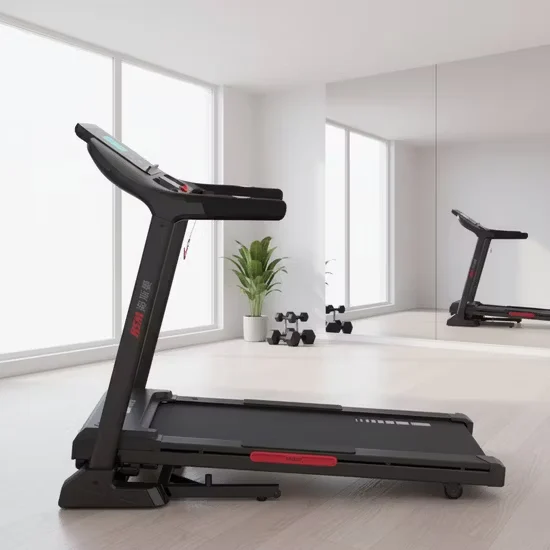
Compact Footprint — The MT296 folds to under one square meter, fitting residential fitness rooms and multi-purpose spaces without structural modification.
Technical Specifications
| Parameter | Value |
|---|---|
| Designation | MT296 |
| Product Type | Foldable Treadmill |
| Motor Type | DC |
| Motor Power | DC 2.0 HP ¹ |
| Speed Range | 1–20 km/h |
| Running Surface | 1200 × 520 mm |
| Console Type | LCD (Speed / Distance / Time / Calories / Pulse) |
| Programs | 16 preset programs |
| Heart Rate | Handgrip pulse sensors |
| Foldable | Yes |
| Product Unfold Size | 1580 × 865 × 1300 mm |
| Product Folded Size | 910 × 865 × 1345 mm |
| Net Weight | 64.0 kg |
| Material | ABS housing |
| Certification | CE, RoHS |
| OEM/ODM Custom | Available |
¹ Peak or continuous duty rating not specified — confirm expected daily run-time with manufacturer before deployment.
Application Suitability
| Deployment Scenario | Typical Use |
|---|---|
| High-end residential home gym | Daily walking and moderate jogging with fold-away storage |
| Corporate wellness room with limited floor space | Intermittent use during breaks by staff members |
| Boutique studio warm-up station | Pre-class cardio preparation between scheduled sessions |
| Apartment complex shared fitness room | Light-duty personal training in noise-sensitive environments |
What Peak Horsepower Hides About Continuous Duty
Motor labeling conventions often obscure how a foldable motorized treadmill DC motor home use unit will hold up under real daily schedules.
A DC motor rated at 2.0 HP peak delivers that output only in short bursts. When a residential treadmill runs for extended sessions or multiple users cycle through in a shared apartment gym, the continuous duty rating determines whether the windings overheat or the brushes degrade prematurely. I have seen under-rated motors fail within months when deployed in environments with daily multi-hour operation, forcing wholesale replacements that cost far more than specifying correctly from the start [NEED_CITE: motor duty cycle classification for continuous commercial operation].
Where This Unit Fits in a Mixed Cardio Zone
The MT296 occupies the walking-to-moderate-jogging intensity band, complementing heavy-duty commercial treadmills and high-inertia ellipticals in a diversified cardio lineup. Its 1200 × 520 mm running surface accommodates walking gaits and steady-state jogging for users of average stride length. In a residential or corporate deployment, this foldable motorized treadmill DC motor home use unit pairs well with a stationary bike or rowing machine to cover full-body conditioning without exceeding available floor space. Handgrip pulse sensors provide basic heart rate feedback for users tracking effort level during self-guided sessions.
Continuous Run-Time and Deployment Environment Requirements
A DC motor at this power class suits intermittent personal sessions rather than back-to-back commercial scheduling. Deploying the unit on upper residential floors requires verifying that impact noise and motor hum remain acceptable to occupants below [NEED_CITE: EN 957 requirements for residential cardio equipment noise transmission]. Adequate ventilation around the motor housing prevents thermal accumulation during longer runs. The fold mechanism relies on a stable, level floor surface; uneven substrates introduce lateral stress on the hinge assembly over repeated open-close cycles. Standard household voltage powers the unit, but confirming the plug type and frequency match the target market avoids commissioning delays.
Drive System and Console Specification Breakdown
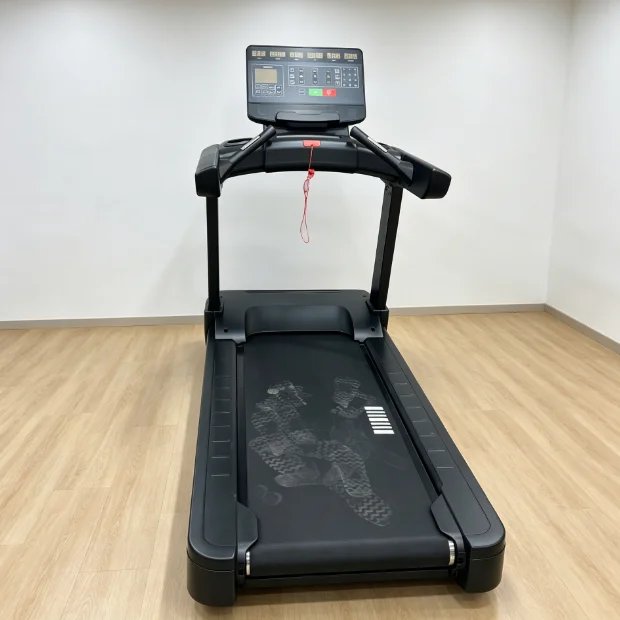
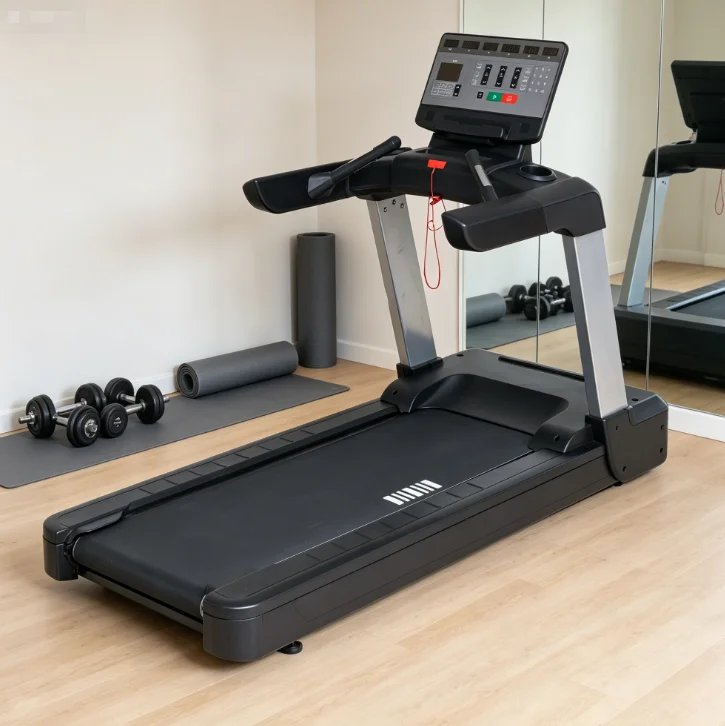
The DC motor configuration trades continuous-duty endurance for a lighter, more compact form factor suited to foldable designs. Unlike AC motors found on commercial treadmills that sustain full load for 10,000+ hours, DC motors at this rating serve personal and light shared-use schedules where daily run-time stays measured in single sessions. The 1–20 km/h speed range covers walking through sustained jogging, though the upper limit serves shorter intervals rather than prolonged sprint work. The LCD console displays speed, distance, time, calories, and pulse simultaneously across its screen, giving users real-time session feedback without touchscreen complexity. Sixteen preset programs introduce structured variation without requiring manual speed adjustments mid-run. Handgrip pulse sensors offer baseline heart rate awareness, though readings may drift during high-movement intervals compared to chest-strap alternatives [NEED_CITE: handgrip versus chest-strap heart rate accuracy during treadmill running].
The Hidden Cost of Underspecified Deployments
Deploying a light-duty motor in a shared apartment fitness room where multiple residents cycle through daily often accelerates brush wear and winding degradation beyond the design envelope. Noise complaints from adjacent units follow when motor hum and footfall impact transfer through inadequately isolated floor slabs. When the running deck lacks sufficient cushioning layers, users report joint discomfort that discourages repeat usage, leaving the equipment underutilized [NEED_CITE: treadmill deck cushioning and joint load reduction in residential deployments]. Voltage mismatches discovered after arrival force adapter sourcing or transformer installation that delays commissioning and frustrates end users.
Why This Product Line Earns Its Place
The MT296 addresses space-constrained deployments where full-frame commercial treadmills cannot fit. Its foldable design reduces the footprint for storage in multi-purpose rooms and residential units. The LCD console with pulse monitoring delivers essential workout data without requiring facility management software integration. OEM customization covers branding, color, and console labeling to match project specifications. For facilities planning a full cardio zone, the broader product family spans treadmills, bikes, ellipticals, rowers, stair climbers, and spinning bikes from one manufacturing source, simplifying procurement and service logistics. Deployment planning includes 3D layout and airflow assessment covering square footage and sightlines specific to the room dimensions where this unit will operate.
Documentation & Test Records
- CE declaration of conformity for the MT296 treadmill unit
- EN 957 test report covering safety and performance requirements
- RoHS compliance documentation for material substance restrictions
- Motor specification sheet detailing DC power and thermal limits
- Console technical documentation with LCD display parameter list
- Installation and commissioning guide with fold mechanism instructions
Installation, Commissioning & Maintenance
- Maintain clearance behind and to each side per the 1580 × 865 mm unfolded footprint
- Place on a level surface with a vibration-dampening mat to reduce floor-transmitted noise
- Verify household voltage and plug type match before first power-on
- Run the belt at low speed without load to confirm tracking and tension
- Inspect belt alignment and lubrication at intervals stated in the maintenance guide
- Clean the LCD console and handgrip sensors regularly to remove sweat residue
Scoping Your Equipment Selection
Provide your cardio zone dimensions and intended unit count to receive a 3D layout with airflow and sightline planning. Specify expected daily run-time per unit so the motor duty rating matches actual scheduling. Indicate deployment floor level and adjacent occupied spaces to confirm noise acceptability. State your target market voltage and plug standard to ensure shipment-ready configuration.
Frequently Asked Questions
Q: What is the difference between peak and continuous motor horsepower?
A: Peak horsepower represents the maximum output a motor can deliver in short bursts, while continuous horsepower reflects sustained output under load over extended periods. A DC 2.0 HP peak rating does not guarantee 2.0 HP throughout an entire session. Matching the continuous duty rating to your expected daily run-time prevents thermal overload and premature component failure.
Q: Is a DC motor suitable for daily home use?
A: A DC motor suits personal and light shared-use environments where daily run-time remains within a single or double session window. In high-traffic shared facilities with back-to-back users throughout the day, continuous-duty AC motors typically outperform DC configurations. Confirm your expected usage pattern with the manufacturer before specifying motor type.
Q: How does the foldable design affect frame stability during running?
A: Foldable frames introduce a hinge point that can transmit slight lateral flex during higher-speed running compared to fixed-frame designs. The MT296’s 64 kg net weight provides baseline stability for walking and moderate jogging on level, even flooring. Ensuring the deployment surface is flat and using a vibration mat reduces unwanted movement during use.
Q: Can the LCD console data be exported or connected to fitness apps?
A: The MT296 LCD console displays real-time speed, distance, time, calories, and pulse data on-screen during sessions. It does not include wireless connectivity or app synchronization capability. Users requiring data export or third-party app integration should evaluate console upgrade options or supplementary wearable devices for tracking.
Q: What maintenance does the running belt and deck require?
A: The running belt requires periodic inspection for alignment, tension, and surface wear. Lubrication intervals depend on usage frequency and are detailed in the commissioning guide. Keeping the deck clean of dust and debris prevents friction buildup that accelerates belt degradation and increases motor load over time.