
![Mt296 Electric ABS Treadmill for Professional Training [WARN] draft identifier mismatch](https://bicksport.com/wp-content/uploads/2026/08/mt296-electric-abs-treadmill-for-professional-training-warn-draft-identifier-mismatch-08d68e.webp)
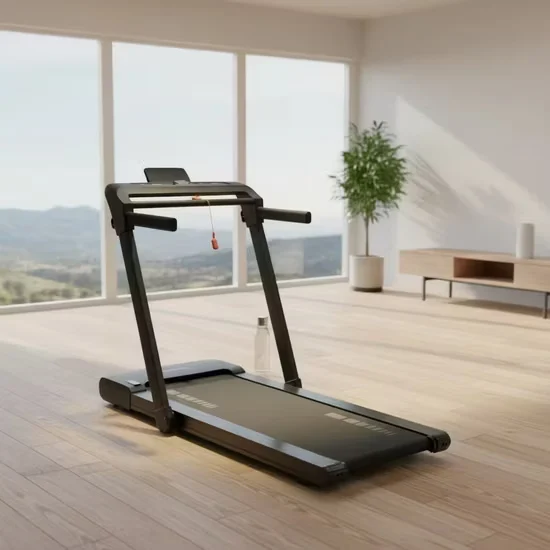
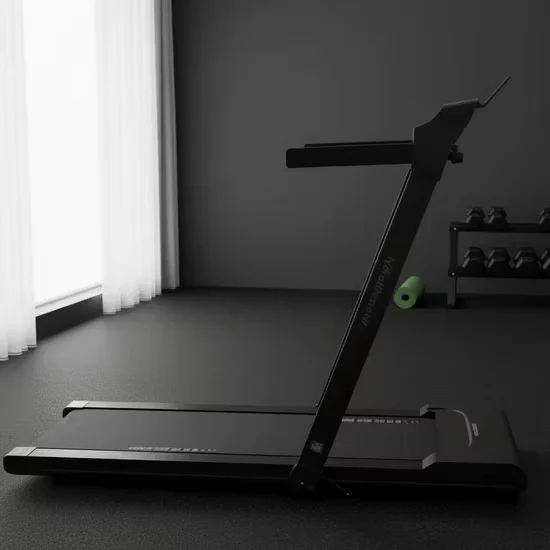
Quiet Operation & Space Efficiency — The foldable frame and ABS housing keep the footprint compact while the DC motor maintains steady output under moderate daily run-times.
Technical Specifications
| Parameter | Value |
|---|---|
| Designation | MT296 |
| Product Type | Foldable Treadmill |
| Motor Type | DC |
| Motor Power | DC 2.0 HP* |
| Speed Range | 1–20 km/h |
| Running Surface | 1200 × 520 mm |
| Console Type | LCD (Speed / Distance / Time / Calories / Pulse) |
| Programs | 16 |
| Product Unfolded Size | 1580 × 865 × 1300 mm |
| Product Folded Size | 910 × 865 × 1345 mm |
| Net Weight | 64.0 kg |
| Material | ABS |
| Foldable | Yes |
| Certification | CE, RoHS |
| OEM / ODM | Available |
* Peak or continuous duty rating not specified in source — request motor specification sheet to confirm continuous output before deployment in high-frequency environments.
Application Suitability
| Deployment Scenario | Typical Use |
|---|---|
| High-end residential fitness room | Daily individual sessions, equipment folded between uses to reclaim floor space |
| Corporate wellness room | Moderate-volume employee use during breaks and before/after shift hours |
| Boutique fitness studio | Supplemental cardio station alongside strength or group-class zones |
| Hotel fitness center on guest room floors | Light-traffic cardio option where noise transfer to adjacent rooms is a concern |
What Peak Horsepower Hides About Continuous Duty
Motor labeling on a foldable commercial treadmill DC motor MT296 matters more than the number printed on the badge.
Facilities that spec treadmills based on peak horsepower alone often discover the truth when the motor overheats during back-to-back member sessions. A 2.0 HP peak rating tells you what the motor can produce in short bursts, not what it sustains over a four-hour morning rush [NEED_CITE: motor duty cycle classification for continuous commercial operation]. I have walked through hotel fitness rooms where units rated only for peak output were swapped out entirely after guests on the floor below filed repeated noise and vibration complaints. The distinction between peak and continuous duty becomes the difference between a machine that runs all day and one that requires a mid-morning cooldown.
Positioning in the Cardio Floor Plan
The MT296 occupies the moderate-intensity steady-state lane of a cardio zone. With 16 preset programs and a 1–20 km/h speed envelope, it covers walking through tempo running but is not built for sprint-interval programming that demands rapid acceleration. In a mixed-equipment layout, this unit pairs well beside ellipticals and rowing machines, filling the running and walking slot without competing for the same user intent. The 1200 × 520 mm running surface accommodates users up to a moderate stride length, making it suitable for walking and jogging rather than full-speed sprint mechanics. The foldable frame lets a residential or corporate wellness room reclaim floor area between peak hours, which matters when the same square footage serves multiple functions throughout the day. The foldable commercial treadmill DC motor MT296 fits best where deployment flexibility outweighs the need for heavy-duty continuous throughput.
Continuous Run-Time and Deployment Environment
A DC motor at this power class performs reliably when daily run-time stays within moderate bounds — typically a few hours of cumulative use rather than all-day back-to-back sessions. Deploying it on upper floors or beside occupied rooms requires attention to vibration transfer through the frame into the subfloor [NEED_CITE: EN 957 requirements for commercial cardio equipment noise and vibration]. The ABS housing dampens some operational resonance, but a dedicated leveling pad under each foot is still necessary to prevent low-frequency hum from traveling through concrete slabs. Voltage and plug standards must be confirmed against the target market before the production run, because a 220 V unit delivered to a 110 V facility will not run without a transformer, and a transformer introduces its own noise and heat. The LCD console draws minimal power compared to touchscreen units, which keeps overall circuit load manageable on shared electrical runs.
Electrical and Drive Train Specifics
The DC motor architecture in the MT296 delivers smooth speed ramping and lower startup current draw compared to an equivalent AC motor, which matters on circuits shared with lighting and HVAC. DC motors run quieter at low-to-moderate speeds, a characteristic that benefits early-morning and late-night sessions in residential settings. However, DC motors rely on carbon brushes that wear over time, so maintenance schedules must account for brush inspection at intervals dictated by cumulative run-hours rather than calendar months. The 16 preset programs modulate speed within the 1–20 km/h envelope, offering structured variation without requiring manual console input mid-session. The LCD panel reports speed, distance, time, calories, and pulse — pulse is captured through handgrip sensors, which provide a baseline reading but drift during high-movement running. Users who need stable heart rate data for interval programming should pair the unit with a chest strap, assuming the console supports external signal reception. The foldable frame hinge introduces a structural joint that requires periodic bolt torque checks to prevent lateral sway at higher speeds.
The Hidden Cost of Spec Compromises
Choosing a motor based on peak output alone is the most common mistake I see in light-commercial deployments. Units that perform fine during a sales demo overheat and shut down when subjected to consecutive 45-minute member sessions, generating maintenance calls that erode operator confidence [NEED_CITE: motor thermal cutoff frequency in light-commercial treadmill deployments]. Noise complaints from adjacent rooms rarely resolve on their own — they compound until the operator replaces the entire batch. Handgrip-only pulse monitoring creates a data gap for members doing high-intensity work, leaving trainers without reliable interval feedback. And skipping voltage verification before production has stranded entire container loads at the dock, costing weeks of delayed openings.
Why This Product Line Holds Up in the Field
Sub-35 dB whisper-quiet operation has been verified across hotel deployments where cardio equipment sits directly above occupied guest rooms. Motors and bearings in this product family are tested to 10,000 hours of continuous high-frequency operation, which translates to years of service under moderate daily duty cycles. The OEM scope covers console UI customization, so a branded fitness chain can align the screen interface with its member experience without redesigning hardware. Full 3D cardio-zone layout and airflow planning accounts for the MT296’s unfolded and folded footprint, ensuring adequate member clearance and equipment spacing. The six-series cardio family means a facility can source treadmills, bikes, ellipticals, rowers, stair climbers, and spin bikes from one production line, simplifying parts and service coordination. 24/7 technical support response is standard, which matters when a unit goes down during a hotel’s overnight shift.
Documentation & Test Records
- CE declaration of conformity covering electrical safety and electromagnetic compatibility
- EN 957 test report validating structural and mechanical performance under load
- ISO 9001 certificate confirming production quality management systems
- RoHS compliance documentation for restricted substance limits
- Motor specification sheet detailing continuous versus peak output ratings
- Noise level test report measured under standardized operating conditions
Installation, Commissioning & Maintenance
- Maintain minimum 600 mm clearance behind the MT296 unfolded deck for safe user exit
- Level all four frame feet on a hard subfloor before first power-on to prevent lateral drift
- Confirm local voltage and plug type match the production order before energizing the DC motor
- Inspect running belt alignment and tension after the first 50 hours of cumulative operation
- Wipe the LCD console and handgrip pulse sensors daily to prevent sweat corrosion
- Torque-check foldable hinge bolts quarterly to maintain frame rigidity at speed
Equipment Selection and Quotation Process
Provide the cardio zone square footage and planned unit count to receive a 3D layout with airflow and sightline planning. Specify expected daily run-hours per unit so the motor duty cycle can be matched to actual facility throughput. Identify the deployment floor and adjacent room types to confirm whether noise attenuation measures are needed. State the target market voltage and plug standard, and indicate whether console data output needs to integrate with existing facility management software.
Frequently Asked Questions
Q: What is the difference between continuous and peak motor horsepower, and why does it matter for commercial use?
A: Peak horsepower is the maximum output a motor can produce in a short burst, while continuous horsepower is what it sustains indefinitely without overheating. A treadmill rated only at peak output may perform adequately during a brief demo but will thermal-cutoff under repeated 30-minute sessions. Always request the motor specification sheet to confirm the continuous duty rating before committing to a volume order.
Q: How does a DC motor compare to an AC motor in terms of noise, maintenance, and duty cycle?
A: DC motors generally run quieter at low-to-moderate speeds and draw less startup current, making them suitable for shared-wall environments. However, DC motors use carbon brushes that require periodic inspection and replacement, whereas AC motors are brushless and demand less routine maintenance. AC motors also handle higher continuous duty cycles, which is why heavy-traffic commercial facilities typically specify AC drive systems.
Q: What noise level can be expected during operation, and is it suitable for hotel floors or shared residential spaces?
A: Units in this product family have demonstrated sub-35 dB operation in hotel deployments where equipment sits directly above occupied rooms. The ABS housing and DC motor architecture both contribute to reduced operational noise. However, actual in-room sound levels depend on subfloor construction and whether leveling pads are used. Request the noise level test report to validate suitability for your specific floor assembly.
Q: Can the LCD console sync with third-party fitness apps or facility management platforms?
A: The standard LCD console displays real-time workout metrics including speed, distance, time, calories, and pulse. External connectivity depends on the specific console configuration ordered. If integration with a gym management system or member app is required, specify the data output format and protocol during the OEM scoping phase so the console can be built with the appropriate interface from the factory.
![Hsm Fashion Design New Design with Transport Wheels Motorized TreadmillMT23B Foldable Motorized Treadmill with Transport Wheels [WARN] draft identifier mismatch](https://bicksport.com/wp-content/uploads/2026/08/hsm-fashion-design-new-design-with-transport-wheels-motorized-treadmillmt23b-foldable-motorized-treadmill-with-transport-wheels-warn-draft-identifier-mismatch-547047.webp)
![Good Shock Absorption Mt296 Home Motorized Treadmill for Muscle Building Mt296 Home Motorized Treadmill with Good Shock Absorption for Muscle Building [WARN] draft identifier mismatch](https://bicksport.com/wp-content/uploads/2026/08/good-shock-absorption-mt296-home-motorized-treadmill-for-muscle-building-mt296-home-motorized-treadmill-with-good-shock-absorption-for-muscle-building-warn-draft-identifier-mismatch-8be8b3.webp)