
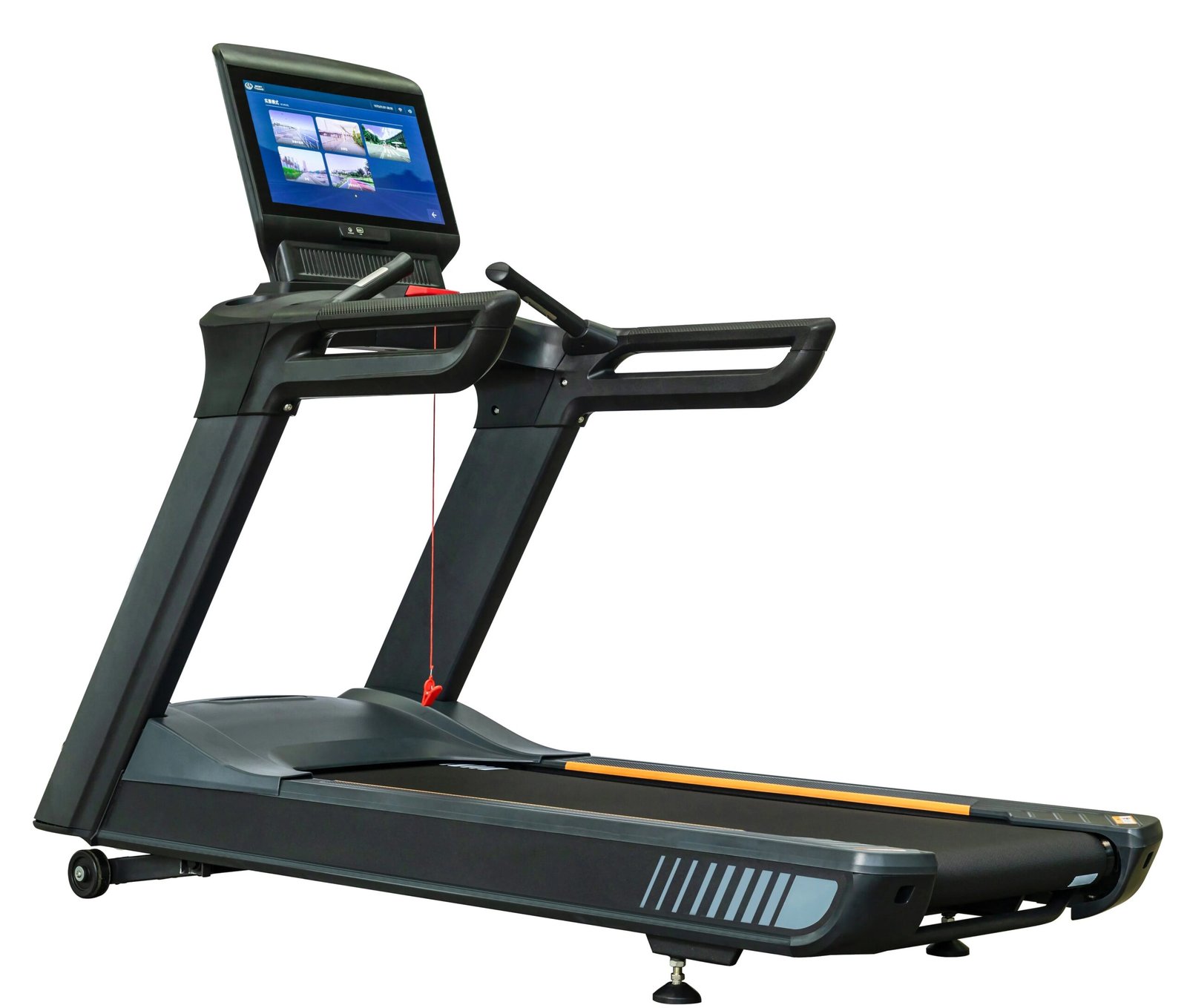
![Mt296 ABS Electric Treadmill for Endurance Training [WARN] draft identifier mismatch](https://bicksport.com/wp-content/uploads/2026/08/mt296-abs-electric-treadmill-for-endurance-training-warn-draft-identifier-mismatch-3a32a7.webp)
Whisper-Quiet Operation — DC motor and cushioned belt system keep acoustic output compatible with shared residential and hospitality environments.
Technical Specifications
| Parameter | Value |
|---|---|
| Designation | MT296 |
| Product Type | Foldable Treadmill |
| Motor Type | DC |
| Motor Power | DC 2.0 HP (peak or continuous not specified) |
| Speed Range | 1–20 km/h |
| Running Surface | 1200 x 520 mm |
| Console Type | LCD (Speed / Distance / Time / Calories / Pulse) |
| Programs | 16 |
| Heart Rate Monitoring | Pulse sensors (handlebar) |
| Foldable | Yes |
| Product Unfolded Size | 1580 x 865 x 1300 mm |
| Product Folded Size | 910 x 865 x 1345 mm |
| Net Weight | 64.0 kg |
| Material | ABS |
| Color Options | Multicolor (customizable) |
| OEM / ODM | Available |
| Certification | CE, RoHS |
Application Suitability
| Deployment Scenario | Typical Use |
|---|---|
| Hotel fitness center on guest room floors | 24-hour access cardio with noise-sensitive adjacency |
| High-end residential home gym | Space-efficient training with foldable storage after sessions |
| Corporate wellness room | Moderate-duty cycle use across staggered employee shifts |
| Community fitness facility | Flexible room configurations with equipment stowed between classes |
| Light-commercial fitness center | Entry-level cardio zones with moderate daily throughput |
Why the Motor Label Matters More Than the Brochure Suggests
A foldable motorized treadmill DC motor commercial deployment demands clarity on what the horsepower rating actually means for daily runtime.
Facility operators routinely specify treadmill motors by peak output, only to discover that continuous duty under public-access conditions tells a different story. A motor rated at DC 2.0 HP may deliver that figure in short bursts but cannot sustain it across back-to-back users in a hotel fitness center running around the clock. I have seen light-commercial units pulled from hotel floors within eight months because the motor windings degraded under continuous thermal load — the units were never designed for that duty cycle. [NEED_CITE: motor duty cycle classification for continuous commercial operation]
The distinction between peak and continuous horsepower determines whether a treadmill survives its first year in a shared facility or becomes a maintenance liability. Specifying without this clarity leaves procurement teams exposed to premature failure and replacement costs that erase any initial savings.
Where This Treadmill Fits Within a Mixed Cardio Layout
This foldable motorized treadmill DC motor commercial model covers walking through sustained running at speeds up to 20 km/h, addressing the moderate-intensity zone that accounts for most general fitness sessions. In a mixed cardio area, it complements ellipticals and rowing machines by providing weight-bearing impact that those low-impact machines omit. The 1200 x 520 mm running surface accommodates users of average stride length comfortably, though taller athletes may find the deck limiting for extended sprint intervals. When folded, the unit reduces its floor footprint substantially, making it practical for rooms that convert between group classes and open cardio time.
Continuous Runtime and Deployment Environment Requirements
A DC motor at this output level suits moderate-duty cycles — think corporate wellness rooms with staggered usage or residential gyms with two to four sessions daily rather than chain gym cardio zones running sixteen hours nonstop. Noise transmission through floor slabs remains a consideration for upper-floor hotel deployments; the cushioned belt system and DC motor configuration reduce acoustic output compared to unmuffled AC alternatives, but verifying site-specific noise thresholds before installation is necessary. [NEED_CITE: EN 957 requirements for commercial cardio equipment] The unit requires a dedicated power circuit with voltage matching the target market — discovering a plug standard mismatch after the container arrives is a preventable but recurring issue. Ground leveling and anti-vibration pads should be factored into installation, particularly in rooms directly above occupied guest corridors or offices.
Reading Between the Specs on the Drive System
The DC motor type in this treadmill is typical for foldable and light-commercial designs, offering lighter weight and lower cost than AC alternatives at the trade-off of reduced continuous thermal tolerance. The DC 2.0 HP rating, without a stated continuous versus peak distinction, means facility specifiers should request the motor duty cycle documentation before committing to high-throughput deployment. The LCD console provides real-time readouts for speed, distance, time, calories, and pulse — functional for user feedback, though it does not specify IoT connectivity or data export to facility management software. The sixteen pre-set programs offer structured variety without requiring external app integration. Handlebar pulse sensors deliver basic heart rate monitoring, which suffices for general fitness tracking but does not match the stability of chest-strap telemetry for interval programming.
The Cost of Underspecifying Drive Components
When a residential-grade motor is installed in a facility running six or more hours daily, the thermal degradation curve accelerates in ways that warranty language does not always make obvious. I supplied a batch of treadmills to a Middle Eastern hotel group where the original belt cushioning layers compressed within months, generating a wave of member knee complaints and an eventual full replacement with magnetically controlled units. Noise complaints in hospitality environments often reach the front desk before maintenance is notified, meaning guest satisfaction scores take damage before the equipment is flagged for repair. [NEED_CITE: acoustic performance benchmarks for hospitality cardio deployments] Data isolation is another hidden cost — when console output cannot integrate with facility management platforms, usage patterns remain invisible and maintenance scheduling becomes reactive rather than predictive.
Why This Product Line Addresses Those Gaps
Sub-35 dB operation has been verified across hotel deployments, directly addressing the noise complaint pattern that plagues upper-floor fitness centers. Motors and bearings across the line undergo 10,000-hour continuous operation testing, providing a durability baseline that light-commercial units without such validation cannot match. The six-series cardio family — treadmills, bikes, ellipticals, rowers, stair climbers, and spinning bikes — allows a facility to source every discipline from one production line, simplifying spare parts logistics. OEM customization extends to console UI, color, and branding at flexible minimum order quantities. Free 3D cardio-zone layouts cover square footage, sightlines, and airflow planning specific to the room, including the folded and unfolded footprint requirements of this model. Technical support operates around the clock for commissioning and ongoing maintenance queries.
Documentation & Test Records
- CE declaration of conformity for the MT296 drive and electrical system
- EN 957 test report covering structural and safety requirements
- ISO 9001 certificate for the manufacturing quality management system
- RoHS compliance documentation for restricted substance limits
- Noise level test report specific to DC motor operation
- Durability test record for motor, bearings, and frame
- Motor specification sheet with duty cycle data
- LCD console technical documentation
- Installation, commissioning guide, and spare parts list
Installation, Commissioning & Maintenance
- Verify unfolded clearance of 1580 x 865 mm plus safety margins on all sides
- Level the floor and install anti-vibration pads before anchoring the MT296
- Confirm voltage and plug standard match the target market before first power-on
- Run initial belt tracking and tension calibration after the first operating week
- Lubricate the running surface per the DC motor maintenance schedule
- Configure LCD console settings and verify pulse sensor response at commissioning
- Wipe down ABS housing and belt edges after each session to prevent sweat corrosion
Procurement Inquiry Guidance
Provide the cardio zone area and planned unit count to receive a 3D layout covering equipment spacing, sightlines, and airflow specific to this foldable treadmill’s dimensions. Specify expected daily runtime to confirm whether the DC motor duty cycle matches your throughput or whether an AC alternative is warranted. Indicate the deployment floor and adjacent room types so acoustic requirements can be validated against site conditions. Confirm the target market voltage and plug standard to avoid post-shipment incompatibility. State whether console data output must integrate with existing facility management or member app platforms.
Frequently Asked Questions
Q: What is the difference between peak and continuous motor power, and how does it affect treadmill lifespan?
A: Peak horsepower is the maximum output a motor can deliver in short bursts, while continuous horsepower is what it sustains under extended load. A DC 2.0 HP rating without this distinction leaves durability uncertain for high-throughput sites. Requesting the motor duty cycle sheet before purchase clarifies whether the unit suits your daily runtime or risks premature winding degradation.
Q: How does DC motor noise compare to AC motor in residential deployments?
A: DC motors generally produce less acoustic output at moderate loads, making them suitable for shared residential spaces and hotel floors where noise transmission is a concern. However, AC motors sustain higher continuous duty with less thermal stress. The deployment environment and expected daily sessions determine which trade-off is acceptable.
Q: Can the LCD console data sync with gym management software or member apps?
A: The LCD console displays speed, distance, time, calories, and pulse data in real time for user feedback. The current specification does not confirm IoT connectivity or data export capability. Facilities requiring usage analytics integration should request console technical documentation to verify output protocol compatibility before ordering.
Q: What maintenance does the folding mechanism and belt deck require over time?
A: The folding hinge and latch points should be inspected monthly for wear and lubricated per the commissioning guide. Belt tension and tracking need recalibration after the initial break-in period and periodically thereafter. Running surface lubrication intervals depend on usage frequency and are documented in the spare parts and maintenance sheet.
Q: How does the 1200 x 520 mm running surface accommodate different user stride lengths?
A: The deck width of 520 mm provides comfortable lateral clearance for most users. The 1200 mm length accommodates walking and moderate-pace running for average-height individuals. Taller users performing extended sprint intervals may find the surface limiting, which should be considered when planning cardio zones for performance-oriented facilities.


![Anti-Slip Mt296 Motorized Treadmill for Home Rehabilitation Training [WARN] draft identifier mismatch](https://bicksport.com/wp-content/uploads/2026/08/anti-slip-mt296-motorized-treadmill-for-home-rehabilitation-training-warn-draft-identifier-mismatch-c13b32.webp)