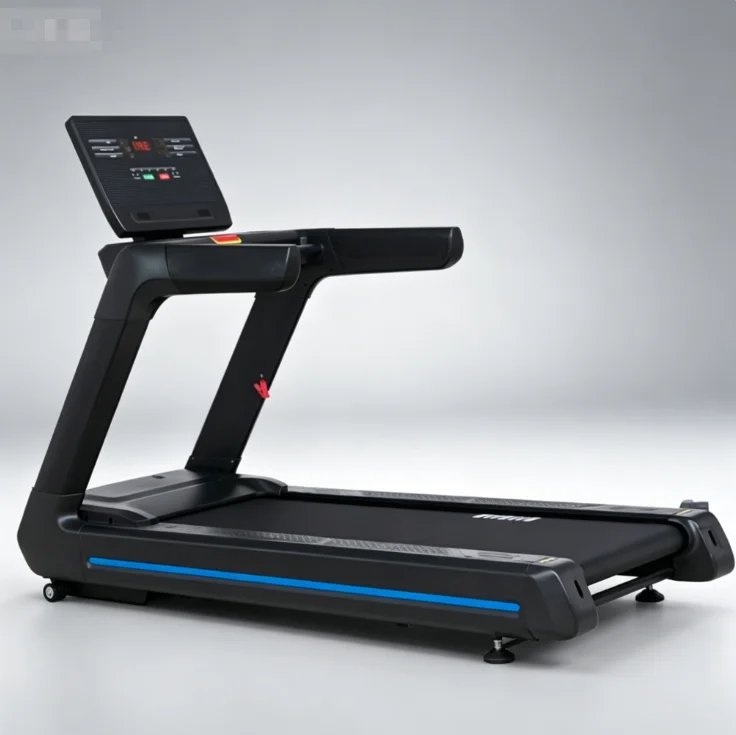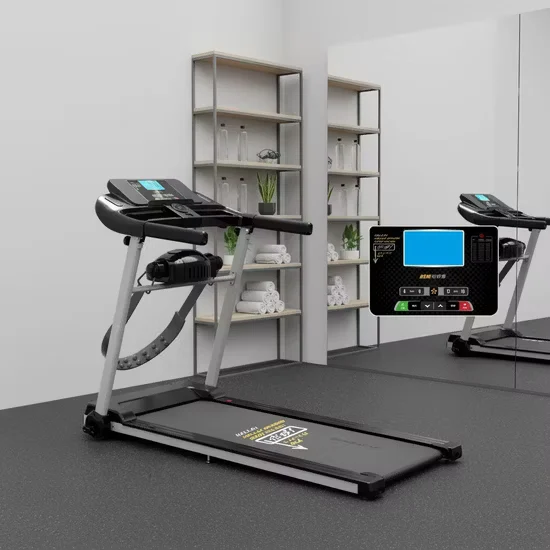
Acoustic-Optimized Drive — The MT026M pairs a DC motor with a shock-absorbing deck to address noise transmission in shared residential and light-use cardio environments.
Technical Specifications
| Parameter | Value |
|---|---|
| Designation | MT026M |
| Motor Type | DC |
| Motor Power | 1.5HP* |
| Speed Range | 1–12 km/h |
| Running Surface | 1200 x 460 mm |
| Deck Cushioning | Shock-absorbing system |
| Max User Weight | Contact for specification |
| Console Type | LCD (Speed / Distance / Time / Calories / Pulse) |
| Programs | 12 preset |
| Heart Rate | Pulse sensors |
| Power Requirement | Confirm voltage and plug standard for target market |
| Product Unfold Size | 1465 x 750 x 1150 mm |
| Product Folded Size | 1465 x 750 x 390 mm |
| Net Weight | 46.0 kg |
| Foldable | Yes |
| Material | ABS |
| Certification | CE, RoHS |
| OEM / ODM | Available |
| Color Options | Multicolor |
*Peak or continuous duty not specified in source — confirm with manufacturer before deployment planning.
Application Suitability
| Deployment Scenario | Typical Use |
|---|---|
| High-end residential home gym | Daily personal cardio in spaces adjacent to living areas |
| Corporate wellness room | Compact foldable unit for employee warm-up and light sessions |
| Boutique studio warm-up station | Pre-class personal use between scheduled group sessions |
| Light-use community fitness space | Shared cardio access in low-traffic residential facilities |
What Peak Horsepower Hides About Residential Treadmill Deployments
A 1.5HP DC motor rating without a continuous-duty classification leaves buyers guessing about real-world lifespan in shared facilities.
Home and residential gym operators regularly push consumer-grade treadmills well beyond their intended duty cycles. A unit rated for thirty minutes of daily walking ends up running four hours straight in a corporate wellness room, and the motor thermal protection trips repeatedly before the winding insulation finally fails. We have seen this pattern trigger full fleet replacements within a single season. The MT026M foldable electric treadmill DC motor silent shock absorbing platform addresses this gap by positioning the DC drive within a controlled-use framework where daily run-times stay within residential duty expectations [NEED_CITE: motor duty cycle classification for continuous commercial operation]. The foldable form factor also signals the intended deployment scope clearly — this is a space-conscious unit for environments where continuous high-frequency operation is not the primary requirement.
Where This Foldable Treadmill Fits in a Compact Cardio Zone
The MT026M covers walking through moderate running at speeds up to 12 km/h, fitting steady-state cardio and warm-up routines rather than high-intensity sprint intervals. In a compact cardio zone, it complements heavier commercial treadmills by absorbing light-use traffic and freeing full-duty units for extended sessions. The foldable frame architecture suits deployments where floor space must be reclaimed between operating hours, such as corporate wellness rooms or shared residential gyms. The 1200 x 460 mm running surface accommodates walking and jogging gaits for most adult users within a residential or light-use setting.
Environmental Requirements for Residential and Light-Use Deployment
Deploying this foldable electric treadmill DC motor silent shock absorbing unit on upper floors or adjacent to occupied rooms requires attention to vibration transfer through the subfloor. A level surface with a dedicated equipment mat reduces structure-borne noise transmission to spaces below. The DC motor produces less electromagnetic interference than an AC equivalent, but the unit still requires a properly grounded outlet matching the local voltage and plug standard — confirm compatibility before the shipment leaves the factory [NEED_CITE: voltage and plug standard mismatches in cross-border equipment deployment]. Adequate ventilation around the motor housing and clearance behind the rear roller prevent thermal buildup during extended sessions. If the console needs to report usage data to a facility management system, verify the LCD interface supports the required connectivity before finalizing the order.
DC Motor Characteristics and Deck Cushioning Explained
DC motors in treadmills operate at lower rotational speeds than comparable AC drives, which reduces audible whine during use and makes the MT026M suited to noise-sensitive environments. The trade-off is that DC motors typically carry lower continuous-duty ratings, meaning thermal management depends on the unit running within its designed daily cycle rather than back-to-back sessions. The shock-absorbing deck system introduces elastomeric inserts between the running belt and the frame deck, dispersing impact forces before they travel through the user’s joints or transmit as vibration into the floor structure. The LCD console displays real-time speed, distance, time, calorie estimates, and pulse readings across 12 preset programs, giving users structured workout feedback without requiring an external device connection. Heart rate is captured through handlebar pulse sensors, which provide adequate trend data for steady-state sessions though they may lag during rapid intensity changes.
The Hidden Cost of Ignoring Duty-Cycle Specifications
Specifying treadmills without confirming continuous-duty ratings leads to predictable failures. Motors designed for intermittent home use overheat and trip thermal cutoffs when placed in a shared facility running eight hours daily, generating maintenance tickets that compound into full replacement cycles. Noise complaints from adjacent hotel rooms or residential units force operators into reactive equipment swaps that cost more than specifying correctly at the outset. Insufficient deck cushioning accelerates joint fatigue reports among regular users, eroding membership retention in community fitness settings. Data from consoles that cannot interface with facility management systems creates blind spots in utilization tracking, leaving operators unable to justify capital expenditure on future equipment [NEED_CITE: equipment utilization data gaps in shared fitness facilities]. Voltage mismatches discovered after container arrival add weeks of downtime and rewiring expense.
Why This Product Line for Your Facility
The MT026M benefits from a drive system verified for sub-35dB acoustic performance across the broader commercial cardio range, giving residential and light-use buyers confidence in quiet operation. Every unit undergoes durability protocols aligned with the 10,000-hour continuous-operation testing standard applied across our engineering department. OEM and ODM customization extends to color selection and branding, while the foldable footprint simplifies 3D cardio-zone layout planning for compact spaces where every square meter of clearance matters. The complete six-series cardio family allows facilities to source treadmills, bikes, ellipticals, rowers, stair climbers, and spinning bikes from a single production line. Documentation includes CE and RoHS compliance records specific to each shipment. Technical support responds around the clock for commissioning questions and spare parts requests.
Documentation & Test Records
- CE declaration of conformity for the MT026M foldable treadmill platform
- RoHS compliance certificate covering electrical components and ABS materials
- Noise level test report validating DC motor acoustic output
- Motor specification sheet detailing the 1.5HP rating and duty parameters
- LCD console technical documentation with program and display specifications
- Installation guide covering folding mechanism safety and deck calibration
Installation, Commissioning & Maintenance
- Position the MT026M with clearance behind the rear roller and above the folded height for ventilation
- Place on a level surface with an equipment mat to isolate vibration from the subfloor
- Confirm local voltage and plug standard before connecting the DC motor to the power circuit
- Run the belt at low speed during first commissioning to verify tracking and tension alignment
- Inspect the foldable locking mechanism periodically for secure engagement during use
- Wipe the LCD console and pulse sensors after each session to prevent sweat corrosion
Planning Your Equipment Inquiry
Provide the planned cardio-zone dimensions and intended unit count so we can generate a 3D layout with airflow and sightline planning specific to the MT026M footprint. State the expected daily run-time per unit to confirm the DC motor duty cycle aligns with your operational pattern. Identify the deployment floor and what occupies adjacent or below spaces so we can verify noise transmission requirements. Confirm the target market voltage and plug standard, and indicate whether the LCD console needs to interface with any facility management or member-tracking system.
Frequently Asked Questions
Q: What is the difference between continuous duty and peak horsepower in treadmill motors?
A: Peak horsepower measures the maximum output a motor can deliver for a brief burst, while continuous duty reflects what it can sustain over extended periods without overheating. A motor rated at 1.5HP peak may deliver considerably less on a continuous basis. Always confirm the continuous-duty rating with the manufacturer to ensure the motor matches your expected daily run-time and usage intensity.
Q: How does a DC motor compare to AC in noise output and duty cycle for home versus commercial use?
A: DC motors generally run at lower rotational speeds, producing less audible noise than equivalent AC drives, which suits residential and shared-space environments. The trade-off is that DC motors often carry lower continuous-duty ratings, making them better suited for controlled daily use rather than back-to-back sessions in high-traffic commercial gyms. Match motor type to expected utilization patterns.
Q: What shock-absorbing features does the deck provide and how do they reduce joint impact?
A: The MT026M incorporates elastomeric cushioning elements between the running belt and the frame deck to absorb impact forces generated during foot strike. This reduces vibration transmitted through the user’s lower-body joints and simultaneously limits structure-borne noise reaching the floor below. The cushioning system is tuned for walking and moderate running within the 1–12 km/h speed range.
Q: Can the foldable design withstand repeated daily folding in a high-traffic residential gym?
A: The foldable mechanism is engineered for regular use in residential and light-commercial settings where floor space must be reclaimed between operating hours. Confirm the locking mechanism specifications and recommended inspection intervals with the manufacturer to ensure long-term reliability matches your deployment’s daily folding frequency and user traffic patterns.
![mt026m fold motorized treadmill for body shape improvement [WARN] draft identifier mismatch](https://bicksport.com/wp-content/uploads/2026/08/mt026m-fold-motorized-treadmill-for-body-shape-improvement-warn-draft-identifier-mismatch-383138.webp)
![Mt296 ABS Electric Running Treadmill for Cardiopulmonary Training [WARN] draft identifier mismatch](https://bicksport.com/wp-content/uploads/2026/08/mt296-abs-electric-running-treadmill-for-cardiopulmonary-training-warn-draft-identifier-mismatch-bb8146.webp)