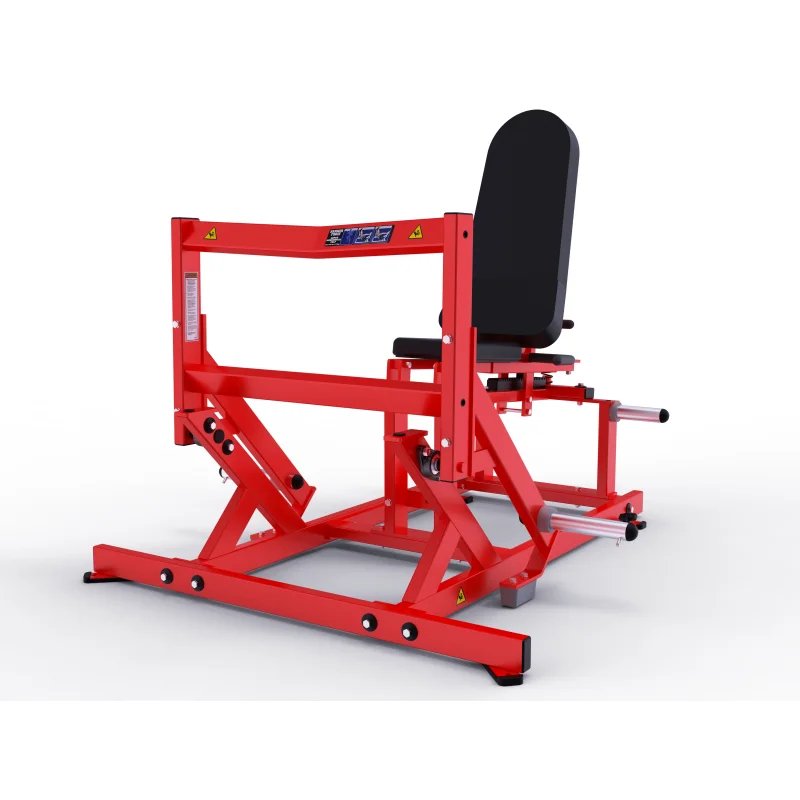
![Leg Exercise ISO-Lateral Kneeling Leg Curl Machine for Gym [WARN] draft identifier mismatch](https://bicksport.com/wp-content/uploads/2026/08/leg-exercise-iso-lateral-kneeling-leg-curl-machine-for-gym-warn-draft-identifier-mismatch-5f6aae.webp)
Whisper-Quiet Bearing Architecture — Sealed commercial-grade bearings and silent glide rails eliminate metal-on-metal rattle across high-frequency leg curl deployments.
Technical Specifications
| Parameter | Value |
|---|---|
| Product Type | Leg Curl Machine |
| Model NO. | 5028 |
| Exercise Part | Leg |
| Frame Material | Commercial-grade steel |
| Resistance System | Selectorized weight stack |
| Drive / Pivot Type | Sealed bearing with silent glide rail |
| Product Dimensions | 1270 × 1000 × 1290 mm |
| Net Weight | 145 kg |
| Max User Weight | Up to 180 kg (commercial range standard) |
| Age Group | Adult |
| Gender | Unisex |
| Fit Area | Professional gym and club |
| Appliance | Community, gymnasium |
| OEM/ODM | Available (logo, color, upholstery) |
| Certification | ISO 9001, CE |
Application Suitability
| Deployment Scenario | Typical Use |
|---|---|
| Chain gym strength zone | High-frequency hamstring isolation between squat racks and cable stations |
| Corporate wellness room | Mid-day targeted leg work for desk-based professionals |
| Professional sports training center | Athlete-grade posterior chain loading with biomechanical tracking |
| Community fitness center | Durable lower-body station for supervised group use |
Why Mechanical Noise Travels Faster Than Service Tickets in Strength Zones
Sealed bearings and a 145 kg anchored frame stop structure-borne vibration before it reaches the front desk.
Most facility complaints originate not from motorized cardio decks but from selectorized strength stations where worn bushings and loose weight stacks broadcast every repetition through concrete slabs. A commercial leg curl machine ISO-lateral kneeling design that ignores acoustic engineering will generate friction noise that escalates as daily cycles accumulate [NEED_CITE: acoustic propagation of structure-borne vibration in multi-story fitness facilities]. Operators replacing pivot bushings quarterly face compounding downtime and member frustration that no amount of floor matting can mask.
Positioning Within a Commercial Strength Floor Layout
The ISO-lateral kneeling leg curl machine occupies a focused posterior-chain niche, complementing compound movements performed on squat racks and leg press stations. Its kneeling posture isolates hamstrings without requiring the spinal stabilization demanded by standing or lying alternatives, making it suitable for users across a broad fitness range. The 1270 × 1000 mm footprint fits standard strength-zone bay spacing while leaving clearance for plate loading and spotter access. Data capture depends on optional console integration available with basic repetition counters or advanced telemetry modules.
Continuous Load and Facility Environment Requirements
A selectorized leg curl station in a busy chain gym may see hundreds of daily repetitions across peak hours, placing sustained demand on pivot bearings and guide rails rather than electronic components. The sealed bearing system is engineered for this continuous high-frequency duty cycle, reducing the maintenance intervals associated with open bushings [NEED_CITE: duty cycle expectations for selectorized strength equipment in commercial environments]. Noise transmission through floor slabs remains a concern on guest-room levels or above occupied office spaces; the 145 kg frame mass and rubber-isolated foot pads dampen vibration transfer. Ground-level installations require a flat, load-bearing surface with a minimum two-meter clearance envelope for safe entry, exit, and weight-stack access.
Selectorized Resistance and Bearing Dynamics
The weight-stack resistance system delivers consistent loading across the full range of motion without the degradation curves associated with elastic or hydraulic alternatives. ISO-lateral movement geometry allows each limb to track an independent path, addressing strength imbalances that a fixed bilateral bar would mask. The kneeling posture positions the hip at a fixed angle, reducing shear force on the knee joint compared to seated leg curl configurations. Sealed bearings at every pivot point prevent dust and sweat ingress — the primary causes of friction escalation and noise complaints in humid or high-throughput environments. A 145 kg steel frame provides the mass necessary to resist lateral shift during heavy unilateral loading, eliminating the stabilizer-bar wobble that undermines movement precision.
The Hidden Cost of Specifying Below Commercial Grade
Facilities that install residential-grade pivot hardware in commercial strength zones routinely face premature bearing seizure, generating grinding noises that prompt immediate member complaints. Weight stacks riding on unsealed guide rods accumulate particulate debris, increasing friction until the stack binds mid-repetition and creates a safety hazard [NEED_CITE: failure mode analysis of selectorized guide rods in high-cycle environments]. Frames under 120 kg shift laterally during maximal hamstring contraction, degrading the user’s perception of build quality and driving attrition toward competitors. Data-blind deployments — where repetition counters and usage sensors are absent — leave operators unable to justify replacement cycles or reallocate underutilized floor space.
Why This Product Line Addresses Strength-Zone Pain Points
Every pivot on this commercial leg curl machine ISO-lateral kneeling model rides on sealed bearings tested for 10,000 hours of continuous high-frequency operation. The frame undergoes cyclic loading validation that replicates peak commercial duty, not light-use residential assumptions [NEED_CITE: cyclic load testing protocol for commercial selectorized strength equipment]. OEM customization extends to upholstery color, logo placement, and weight-stack increments, allowing brand consistency across multi-site rollouts. Free 3D layout planning accounts for this station’s 1270 × 1000 mm footprint, adjacent equipment sightlines, and member traffic flow so the leg curl machine integrates into a coherent strength bay. Full 24/7 technical support and documented spare parts availability eliminate the procurement black holes that strand facilities with inoperable equipment.
Documentation & Test Records
- CE declaration of conformity covering the full assembled unit
- EN 957 test report for selectorized strength equipment safety
- ISO 9001 certificate for manufacturing quality management
- Durability test record documenting 10,000-hour bearing and frame cycles
- Noise level test report for mechanical pivot and weight-stack operation
- Spare parts list with lead times for all wear components
Installation, Commissioning & Maintenance
- Verify 1270 × 1000 mm footprint with one-meter clearance on all sides for safe loading and exit
- Level the floor surface and place rubber vibration pads under each foot to isolate structure-borne noise
- Inspect all sealed bearings at commissioning and confirm smooth pivot travel through full range of motion
- Apply manufacturer-specified lubricant to weight-stack guide rods at intervals documented in the maintenance manual
- Clean upholstery and frame contact points daily with non-corrosive solution to prevent sweat-induced corrosion
- Check fastener torque on frame joints monthly, as vibration from heavy unilateral loading can loosen hardware over time
Scoping Your Strength-Zone Equipment Selection
Provide your strength-bay dimensions and current equipment list to receive a 3D layout that positions this leg curl station relative to squat racks, cable machines, and member traffic corridors. Specify expected daily repetition volume so bearing and guide-rod durability can be matched to your duty cycle. Identify the deployment floor and adjacent occupied spaces to confirm whether additional acoustic isolation pads are warranted. State your target market and any upholstery branding requirements so OEM lead times are factored into the project timeline.
Frequently Asked Questions
Q: How does ISO-lateral movement differ from a traditional bilateral leg curl?
A: ISO-lateral geometry allows each leg to follow an independent arc, preventing the dominant limb from compensating during fatigue. Traditional bilateral machines lock both legs into a single padded lever, masking strength imbalances that can lead to overuse injuries. The kneeling posture also fixes the hip angle, concentrating load on the hamstrings while reducing lower-back involvement compared to standing configurations.
Q: What maintenance does a commercial selectorized leg curl machine require?
A: Primary maintenance involves inspecting sealed bearings for smooth rotation, lubricating weight-stack guide rods at scheduled intervals, and verifying fastener torque on frame connections. Upholstery should be cleaned daily with a non-corrosive solution to prevent sweat accumulation. Unlike motorized cardio equipment, there are no electronic components or drive belts to service, keeping the maintenance burden predictable.
Q: How should I plan floor space around this leg curl station?
A: The unit occupies 1270 × 1000 mm and requires a minimum one-meter clearance envelope on all sides for safe user entry, weight-stack access, and spotter positioning. Place the machine so the user’s head does not face a wall or high-traffic walkway, preserving sightlines that improve comfort and perceived safety during heavy sets.
Q: Can the upholstery and frame color be customized for my brand?
A: Yes, OEM options cover upholstery material, stitching color, frame powder-coat finish, and logo placement. Console accessories such as repetition counters or QR-code plates can also be specified during the customization scoping phase. Minimum order quantities are flexible and confirmed during the quotation stage.
Q: What is the expected service life of sealed bearings versus standard bushings?
A: Sealed bearings in this commercial range are validated through a 10,000-hour continuous operation test that replicates peak facility duty cycles. Standard open bushings in comparable machines typically require replacement far earlier due to dust and sweat ingress, which accelerates friction and noise generation under identical usage conditions.