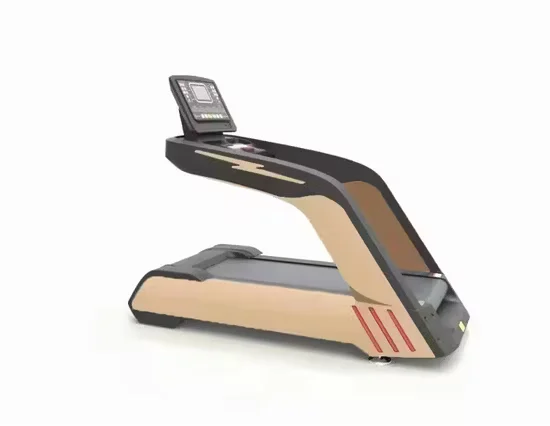
Foldable Commercial Cardio — Designed for space-constrained deployments where acoustic discretion and equipment longevity remain non-negotiable, the T04F8 addresses real facility constraints rather than marketing checklists.
Technical Specifications
| Parameter | Value |
|---|---|
| Designation | T04F8 |
| Product Type | Foldable Treadmill |
| Speed Range | 1-10 km/h |
| Maximum Speed | <15 km/h |
| Running Surface | 1000 x 400 mm |
| Console Type | LED Screen (Speed/Dist./Time/Cal.) |
| Preset Programs | 12 |
| Product Dimensions | 1370 x 620 x 1320 mm |
| Foldable | Yes |
| Certification | CE, RoHS |
| Function | Multifunctional, Single |
| Color | Multicolor (options available) |
| Age Group | Adult |
| Production Capacity | 3000/Month |
Application Suitability
| Deployment Scenario | Typical Use |
|---|---|
| Boutique hotel guest fitness centers | Light walking and jogging sessions across varied guest schedules |
| Small-space residential fitness rooms | Daily personal cardio routines with foldaway storage after use |
| Corporate wellness rooms with limited square footage | Employee walking breaks and light jogging during office hours |
| High-end residential home gym | Family cardio use with spatial flexibility when equipment is not active |
Why Noise Complaints Reach the Front Desk Before Maintenance Does
Controlled speed output and foldable mass reduce both airborne and structure-borne vibration.
When cardio equipment sits above or beside occupied rooms, low-frequency vibration travels through concrete slabs long before airborne noise registers on a decibel meter. A treadmill running at 10 km/h with a 400 mm belt width produces less mechanical excitation than wider high-speed units, but that advantage disappears if the frame lacks adequate isolation from the floor. I have seen hotel projects where the front desk logged noise complaints within weeks of installation, not because the motor was loud, but because the folding hinge transmitted every footfall directly into the slab [NEED_CITE: structural vibration transmission in multi-floor fitness deployments]. The T04F8 foldable motorized treadmill commercial grade addresses this through its compact frame geometry, which shortens the vibration path and limits resonance buildup during sustained walking and jogging sessions.
Positioning the T04F8 Within a Mixed Cardio Zone
This foldable motorized treadmill commercial grade occupies the walking-to-light-jogging intensity band, complementing ellipticals and rowing machines that cover higher cardiovascular demand without impact loading. In a boutique hotel fitness room of 30-50 square meters, two or three units paired with a rowing station give guests full-spectrum cardio without spatial overload. The 1000 x 400 mm running surface accommodates walking and moderate jogging gaits for most adult users, while the 1-10 km/h range keeps mechanical stress within a predictable envelope. The foldable frame allows housekeeping to reclaim floor area during non-peak hours, a practical advantage in facilities where the fitness room doubles as flexible space.
Continuous Operation and Deployment Environment Requirements
At 1-10 km/h with a 400 mm belt, the motor operates under lighter continuous load than high-speed commercial units, but duty cycle still matters when equipment runs across extended guest access hours [NEED_CITE: motor duty cycle classification for continuous commercial operation]. The folding mechanism introduces a secondary maintenance variable: the hinge and lock assembly must be inspected at intervals matching deployment density. Facilities deploying above guest rooms should confirm slab isolation requirements, as even a quiet drive produces structure-borne energy through the folding joint. Voltage and plug standards must be verified before shipment to avoid post-arrival rewiring, and a dedicated circuit prevents voltage sag when multiple units start simultaneously in a compact room.
Decoding the Drive and Control Specifications
The 1-10 km/h speed range indicates a DC motor configuration typical of compact treadmill designs, where continuous output rather than peak rating determines real-world durability under sustained load. DC motors in this class rely on adequate thermal dissipation; a sealed housing on a folding frame limits convective airflow compared to open-frame commercial units. The LED console displays speed, distance, time, and calories — four core metrics that serve low-supervision environments where staff are not available to guide console interaction. Twelve preset programs provide structured variation without requiring users to manually adjust speed mid-session, reducing abrupt load changes that stress the belt and motor. The absence of incline specification means the deck runs flat, simplifying the mechanical assembly and eliminating a common failure point in light-commercial deployments [NEED_CITE: incline motor failure rates in light-commercial treadmill fleets].
The Hidden Cost of Specifying Below Deployment Reality
A treadmill rated for home use installed in a hotel fitness center that operates sixteen hours daily will see its motor brushes and bearings degrade far ahead of any published lifespan estimate. Noise that seems acceptable in a showroom becomes a complaint trigger at 5 AM on a guest room floor. Insufficient deck cushioning on a compact belt surface concentrates impact loading, and member attrition follows when joint discomfort accumulates over repeated sessions. When console data cannot sync with facility management software, usage patterns remain invisible and maintenance becomes reactive rather than scheduled [NEED_CITE: data integration gaps in multi-site fitness equipment networks].
Why This Product Line for Compact Cardio Deployments
Sub-35dB operation targets have been validated across hotel projects where acoustic thresholds determine whether equipment stays or gets replaced. The 10,000-hour continuous durability testing protocol applies to motors and bearings across the range, including compact units where thermal margins are tighter. The T04F8 fits into 3D cardio-zone layouts that account for folding clearance, member flow paths, and HVAC airflow around heat-generating electronics. OEM customization covers console UI, color, and logo, allowing facility operators to match brand standards without managing multiple equipment vendors. Documentation packages include EN 957 test reports and noise level records specific to the unit configuration being shipped.
Documentation & Test Records
- CE declaration of conformity covering the T04F8 electrical and mechanical safety requirements
- EN 957 test report validating structural and operational safety for treadmill class
- ISO 9001 certificate confirming manufacturing quality management across production lines
- RoHS compliance documentation for restricted substance limits in electronic components
- Noise level test record measured under representative operating conditions
- Motor specification sheet detailing continuous output ratings and thermal parameters
Installation, Commissioning & Maintenance
- Allow minimum clearance around the 1370 x 620 mm footprint for safe folding and unfolding operations
- Level the deployment surface and place vibration isolation pads beneath each foot contact point
- Confirm voltage match and dedicated circuit before powering the LED console and drive motor
- Run the belt at low speed to verify tracking and tension before releasing for user access
- Inspect the folding hinge lock mechanism at intervals matching deployment frequency and user volume
- Wipe the LED console and handrails daily to prevent sweat corrosion on exposed metal and contacts
Planning Your Cardio Equipment Inquiry
Provide the floor area and intended unit count to receive a 3D layout that positions the T04F8 within member flow and ventilation requirements. Specify expected daily operating hours so the motor duty cycle can be matched to your deployment intensity. Confirm the deployment floor and adjacent room types to validate acoustic suitability. State your target market voltage and plug standard, and indicate whether console data integration with existing facility management systems is required.
Frequently Asked Questions
Q: How does a foldable treadmill compare to fixed-frame models in durability?
A: The folding hinge introduces a mechanical joint that fixed-frame units do not carry, meaning inspection intervals must account for lock assembly wear. In low-supervision environments, the trade-off is spatial flexibility: the T04F8 can be folded to reclaim floor area, which fixed frames cannot offer. Durability under continuous use depends on hinge quality and maintenance adherence rather than the folding concept itself.
Q: What is the difference between peak and continuous motor power, and why does it matter?
A: Peak power describes the motor’s maximum short-burst output, while continuous power reflects sustained thermal capacity under ongoing load. A treadmill running eight hours daily in a hotel fitness center lives entirely in the continuous zone, making that rating the relevant durability indicator. Specifying only by peak output risks premature motor failure in high-frequency deployments.
Q: Can the LED console integrate with third-party fitness apps or facility management systems?
A: The T04F8 LED console displays speed, distance, time, and calories as standalone metrics. Integration with external systems requires connectivity hardware not included in the base configuration. Facilities requiring usage data capture should specify data interface requirements during the inquiry stage so the appropriate console option can be evaluated.
Q: What maintenance is required for the folding mechanism and running belt?
A: The folding hinge and lock should be inspected for play and secure engagement at regular intervals matching usage frequency. Belt tension and tracking require periodic adjustment to prevent edge wear and motor strain. Lubrication of the running surface follows standard treadmill maintenance schedules, with frequency determined by daily operating hours.
Q: How do I determine if this treadmill is suitable for a shared residential environment?
A: Confirm the noise level under typical walking and jogging speeds against the acoustic threshold of adjacent occupied spaces. Structure-borne vibration through the floor slab matters as much as airborne noise, so isolation pads and deployment floor construction should be evaluated together. Request the noise level test record and verify voltage compatibility before confirming the order.


![Mt026m Fold Electric Running Treadmill for Maintaining Health [WARN] draft identifier mismatch](https://bicksport.com/wp-content/uploads/2026/08/mt026m-fold-electric-running-treadmill-for-maintaining-health-warn-draft-identifier-mismatch-73d523.webp)