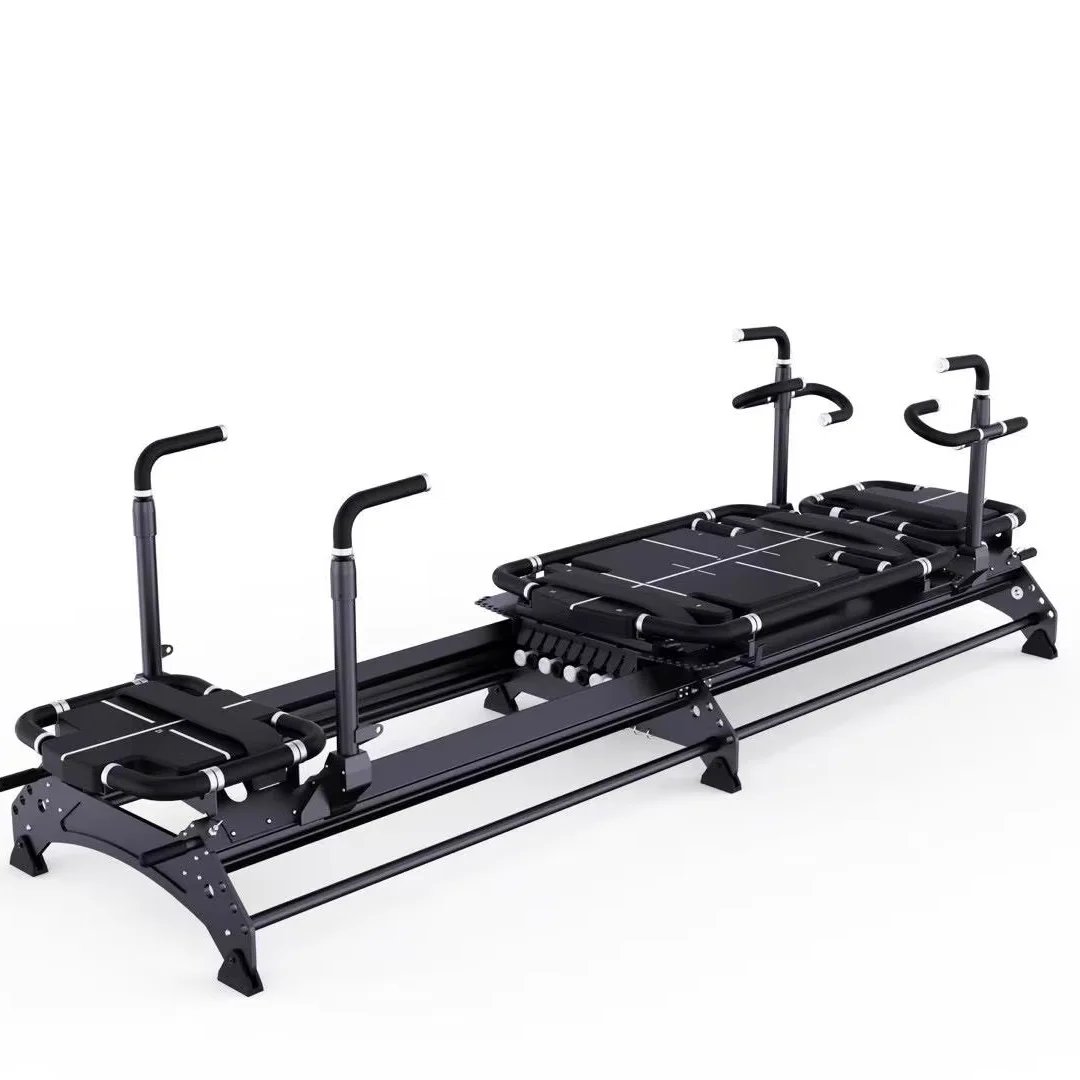
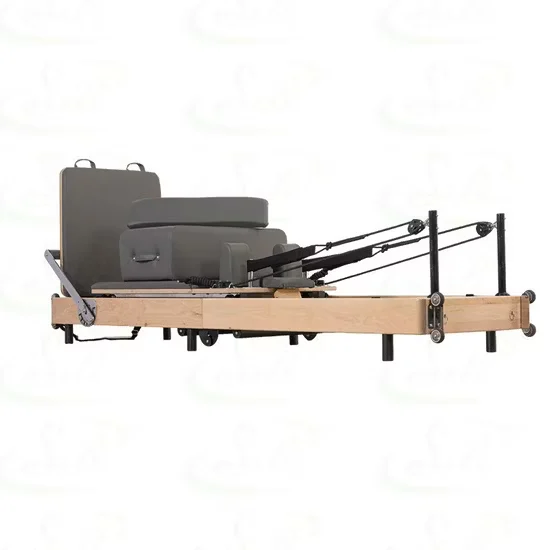
Precision Carriage Glide — Microfiber leather upholstery and sealed bearing tracks tested for continuous studio use without carriage rattle or surface wear.
Technical Specifications
| Parameter | Value |
|---|---|
| Product Type | Pilates Reformer |
| Model NO. | SRY-23 |
| Product Dimensions | 780 × 590 × 180 mm |
| Net Weight | 100 kg |
| Material | Microfiber Leather |
| Accessory Options | Long Box / Jump Board / Platform |
| Color | Solid Color, customizable |
| Logo | Customized Is Allowed |
| Target User | Adult, Unisex |
| Certification | ISO 9001, CE |
| Warranty | 3 Years |
Application Suitability
| Deployment Scenario | Typical Use |
|---|---|
| Pilates studio with back-to-back class scheduling | High-frequency reformer sessions with rapid client turnover and minimal downtime between classes |
| Home studio requiring professional-grade equipment | Daily private practice with controlled movement patterns and consistent carriage resistance |
| Rehabilitation center focusing on controlled movement therapy | Low-impact resistance exercises with precise spring tension adjustments for patient recovery protocols |
| Boutique fitness center with mixed cardio and mind-body zones | Reformer classes positioned adjacent to quiet stretching areas where carriage noise must remain contained |
Why Upholstery Wear and Carriage Noise Drive Studio Replacement Costs
Microfiber leather and sealed carriage bearings extend service intervals in high-frequency Pilates environments.
Studio operators replacing reformer pads every few months face compounding costs — not just the material, but the class cancellations during reupholstery and the client complaints about cracked vinyl surfaces. Carriage noise is a parallel problem. When wheel bearings lack proper sealing, the rumble transmits through hardwood floors into adjacent treatment rooms [NEED_CITE: noise transmission standards for mind-body fitness spaces]. I have seen studio owners pull entire fleets of reformers after members started comparing equipment quality across competing studios. The commercial Pilates reformer microfiber leather wedge pillow addresses both failure points with material selection and bearing specification rather than cosmetic fixes.
Reformer Positioning Within a Mixed-Discipline Studio Layout
This unit covers classical and contemporary Pilates repertoires from beginner mat-transition work through advanced spring-resistance sequences. In a studio layout, it pairs with Cadillac towers for decompression work and chairs for standing balance progressions. The 780 × 590 mm footprint fits standard reformer bays with adequate lateral clearance for instructor circulation. Maximum user accommodation suits the broad adult population range encountered in group class settings. The commercial Pilates reformer microfiber leather wedge pillow supports resistance adjustments through spring configuration rather than electronic controls, keeping the movement experience tactile and instructor-directed.
Continuous Class Scheduling and Floor-Level Deployment Considerations
Studios running four or more reformer classes daily subject carriage systems to sustained load cycles that exceed home-use design assumptions [NEED_CITE: duty cycle classification for commercial Pilates equipment]. Floor placement matters — second-floor studios above occupied commercial spaces need carriage systems that do not transmit low-frequency vibration through structural slabs. Adequate lateral ventilation prevents microfiber leather from retaining perspiration moisture during back-to-back sessions. Standard single-phase power is not a concern for this spring-driven platform, eliminating electrical infrastructure modifications during studio buildout. Ground-level concrete slabs should be verified for flatness before installation to prevent frame torsion during full-range carriage travel.
Spring Resistance and Carriage Track Engineering
Spring-based resistance delivers a linear load curve that increases proportionally with carriage displacement, differing fundamentally from magnetic or pneumatic systems found in other fitness categories. The microfiber leather surface resists the abrasion cycle of repeated body contact — sweat salts and friction degrade standard vinyl within months in commercial settings, while microfiber maintains surface integrity through extended use. Carriage track smoothness depends on bearing seal quality and rail alignment precision; any lateral play introduces audible rattle that amplifies through rigid studio flooring. The 100 kg net weight provides frame stability during explosive jump board exercises without requiring floor anchoring. Available accessories including the long box, jump board, and platform expand the exercise catalog without additional equipment purchases.
The Hidden Cost of Specifying Below Commercial Duty Requirements
Studios that purchase reformers rated for home use in commercial environments face predictable failure sequences. Vinyl upholstery cracks along high-contact seams within the first year, requiring re-covering that takes the unit offline for days. Carriage bearings without commercial-grade seals develop lateral play that generates noise complaints from adjacent treatment spaces and ultimately requires full carriage replacement [NEED_CITE: bearing lifespan under continuous commercial Pilates use]. Frame flex on underweight platforms introduces wobble during standing exercises, creating liability exposure. Operators who calculate total cost of ownership rather than unit acquisition price consistently specify commercial-rated equipment from the outset.
Why This Product Line for Studio Deployments
Sub-35dB operational standards from our cardio engineering division inform the bearing and track tolerances applied to this reformer — carriage glide is measured, not assumed. The 10,000-hour continuous-use testing protocol applied to our motors extends to spring cycle verification and track wear assessment on reformer platforms. Full OEM capability covers logo placement, color selection, and accessory bundling so studio branding remains consistent across the equipment floor. Our 3D layout planning service addresses reformer spacing, instructor sightlines, and ventilation pathways specific to Pilates studio geometry rather than generic gym templates [NEED_CITE: spatial planning guidelines for group reformer studios]. Documentation packages include the test records and maintenance schedules that commercial insurance auditors request. 24/7 technical support covers spring replacement guidance and track alignment procedures.
Documentation & Test Records
- CE declaration of conformity covering mechanical safety requirements for studio deployment
- EN 957 test report validating structural load capacity and entrapment prevention
- ISO 9001 certificate documenting manufacturing quality management systems
- Microfiber leather abrasion and chemical resistance test records
- Carriage bearing lifecycle and noise level verification report
- Spring tension calibration and cycle durability documentation
Installation, Commissioning & Maintenance
- Verify 780 × 590 mm footprint clearance plus 600 mm instructor circulation space on all sides
- Confirm floor flatness within tolerance before positioning to prevent frame torsion during carriage travel
- Inspect carriage track alignment and bearing preload upon delivery before first client session
- Establish microfiber leather cleaning protocol using pH-neutral solutions after each class block
- Schedule spring tension verification and carriage track lubrication at defined class-count intervals
- Document accessory mounting points for long box, jump board, and platform changeover procedures
Planning Your Reformer Procurement
Provide your studio floor plan and daily class schedule so we can model carriage duty cycles and recommend accessory configurations. Specify whether the deployment floor sits above occupied spaces so we can verify carriage noise transmission against your building requirements. Indicate your target market and any branding customization — logo placement, color matching, and console integration where applicable. Confirm whether your insurance or facility certification requires specific test documentation packages with the shipment.
Frequently Asked Questions
Q: How does microfiber leather compare to vinyl for daily studio use?
A: Microfiber leather resists the sweat salt crystallization and UV degradation that cause vinyl cracking along high-contact seams. In studio environments running multiple daily classes, microfiber maintains surface flexibility and color stability through extended use cycles. Cleaning requires only pH-neutral solution application rather than the conditioning treatments that vinyl demands to prevent drying and splitting.
Q: What carriage noise levels should studios expect during group classes?
A: Sealed bearing carriages on properly leveled floors produce minimal audible glide during standard exercises. Noise transmission becomes a concern primarily in multi-story buildings where low-frequency vibration travels through structural elements. Our bearing specification and track tolerance standards originate from hotel deployment requirements where equipment operates directly above occupied guest rooms.
Q: What customization options are available for studio branding?
A: Logo placement on the reformer frame and upholstery is configurable along with color selection from the solid color range. Accessory bundles including the long box, jump board, and platform can be matched to frame color for visual consistency. Custom orders require confirmed artwork files and minimum quantities that vary by customization scope.
Q: What does the three-year warranty cover on moving parts?
A: The warranty covers frame structural integrity, carriage bearing function, and spring tension retention under normal commercial use conditions. Consumable items such as upholstery surface wear from client contact are addressed separately through the material durability specification. Warranty service includes technical guidance for bearing adjustment and spring replacement procedures.