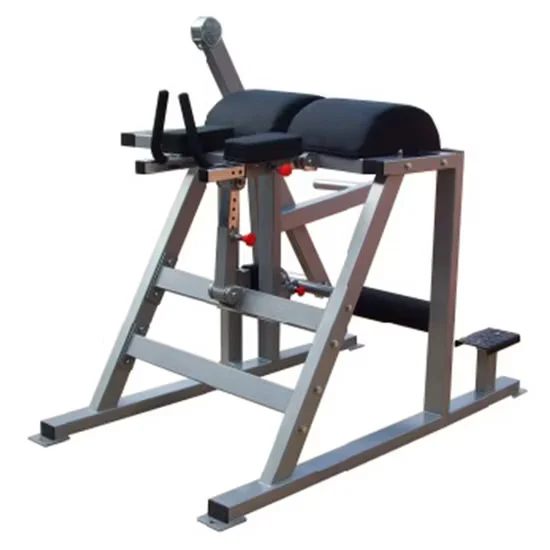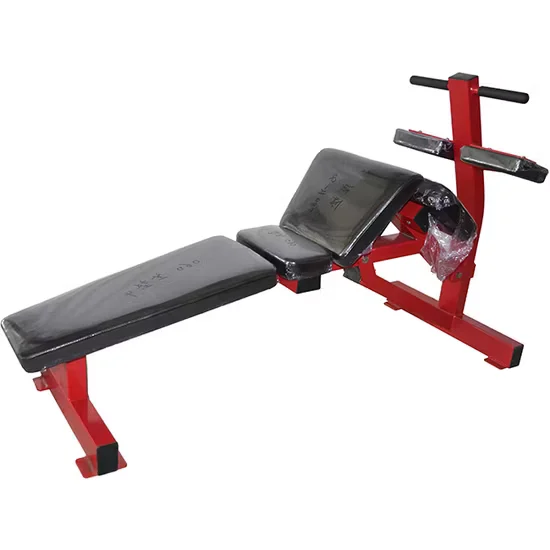
Reinforced Steel Durability — tested for high-frequency facility use, this abdominal board maintains structural rigidity under continuous repetitive loading cycles.
Technical Specifications
| Parameter | Value |
|---|---|
| Product Type | Abdominal Board |
| Model NO. | 5061 |
| Material | Steel |
| Product Dimensions | 1670600790mm |
| Net Weight | 60kg |
| Max User Weight | 180kg |
| Age Group | Adult |
| Gender | Unisex |
| OEM/ODM | Available |
| Production Capacity | 500 PCS/Month |
| Certification | ISO 9001, CE |
Application Suitability
| Deployment Scenario | Typical Use |
|---|---|
| hotel fitness center on guest room floors | Core conditioning station available around the clock for guests seeking structured abdominal routines |
| chain gym cardio zone | Dedicated core training anchor between cardio machines for circuit-based member workflows |
| corporate wellness room | Compact strength station for employees performing quick core sessions during breaks |
| high-end residential home gym | Space-efficient abdominal trainer for private fitness environments with limited floor area |
| community fitness center | Durable core station accommodating diverse age groups and fitness levels throughout daily operating hours |
Why Padding Compression Ruins Core Stations Before the Frame Does
Commercial abdominal boards fail at the upholstery long before the steel yields.
Facility operators repeatedly see the same pattern: the frame holds up fine, but padding compresses unevenly within months of high-frequency use, creating pressure points that generate member complaints. Once users feel discomfort along the spine during decline work, they migrate to mat-based alternatives and the station sits empty [NEED_CITE: upholstery compression rates under continuous commercial loading]. This commercial abdominal board fitness bench addresses that failure point with high-density padding geometry designed to distribute load across the full contact surface rather than concentrating it at the lumbar region.
Core Training Positioning Within the Strength Floor
This abdominal board occupies the dedicated core and bodyweight training zone, complementing cable machines and functional rigs where members perform weighted and unweighted abdominal work. It covers decline, flat, and incline positioning for rectus abdominis engagement through full range of motion, fitting between multi-station setups without disrupting traffic flow. The 1670mm length accommodates users across a wide height spectrum while the 180kg maximum user weight rating ensures stability for heavier members performing weighted sit-ups and leg raises. This commercial abdominal board fitness bench slots into facilities as a single-purpose station that anchors the core training area without demanding the footprint of a multi-functional rig.
Continuous Deployment and Facility Environment Fit
A steel-frame abdominal board in a commercial setting faces constant cyclic loading from hundreds of daily repetitions across multiple users. The 60kg net weight provides sufficient mass to resist shifting during vigorous use, eliminating the need for floor anchoring in most installations. Placement on standard commercial rubber flooring with basic leveling is adequate, though operators should maintain clearance on both ends for full range of motion during decline exercises [NEED_CITE: commercial gym floor load distribution requirements for static strength stations]. Temperature and humidity variations in facility environments do not affect the steel frame integrity, making this station suitable for spaces where climate control fluctuates between operating and off-hours. The compact 1670*600mm footprint allows deployment in corridors or transitional zones between primary training areas without creating bottlenecks.
Steel Frame and Upholstery Engineering Decoded
The reinforced steel frame uses welded construction to maintain dimensional stability under asymmetric loading — when a user shifts weight during oblique work, the frame resists torsional flex that would otherwise create wobble and erode user confidence over time. Padding density and thickness are calibrated for commercial repetition volumes; softer foams that feel comfortable during a showroom test compress into permanent valleys within weeks of real facility use, while overly firm pads create vertebral pressure points during extended sets. The pad geometry follows natural spinal curvature to support the lumbar region during decline positioning, reducing the tendency for users to hyperextend at the bottom of the movement. Surface upholstery must withstand sweat exposure, cleaning chemicals, and friction from repeated mounting and dismounting cycles without delamination or seam failure [NEED_CITE: commercial upholstery abrasion standards for fitness equipment].
The Hidden Cost of Specifying Below Commercial Grade
Purchasing decisions driven by upfront cost rather than duty-cycle matching generate predictable downstream expenses. Lightweight frames flex under repetitive loading, loosening weld joints and creating audible creaking that members associate with equipment failure even when structural integrity remains intact. Padding specified for light-commercial use compresses within months, generating back discomfort complaints that personal trainers escalate to management, eventually resulting in station replacement and member attrition during the interim period [NEED_CITE: equipment replacement cycles in high-traffic commercial fitness facilities]. Upholstery that lacks adequate sweat and chemical resistance develops surface cracking, creating hygiene concerns that prompt facility managers to pull the station from the floor entirely. These compounding failures turn a single station decision into a pattern of repeated procurement cycles.
Why This Product Line Holds Up Under Facility Demands
Every unit in this cardio and strength family undergoes 10,000-hour durability testing on load-bearing components, ensuring frames and welds survive continuous high-frequency operation without structural degradation. The sub-35dB design philosophy extends across the product range, meaning this abdominal board sits quietly alongside whisper-quiet cardio machines without introducing mechanical noise into shared facility environments. Full OEM and ODM capability covers upholstery color, frame finish, and branding integration so the station matches existing facility aesthetics without aftermarket modification. The 3D layout planning service accounts for the 1670*600mm footprint alongside adjacent equipment spacing, ensuring the core training zone maintains proper member flow and sightlines. Twenty-four-seven technical support and spare parts availability means a damaged pad or loose component gets addressed before the station sits idle long enough for members to form alternative habits.
Documentation & Test Records
- CE declaration of conformity confirming compliance with European fitness equipment safety directives
- EN 957 test report validating structural load capacity and stability under commercial use conditions
- ISO 9001 certificate covering manufacturing quality management across the production process
- Upholstery abrasion and chemical resistance test data for facility-grade padding materials
- Frame weld integrity and load-bearing test documentation with maximum user weight verification
- Spare parts list with component replacement cycle guidance for maintenance planning
Installation, Commissioning & Maintenance
- Position the 1670600790mm frame with minimum one-meter clearance on both ends for full decline range of motion
- Level the steel base on commercial rubber flooring to prevent frame rocking during asymmetric loading exercises
- Inspect all weld joints and fastener torque upon delivery before placing the station into member-facing service
- Schedule upholstery inspection quarterly to detect seam stress or surface cracking before padding exposure occurs
- Wipe down pad surfaces with facility-approved disinfectant after each operating shift to prevent sweat degradation
- Verify pad mounting hardware quarterly and retighten to specification to maintain secure attachment under cyclic loading
Equipment Selection and Facility Planning Inquiry
Share your core training zone dimensions and existing equipment list to receive a 3D layout plan that positions this abdominal board with correct spacing and member flow integration. Specify daily operating hours and expected user volume to confirm the frame and upholstery specification matches your facility duty cycle. Identify the deployment floor and adjacent occupied spaces to verify noise transmission requirements align with the station profile. Indicate target market and facility region to confirm documentation and compliance alignment with local regulatory standards.
Frequently Asked Questions
Q: What materials are used in the frame and padding for commercial longevity?
A: The frame is constructed from welded steel designed to resist torsional flex under repetitive asymmetric loading typical of core training movements. Padding uses high-density foam with commercial-grade upholstery rated for sweat exposure, chemical cleaning agents, and friction from repeated mounting cycles. Material specifications are documented in the test records provided with each order to support facility procurement verification.
Q: How does the ergonomic design reduce lower back strain during use?
A: The pad geometry follows the natural curvature of the spine, distributing contact pressure across the full lumbar and thoracic region rather than concentrating load at a single vertebral segment. This support profile becomes critical during decline positioning where gravity increases the tendency toward hyperextension. The result is a more controlled range of motion that allows users to maintain proper alignment throughout each repetition.
Q: Can the abdominal board be customized with facility branding and color schemes?
A: OEM and ODM customization covers upholstery color, frame finish, and logo application to align the station with existing facility design standards. Customization scoping occurs during the quotation phase with confirmation of minimum order quantity and production lead time. Console-equivalent branding on strength stations ensures visual consistency across mixed equipment deployments in multi-zone fitness environments.
Q: What is the recommended maintenance schedule for high-traffic environments?
A: Quarterly inspections should cover upholstery surface condition, seam integrity, pad mounting hardware torque, and frame weld visual assessment. High-traffic facilities operating twelve or more hours daily may benefit from monthly upholstery checks to catch surface degradation before padding becomes exposed. The spare parts list includes component replacement guidance to support proactive maintenance scheduling rather than reactive repairs.
Q: How does the footprint compare to other core training stations in space planning?
A: At 1670*600mm, the station occupies a compact linear footprint that fits between multi-station rigs and cable machines without disrupting traffic lanes. The low profile allows placement along walls or in transitional corridors between primary training zones. The 3D layout planning service integrates this footprint with surrounding equipment spacing to ensure the core training area maintains proper sightlines and member flow throughout the facility.
![Commercial Pendulum Squat Machine Strength Training Leg Press [WARN] draft identifier mismatch](https://bicksport.com/wp-content/uploads/2026/08/commercial-pendulum-squat-machine-strength-training-leg-press-warn-draft-identifier-mismatch-bd908a.webp)