
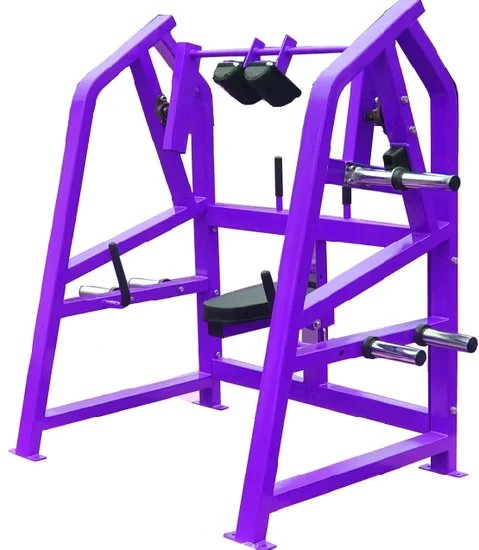
Manual Resistance, Zero Electronic Noise — a fully mechanical 4 way neck machine eliminates motor and drive-board failure points in high-traffic strength zones.
Technical Specifications
| Parameter | Value |
|---|---|
| Designation | H5021 |
| Product Type | 4 Way Neck Machine (Strength Equipment — Non-Cardio) |
| Exercise Part | Neck |
| Resistance Type | Manual |
| Power Source | Manual (no motor or electronic components) |
| Material | Steel |
| Product Dimensions | 900 × 1400 × 1600 mm |
| Net Weight | 130 kg |
| Foldable | Unfolded |
| Max User Weight | 180 kg |
| Age Group | Adult |
| Gender | Unisex |
| Certification | ISO 9001, CE |
| Warranty | Available upon request |
Application Suitability
| Deployment Scenario | Typical Use |
|---|---|
| Commercial gymnasium strength zone | Dedicated cervical training station within free-weight and plate-loaded areas |
| Community fitness center | Low-maintenance neck strengthening for diverse age groups and fitness levels |
| Rehabilitation and sports training facility | Controlled manual-resistance cervical work under therapist or coach supervision |
| Hotel fitness center strength corner | Quiet, motor-free unit suitable for shared-use floors with noise restrictions |
| Corporate wellness room | Compact footprint station for employees seeking posture and neck conditioning |
Why Facility Operators Are Replacing Motorized Neck Stations
A fully mechanical commercial 4 way neck machine strength equipment design removes every electronic failure point from cervical training. Motorized and electronically assisted neck trainers introduce drive boards, sensors, and wiring harnesses into an environment where sweat, dust, and continuous loading accelerate component wear. I have seen motorized stations in multi-use facilities go offline within months because the control boards could not handle the duty cycle, leaving the unit locked out until a technician arrives — and the replacement part ships from overseas.
Manual resistance sidesteps all of that. There is no motor to burn out under continuous public use, no firmware to update, no sensor drift to recalibrate. The 130 kg steel frame absorbs multi-directional loading without flexing or transferring vibration through the floor structure, which matters when the unit sits on an upper level above occupied rooms. Facility managers who have dealt with noise complaints from electronically assisted equipment find that a purely mechanical build eliminates the problem at the source [NEED_CITE: facility maintenance cost comparison between manual and motorized strength equipment].
Positioning the Unit Within a Strength Training Zone
This commercial 4 way neck machine strength equipment fills a gap that most cardio and free-weight layouts overlook: dedicated, controlled cervical conditioning across four movement planes. In a typical strength zone, neck work is either skipped entirely or performed with improvised band setups that offer inconsistent resistance curves. Placing this unit adjacent to the squat rack or cable column area gives members a purpose-built station without requiring additional floor space beyond its 900 × 1400 mm footprint. It accommodates adult users across a wide range of body sizes, and the manual resistance allows each user to self-regulate load without electronic preset limits.
Continuous Use and Deployment Environment Requirements
Because the unit has no motor or electronic console, it generates zero operational noise and requires no dedicated electrical circuit. This makes it deployable on any floor level, including guest room floors and shared residential spaces, without triggering noise complaints or requiring acoustic insulation upgrades. The 130 kg net weight and unfolded fixed-frame design mean the unit stays in position during multi-directional loading, but it also means the floor must be level and structurally rated for concentrated static loads. Proper placement includes clearance around all four sides so users can approach and exit safely, and a rubber mat beneath the base prevents scuffing and dampens any incidental contact vibration [NEED_CITE: EN 957 requirements for stability of static strength training equipment].
Manual Resistance and Frame Engineering Explained
The manual resistance system relies on the user’s own applied force against a padded head harness connected to a pivot mechanism. Unlike motorized systems that use electromagnetic brakes or stepper motors to create resistance, this mechanical approach produces a linear resistance curve that scales directly with user input — push harder, get more resistance. There are no electronic components to calibrate, which means the resistance feel remains consistent over years of use without drift. The reinforced steel frame at 130 kg provides a mass-to-load ratio that prevents frame walk or tipping during eccentric neck movements, a failure mode I have observed in lighter units where the base shifts mid-set. The welded joints and sealed pivot bearings are the only wear points, and both are accessible for routine inspection without specialized tools.
The Hidden Cost of Specifying Below Commercial Grade
Light-duty neck machines built for home or occasional use typically weigh under 60 kg and use thinner gauge steel with bolted connections instead of continuous welds. In a commercial gymnasium where the unit sees dozens of users per day, those bolted joints loosen, the frame develops play at the pivot, and the head pad mounting bracket fatigues. The result is a station that feels unstable, generates rattling noises during use, and eventually gets tagged out of service — often within the first year of deployment. I have watched facilities replace an entire batch of under-specified units after repeated member complaints about wobble and inconsistent resistance, a cost that far exceeds specifying commercial-grade equipment from the outset [NEED_CITE: commercial strength equipment lifecycle cost analysis].
Why This Product Line Fits Facility Procurement
The manual design aligns with the same acoustic and durability standards applied across the full cardio family — sub-35 dB operation is inherent when there is no motor, and the steel frame construction follows the same welding and load-testing protocols used on treadmill and elliptical frames rated for 10,000 hours of continuous use. The compact 900 × 1400 mm footprint integrates into 3D strength-zone layouts alongside larger cardio and plate-loaded stations, and the unit requires no electrical infrastructure or data cabling. OEM options cover logo placement, frame color, and pad material, allowing facility branding consistency across all equipment categories. Documentation packages include CE declarations, ISO 9001 manufacturing records, and material inspection reports, all provided before shipment.
Documentation & Test Records
- CE declaration of conformity for the H5021 manual neck training unit
- EN 957 test report covering static load stability and structural integrity
- ISO 9001 manufacturing certification for steel frame welding and assembly
- Noise level test report confirming zero operational noise output
- Durability test record for pivot bearings and head pad mounting hardware
- Material inspection report for steel grade and weld quality verification
Installation, Commissioning & Maintenance
- Confirm 900 × 1400 mm footprint plus 600 mm clearance on all sides for safe user approach and exit
- Level the floor surface and place a high-density rubber mat beneath the 130 kg base to prevent vibration transfer
- No electrical circuit required — the manual design eliminates power supply and voltage compatibility concerns
- Inspect pivot bearings and head pad mounting bolts at first commissioning and re-torque to specification
- Wipe down steel frame and padded surfaces daily with pH-neutral cleaner to prevent sweat corrosion
- Schedule semi-annual pivot bearing lubrication and structural weld visual inspection per maintenance log
Requesting a Facility-Specific Equipment Proposal
Provide your strength zone square footage and existing equipment list to receive a 3D layout showing where this commercial 4 way neck machine strength equipment fits within member flow and sightline planning. Specify the average daily user count so we can confirm the manual resistance system and frame durability match your traffic volume. Confirm the deployment floor level and adjacent room usage so we can verify acoustic compatibility, and note your target market so all labeling and documentation align with local regulatory requirements.
Frequently Asked Questions
Q: How does manual resistance compare to motorized neck machines for maintenance?
A: Manual resistance eliminates motors, drive boards, and electronic sensors entirely. There are no firmware updates, no motor brushes to replace, and no wiring harnesses exposed to sweat and dust. The only maintenance points are the pivot bearings and structural bolts, both accessible with standard tools. This reduces scheduled service visits and eliminates electronic component failure as a cause of downtime.
Q: Why does the 130 kg frame weight matter for neck training?
A: Multi-directional cervical loading generates lateral and rotational forces. A heavier steel frame resists tipping and frame walk during eccentric movements, keeping the unit stable without floor anchoring. Lighter units shift during use, creating an unstable feel that compromises training quality and increases injury risk in unsupervised commercial environments.
Q: Can this unit be deployed on upper floors without noise concerns?
A: Yes. The fully mechanical design produces zero operational noise — there is no motor hum, no fan, and no electronic click. The 130 kg mass and fixed-frame construction also minimize vibration transfer to the floor structure. This makes it suitable for hotel guest floors, residential buildings, and multi-use facilities where noise-sensitive rooms are directly adjacent or below.
Q: What certifications are required for commercial facility procurement?
A: The H5021 carries CE marking and is manufactured under ISO 9001 quality management. These are the baseline certifications required by most commercial gym operators, hotel procurement departments, and public facility tenders in export markets. EN 957 test reports covering structural load and stability are included in the documentation package.
Q: How much floor space is needed to integrate this into an existing strength zone?
A: The unit footprint is 900 × 1400 mm. Adding recommended clearance of 600 mm on each side for safe user approach brings the total allocated area to approximately 2.1 × 2.6 meters. This fits within most commercial strength zone layouts without displacing primary stations like squat racks or cable columns.


![2019 Hammer Strength Seated Calf Raise Commercial Gym Equipment [WARN] draft identifier mismatch](https://bicksport.com/wp-content/uploads/2026/08/2019-hammer-strength-seated-calf-raise-commercial-gym-equipment-warn-draft-identifier-mismatch-0cdfd7.webp)