![Factory Sales Spring Board Pilates Wall for Studio [WARN] draft identifier mismatch](https://bicksport.com/wp-content/uploads/2026/08/factory-sales-spring-board-pilates-wall-for-studio-warn-draft-identifier-mismatch-89d7ef.webp)
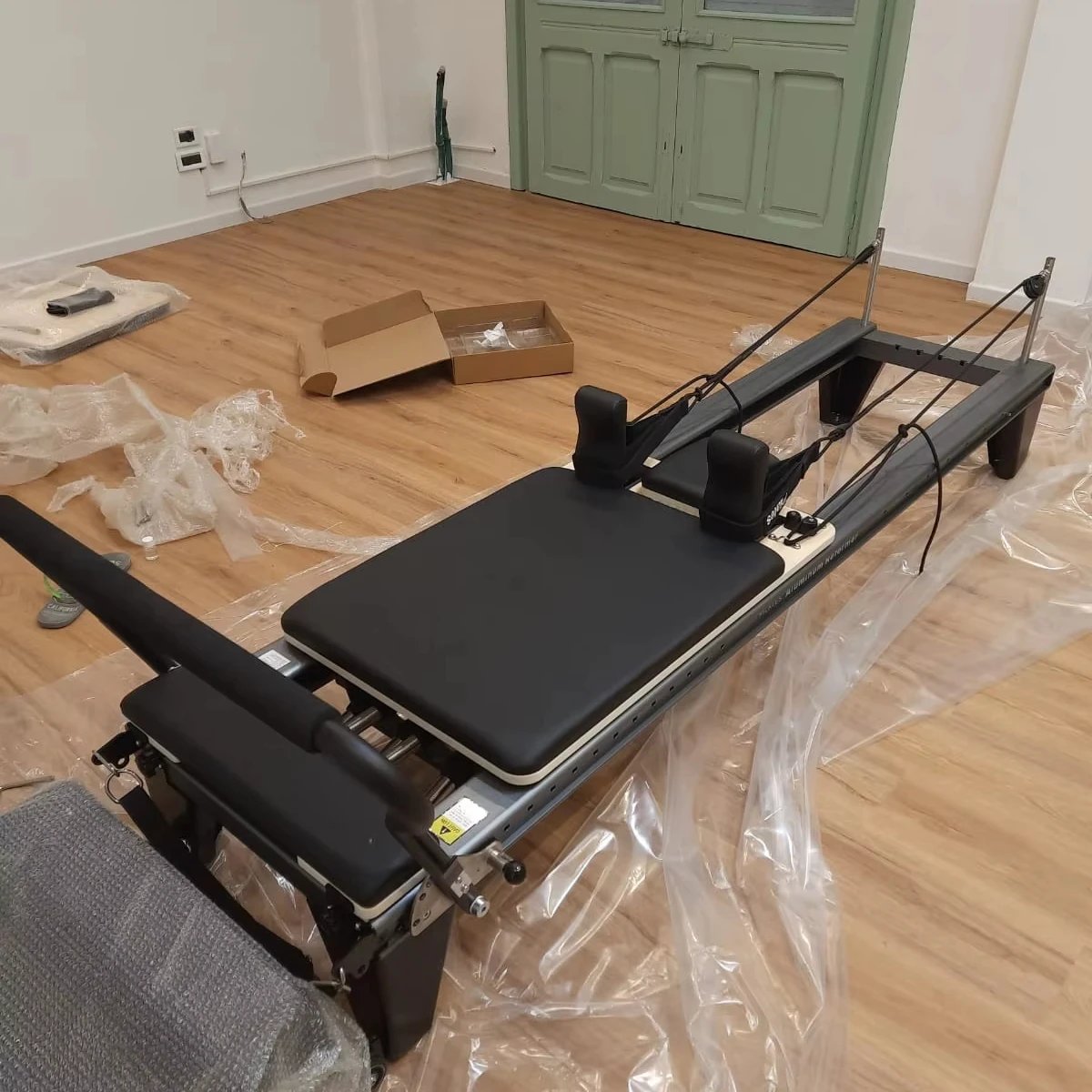
Spring-Loaded Reformer Precision — SRY-09 Pilates wall unit integrates a spring resistance system with jump board platform, engineered for continuous studio-class repetition cycles without tension degradation.
Technical Specifications
| Parameter | Value |
|---|---|
| Designation | SRY-09 |
| Product Type | Pilates Wall Unit / Spring Board Pilates Equipment |
| Specification | 1850 × 560 × 75 mm |
| Net Weight | 35 kg |
| Accessories | Long Box / Jump Board / Platform |
| Color | Solid Color (Customizable) |
| Logo | Customized Is Allowed |
| Age / Gender | Adult / Unisex |
| Warranty Time | 3 Years |
| Production Capacity | 800 Pieces/Month |
Application Suitability
| Deployment Scenario | Typical Use |
|---|---|
| Commercial Pilates studio chains | Uniform wall-mounted spring training across franchise locations for group reformer-class cadence |
| Boutique reformer studios | Integrating spring board exercises into class rotation alongside traditional carriage work |
| Rehabilitation and physiotherapy centers | Adjustable-resistance apparatus for progressive loading and spinal articulation protocols |
| Private training studios | Space-efficient wall unit delivering full-body spring resistance within limited square footage |
Why Spring Fatigue Reaches the Studio Owner Before the Maintenance Call
Consistent spring tension across full range of motion outlasts elastic band alternatives under continuous studio-class repetition cycles.
Pilates studios deploying consumer-grade wall units frequently report spring fatigue and frame flex within months, forcing unplanned equipment swaps that disrupt class scheduling. The commercial Pilates wall unit spring board reformer addresses this with springs rated for high-repetition cycles and a reinforced steel frame that resists flex under dynamic jump board loading [NEED_CITE: spring fatigue cycle testing for commercial Pilates equipment]. From my years on the production floor testing magnetic resistance systems, I know that tension consistency is the single biggest differentiator between studio-grade and home-grade spring mechanisms — elastic bands simply cannot match the linear load curve that commercial springs deliver over thousands of cycles.
Positioning the Wall Unit Within a Multi-Apparatus Studio Layout
The SRY-09 commercial Pilates wall unit spring board reformer covers spring-loaded resistance training across spinal articulation, hip hinge, and plyometric jump board patterns. It complements traditional reformer carriages by providing wall-mounted resistance work without consuming additional floor space, making it ideal for studios running back-to-back group classes. The 1850 × 560 mm footprint fits standard studio bay spacing, and the 35 kg net weight with reinforced mounting keeps the unit stable during dynamic loading for users across a wide body weight range.
Continuous Studio Shifts and Structural Integrity Requirements
Studios running three or more group classes daily subject wall units to continuous high-frequency loading that demands structural endurance beyond consumer-grade construction. The SRY-09 frame and spring mounts are tested for sustained multi-shift operation, with weld integrity verified for dynamic jump board forces [NEED_CITE: EN 957 load-bearing requirements for commercial Pilates apparatus]. Proper wall mounting into load-bearing studs or reinforced concrete is essential — drywall anchors will fail under plyometric cycles. Studios should confirm electrical clearance for any adjacent lighting or ventilation fixtures that could interfere with the 1850 mm height envelope.
Spring Resistance Mechanics and Accessory Integration
Spring-based resistance delivers a linear tension curve across the full range of motion, unlike elastic bands that lose elasticity and flatten under continuous commercial repetition. The integrated jump board platform converts the wall unit into a plyometric-capable surface, eliminating the need for a separate jump apparatus and preserving studio floor space. The long box accessory expands the exercise repertoire for supine spinal articulation and hip hinge patterns, while the platform provides a stable base for standing spring work. Each accessory mounts directly to the reinforced frame without requiring separate hardware or structural modification.
The Hidden Cost of Spec Compromise on Wall-Mounted Units
Consumer-grade wall units with undersized springs and light-gauge frames generate maintenance callbacks within months of studio deployment, as spring tension drifts and frame welds crack under jump board impact. Studios that selected equipment based on unit price alone often face batch replacement costs that exceed the original savings, not counting lost class revenue during downtime [NEED_CITE: commercial Pilates equipment replacement frequency in high-use studios]. Frame flex under dynamic loading also compromises exercise precision, leading to client complaints about inconsistent resistance feel across different units in the same studio.
Why This Product Line Delivers for Studio Deployments
The SRY-09 spring resistance system is cycle-tested for continuous studio-class repetition, matching the durability standards we apply across our full cardio and resistance product range. OEM customization covers logo, color, and accessory configuration so franchise operators can maintain brand consistency across locations. Our engineering team provides 3D layout planning that accounts for the wall unit’s 1850 × 560 mm footprint alongside reformer carriages and mat zones, ensuring proper sightlines and instructor circulation paths. Every unit ships with a 3-year structural warranty and 24/7 technical support access.
Documentation & Test Records
- CE declaration of conformity covering SRY-09 structural and material compliance
- EN 957 test report verifying load-bearing capacity for commercial studio deployment
- ISO 9001 certificate confirming manufacturing quality management processes
- Spring fatigue cycle test record documenting tension consistency over declared lifespan
- OEM customization specification sheet for logo, color and accessory configuration
Installation, Commissioning & Maintenance
- Mount SRY-09 into load-bearing wall structure with 1850 mm height clearance and lateral spacing for arm extension
- Verify wall stud or concrete anchor integrity before loading jump board platform with dynamic plyometric force
- Inspect spring tension consistency and mounting hardware torque quarterly under continuous studio-class use
- Clean spring coils and frame welds weekly to prevent sweat corrosion in high-humidity studio environments
- Confirm long box and platform accessory mounting pins are fully seated before each group class session
Planning Your Studio Equipment Inquiry
Provide your studio floor plan and wall unit count to receive a 3D layout with instructor sightline and member flow planning. Specify daily class frequency and average group size to confirm spring tension rating matches your operational cadence. Indicate whether OEM logo and color customization is required for brand alignment across multiple locations, and confirm accessory configuration — long box, jump board, or platform — for each unit in your deployment.
Frequently Asked Questions
Q: How does spring tension compare to elastic band resistance for studio-class repetition?
A: Spring mechanisms deliver a linear tension curve that remains consistent across the full range of motion, unlike elastic bands that flatten and lose elasticity under continuous repetition. For studios running multiple daily classes, springs maintain predictable resistance feel session after session, while bands require frequent replacement as their load profile degrades.
Q: What dynamic force capacity is verified for the jump board platform?
A: The jump board platform is engineered for plyometric loading cycles consistent with commercial Pilates jump board protocols. The reinforced frame and spring mounts are tested to withstand repeated dynamic force without structural flex or weld fatigue, though studios should confirm wall mounting integrity for their specific building structure.
Q: How does the frame hold under continuous multi-shift studio use?
A: The reinforced steel frame is fabricated and welded to commercial studio standards, with structural integrity verified for high-frequency group class deployment. The 35 kg net weight provides a stable center of gravity during dynamic loading, and the 3-year warranty covers frame structural defects under normal commercial operation.
Q: Can logo, color and accessory configuration be matched to brand identity?
A: Yes. OEM customization covers solid color finish, logo placement, and accessory selection — long box, jump board, or platform — allowing franchise operators to maintain visual consistency across locations. MOQ and lead time for custom configurations are confirmed during the quotation process.
Q: What does the 3-year warranty cover and what components are excluded?
A: The 3-year warranty covers frame structural integrity, weld defects, and spring mount hardware under normal commercial studio use. Wear components including spring coils, jump board surface padding, and mounting hardware consumables are excluded but available as replacement parts through the spare parts program.
![Folding Maple Wood Pilates Reformer for Home Gym & Studio Fitness [WARN] draft identifier mismatch](https://bicksport.com/wp-content/uploads/2026/08/folding-maple-wood-pilates-reformer-for-home-gym-studio-fitness-warn-draft-identifier-mismatch-2adce9.webp)